Agra hits different when you walk with a local instead of rushing between monuments. This 2–3 hour walking tour pairs big landmarks like Jama Masjid with side-street places you’d almost certainly miss on your own. The vibe is part sightseeing, part city-living, and it’s built around short stops that keep things moving.
Two things I really like: first, the route is designed for personal attention—it’s a private tour, so your guide can slow down when you actually care about what you’re seeing. Second, you get an English-speaking local guide who can connect the dots between religious sites, old markets, and how Agra runs day to day, not just what the buildings look like.
One consideration: the schedule is tight. Some stops are listed for around 15–25 minutes, so if you want extra time at a specific spot (like mosque entrances or photo angles), you should ask early and be ready to keep the pace with the group plan. Also, at about $11, it’s good value, but a “short walk” feeling can show up if you were expecting a longer, deeper tour.
In This Review
- Key points at a glance
- Why this Agra walk feels different from the Taj Mahal circuit
- Meeting near Jama Masjid and getting around without friction
- Stop 1: Jama Masjid, a giant mosque in the city’s daily rhythm
- Stop 2: Shri Mankameshwar Mandir and the 650-year stories people remember
- Stop 3: Agra Fort Railway Station—old rail architecture with British-era echoes
- Stop 4: Kinari Bazar, the 400-year-old old-city market feel
- Stop 5: Johri Bazar pethe—why this sweet is worth your time
- Stop 6: Subash Bazar, wholesale-style shopping energy
- Stop 7: the small Agra corners that don’t show up on most maps
- Price and value: about $11 for a guide-led city taste
- What you’ll learn from guides like Amit and Ritik
- Timing and weather: when the tour works best
- Who should book this Agra walking tour
- Should you book this walking tour?
- FAQ
- How long is the Agra walking tour?
- Is pickup offered?
- Is this tour private or shared?
- What ticket costs are included for the stops?
- What food is included on the tour?
- What’s the meeting point for the tour?
- Does the tour run at any time during the day?
- What happens if the weather is bad?
Key points at a glance
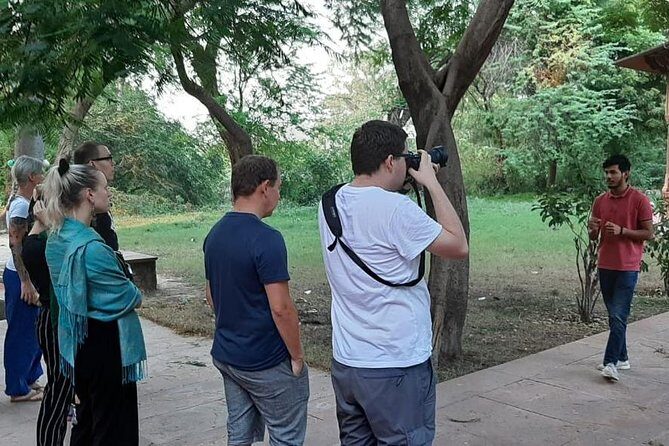
- Off-the-main-road route beyond the usual Taj Mahal loop
- Private guide for personal attention and quick questions
- Transportation included for short hops, not just 100% on foot
- Market time in places locals shop (Kinari Bazar and Subash Bazar)
- Pethe tasting in Johri Bazar, with sweet made from white pumpkin
- Several stops with free admission, while a couple of items are included
Why this Agra walk feels different from the Taj Mahal circuit
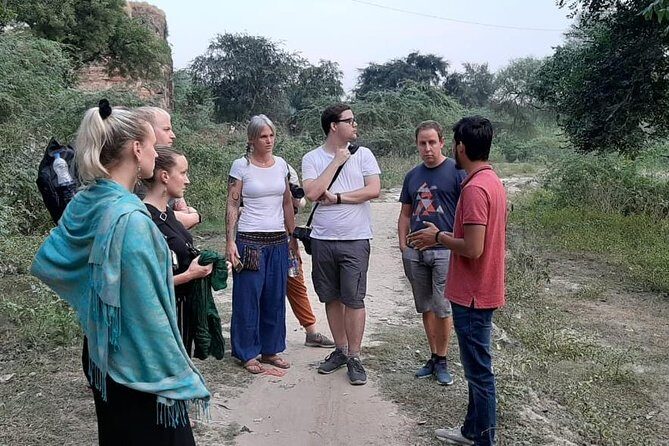
Agra is famous for one big postcard view, but the city is more interesting than that single photo. This walk takes you into the working parts of Agra: mosques that are part of everyday life, temples with centuries of local storytelling, and old bazaars where shopping still looks like shopping used to look.
What makes it work is the mix. You’re not just ticking off sights. You’re moving from one kind of place to another—religious sites, transport history, and street markets—so your mental map of Agra grows as you go.
You can also read our reviews of more walking tours in Agra


Meeting near Jama Masjid and getting around without friction
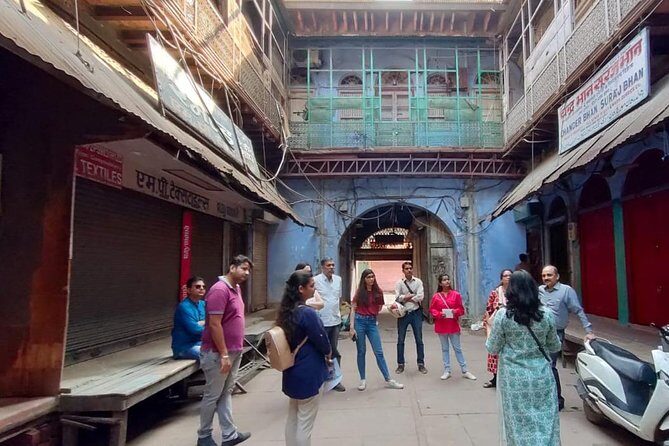
You start close to Jama Masjid and the tour finishes back at the meeting point. Pickup is offered, and you also get a mobile ticket. If you’re the type who hates logistical stress on a short trip, this setup helps a lot.
One more practical advantage: it’s described as near public transportation, and the experience includes transportation. In real terms, that usually means you’ll walk the streets for the “Agra feel,” but you won’t be stuck doing every move on foot. One guide experience (mentioned in feedback) included hops using metro and tuk-tuk, which is exactly the kind of sensible rhythm you want when streets get crowded.
Stop 1: Jama Masjid, a giant mosque in the city’s daily rhythm
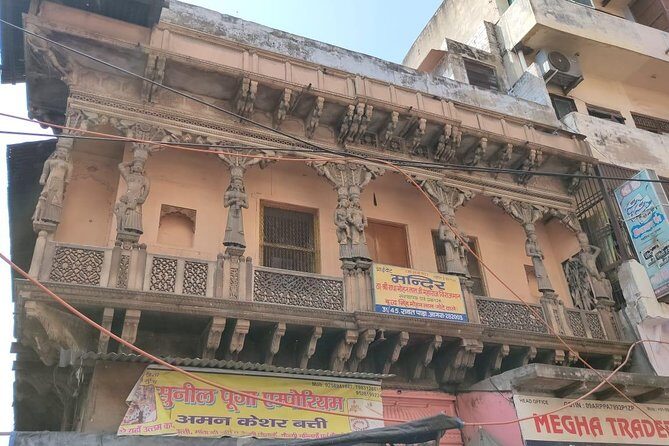
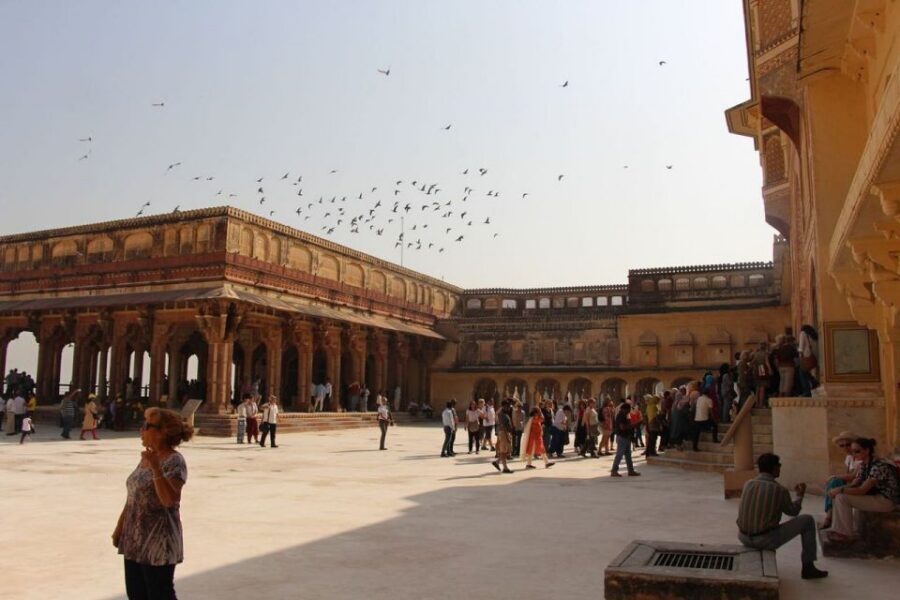
The first stop is Jama Masjid, one of Agra’s biggest mosques. You get about 20 minutes here, and the admission ticket is free.
Why this stop matters: it’s not a museum-style visit. It’s a living religious space, so you learn by watching how the area functions around you—people entering, families moving through, and the building setting the tone for the neighborhood. The guide’s job is to help you understand what you’re looking at without turning it into a lecture.
What to watch for: because the visit is time-boxed, use your first minutes to confirm where you’re allowed to go and what you can photograph. Some people felt the tour could have included more access detail, so if you care about a particular entrance area, ask right away.
Stop 2: Shri Mankameshwar Mandir and the 650-year stories people remember
Next up is Shri Mankameshwar Mandir, described as about 650 years old, with free admission. You’ll spend around 20 minutes.
This is a good contrast to the mosque. You go from a major Islamic landmark into a Hindu temple space where the guide can explain the meaning behind architectural details and local legends. The value here is that you’re not just looking at an old building—you’re getting context for why the stories matter to the people who come here.
A practical tip: if you’re visiting from a “big monuments only” mindset, slow down. Temple visits are the places where your questions matter most. Ask how the stories connect to daily life, festivals, or the community surrounding the temple.
Stop 3: Agra Fort Railway Station—old rail architecture with British-era echoes
Then you head to Agra Fort Railway Station, with about 20 minutes and an included ticket.
The station is presented as the oldest railway station in the city, built by the Britishers, and it’s known for rare architecture and a reputation for lots of stories. Whether you’re a rail-history fan or not, the real win is the atmosphere: stations are where cities reveal themselves. You see movement, signage, local routines, and the “in-between” spaces that guidebooks rarely spotlight.
One note: this stop is included as an attraction with a ticket, so it’s part of what you’re paying for at this low price. If you’re comparing tours, this is a key differentiator—some walks list “sightseeing,” but this one includes a specific entry cost and time allocation.





Stop 4: Kinari Bazar, the 400-year-old old-city market feel
Your fourth stop is Kinari Bazar, described as around 400 years old, again with free admission. You get roughly 20 minutes.
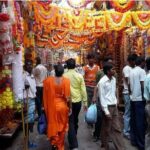
Kinari Bazar is about textures and habits. It’s the kind of market where products are smaller, more detailed, and often linked to traditional clothing and household trade. The tour frames it as a place that feels like time has slowed down. That’s not just poetic talk—it’s the practical difference between a tourist market and a working market.
What you’ll likely enjoy here:
- stopping to look at materials and trims
- seeing how vendors talk to customers
- getting your first real sense of old Agra street layout
If you’re sensitive to crowds or sharp smells from food stalls, go slow. Markets can feel intense, but they’re also the fastest way to understand local life.
Stop 5: Johri Bazar pethe—why this sweet is worth your time
Next is Gopal Das Pethe Wale Johri Bazar, with about 15 minutes and an included ticket/entry tied to the sweet stop. The tour highlights pethe made from white pumpkin, and it frames the place as having a story you’ll enjoy.
Pethe is a classic Agra candy, and the point of this stop isn’t just eating something sweet. It’s tasting one of the city’s food identities in a market setting, not a generic shop with a tourist poster.
How to make this stop feel worth it:
- treat it like a small taste, not a meal
- ask your guide what makes the pumpkin version distinct
- notice how vendors sell and package it—part of the charm is how practical it is
Stop 6: Subash Bazar, wholesale-style shopping energy
After the sweet, you go to Subash Bazar, about 20 minutes and free admission. This is described as the “madness” of the market world—clothes for Indian wear, presented as a wholesale-style area with a strong vibe.
This stop is where you see the other side of Agra commerce: not only everyday browsing but also what looks like bulk buying, faster transactions, and shoppers who know exactly what they want. It’s a great contrast to the temple and mosque stops.
If you’re hoping to buy fabric or clothing, this is likely the moment. If you’re not, still go with curiosity. Even without purchasing, you’ll understand the system: who sells, who compares, who brings items for measuring or matching.
Stop 7: the small Agra corners that don’t show up on most maps
The final segment is a wandering portion where you explore smaller places whose location isn’t easy to find on Google. You’ll spend about 25 minutes.
This is where a guide earns their pay. When a route includes only major monuments, you get photos. When a route includes “small places,” you get comprehension. You’re learning how neighborhoods flow, how streets connect, and why certain corners matter to locals even when tourists rarely ask about them.
This part is also the best time to ask your guide for practical tips, like:
- where locals eat nearby
- what areas are good for a calm walk later
- what to avoid if you’re heading out on your own
You won’t leave with every street detail, but you’ll leave with a sense of where you are in Agra and how the city behaves.
Price and value: about $11 for a guide-led city taste
At around $11 for roughly 2–3 hours, this is priced like a “get oriented fast” tour. And that’s exactly what it can be good at—especially if you’re staying near Agra’s core areas and you want more than the Taj Mahal checklist.
Where the value shows:
- you’re paying for transportation provided, not just a guided walk
- multiple stops include free admission, which keeps the experience from turning into constant upsells
- a ticketed railway station stop is included
- pethe tasting is included, which matters because food in India is often where tours become the most worthwhile
Where the value can feel weaker:
- if you expected long dwell times at every landmark, the 15–25 minute stop lengths might feel short
- if the guide’s pace is brisk, you’ll want to actively steer the conversation to the specifics you care about
For many people, that trade-off is fine. For others—especially those who like slow, deep museum-style pacing—it might not.
What you’ll learn from guides like Amit and Ritik
From feedback, two guide names come up often: Amit and Ritik.
Amit is described as high-energy and knowledgeable about the region, with a lively mix of walking plus short transport hops through busy streets and alleyways. Ritik is praised for professionalism and being easy to talk with, and one person noted that their experience helped rebuild confidence in guides around Agra. That same feedback also points to the practical side: you’re walking busy areas, so being comfortable with your guide matters as much as what you see.
Even if you don’t care about the guide’s personality, these notes matter. In a city like Agra, a good guide isn’t only interpreting monuments. They’re helping you navigate crowds, choose routes, and keep the visit respectful.
Timing and weather: when the tour works best
The experience requires good weather. The tour is available during a wide time window (4:00 AM to 10:00 PM), so you’ll likely be able to pick a slot that fits your day. If conditions are poor, you may be offered another date or a full refund.
If you’re choosing between a morning and an afternoon slot, I’d treat it like this: morning can be cooler and easier for walking; late afternoon can work if the weather is stable. Since you’re also moving through markets, avoiding the hottest hours can make the whole route more comfortable.
Who should book this Agra walking tour
This tour is a strong match if you:
- want a break from the Taj-only plan
- like markets, street scenes, and everyday city life
- prefer a private guide who can answer your questions fast
- want a short guided window that still hits multiple types of places
It may be less ideal if you:
- need long sit-down visits at religious sites
- hate crowds and market noise
- expected a longer 4–6 hour walking day
Should you book this walking tour?
I think you should book it if you want your Agra day to feel like a real city, not a conveyor belt. The combination of Jama Masjid, a centuries-old temple, an old railway station stop, and two market areas—plus pethe—fits well into a tight schedule and keeps your money working hard.
If you’re the type who wants maximum time at one landmark, consider whether a longer, monument-focused tour better suits you. But if you want variety, context, and practical local perspective for about $11, this is a smart way to spend a half-day in Agra.
FAQ
How long is the Agra walking tour?
It runs about 2 to 3 hours.
Is pickup offered?
Pickup is offered, and the tour also includes transportation.
Is this tour private or shared?
It’s a private tour/activity, meaning only your group participates.
What ticket costs are included for the stops?
Admission is free for stops like Jama Masjid, Shri Mankameshwar Mandir, Kinari Bazar, and Subash Bazar. The Agra Fort Railway Station stop has an included ticket, and the pethe sweet stop has an included ticket as well.
What food is included on the tour?
You get to sample pethe at a local confectionary shop in Johri Bazar. The tour specifically mentions pethe made from white pumpkin.
What’s the meeting point for the tour?
The start is near Jama Masjid in Agra, and the tour ends back at the meeting point.
Does the tour run at any time during the day?
The activity’s listed opening hours run from 4:00 AM to 10:00 PM.
What happens if the weather is bad?
The experience requires good weather. If it’s canceled due to poor weather, you’ll be offered a different date or a full refund.