Golden Triangle tours can get repetitive fast, and this one doesn’t. You’ll hit Amber Fort, then switch gears to Bundi’s palaces and stepwells, and finish with a Ranthambore jeep safari plus the Taj circuit in Agra. One thing to watch: most sightseeing entrance fees are not included, so you’ll want cash/card set aside for tickets and a few paid sites.
I like that the trip feels structured but not chaotic. You get AC vehicle transport throughout, plus a complimentary phone SIM with internet to handle maps and timing, and the group setup is private (just your group). The main trade-off is the pace: you’ll spend a lot of time moving between cities, even though the days are planned around the best highlights.
In This Review
- Key things I’d watch for
- The 7-day route from Delhi that actually feels organized
- Jaipur in one tight day: forts, palaces, and sunrise-level detail
- Amber Fort: Mughal architecture with Rajput drama
- City Palace and the official Jaipur story
- Jal Mahal, Hawa Mahal, and Jantar Mantar: three styles of Jaipur
- One small time-saving habit
- Bundi’s palaces and stepwells: where the trip turns more personal
- Garh Palace: big, layered, and easy to picture
- Nawal Sagar: the lake that photographs itself
- Raniji-ki-Baori: the Queen’s Stepwell with serious carvings
- Sukh Niwas Mahal and Kipling’s Kim
- Ranthambore National Park: planning your tiger safari window
- Fatehpur Sikri and Agra Fort: the Mughal route before the Taj
- The Taj Mahal: the stop that needs less rushing
- Agra Fort: Akbar’s red-sandstone fortress mood
- Baby Taj, then back to Delhi with a lighter evening
- Old Delhi on Day 7: Mughal, Gandhi, war memorials, and a Bahá’í temple
- Red Fort and Jama Masjid: two major living landmarks
- Raj Ghat and India Gate: memorials that slow your pace
- Humayun’s Tomb: built by Bega Begum, designed by Persian architects
- Lotus Temple and Qutub Minar: religion and UNESCO in the same day
- Price and what $670 buys you in real terms
- Who should book this, and who might want a slower plan
- Should you book Holiday Tours and Travels for this Golden Triangle plus Ranthambore trip?
- FAQ
- What’s included in the $670 per person price?
- Are entrance tickets included for the monuments and forts?
- How does the Ranthambore safari fit into the trip?
- Where does the tour start and end?
- What is the cancellation policy?
- Is this tour private and can most people join?
Key things I’d watch for
- A “full circuit” route: Delhi → Jaipur → Bundi → Ranthambore → Agra → back to Delhi.
- One shared Ranthambore safari: included once, built into the schedule with hotel check-in first.
- Bundi is the smart curveball: Garh Palace, Nawal Sagar, Raniji-ki-Baori, and Sukh Niwas Mahal.
- Major Mughal stops on purpose: Taj Mahal, Agra Fort, Itimad-ud-Daulah, plus Delhi’s Mughal monuments.
- Phone SIM + comfort travel: helpful for navigating and keeping your day on track.
The 7-day route from Delhi that actually feels organized
This tour is built like a classic Golden Triangle, but with two quality additions: Bundi and Ranthambore. That combo changes the vibe. Jaipur and Delhi give you Rajasthan and Mughal-era big landmarks. Bundi slows things down just enough to feel different, and Ranthambore brings you into the wild world (jeeps, early starts, and the kind of waiting that suddenly feels exciting).
The practical reality: travel days can feel long. You’ll be switching cities, checking into hotels, then heading out again. Still, the schedule is packed with time slots per site, which helps you avoid that frustrating India-tour problem where you arrive, you stand around, and you lose the day.
You can also read our reviews of more tours and experiences in New Delhi.



Jaipur in one tight day: forts, palaces, and sunrise-level detail
Jaipur’s first-day flow is all about stacking the city’s “most iconic” hits without making you wander blindly. You start with Amber Fort, then move into the city’s Mughal and Rajput landmarks.
Amber Fort: Mughal architecture with Rajput drama
Amber Fort is the centerpiece. It’s described as a blend of Mughal architecture, with red sandstone and white marble, sitting above rugged hills. Historically, it traces back to construction by Raja Mann Singh in 1592, with later completion by Swai Jai Singh. That matters because it explains why the fort feels both grand and polished.
If you want this stop to feel worth it, show up ready for heat and steps. Even if your day is planned, you’ll still be walking on uneven ground and climbing wherever the viewpoints open up. Wear shoes you trust, and keep water handy.
City Palace and the official Jaipur story
City Palace is the next major anchor. It was established when Maharaja Sawai Jai Singh II moved his court to Jaipur from Amber. That makes it more than a pretty building: it connects the fort story to the functioning capital.
The City Palace stop in the schedule is shorter, and some sites here have tickets not included, so don’t plan on a long, museum-style visit unless your group has time flexibility.
Jal Mahal, Hawa Mahal, and Jantar Mantar: three styles of Jaipur
You’ll also see:
- Jal Mahal on Man Sagar Lake: a palace-in-the-water look, renovated and enlarged in the 18th century by Maharaja Jai Singh II.
- Hawa Mahal: the Palace of Wind, built in 1799 by Maharaja Sawai Pratap Singh, designed to extend to the zenana (women’s chambers). It’s that famous “honeycomb façade” vibe from the outside.
- Jantar Mantar: the UNESCO-listed astronomical instruments, built by Sawai Jai Singh II and completed in 1734, including the world’s largest stone sundial.
Here’s the practical takeaway: Jaipur is visual. You’ll get the best payoff if you move with purpose—quick photos, then a short pause to actually read what you’re looking at. These places are static, so your attention is what makes them come alive.



One small time-saving habit
Jaipur also includes time for shopping in famous bazaars. If shopping is a priority, treat it like a plan, not a wander. Set a budget in your head early, and don’t wait until you’re tired to start negotiating.
Bundi’s palaces and stepwells: where the trip turns more personal
On Day 3 you shift from the heavy hitters of Jaipur into Bundi, and that’s a big quality win. Bundi’s highlights feel more “made for slow looking,” especially if you like architecture details.
Garh Palace: big, layered, and easy to picture
Garh Palace in Bundi is described as one of India’s largest palaces, built over three centuries by different rulers. You’ll see Rajput architecture in the jharokhas (overhanging windows) and pillars, including elephant carvings. The schedule also points to major areas like Chhatra Mahal, Phool Mahal, and Badal Mahal.
What I’d love here is the way the palace complex holds multiple eras at once. Even if you only spend around two hours, you’ll still get that “this place has stories” feeling—especially at Chitrashala, known for miniature murals and an attractive pavilion/gallery setup.
Nawal Sagar: the lake that photographs itself
Nawal Sagar is an artificial lake where you can see reflections of nearby palaces and forts. In the center is a half-submerged temple dedicated to Lord Varun Dev.
This is one of those stops where you don’t need a long time. You need a calm moment. If you’re in a rush, the reflections and stillness won’t register. If you take 10 minutes to slow down, it becomes a memorable contrast to Jaipur’s monumental feel.
Raniji-ki-Baori: the Queen’s Stepwell with serious carvings
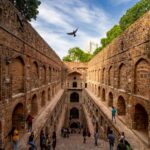
Raniji-ki-Baori, or the Queen’s Stepwell, was built in 1699 by Rani Nathavati Ji. It’s multi-storied, full of carvings (including Gajraj with his trunk turned inward), and features a high arched gate.
Stepwells can sound like a niche stop, but this one is built for visual attention. It gives you texture—columns, angles, and carved figures. It’s also the kind of place that makes you look up and not just forward.
Sukh Niwas Mahal and Kipling’s Kim
Finally, Sukh Niwas Mahal is tied to a literary surprise. It’s described as a summer retreat, and many credit it as the place where Kipling wrote Kim. Part of a movie based on the novel was also shot here.
That link is useful because it gives you a hook for the visit. When you connect a place to a story, you remember more than just dates.
Ranthambore National Park: planning your tiger safari window
Day 4 is when the trip becomes about wildlife, not just monuments. You check into the hotel on arrival, and then you head out for a 4-hour jeep safari in Ranthambore National Park. The park is known for tiger sightings and for giving one of the best chances to photograph tigers in their natural habitat.
Two honest expectations:
- Tiger encounters are never guaranteed, no matter how good the park is.
- If you treat the safari like a photo assignment from minute one, you’ll miss what makes it special.
Your best strategy is simple: stay alert, listen when your driver points things out, and take photos only when you spot activity. In wildlife contexts, the “best moment” is rarely the one you planned.
Because the safari is included as one time sharing jeep, you should also expect you’ll be riding with others. That affects where the jeep positions you and how quickly you move from sight to sight. It’s still a great inclusion because it removes the biggest variable from planning.
Fatehpur Sikri and Agra Fort: the Mughal route before the Taj
Day 5 has a classic drive structure: breakfast, then travel to Agra with a stop at Fatehpur Sikri on the way. Fatehpur Sikri is described as a perfectly preserved red sandstone ghost town and Akbar’s estranged capital.
This stop is valuable because it explains the “Mughal world” behind the later monuments. Without it, Taj Mahal can feel like a standalone masterpiece. With it, you see the wider political and architectural ambition that led there.
The Taj Mahal: the stop that needs less rushing
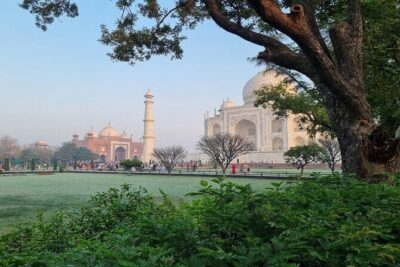
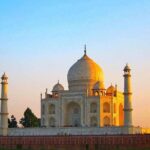
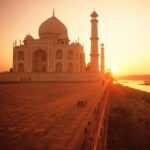
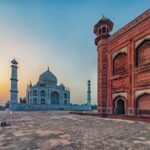
Then you reach the Taj Mahal for a visit set at around two hours. It’s described as one of the seven wonders of the world and an extravagant expression of love. That’s a lot to live up to, but the practical reality is: you’ll remember the scale, the symmetry, and the way your eye keeps returning to the center.
If you’re sensitive to crowds or heat, aim to use your time like this: one main viewing, one detail walk, then a calm pause where you just watch light and shadows shift.
Agra Fort: Akbar’s red-sandstone fortress mood
Agra Fort is next, planned at about one hour. It’s described as a red-sandstone fort on the Yamuna river, with construction begun by Emperor Akbar in 1566. This is a good companion stop because it changes the story from love to power and defense.
Agra Fort tends to reward people who enjoy structure and viewpoints. If you like photos from different angles, this is where you’ll get them.
Baby Taj, then back to Delhi with a lighter evening
Day 6 covers Itimad-ud-Daulah, often called Baby Taj. It’s a Mughal mausoleum and described like a jewel box, with a reputation as a draft of the Taj Mahal. The schedule gives you about one hour here.
I like this stop because it’s a “less overwhelming” way to stay in Mughal mood. The Taj can make you feel tiny (in a good way). Baby Taj lets you notice craftsmanship. You’ll see details without the constant pressure of the main-famous icon.
After that, you drive back to Delhi. The afternoon is at leisure, with hotel check-in on arrival. That downtime is important on a trip like this—your feet will thank you, and you’ll avoid the last-day burnout that often happens on high-volume itineraries.
Old Delhi on Day 7: Mughal, Gandhi, war memorials, and a Bahá’í temple
Day 7 stacks several Delhi highlights, and the variety is the point. You start with Red Fort, then move through Jama Masjid, Raj Ghat, India Gate, Humayun’s Tomb, Lotus Temple, and Qutub Minar.
Red Fort and Jama Masjid: two major living landmarks
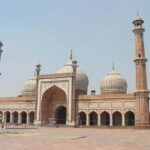
Red Fort is described as the main Mughal residence for nearly 200 years, until 1856, and it houses museums. Jama Masjid is highlighted as one of India’s largest mosques, built by Mughal Emperor Shah Jahan.
Dress and comfort matter here. Plan for places where you may need to cover shoulders and keep shoes sorted out. Also, keep your schedule mindset: you’re not doing “deep museum work” at each stop, you’re doing “see the landmark, understand the meaning” visits.
Raj Ghat and India Gate: memorials that slow your pace
Raj Ghat is the memorial dedicated to Mahatma Gandhi. India Gate is a war memorial on Rajpath, on the eastern edge of the ceremonial axis (the schedule notes the older name Kingsway).
These stops give your day emotional pacing. If your earlier days feel like sprinting between buildings, memorials bring the human scale back in.
Humayun’s Tomb: built by Bega Begum, designed by Persian architects
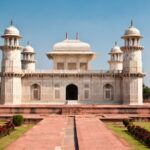
Humayun’s Tomb is a Mughal tomb commissioned by Humayun’s first wife and chief consort Empress Bega Begum in 1569–70. The schedule notes Persian architects Mirak Mirza Ghiyas and his son, Sayyid Muhammad.
This is one of those sites where the architecture knowledge is part of the experience. Even if you don’t memorize names, you’ll feel the planned geometry and the importance of patronage and design.
Lotus Temple and Qutub Minar: religion and UNESCO in the same day
Lotus Temple is a Bahá’í House of Worship dedicated in December 1986. Qutub Minar is the UNESCO-listed Qutab complex minaret.
This ending mix works well because it’s not only about one empire or one style. It shows how Delhi layers eras.
Your day finishes with a transfer to the airport, which is a good catch-all because the trip ends when it needs to, not when you’re exhausted.
Price and what $670 buys you in real terms
At $670 per person, the biggest value isn’t one single attraction. It’s the combination of logistics you’d otherwise have to piece together: AC vehicle transport, tolls/parking/state tax, driver allowances, 6 nights accommodation, and breakfast included (6 breakfasts).
Then there’s the safari: a one-time sharing jeep safari in Ranthambore is included. That’s usually one of the costliest things to arrange independently, because you’re not just buying a ticket—you’re buying the right timing, jeep access, and transport structure.
You also get a complimentary phone SIM with internet for the trip. That small line item helps more than you’d think: it reduces stress when schedules change slightly, and it makes it easier to ask questions and confirm meeting points.
What’s not included matters too. Entrance tickets are listed as not included, along with travel insurance, tips, and laundry/phone calls. Lunch, dinner, snacks, and drinks are also not included. So yes, budget extra for food and tickets. But if you’re comparing against doing this trip on your own with hired cars, hotels, and separate safari booking, this package still looks like solid value—especially for first-timers who want structure.
Who should book this, and who might want a slower plan
This fits well if:
- You want Jaipur + Bundi + Ranthambore + Agra + Delhi in one run.
- You prefer a planned route over sorting transport city by city.
- You like both culture stops and a wildlife day that changes the rhythm.
It might not fit as well if:
- You hate packed days and long driving stretches.
- You want lots of free time in each city.
- You’re hoping entrances are fully covered (they’re not).
Also, it’s private—just your group—which usually helps if you want your schedule to be followed without the awkwardness of a larger shared group.
Should you book Holiday Tours and Travels for this Golden Triangle plus Ranthambore trip?
I’d book this if you want a single, coordinated way to see Rajasthan and the Mughal highlights, then trade temples for tiger country for a day. The inclusion of AC transport, hotel nights, breakfast, and the Ranthambore jeep safari does the heavy lifting for you.
I’d think twice if entrance fees and extra food costs would annoy you. This is a “great structure, extras not included” kind of deal, so treat it like a trip where you set aside money for tickets and meals.
If your priority is comfort and a clear plan—without spending days arranging rides—this package is a strong choice.
FAQ
What’s included in the $670 per person price?
It includes AC transportation (tolls, parking, state tax, and driver allowances), a one-time sharing jeep safari in Ranthambore, 6-night accommodation, a complimentary phone SIM with internet during the trip, and breakfast (6). Pickup is offered, and the tour uses a mobile ticket.
Are entrance tickets included for the monuments and forts?
Entrance tickets are listed as not included. In the schedule, some stops are marked free, but many are marked as tickets not included, so you should plan to pay for entry at several sites.
How does the Ranthambore safari fit into the trip?
After hotel check-in on arrival in Ranthambore, you go on a jeep safari in Ranthambore National Park. The safari time in the schedule is 4 hours, and it’s included once as a sharing safari.
Where does the tour start and end?
It starts at Indira Gandhi Intl Airport in New Delhi, with pickup offered. It ends with a transfer to the airport.
What is the cancellation policy?
You can cancel up to 3 days in advance for a full refund. If you cancel less than 3 full days before the experience start time, the amount paid is not refunded.
Is this tour private and can most people join?
Yes, it’s private, meaning only your group participates. The information also says most travelers can participate, and it’s near public transportation.