REVIEW · NEW DELHI
6-Days Private Luxury Golden Triangle Tour from Delhi
Book on Viator →Operated by Raj Tour and Travel-Agra · Bookable on Viator
Golden Triangle, with fewer travel headaches. This private 6-day luxury route knits together Delhi, Agra, and Jaipur with a private air-conditioned car plus live guides, so the days feel focused instead of chaotic. You get hotel pickup/drop-off and tight sightseeing built around the places that most people actually come to see.
What I like most is how well it handles Old Delhi and the big monument days. You’ll ride in a tuk-tuk through Old Delhi and get guided stops like Jama Masjid and Chandni Chowk, then later you’ll hit the Taj Mahal at sunrise with a guide who’s praised for smart pacing and great photo moments (including guides like Iqrar and Faz).
My only real heads-up is budgeting for extra monument tickets, since entrance fees are not included. Also, you’ll want to plan around closures like the Taj Mahal being closed on Fridays and the Lotus Temple being closed on Mondays.
In This Review
- Quick hits before you go
- Private luxury that mostly means less hassle
- Day 1 Delhi warm-up: airport pickup and getting oriented
- Old Delhi by tuk-tuk: Jama Masjid and Chandni Chowk
- UNESCO Delhi: Humayun’s Tomb, Qutub Minar, and the Lotus Temple option
- Rashtrapati Bhavan and the long drive toward Agra
- Agra Fort, the Baby Taj, and Mehtab Bagh’s calmer sunset
- Taj Mahal sunrise plus Fatehpur Sikri on the way to Jaipur
- Jaipur highlights: City Palace, Hawa Mahal, Jantar Mantar, and more
- Price, comfort, and the entrance-fee reality check
- Small practical tips that make this tour smoother
- Should you book this 6-day private Golden Triangle tour from Delhi?
- FAQ
- What cities are included in this 6-day Golden Triangle tour?
- Is hotel pickup and drop-off included?
- Are monument entrance fees included?
- Do you get a private live guide in each city?
- Are there any closures I should know about?
- Does the price include hotel nights and breakfast?
- What is the cancellation policy?
Quick hits before you go
- Private car, hotel pickup/drop-off keeps you from negotiating transport across three cities.
- Old Delhi tuk-tuk ride adds character to the busiest neighborhood on the route.
- Sunrise Taj Mahal is scheduled early for the best feel and lighter crowds.
- Mehtab Bagh sunset viewpoint gives you a calmer Taj-adjacent perspective across the Yamuna.
- UNESCO-heavy Delhi and Fatehpur Sikri means fewer “skip it” moments.
- Guide support for photos and efficient routing is a standout theme in the guide reviews.
Private luxury that mostly means less hassle
This tour calls itself private and that’s not just marketing language. A private air-conditioned car with hotel pickup/drop-off is the difference between “we’ll figure it out” and “we’re moving with purpose.”
In practice, that means you spend your time at the sights instead of tracking down the right entrance, sorting out directions, or waiting around. The live guide in each city also helps you turn “I saw a fort” into “I understand what I’m looking at.”
You can also read our reviews of more private tours in New Delhi


Day 1 Delhi warm-up: airport pickup and getting oriented
On Day 1, the driver picks you up from the airport and takes you to your hotel. It’s a small start, but it matters because Delhi is loud, wide, and traffic-heavy—starting relaxed helps.
If you’ve just landed, you’ll appreciate that you don’t have to arrange anything locally. You can use the rest of the day to reset your body and map out your first day.
Old Delhi by tuk-tuk: Jama Masjid and Chandni Chowk
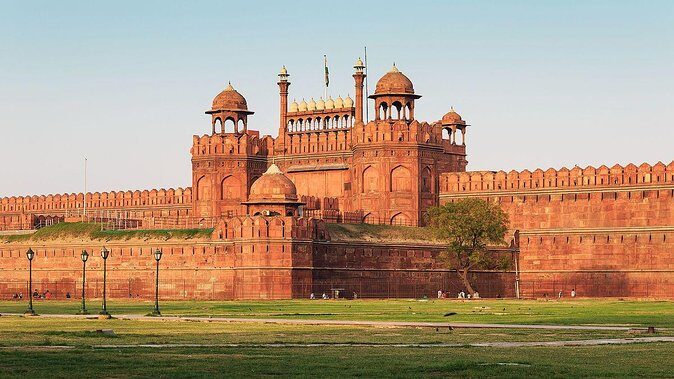
Day 2 is where Old Delhi really starts to click. After breakfast, you meet your guide and begin a Delhi city tour with stops that represent different layers of the city.
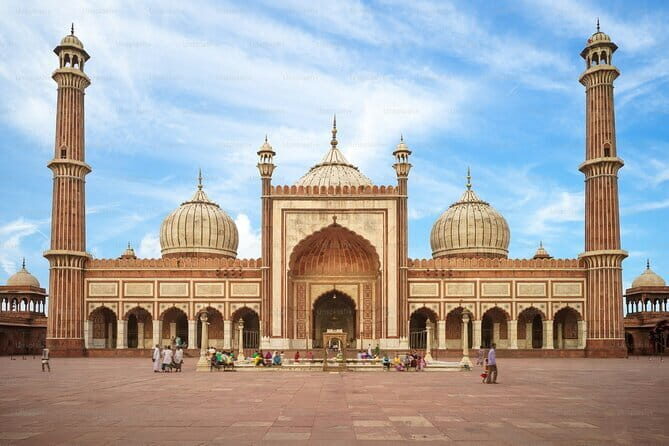
Jama Masjid is one of the big anchors. Built by Emperor Shah Jahan in 1656, it’s huge and imposing, and it’s the kind of place where your guide’s context helps you read the architecture instead of just taking photos.
Then you move to Chandni Chowk, one of Delhi’s oldest and liveliest lanes. This is the part you should approach with flexibility. Narrow streets, crowds, and constant motion make it feel like you stepped into the city’s daily life—not a museum.
A fun detail: the tour includes a tuk-tuk ride in Old Delhi. It’s not just a novelty. It can cut through the sense of distance and helps you get quick visual impressions while your guide keeps you pointed in the right direction.
UNESCO Delhi: Humayun’s Tomb, Qutub Minar, and the Lotus Temple option
After Old Delhi, the route shifts into Mughal and UNESCO territory. Humayun’s Tomb is an early Mughal garden-tomb and a UNESCO World Heritage Site, and it works well as a “breather” between busier streets.
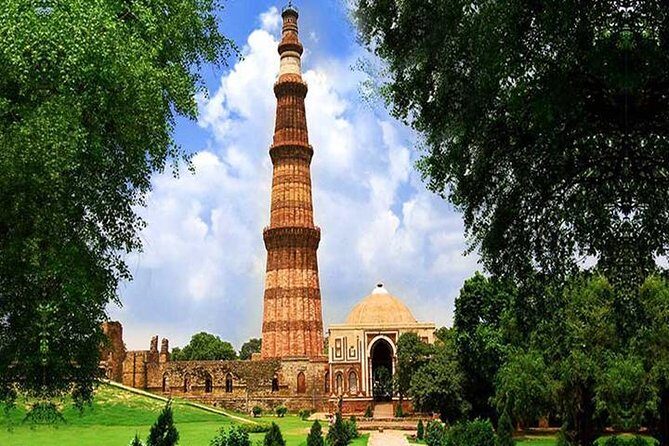
Next is Qutub Minar, another UNESCO highlight. It’s a 73-meter brick minaret from the 13th century, and the carvings and Indo-Islamic design details reward slow walking. Budget extra attention here, because it’s easy to rush and miss the visual story.
Then there’s the Lotus Temple, shaped like a blooming lotus and open to all faiths. It’s included as a shorter stop, and it’s often a mental reset from the stone and crowds. Do note the closure rule: it’s closed every Monday, so if your trip lands on that day, you’ll want the day’s plan to shift.
You also get India Gate, a World War I memorial in New Delhi with lawns and an eternal flame. It’s quick, but it gives you a sense of national scale before you roll into the rest of the day.
Rashtrapati Bhavan and the long drive toward Agra
You also visit Rashtrapati Bhavan, the President of India’s official residence. It’s an architectural blend of Indian and Western styles, originally built as the Viceroy’s House during British rule.
From a traveler’s point of view, this stop is about contrast. After Mughal-era tombs and minarets, it gives you a look at a different era of power and design.
Later on, the driver takes you onward to Agra and drops you at your hotel for overnight stay. This is a key detail: you’re not just doing Delhi sightseeing—you’re also traveling. If you hate long road time, pack snacks and water and think of this as part of the adventure.
A few more New Delhi tours and experiences worth a look





Agra Fort, the Baby Taj, and Mehtab Bagh’s calmer sunset
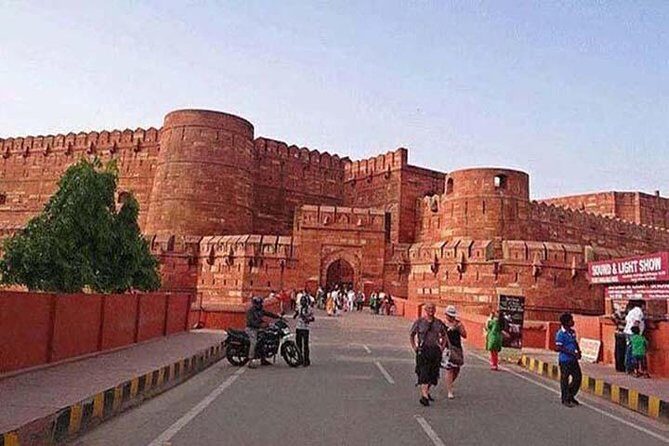
Day 3 is built for Agra’s classic triangle of sights: fort, tomb, and a Taj-adjacent viewpoint.
Agra Fort is a UNESCO World Heritage Site and a major Mughal red-sandstone fortress. Plan for a solid walk inside and take your time in the areas that open toward distant views of the Taj Mahal. Your guide’s job here is to help you understand why the fort’s placement and layout mattered.
Then you’ll head to Itmad-ud-Daula, often called the Baby Taj. It’s a marble tomb built by Empress Nur Jahan for her father, and the inlay work makes it feel delicate compared to the bigger fortress energy.
After that comes Mehtab Bagh, across the Yamuna River from the Taj Mahal. This garden stop is short, but it has a specific purpose: it’s a great place for a different angle and a calmer sunset mood away from the densest crowds near the main monument.
If you’re the type who wants photos that don’t look like everyone else’s Instagram feed, this is one of the smarter scheduling choices.
Taj Mahal sunrise plus Fatehpur Sikri on the way to Jaipur
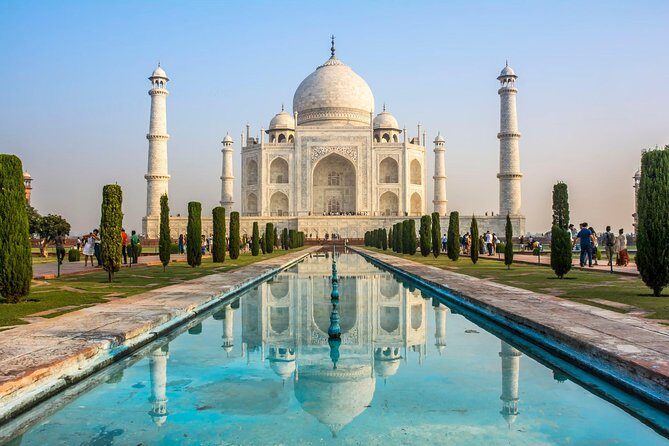
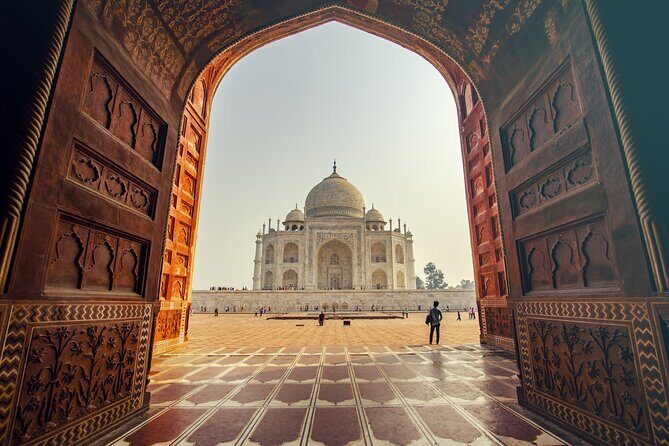
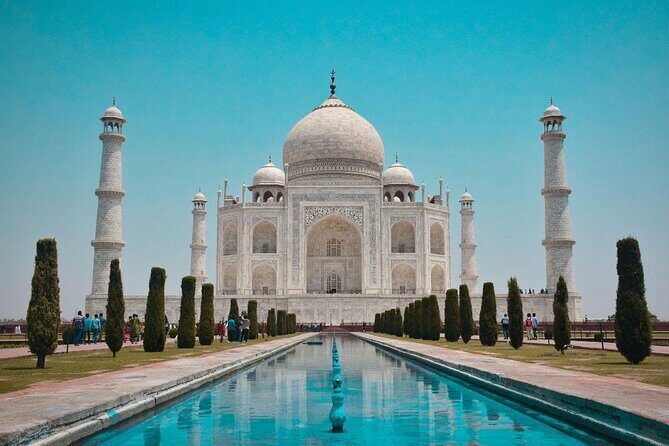
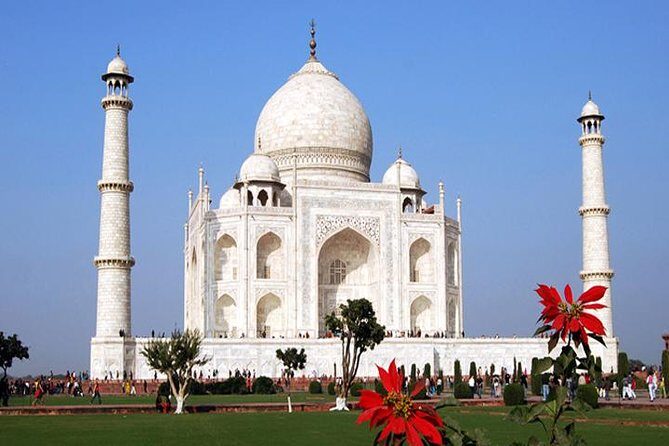
Day 4 is the big one. The tour schedules an early sunrise visit to the Taj Mahal. The Taj Mahal is closed every Friday, so this timing is only worth it when the day aligns.
Why sunrise works: the air is calmer, the light is softer, and you get that first real look at the monument before the day fills up. Even if you’ve seen photos for years, seeing it in person at the start of the day changes the scale you feel.
Next, you travel toward Jaipur and stop at Fatehpur Sikri, another UNESCO World Heritage Site. Built by Emperor Akbar in the 16th century, it’s a preserved red-sandstone city and once served as a Mughal capital. You’ll see grand palaces, spacious courtyards, and the impressive Jama Masjid there.
This stop is a good “wow” after the Taj. It helps you zoom out from one monument to an entire city-plan of power and culture.
Jaipur highlights: City Palace, Hawa Mahal, Jantar Mantar, and more
Day 5 focuses on central Jaipur, often called the Pink City. City Palace is the first stop and it sits in the old city core. This royal residence blends Rajasthani and Mughal architecture, but keep in mind that certain areas remain restricted, so not everything is open.
Then comes Hawa Mahal, the Palace of Wind. It’s the famous pink façade with 953 ornate windows designed so royal women could observe street life privately. Even if you only view it from the outside, the façade details are photo gold.
Jantar Mantar is next, and it’s a UNESCO World Heritage Site with giant stone astronomical instruments. The highlight here is the world’s largest stone sundial, plus other instruments that connect old engineering to sky observations.
Day 6 keeps the momentum but shifts to fort and viewpoint energy. Jaigarh Fort offers panoramic views of Jaipur and includes military history. It also houses Jaivana, described as the world’s largest cannon.
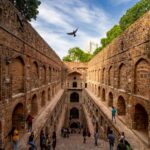
After that, you go to Panna Meena ka Kund, an 8th-century stepwell with symmetrical staircases. It’s a rare kind of stop that feels quiet and photogenic, and it’s included as a free-entry visit.
Then there’s Monkey Temple (Galta Ji), a Hindu pilgrimage site tucked in the Aravalli hills. It includes sacred water tanks and panoramic views, plus a resident monkey population. Treat this as a spiritual spot as much as a photo stop, and keep your expectations flexible if monkeys are active.
Finally, you finish at Patrika Gate near Jawahar Circle. It’s an Instagram-famous entrance with intricate hand-painted arches that make for a colorful farewell to Jaipur.
After all of that, the driver takes you back to Delhi for drop-off. It’s a lot of scenery in a short time, but this tour is designed so the last day still feels meaningful.
Price, comfort, and the entrance-fee reality check
The price is $177.50 per person, which is where value matters most. For that cost, you’re paying for a private car across a multi-day, multi-city route, plus live guides and hotel pickup/drop-off.
The big variable is entrance fees. Monument tickets are listed as not included, and several stops specify whether admission is free. That means your final spend can change based on which days you visit and what you choose to pay on-site.
Here’s the practical way to think about it: if you’d otherwise hire separate guides, manage transport, and try to self-plan early Taj timing, this package reduces your admin load. If you’re the type who enjoys planning and doesn’t mind sorting tickets alone, you might save some money by going independently—but you’ll also lose some of the efficiency.
Also watch the closure days. The Taj Mahal is closed every Friday, and the Lotus Temple is closed every Monday. If your dates land on those days, your experience will still go forward, but those specific highlights won’t happen as scheduled.
Small practical tips that make this tour smoother
Wear comfortable shoes. This route includes forts, tombs, and lots of walking—even when the stop times look short on paper.
Start thinking early when it comes to the Taj Mahal sunrise day. You’ll want to be ready to move while it’s still cool and before crowds fully build.
Bring a hat and sunscreen. Delhi, Agra, and Jaipur can turn bright fast, and you’ll be standing in full sun at multiple stops.
Finally, lean on your guide for photos and flow. In the guide feedback, I keep seeing the same theme: the best guides help you move efficiently and capture the monuments in good angles without turning the day into a sprint. If you get a guide like Iqrar (or another guide praised for Taj efficiency), that can genuinely change how the day feels.
Should you book this 6-day private Golden Triangle tour from Delhi?
Yes, if you want a private, guide-led Golden Triangle with less planning pressure. It’s a strong fit for couples, small groups, and anyone who likes the classic highlights but doesn’t want to juggle tickets, transport, and meeting points across three cities.
Be sure to double-check your travel dates for Taj and Lotus closure days, and budget for entrance fees you’ll pay on arrival. If you’re okay with that small cost variable, this tour gives you a well-shaped path through Delhi’s monuments, Agra’s biggest hits, and Jaipur’s most recognizable sights.
FAQ
What cities are included in this 6-day Golden Triangle tour?
The tour covers Delhi, Agra, and Jaipur over about 6 days, with hotel pickup and drop-off included.
Is hotel pickup and drop-off included?
Yes. The tour includes hotel pickup and drop-off, including airport pickup on Day 1.
Are monument entrance fees included?
No. Monument entrance fees are not included and you’ll pay them directly. Some stops note free admission, while others do not.
Do you get a private live guide in each city?
Yes. The tour includes a private live tour guide in all the cities during the sightseeing days.
Are there any closures I should know about?
Yes. The Lotus Temple is closed every Monday, and the Taj Mahal is closed every Friday.
Does the price include hotel nights and breakfast?
If you select the package with hotel tiers, it includes 5 nights stay with breakfast (for 4-star or 5-star options) and breakfast on 5 mornings.
What is the cancellation policy?
You can cancel for free if you do it at least 24 hours in advance for a full refund. If you cancel within 24 hours, the amount paid is not refunded.