REVIEW · NEW DELHI
6 Days: Golden Triangle With Ranthambore Tour With 5 Star Hotels
Book on Viator →Operated by Unseen Tours and Travels · Bookable on Viator
Tigers and Taj in six days? This tour strings together Delhi, Jaipur, Agra, and Ranthambore with private transport and local guidance. You get a tight route built for people who want big sights without spending days figuring out trains, drivers, and tickets.
I really like the private air-conditioned vehicle with an experienced driver. It keeps the days moving, and it also means you’re not stuck negotiating your way between neighborhoods or coordinating with multiple vendors.
One thing to watch: monument entry fees are not included by default. The tour notes that entry fees are included only with the 5-star hotel option, so your final spending can change based on which grade you pick.
In This Review
- Key takeaways before you go
- Golden Triangle plus Ranthambore: how this 6-day plan really works
- Delhi in one day: Red Fort, Jama Masjid, Qutub Minar, Humayun’s Tomb
- Jaipur Day 2: Albert Hall Museum, Birla Mandir, and Patrika Gate
- Jaipur Day 3: Amber Fort, City Palace, Jantar Mantar, Hawa Mahal, plus Jal Mahal
- Ranthambore National Park safari: what tiger hunting feels like
- Agra Day 5: Fatehpur Sikri, the Taj Mahal, and Agra Fort
- Hotels and comfort: 4-star vs 5-star makes a real difference
- Price and value: is $387 fair for 6 days with guides and a tiger safari
- Should you book this Golden Triangle with Ranthambore tour
- FAQ
- What cities does this tour cover and how long is it?
- Do you provide pickup and drop-off?
- Are hotels included, and is breakfast included?
- Is a guide included at every stop?
- Are monument entry fees included?
- What wildlife experience is included at Ranthambore?
- Are there meals included besides breakfast?
Key takeaways before you go
- Private AC transport all the way, plus city guide support where listed
- Tiger-focused Ranthambore safari built into the itinerary (sharing safari with hotel options)
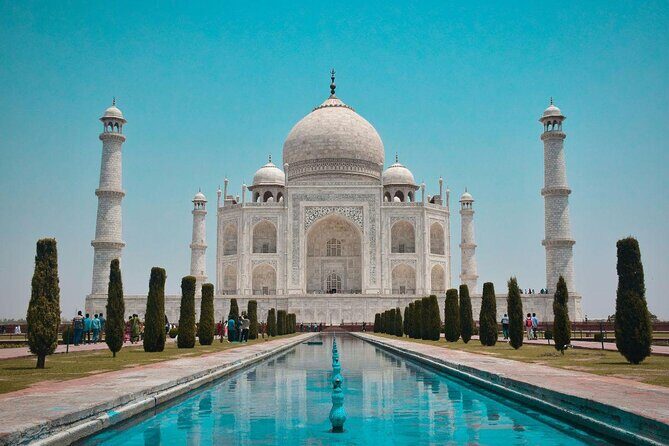
- Mughal-and-fort landmarks across Delhi, Jaipur, and Agra, including UNESCO sites like the Taj Mahal
- Family-style dinner in Jaipur, plus a hotel dinner during the Ranthambore part
- Flexibility with guides on what to enter, especially when admission tickets apply
- Two hotel grades (4-star vs 5-star) with a major difference in whether monument entry fees are included
Golden Triangle plus Ranthambore: how this 6-day plan really works
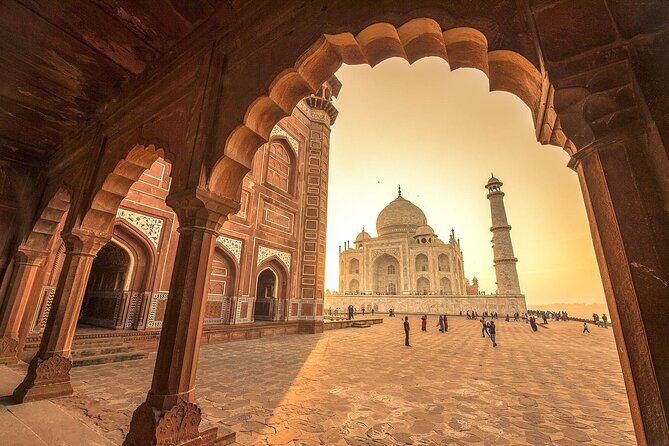
This is a classic North India “big hits” route, but with one smart twist: you don’t just do monuments. You also do the wildlife piece at Ranthambore National Park, where the whole trip’s pacing shifts from architecture to animal sightings.
The real value is in the way the logistics are handled. You’re in a private AC vehicle with an experienced driver, and you’re not coordinating your own hotel moves between Delhi, Jaipur, and Agra, then switching gears again for Sawai Madhopur/Ranthambore. That alone saves stress if you’re short on time.
I also like that the tour isn’t pretending every day will feel slow and leisurely. It’s built to compress. If you prefer long breaks and lots of free time, you might feel the schedule. But if you like seeing a lot, without the planning burden, this style fits well.
A few more New Delhi tours and experiences worth a look



Delhi in one day: Red Fort, Jama Masjid, Qutub Minar, Humayun’s Tomb
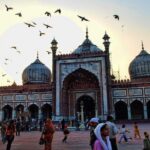
Day 1 is Old Delhi to South Delhi, and it’s a lot of landmarks packed into a single day. You start at the Red Fort (Lal Qila), commissioned by Shah Jahan in 1638, and then head to Jama Masjid, one of Delhi’s largest mosques built between 1650 and 1656. It’s a strong opening because you feel the Mughal scale fast.
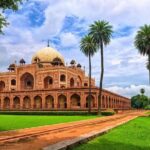
From there, you swing to Qutub Minar and the Qutb complex area, then wrap with Humayun’s Tomb. Humayun’s Tomb matters because it’s a major Mughal-era tomb site commissioned in 1558, with Persian architects involved. The Qutub Minar stop is a different flavor—more “victory tower” energy and older fortified-city context.
A small practical note: many of these stops list admission tickets not included in the tour details. If you choose the 4-star option, expect to handle at least some site entry fees yourself; the 5-star option is the one that explicitly includes monument entry fees.
Jaipur Day 2: Albert Hall Museum, Birla Mandir, and Patrika Gate
Jaipur comes in with culture first, not just forts. The Albert Hall Museum is the anchor here, described as the oldest museum of Rajasthan and a fine example of Indo-Saracenic architecture. If you like museums that connect objects to place, this is a useful warm-up before the palaces and fort walls.
Then you get Birla Mandir, a white-marble temple built in 1988. It’s more modern than the rest of the Mughal-era spotlight, so it helps the day feel balanced rather than repetitive. You also stop at Patrika Gate at Jawahar Circle Park, which is a visual break from stone monuments and a good place to reset your camera batteries.
This is also a day where you can feel the pacing shift toward lighter stops. That’s good because it sets you up for Day 3, which is the “legs-and-layers” day in Jaipur.
Jaipur Day 3: Amber Fort, City Palace, Jantar Mantar, Hawa Mahal, plus Jal Mahal
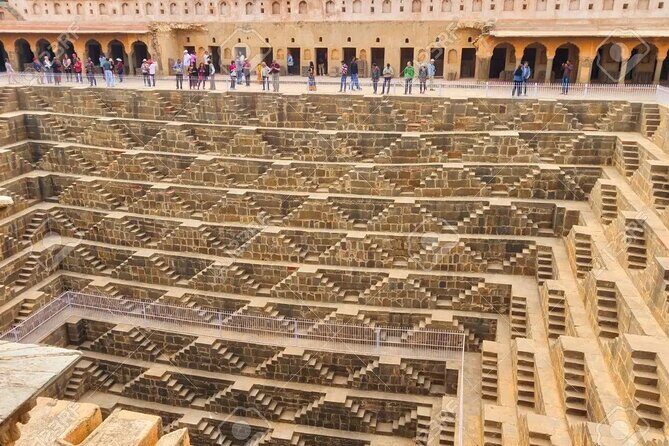
Day 3 is the Jaipur power day. You start at Amber Fort, located about 11 km from Jaipur city and originally built by Raja Man Singh, with later additions by Sawai Jai Singh. Even if you’ve seen lots of forts before, Amber tends to hit because of how the story of Jaipur’s rulers is written into the architecture.
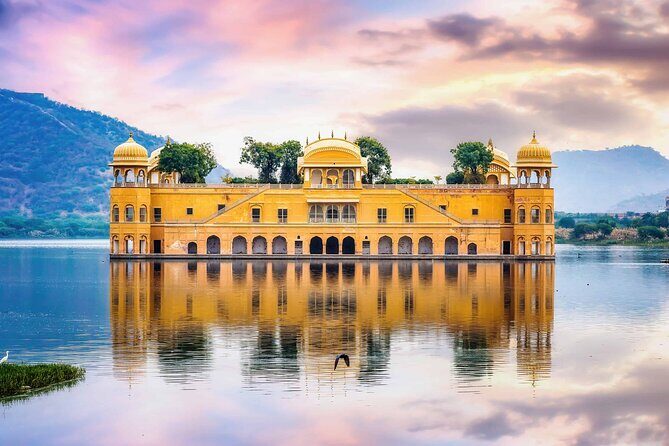
You also visit Jal Mahal, the palace-in-the-lake scene on Man Sagar Lake. The palace was originally constructed in 1699 and later renovated and enlarged in the 18th century by Maharaja Jai Singh II. It’s one of those stops where you take in the idea of the place as much as the building itself.
Next comes City Palace of Jaipur, established when the court moved to Jaipur in 1727. The same theme—power shifting, city planning, royal symbolism—keeps showing up. Then you move to Jantar Mantar, the UNESCO-listed collection of astronomical instruments completed in 1734, including the world’s largest stone sundial. If you like the science side of heritage, this is a standout.
You finish with Hawa Mahal, the iconic red and pink sandstone façade extending toward the women’s chambers. It’s essentially a built viewpoint, and it helps you understand why Jaipur became a place of spectacle in the first place.
Keep your expectations realistic: this day is heavy. You’ll be hopping between big sites with short time windows, so wear comfortable footwear and keep water on your radar. The tour structure can’t turn a busy day into a slow one, but it does keep the handoffs organized.
Ranthambore National Park safari: what tiger hunting feels like
Day 4 is where the trip turns into wildlife mode. You head to Ranthambore National Park, a former royal hunting ground with tigers, leopards, and marsh crocodiles. The description also points you to key landscape features: Ranthambore Fort on a hilltop, Ganesh Mandir within the park, and Padam Talao Lake known for water lilies.
The big promise is “Look for Bengal tigers,” but here’s how to think about it in a grounded way: wildlife sightings depend on conditions. Your win is being in the right place with a planned safari time slot—3 hours is set aside for the park experience.
You’ll also likely be in a sharing safari format with the hotel options. That doesn’t reduce the chance of seeing animals, but it does mean you’re not the only group out there, so you follow the group rhythm rather than moving freely on your own.
One more practical point: the park experience is about scanning and patience. If you go in expecting a guaranteed tiger encounter, you’ll be stressed. If you go in expecting a real safari drive and the chance to spot signs and animals, you’ll enjoy the day more.



Agra Day 5: Fatehpur Sikri, the Taj Mahal, and Agra Fort
Agra Day 5 starts with Fatehpur Sikri, a Mughal-founded city west of Agra. The place is laid out in red sandstone, with Buland Darwaza marking the entrance to the Jama Masjid mosque complex. Nearby are the marble Tomb of Salim Chishti and carved halls like Diwan-E-Khas, plus the mix of Hindu and Mughal styles at Jodha Bai’s Palace and views from the Panch Mahal.
If you’ve only heard of the Taj, Fatehpur Sikri helps you understand how Mughal power expressed itself across multiple sites, not just one monument.
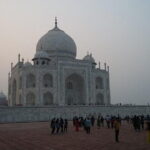
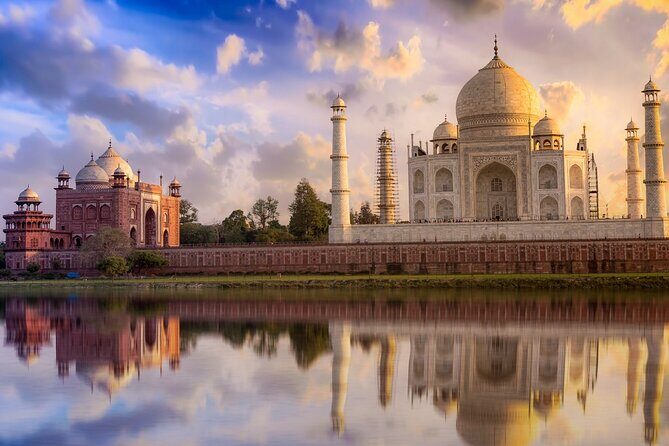
Then you go to the Taj Mahal, commissioned in 1632 by Shah Jahan to house Mumtaz Mahal’s tomb, and also containing Shah Jahan’s tomb. The stop is listed at 1 hour 30 minutes, which is usually enough time to see it properly without feeling trapped. It’s the kind of stop where photos will never do the scale justice.
You wrap with Agra Fort, built for Akbar between 1565 and 1573, later serving as a main residence for rulers across dynasties until the capital shift to Delhi in 1638. This pairing works well: the Taj gives romance and geometry, while Agra Fort gives political weight and fortification reality.
As with earlier stops, Taj Mahal and other monuments list admission tickets not included. The 5-star option is the one that explicitly includes monument entry fees, so it matters for your budgeting.
Hotels and comfort: 4-star vs 5-star makes a real difference
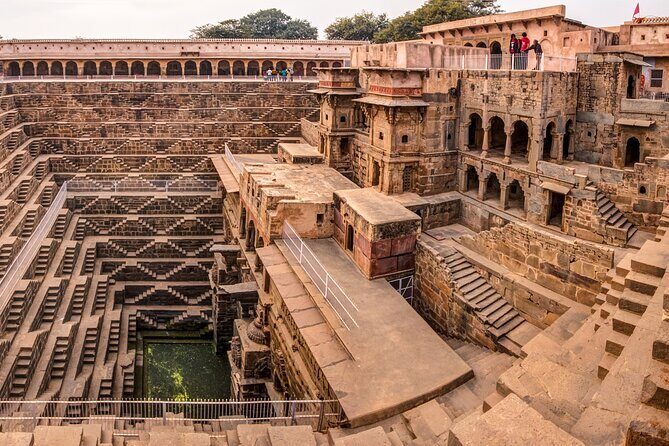
The tour includes 5 nights accommodation with breakfast, with hotel choice from 4-star or 5-star options. After a week that mixes packed sightseeing with a safari day, breakfast included is a simple quality-of-life win. It also reduces your daily decision fatigue.
The biggest difference between 4-star and 5-star options isn’t just room comfort. It’s the tour’s note that monument entry fees are included only with the 5-star option. So if you hate surprise costs at ticket counters, the 5-star route can feel cleaner.
Either way, expect a “base your day from the hotel and move” rhythm. This isn’t a stay-in-one-neighborhood style trip. It’s a move-with-the-plan trip, supported by the private driver and city guides.
Price and value: is $387 fair for 6 days with guides and a tiger safari
At $387 per person for about 6 days, the value comes from what’s bundled: private AC transport with a driver, guided support in Delhi, Jaipur, Fatehpur Sikri, and Agra, and hotel nights with breakfast. You also get dinner built into the plan: one traditional dinner with an Indian family in Jaipur, plus one dinner at the hotel in Ranthambore.
The trick is figuring out how you personally feel about admission costs. If you select the 4-star option, the tour data indicates monument entry fees are generally not included, even though many sites are listed with admission ticket notes. If you select the 5-star option, monument entry fees are included, which can make the total cost feel more predictable.
So the “fairness” of the price depends on your ticket tolerance. If you’d rather pay fewer surprise extras onsite, the 5-star option tends to make more sense. If you’re flexible and comfortable handling some tickets directly, the 4-star option can be the better deal.
One more value layer: the tour is structured as private, with only your group, and it includes pickup and a drop in New Delhi at your desired destination after breakfast on Day 6. That kind of door-to-door time saving is often what you pay for in India.
Should you book this Golden Triangle with Ranthambore tour
Book it if you want a well-organized, high-sight itinerary that still includes a genuine nature day. It’s a strong fit for first-timers who want the Golden Triangle landmarks plus a tiger safari shot, without managing transportation and hotel changes yourself.
Skip it if you hate tight schedules or you want lots of free time to wander at your own pace. This trip is built to move. Also, check which hotel option you choose, because monument entry fees are tied to that decision.
If you’re the type who likes walking away with photos, names, and a clear sense of how these cities connect, I think you’ll enjoy the outcome.
FAQ
What cities does this tour cover and how long is it?
It’s an approximately 6-day private tour that goes from New Delhi to Jaipur, Ranthambore National Park (Sawai Madhopur area), and Agra, with the trip ending back in New Delhi.
Do you provide pickup and drop-off?
Yes. Pickup is offered, and after breakfast on Day 6 you’ll be dropped at your desired destination in New Delhi.
Are hotels included, and is breakfast included?
Yes. The tour includes 5 nights of accommodation in either 4-star or 5-star hotels, with breakfast included.
Is a guide included at every stop?
Guides are included for Delhi, Jaipur, Fatehpur Sikri, and Agra (as listed in the tour inclusions).
Are monument entry fees included?
Monument entry fees are included only with the 5-star hotel option. The tour also lists admission tickets as not included for many specific sights.
What wildlife experience is included at Ranthambore?
You get a shared safari experience in Ranthambore National Park, with the goal to look for Bengal tigers. The park is also noted for leopards and marsh crocodiles.
Are there meals included besides breakfast?
Yes. The tour includes one traditional dinner with an Indian family in Jaipur, plus one dinner at the hotel in Ranthambore. Lunch is not included unless specified.