REVIEW · NEW DELHI
4-Days Private Golden Triangle Delhi, Agra & Jaipur Tour – All Inclusive
Book on Viator →Operated by Agra Day Tour Packages · Bookable on Viator
Three cities, one monument-filled sprint.
This private Golden Triangle-style trip is built for people who want big highlights without weeks of planning, starting in Delhi and ending in Jaipur with sunrise Taj Mahal plus a rickshaw ride through Old Delhi’s lanes. I love that it’s guided end-to-end with a real focus on getting to the right places at the right time, not just getting you on a bus. It’s also the kind of itinerary where photos happen naturally, especially when the guide knows where to stand.
What I like most is the pacing around the headline sights. You’ll do Taj Mahal at sunrise with a guide, then keep moving in Agra with Agra Fort, and later get the classic Jaipur “pink city” photos without feeling rushed every single minute. I also really like the human touch in the guiding: several guide names came up for their helpful, practical style—like Mohammed Chand with driver Aakash, and Imran—both known for being efficient, patient, and good at helping you get memorable shots.
One thing to consider: monument entry fees aren’t included, and some sites can eat time depending on lines and closing rules. Also, the route involves driving between cities, so you’ll want to go in expecting a steady travel rhythm rather than long, slow museum wandering.
In This Review
- Key things to know before you go
- A fast Golden Triangle route that still feels private
- Delhi in One Day: Jama Masjid to Lotus Temple
- The Agra leg starts before you’re fully awake
- Fatehpur Sikri: a smart pause on the drive to Jaipur
- Jaipur Pink City hits: Amber Fort, Jal Mahal, Hawa Mahal
- Jantar Mantar: the brainy side of Jaipur
- What is actually included in this $440 price
- Hotels, meals, and where your money may run out
- Transportation and timing: what “private” changes
- Who this tour suits best
- Should you book this Golden Triangle private tour?
- FAQ
- What cities are included in this tour?
- How long is the tour?
- What time does the tour start?
- Is pickup included?
- Are entrance fees included?
- What’s included with the price?
- Where is the tour located and what meeting area should I expect?
- Can I cancel for a refund?
- Is this a private tour?
Key things to know before you go
- Sunrise Taj Mahal with a guided start, when the crowds and light are at their best.
- Rickshaw ride in Old Delhi that helps you feel the city instead of just staring at it from a car window.
- A 4-star hotel with breakfast for three nights, so mornings start with less hassle.
- Delhi to Agra to Jaipur with expressway transfer and a stop via Fatehpur Sikri en route.
- Jaipur photo and viewpoints timed around Amber Fort, Jal Mahal, and Hawa Mahal.
- A private setup so your group is the only one in the experience.
A fast Golden Triangle route that still feels private
Golden Triangle tours can either feel like a checklist or like a real trip. This one aims for the sweet spot by combining private guiding, hotel nights, and a route that hits the big three cities—Delhi, Agra, Jaipur—without turning your day into a chair-sit marathon.
Starting at 9:00 am, you’re not left guessing what happens next. Pickup is included from the airport or hotel on Day 1, and the plan is structured around key sights rather than endless shopping stops. You’ll also get a mobile ticket, which is handy in a country where rules and counters can vary by site.
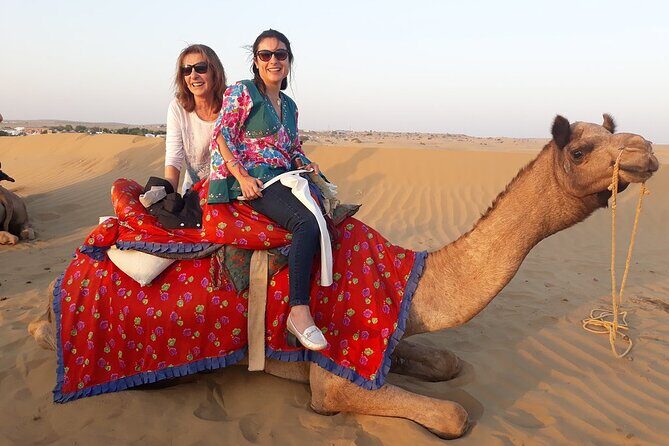
Because it’s private, your guide can adjust pacing to your group—slower if you’re into photos, or tighter if you prefer to keep moving. In the reviews, guides like Mohammed Chand and Imran were singled out for being organized and flexible, which matters on a route like this where traffic and queues can change your timing.
You can also read our reviews of more private tours in New Delhi


Delhi in One Day: Jama Masjid to Lotus Temple
Day 1 is all about Old and New Delhi, with a mix of religion, history, and classic photo stops. It starts with Jama Masjid, one of the biggest mosques in India. You get around an hour there, with a guide who sets context so it isn’t just “big building, nice view.” If you like architecture and atmosphere, this is where Delhi feels most alive.
Right after, you’ll take a rickshaw ride through Old Delhi. This is one of those experiences that makes your brain go, Oh, so this is what those lanes are for. It’s also practical: being on a rickshaw helps you see street-scale life that you simply can’t appreciate from a car.
Then you shift into a quieter, more reflective zone with Raj Ghat, the memorial connected with Mahatma Gandhi. The schedule gives about half an hour, and that’s enough to pause, read, and get your bearings. It’s the kind of stop that changes how you look at the rest of the day because you’re reminded this is a living country with living ideas, not only monuments.
Next comes Gurudwara Bangla Sahib, a Sikh temple, with time for a guided visit. You’ll get an explanation of Sikhism, which is important because it helps you notice the small details—people’s routines, the respectful energy, and the sense of community.
After that, you move into New Delhi’s visual landmarks: India Gate is a straightforward war memorial and a great photography stop. The route then passes by the President House area, which works well for travelers who want a quick “see it from the road” glimpse without losing half a day to navigation.
Finally, you end with Lotus Temple, a Bahai House of Worship. The architecture is standout, and it’s also a calmer finale for the day. You get a good chunk of photo time, and the building’s clean lines make it easy to get pictures even if you’re not traveling with a camera expert.
The Agra leg starts before you’re fully awake
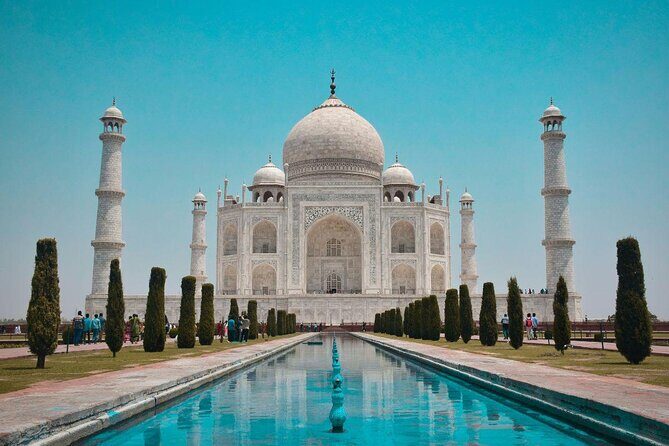
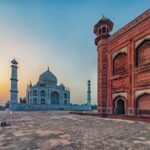
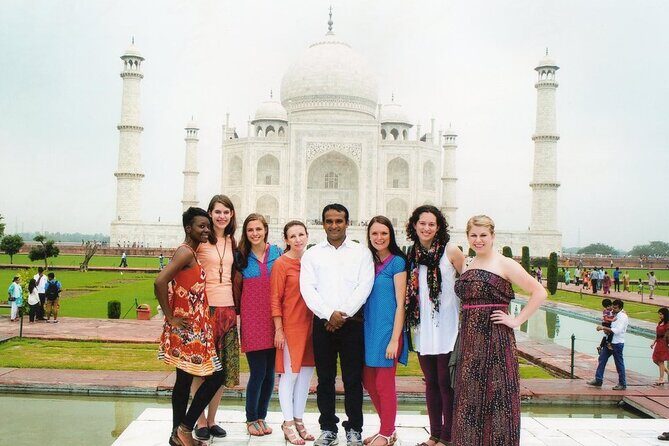
On Day 2, you’re leaving early for the best version of Taj Mahal: sunrise. That means you’re not just visiting Taj Mahal—you’re visiting it when the light is softer and the crowds are typically less intense than peak hours. The guided sunrise approach is one of the main reasons this itinerary feels “high value,” because timing turns the monument from impressive to unforgettable.
After the sunrise tour, you’ll return to the hotel for breakfast. This matters. Some tours throw you into the next activity immediately, and you end up hungry and cranky. Here, the built-in breakfast stop helps you enjoy the rest of the day instead of surviving it.
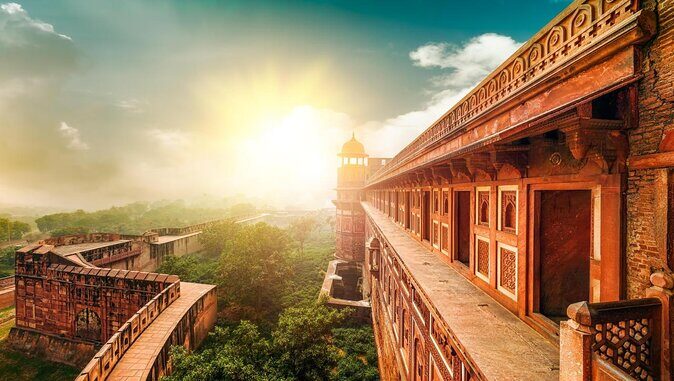
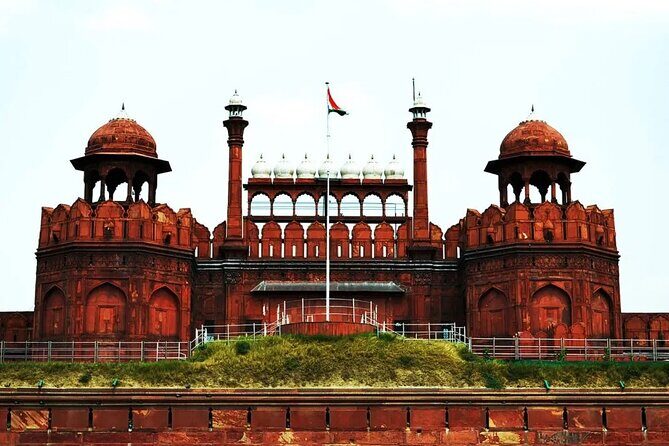
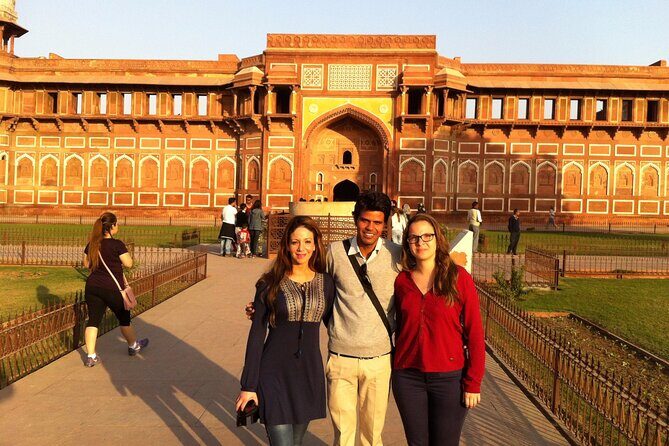
Next is Agra Fort. You’ll go after checkout, then explore at a slower, more interpretive pace—especially with the mention of local art and crafts from the Mughal era after lunch. This is where you start to understand the wider Mughal story around Taj Mahal rather than treating it like a standalone postcard.
A practical note: Taj Mahal and Agra Fort are major sites, and entry rules can be strict. Since monument entry fees aren’t included, I recommend you budget extra for tickets and keep a little flexibility for security and lineups.
Fatehpur Sikri: a smart pause on the drive to Jaipur
After Agra sightseeing, the plan is to drive to Jaipur, reaching around 7:00–8:00 pm. The itinerary includes traveling via Fatehpur Sikri, which is a good use of travel time. Instead of treating the drive as dead time, you get at least a chance to break up the long corridor between cities.
Even without a long stay outlined, this kind of stop helps the trip feel connected. You see that India’s history isn’t locked in three separate boxes—Delhi, Agra, Jaipur are linked by movement, rulers, and routes.
You’ll have overnight in Jaipur, and that evening arrival is useful for travelers who don’t want to start Jaipur the moment they reach town. It gives you a buffer so you can wake up and actually enjoy Day 3.
Jaipur Pink City hits: Amber Fort, Jal Mahal, Hawa Mahal
Day 3 is the Jaipur “wow” day, with a sequence that’s built around both views and story.
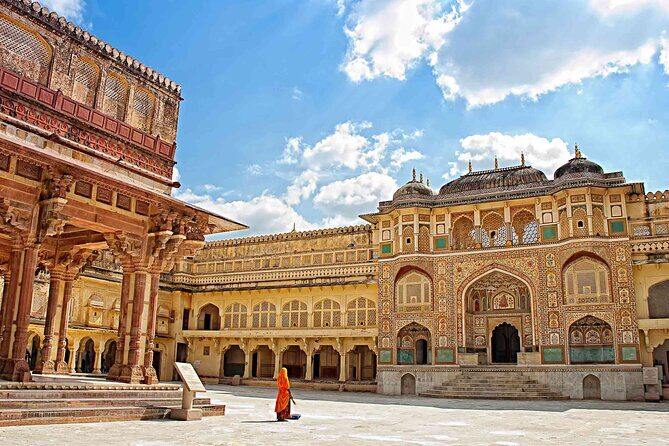
It begins with Amber Palace (Amber Fort). You’ll go by car to the fort and enjoy about two hours with a private guide. Amber Fort is one of those places where you’ll feel the difference between a random visit and a guided visit. Your guide helps you read the fort’s layout and significance, so it’s not just walking up stairs and nodding at walls.
After Amber Fort, there’s a photo stop at Jal Mahal, the Water Palace. Even if you only get around 15 minutes, the timing can be great for pictures because you’re already near the viewpoint. This is a classic “quick stop, big payoff” moment.
Next comes Hawa Mahal, the Palace of Breeze. You’ll have another brief photo stop, about 15 minutes. This is where I suggest you move like a photographer, even if you aren’t one: decide your angle early, snap your must-have shots, then enjoy the moment instead of standing in the same spot for 20 minutes.
Finally, you’ll reach City Palace, which houses the Maharaja Sawai Man Singh II Museum and is still tied to the royal family’s legacy. The schedule lists it, but the time details are shorter, so don’t expect a full museum day. Think of it as an anchor point: you’re learning how Jaipur’s royal power shaped the city’s spaces.




Jantar Mantar: the brainy side of Jaipur
Your last scheduled stop is Jantar Mantar, the astronomical instruments built by Sawai Jai Singh II and completed in 1734. This is one of those attractions that can be either confusing or totally satisfying—depending on whether someone helps you interpret what you’re seeing.
With a guided stop of about 45 minutes (as outlined), you’ll get the basics of how the instruments relate to astronomy and timekeeping. It’s a nice contrast to forts and palaces. You finish Jaipur feeling like you didn’t only learn about power and architecture, but also about the science that supported life at the time.
What is actually included in this $440 price
Let’s talk value in plain terms.
At $440 per person, you’re paying for a private, guided, all-inclusive-style structure that includes:
- 3 nights in a 4-star hotel with breakfast
- a professional guide
- pickup and transfers as described
- a rickshaw ride in Old Delhi
- all taxes/fees/handling charges with GST
- mobile ticket
- admissions where the schedule marks them free
That’s a lot to pack into a short trip, and for many people the hotel + breakfasts alone justify a big slice of the cost. The private guide is also a key part of the value. Golden Triangle tours that look similar on paper can feel very different when you’re paying for someone to explain context and keep timing on track.
The best “value signal” is how often the route is praised for smooth coordination and picture-friendly guidance. In the feedback, guides such as Mohammed Chand and Arbab were highlighted for efficiency, patience, and helping with photos. That kind of practical support is hard to quantify, but it shows up in how relaxed your day feels.
Hotels, meals, and where your money may run out
You’ll have breakfast included at the hotel for two mornings listed as Breakfast (2) in the details, and the package states 3 nights accommodation with breakfast. Still, since wording can vary by supplier, I’d treat meals beyond breakfast as not fully covered and plan accordingly.
Food and drinks aren’t included unless specified. One review note flagged that the recommended restaurant can be slightly expensive. That’s common on organized tours: convenience has a price, and you may find yourself paying more than if you were wandering independently.
My practical advice: decide your daily strategy.
- If you love trying different foods, keep money flexible for lunch and dinner.
- If you want control, ask your guide what nearby options are and what’s a fair price range before you commit.
Also remember: with sunrise Taj Mahal and long drives, your appetite can swing. Carrying a small water bottle and simple snack can save your mood when timing gets tight.
Transportation and timing: what “private” changes
Private tours aren’t only about exclusivity—they’re about control. Here, you’re with a guide and driver who handle pickup and the driving legs between cities, including an expressway route to Agra.
On a Golden Triangle schedule, the biggest risk is losing time to traffic or over-optimistic transitions. In the feedback, drivers like Aakash were praised for efficiency alongside guides like Mohammed Chand. That combination matters because it affects whether you arrive early enough to enjoy the monuments, or you end up rushing and trying to squeeze in photos while tired.
If you prefer a relaxed pace, you can still make this work because the guide can help you prioritize. But you should enter with the mindset of a “short trip with full intensity,” not a slow cultural retreat.
Who this tour suits best
This tour fits you if:
- You want major highlights in a short timeframe—Taj Mahal, Amber Fort, and the key Delhi sights.
- You enjoy guided context, not just visiting for photos.
- You like the feel of Old Delhi and want that rickshaw experience, not only big-city viewpoints.
- You’d rather pay for coordination than spend your vacation managing tickets and route planning.
It may not be the best fit if:
- You want deep time in museums or long free hours each day.
- You hate early starts. Sunrise Taj Mahal requires a real early day.
- You strongly prefer to handle monument tickets yourself in advance (since entries aren’t included overall).
Should you book this Golden Triangle private tour?
I’d book it if you want a clean, structured Golden Triangle that treats timing and guidance as part of the value—not just an add-on. The sunrise Taj Mahal start, the Old Delhi rickshaw ride, and the Jaipur fort-to-viewpoint sequence are the kind of highlights that make a short trip feel complete.
Before you confirm, do two quick checks:
- Budget for monument entry fees since they aren’t included in general.
- Plan for lunch and dinner costs since food and drinks aren’t covered.
If that fits your style, you’ll likely love how the days flow—less guesswork, more seeing. And if you’re lucky with your guide, you’ll get that extra layer of helpful storytelling and photo direction that turns a “tour” into a memory you’ll actually want to replay.
FAQ
What cities are included in this tour?
The tour covers Delhi, Agra, and Jaipur.
How long is the tour?
It’s described as a 4-day private tour, with the itinerary showing about 3 days of sightseeing and 3 nights.
What time does the tour start?
The start time is 9:00 am.
Is pickup included?
Yes, pickup is offered from the airport or hotel on Day 1.
Are entrance fees included?
The package states that the entry fee of monuments is not included. Some stops are marked as free on the schedule.
What’s included with the price?
Included items are 3 nights accommodation in a 4-star hotel with breakfast, a professional guide, rickshaw ride in Old Delhi, and all taxes/fees/handling with GST, plus a mobile ticket.
Where is the tour located and what meeting area should I expect?
The tour is listed for New Delhi, India, with a note that it is near public transportation.
Can I cancel for a refund?
Yes. You can cancel up to 6 days in advance for a full refund, with partial refunds if you cancel closer to the start date.
Is this a private tour?
Yes. It’s private, meaning only your group participates.