REVIEW · NEW DELHI
3 Days Private Luxury Golden Triangle Tour in Delhi, Agra, Jaipur
Book on Viator →Operated by TRAVELITE TAJ TOURS · Bookable on Viator
Three days in the Golden Triangle, and your brain stays un-fried. This private luxury route strings together Delhi’s big landmarks, the Taj Mahal sunrise moment, and Jaipur’s palace sights without the stress of public transport.
What I like most is the private live guide at each major monument and the comfort of a private A/C car with a driver, so you can focus on the sights. I also like the way the package handles the hard parts for you: monument tickets, breakfast and dinner (when you pick 3- or 5-star), and smooth city-to-city transfers. The main drawback is simple: it’s an intense schedule, and lunch is not included, so you’ll want a plan for meals between stops.
In This Review
- Key highlights you’ll actually feel on the trip
- Is this 3-Day Golden Triangle tour good value at $120 per person?
- Private A/C car + live guides: the comfort you notice immediately
- Day 1 in Delhi: Old Delhi markets to Qutub Minar and Agra transfer
- Chandni Chowk in a tuk-tuk style drive
- Jama Masjid: big courtyard, big scale
- Gurudwara Bangla Sahib: calm pause with a story
- New Delhi memorial and planned-city landmarks
- Swaminarayan Akshardham or Humayun’s Tomb
- Qutub Minar: the UNESCO “wow” factor
- Evening transfer to Agra
- Day 2: Taj Mahal sunrise, Agra Fort, Itmad-ud-Daula, and Fatehpur Sikri on the way to Jaipur
- Taj Mahal sunrise: timing that changes everything
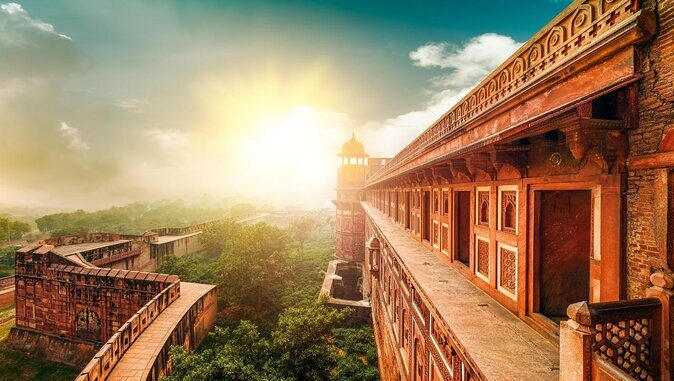
- Agra Fort: blend of Indian and Islamic style
- Itmad-ud-Daula: smaller tomb, strong design details
- Fatehpur Sikri stop (Panch Mahal): a brief portal to an older capital
- Arrive in Jaipur and settle in
- Day 3: Hawa Mahal, City Palace, Jal Mahal, then back to Delhi
- Hawa Mahal (Palace of the Winds): 953 windows
- City Palace: the seat of power now turned museum space
- Jal Mahal: lake palace for a quieter moment
- Back to Delhi, or drop at Jaipur airport
- Where this Golden Triangle tour fits best (and where it might not)
- What to watch for when you plan your days in India
- Should you book it?
- FAQ
- What cities does the 3-day tour cover?
- Is pickup from the airport or any location included?
- Do I get a private vehicle and driver?
- Are monument tickets included?
- Are meals included?
- What kind of accommodation can I choose?
- Is this tour really private?
- Is cancellation free?
- Do you get a mobile ticket?
Key highlights you’ll actually feel on the trip
- Pickup from multiple NCR areas (9–11 AM window): you don’t have to fight city logistics before sightseeing even starts.
- Live private guides at the monuments: explanations are timed to what you’re seeing, not hours later.
- Early Taj Mahal sunrise: the day in Agra starts with the marble mausoleum glow instead of mid-day crowds.
- UNESCO hits in both Delhi and Agra: Qutub Minar, Humayun’s Tomb, Agra Fort, and more are built into the flow.
- Photo-friendly support from guides: guides like Zaidy have been praised for helping with good-quality pictures.
Is this 3-Day Golden Triangle tour good value at $120 per person?
At $120 per person for a 3-day private package, you’re paying for three things most DIY trips end up costing you in time (and sometimes money): private transport, admission tickets, and trained interpretation at the monuments. The big value move here is that you’re not just “going to places.” You’re moving efficiently between Delhi, Agra, and Jaipur with the logistics handled, and you get guides at the sites.
This is especially meaningful because the Golden Triangle is not one city. It’s three. And each day includes multiple stops that would be time-consuming to sequence on your own.
One watch-out: the price is not low-low. If you love slow travel, long lunch breaks, and wandering without a timetable, this tour may feel like a sprint. But if you want maximum famous-world-heritage coverage with minimal hassle, the package fits.
You can also read our reviews of more private tours in New Delhi


Private A/C car + live guides: the comfort you notice immediately
The tour is built around a private vehicle and a driver, plus a live guide at the monuments. That combination matters more than it sounds.
First, you avoid the daily pain of figuring out transport while you’re tired. Here, you’re driven between places, and you start each day with a clear plan. Second, the guide time isn’t generic “lecture time.” It’s paired to the monuments you’re standing in front of, which makes explanations easier to remember.
I also find this setup helps with photography. One guide highlighted by name, Zaidy, has been praised for both English clarity and helping with great photos. Another guide, Amir Khan, has been noted for being helpful and for explaining details in a way that’s easy to ask questions about. And the driving quality is mentioned too, including praise for a driver named Sonu for punctual, safe driving.
Day 1 in Delhi: Old Delhi markets to Qutub Minar and Agra transfer
Day 1 is a “see Delhi properly” day. You start with pickup from a wide set of locations around Delhi and NCR—anywhere in Delhi, Noida, Gurugram, Ghaziabad, or Faridabad—with pickup timing you can choose between 9 AM and 11 AM. That flexibility is a gift if your flight or train timing is uncertain.
Chandni Chowk in a tuk-tuk style drive
Your Old Delhi stop is Chandni Chowk, with a guide meeting point listed near Sunheri Masjid. You then ride past the colorful, busy bazaars in a tuk-tuk while your guide explains the role these markets play for locals. The advantage: you get the feel of Old Delhi without spending your whole morning stuck in traffic.
Practical note: markets mean lots of people and lots of things to look at. Comfortable shoes matter.
Jama Masjid: big courtyard, big scale
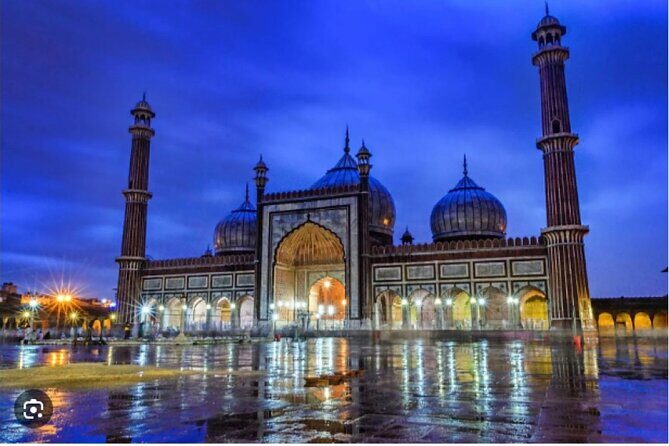
Next is Jama Masjid, described as India’s largest mosque, built in 1656 with the help of 5,000 workers. You’ll have time to walk the red sandstone courtyard. This is one of those sights where the architecture does most of the talking, even if you just stand still and look around.
A few more New Delhi tours and experiences worth a look





Gurudwara Bangla Sahib: calm pause with a story
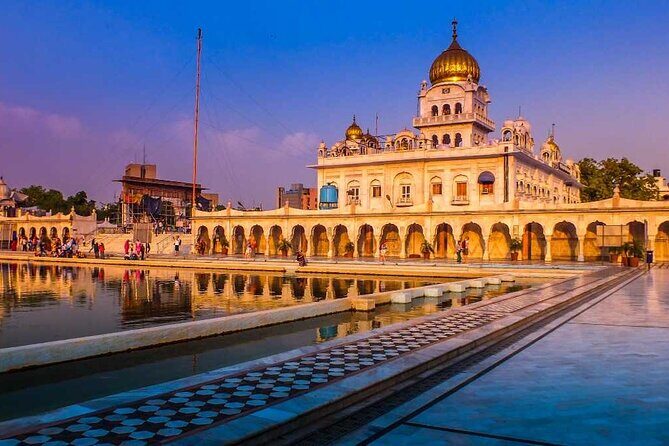
Then comes Gurudwara Bangla Sahib. The tour description includes the story of the eighth Sikh Guru curing smallpox and cholera epidemics by distributing water from the tank. Even if you only catch the main outline, it’s a nice counterbalance to Old Delhi’s pace.
New Delhi memorial and planned-city landmarks
Your route also includes the Tomb of the Unknown Soldier, noted for carved names of 13,300 Indian servicemen. You also pass by the planned-city architecture linked to Sir Edwin Lutyens and Herbert Baker, with the description calling out the 330 acres built in 1929.
This part can be brief, but it’s worth paying attention. Delhi has layers, and this is where the city planning side shows up.
Swaminarayan Akshardham or Humayun’s Tomb
The itinerary gives you a choice between Swaminarayan Akshardham and Humayun’s Tomb. Akshardham is described as one of the biggest Hindu temples, constructed in 2005 yet designed to look like it’s from a much earlier era. Humayun’s Tomb is UNESCO-listed and described as the first garden tomb of India, built after Humayun’s death by his wife.
My suggestion: if you prefer monumental architecture and large-scale design, choose Akshardham. If you want UNESCO garden calm and Mughal-era mood, choose Humayun’s Tomb.
Qutub Minar: the UNESCO “wow” factor
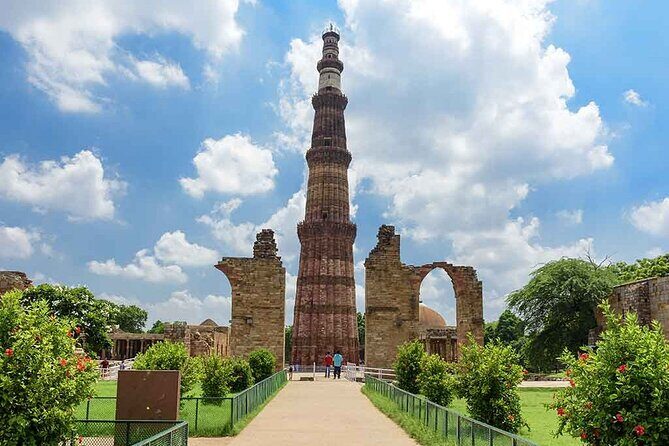
Qutub Minar is the next big stop. It’s described as the tallest minaret built in 1192 and part of a UNESCO World Heritage Site. Plan to spend real time here. It’s the kind of structure where you start noticing details instead of just taking a quick picture.
Evening transfer to Agra
After Delhi sightseeing, you drive to Agra and drop at your hotel. The tour summary doesn’t include an evening monument here, which is a smart move: it helps you stay functional for the Taj Mahal day.
Day 2: Taj Mahal sunrise, Agra Fort, Itmad-ud-Daula, and Fatehpur Sikri on the way to Jaipur
Day 2 is the day you’re most likely to remember for the rest of the trip.
Taj Mahal sunrise: timing that changes everything
The tour starts early for sunrise at the Taj Mahal. It’s framed as a “mesmerizing sunrise view” over the marble mausoleum, built by Emperor Shah Jahan in 1630 for his favorite wife. You’ll get about 2 hours here, which is long enough to walk, look closely, and take photos without feeling rushed into the next line.
Practical reality: early mornings in Agra can be cool. Bring a light layer you can handle easily.
Agra Fort: blend of Indian and Islamic style
Next is Agra Fort, another UNESCO site. It’s described as a 17th-century fortress and a blend of Indian and Islamic art and architecture. The appeal here is that it feels different from the Taj. The Taj is pure romantic marble. Agra Fort is more about power, defense, and court life.
Itmad-ud-Daula: smaller tomb, strong design details
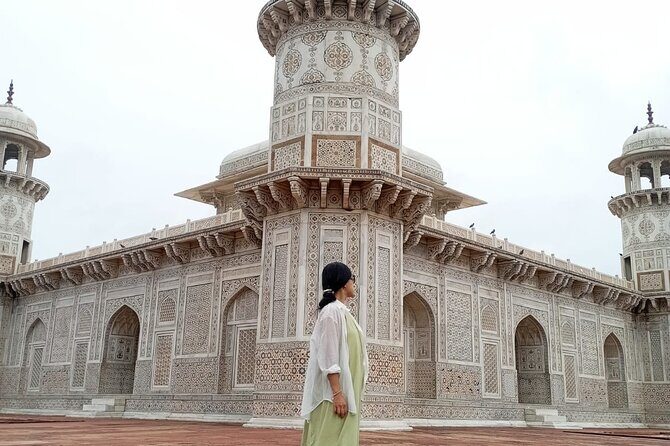
After that, you visit Itmad-ud-Daula. The tour description calls it the first Mughal structure built completely from marble, with early extensive use of pietra dura (inlay work). It’s also described as the first tomb built on the banks of the Yamuna.
This is a great stop if you enjoy detailed craftsmanship. It’s not as famous as the Taj, so it can feel more relaxed, but still very “Mughal.”
Fatehpur Sikri stop (Panch Mahal): a brief portal to an older capital
Then you head toward Jaipur, with an opportunity to visit Fatehpur Sikri on the way. The itinerary specifically mentions Panch Mahal and describes Fatehpur Sikri as a fortified ancient city about 40 km west of Agra, with a short-lived period as the Mughal empire’s capital between 1572 and 1585.
You get around 1 hour here. That’s not enough to conquer the whole site, but it’s plenty to understand why it mattered.
Arrive in Jaipur and settle in
Once sightseeing wraps, you drive to Jaipur and drop at your hotel. This is also where choosing your hotel rating matters: the package lets you pick between 3-star and 5-star accommodation, and the inclusions mention breakfast and dinner depending on that choice.
Day 3: Hawa Mahal, City Palace, Jal Mahal, then back to Delhi
Day 3 focuses on Jaipur’s most recognizable palace shapes and city-center glamour, then ends with a calmer wrap-up.
Hawa Mahal (Palace of the Winds): 953 windows
Hawa Mahal is first. It’s described as decorated with 953 windows, constructed in 1799, built specially for royal ladies. That one detail—953 windows—sets up what you should expect: a façade that turns into a pattern.
Spend time noticing where the light hits the architecture. Even when you’re tired, this stop usually resets your mood because the design is so visually specific.
City Palace: the seat of power now turned museum space
Next is City Palace of Jaipur. The tour describes it as centered in Jaipur city, with patterned gardens and architecture. It started as the seat of the Maharaja of Jaipur, and now parts are reserved for museums. You get about 2 hours, which is a comfortable length for palace spaces that can involve multiple courtyards and halls.
Jal Mahal: lake palace for a quieter moment
Then there’s Jal Mahal, described as a 17th-century architectural beauty in the middle of Man Sagar Lake, built in Rajput-style architecture. You have a short 30 minutes here, billed as a spot for peace lovers.
This is your gentle break from the big-ticket sights. Don’t rush it. Even just standing near the lake view helps you end the tour on something less frantic.
Back to Delhi, or drop at Jaipur airport
Finally, you return to Delhi after finishing sightseeing in Jaipur. The itinerary suggests about 4 hours for the journey back, and you can choose a drop-off at Jaipur airport if you prefer.
That flexibility is useful if you have a late flight.
Where this Golden Triangle tour fits best (and where it might not)
I think this works best if you want a clear path through Delhi, Agra, and Jaipur, and you want help interpreting what you’re seeing. Private guides at the monuments are a big deal when you’re trying to make sense of Mughal, Rajput, Sikh, and Islamic architecture in just a few days.
It also fits well if you value comfort. The private A/C car and driver remove most of the friction. And the pickup window (9–11 AM) lets you align with travel days.
Where it may not fit:
- If you hate tight schedules, you might feel pressured. This route is packed.
- If you want long, unplanned meals, you’ll have to work around the fact that lunch is not included in the package.
What to watch for when you plan your days in India
A few practical tips so the tour feels smooth instead of exhausting:
- Wear shoes you can walk in for courts, forts, and palace grounds.
- Bring water and plan for snacks since lunch isn’t included.
- If you’re a photographer, ask your guide for help timing shots, especially around the Taj Mahal sunrise window. Guides like Zaidy are noted for taking photo support seriously.
- Start the day ready to go. Pickup is between 9 AM and 11 AM, so don’t schedule anything tight right before pickup time.
Should you book it?
If you want a private, efficient Golden Triangle tour that hits the big monuments with live guides and included tickets, I’d say this is worth considering. The value comes from what’s bundled: private A/C transport, monument admissions, and guide time at each stop, plus breakfast and dinner if you choose 3- or 5-star hotels.
I’d only skip it if you’re the type who hates schedules and needs long breaks built into the day. This tour is for people who want to see a lot, fast, with comfort doing the heavy lifting.
If that’s your style, book it and enjoy the fact that your “how do I get there” problems are handled before you even leave the hotel.
FAQ
What cities does the 3-day tour cover?
It covers Delhi, Agra, and Jaipur as part of a Golden Triangle route.
Is pickup from the airport or any location included?
Pickup is offered from anywhere in Delhi, Noida, Gurugram, Ghaziabad, and Faridabad, with pickup time options between 9 AM and 11 AM.
Do I get a private vehicle and driver?
Yes. The tour includes all transfers and sightseeing by a private A/C car and driver.
Are monument tickets included?
Yes. The package includes all monument tickets.
Are meals included?
Breakfast is included (2). Dinner is also included (3), as stated in the inclusions for the selected accommodation option. Lunch is not included.
What kind of accommodation can I choose?
You can choose between 3-star or 5-star accommodation.
Is this tour really private?
Yes. It is private, and only your group will participate.
Is cancellation free?
Cancellation is listed as free, with a full refund if you cancel up to 24 hours in advance of the experience start time.
Do you get a mobile ticket?
Yes. The tour offers a mobile ticket.