REVIEW · NEW DELHI
3-Days Private Luxury Golden Triangle Tour (Delhi, Agra & Jaipur)
Book on Viator →Operated by Kriti Taj Day Tour Packages · Bookable on Viator
Three cities, one smooth luxury route. This 3-day private Golden Triangle trip is interesting because it strings together major monuments with AC comfort and city-by-city guides, so you spend less time guessing and more time seeing. I especially like how Day 1 balances Old Delhi icons with UNESCO sights, then Day 2 hits the big one, the Taj Mahal, in a structured way. The one real drawback to plan for is that lunch and dinner are not included, so you’ll want to budget time and cash for meals.
If you’re short on time, I think this kind of tight loop makes sense. You also get breakfast at your 4-star hotels, which saves a morning decision. Just know the schedule is full, so the day-to-day pace can feel brisk, especially with city traffic and monument crowds.
In This Review
- Key highlights I’d put at the top
- Golden Triangle in 3 days: what you really get
- Price and value: is $370 a good deal for this lineup?
- Day 1 in Delhi: Old Delhi spices, Mughal power, and UNESCO Qutb Minar
- Jama Masjid and Old Delhi: the rickshaw-and-spice start
- India Gate: quick, iconic, and easy to enjoy
- Rashtrapati Bhavan: a brief look at the President’s House
- Gurudwara Bangla Sahib: calm inside a city stop
- Qutb Minar: UNESCO ruins that actually hold your attention
- Day 2 in Agra: Taj Mahal with context, then Fort and Fatehpur Sikri
- Taj Mahal: the masterpiece, plus time to do it justice
- Agra Fort: the royal residence behind the fame
- Fatehpur Sikri (Panch Mahal area): Mughal grandeur beyond one gate
- Day 3 in Jaipur: City Palace, Hawa Mahal, and Jantar Mantar in one arc
- City Palace: the royal complex and administrative headquarters
- Hawa Mahal: the palace of winds, built for viewing
- Jantar Mantar: 19 instruments and the big stone sundial
- The guide factor: why names like Nick and Neeraj keep coming up
- Comfort and logistics: private AC car, mobile tickets, and hotel breathing room
- Who should book this Golden Triangle tour?
- Should you book this 3-Day Private Luxury Golden Triangle Tour?
- FAQ
- How much does the 3-Day Private Luxury Golden Triangle Tour cost?
- What cities are included in the tour?
- Is the tour private?
- Are hotel stays included, and what quality are they?
- Is breakfast included?
- Are admission tickets included for the main monuments?
- Are lunch and dinner included?
- Do I get pickup and drop-off?
- What is the cancellation policy?
Key highlights I’d put at the top
- Private AC car with guides in each city, so explanations and logistics stay handled
- Jama Masjid plus an Old Delhi rickshaw-style spice market stop, not just photo pauses
- Taj Mahal and Agra Fort as a single day, with time built in for proper viewing
- Fatehpur Sikri stops that go beyond the headline, including Buland Darwaza and Salim Chishti’s tomb area
- Jaipur’s main monuments clustered together, with time for City Palace, Hawa Mahal, and Jantar Mantar
Golden Triangle in 3 days: what you really get
The Golden Triangle route is shaped like a map triangle linking New Delhi, Agra, and Rajasthan. In plain terms, it’s the fastest way to see a lot of India’s “greatest hits” without chaining together a dozen separate day trips.
What makes this tour work is the balance of big-name landmarks and supporting stops. You’re not only doing the Taj Mahal. You also get UNESCO-era architecture in Delhi at Qutb Minar, then you move into Jaipur with the imperial sights that people come for: City Palace, Hawa Mahal, and Jantar Mantar.
The private setup matters here. This isn’t a “stand in a crowd and hope” kind of day. You’re in your own group, with an air-conditioned car and professional guides who meet you in each city. That usually means less time lost to ticket confusion, route chaos, and the typical question of where you’re supposed to go next.
You can also read our reviews of more private tours in New Delhi


Price and value: is $370 a good deal for this lineup?
At $370 per person for 3 days, you’re paying for three things that would cost real money if you built the trip yourself: private transport, guided visits, and hotel nights.
Here’s what’s included in your package:
- An air-conditioned vehicle
- 2 nights’ accommodation in 4-star hotels with breakfast
- Breakfast is included for those hotel mornings
- Pickup is offered, and you’re dropped off after the tour
- Admission tickets are listed as included for the key stops on the schedule
- A mobile ticket is provided
What’s not included:
- Lunch and dinner
So the value question comes down to this: if you want to see Delhi, Agra, and Jaipur in a short window and you don’t want to manage drivers, tickets, and guide services yourself, this price can be competitive. The “luxury” part isn’t about fancy add-ons everywhere; it’s about having the comfort and guidance to keep you moving efficiently.
One more practical note: you’re likely to travel with others only in the loosest sense. It’s a private tour, meaning your group stays together, which can feel better than negotiating shared vans and mixed schedules.
Day 1 in Delhi: Old Delhi spices, Mughal power, and UNESCO Qutb Minar
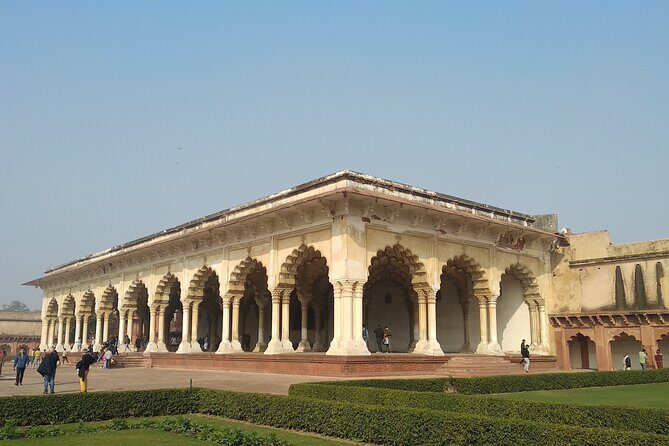
Day 1 is where the tour earns its keep, because it doesn’t just do monuments in a row. It gives you a changing rhythm: heritage buildings, memorial spaces, a Sikh spiritual site, and then a UNESCO masterpiece.
Jama Masjid and Old Delhi: the rickshaw-and-spice start
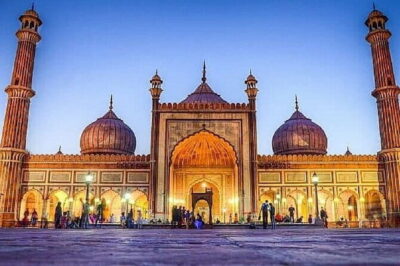
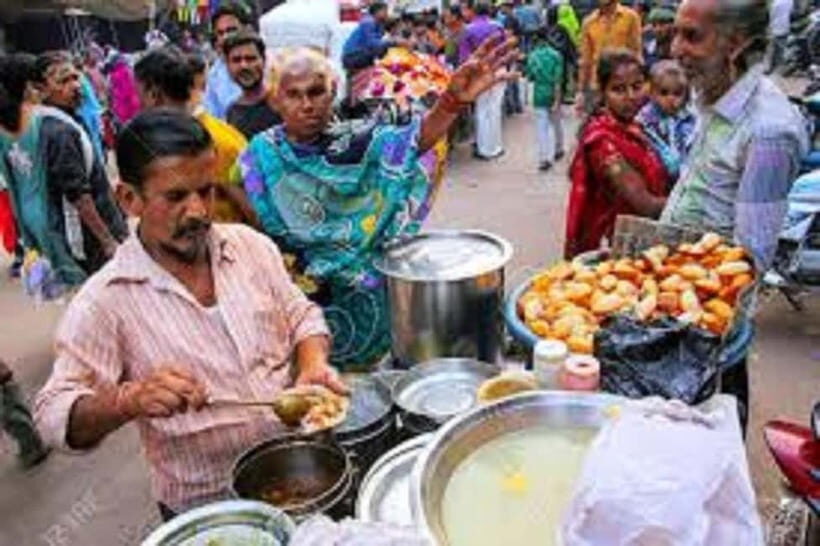
You start with Jama Masjid, one of India’s largest mosques, built by Mughal emperor Shah Jahan between 1644 and 1656 and inaugurated by its first Imam. The plan includes time inside and also a spice-market experience, with a rickshaw-style ride through Old Delhi’s busy lanes.
Why I like this stop for visitors: it’s not just architecture. The mosque sits inside a neighborhood where you can feel the city’s everyday energy. That contrast helps the day feel more than sightseeing-box checking.
A consideration: Old Delhi areas can be loud and crowded, and there’s usually a bit of walking involved. If you’re sensitive to crowds, take breaks when you can and wear comfortable shoes.
India Gate: quick, iconic, and easy to enjoy
Next is India Gate, a war memorial near Kartavya path. You get a short stop (about 30 minutes) with admission ticket included.
This works because it’s easy viewing. It’s wide-open space where you can catch the feel of Delhi’s ceremonial axis without losing half your day.
A few more New Delhi tours and experiences worth a look





Rashtrapati Bhavan: a brief look at the President’s House
Then comes a very short visit (about 5 minutes) at Rashtrapati Bhavan, the President’s residence. The descriptions note it was designed by Sir Edwin Lutyens and Herbert Baker and sits on a 330-acre estate.
Real talk: this is more of an exterior/photo-and-straight-on stop than a deep visit. If you’re hoping for a long, detailed interior experience, don’t expect that here. But it’s still a good marker in the “Delhi power and planning” story.
Gurudwara Bangla Sahib: calm inside a city stop
After that, you head to Gurudwara Bangla Sahib. This major Sikh gurdwara is associated with Guru Har Krishan and is known for the holy pond (Sarovar) inside the complex. You get about an hour.
This is a nice contrast to the earlier chaos of Old Delhi. It’s the kind of place where you slow down naturally, especially if you’re curious about faith spaces rather than only palaces and forts.
Qutb Minar: UNESCO ruins that actually hold your attention
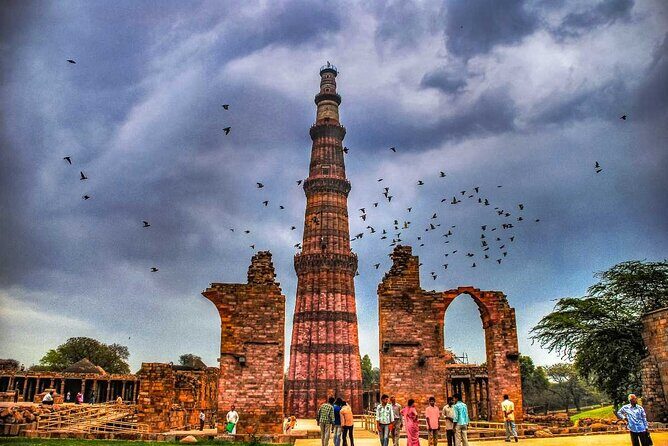
Day 1 ends at Qutb Minar, a minaret and victory tower forming part of the Qutb complex. It’s a UNESCO World Heritage Site in South Delhi’s Mehrauli area. The site ties into Delhi’s older fortified city of Lal Kot, associated with the Tomar Rajputs.
You’re scheduled for about 1.5 hours, and that’s enough time to appreciate why this place is on UNESCO lists without feeling rushed.
A final Day 1 thought: by the end of this day, you may feel monument-fatigued. That’s normal. If you want to make the most of it, use your guide to focus your questions: ask what to notice first, not just what to photograph.
Day 2 in Agra: Taj Mahal with context, then Fort and Fatehpur Sikri
Agra day is the headline day. But the best part is that the tour doesn’t stop at the Taj. It keeps you in the same historical world, moving from royal tomb to Mughal military power to grand ceremonial architecture at Fatehpur Sikri.
Taj Mahal: the masterpiece, plus time to do it justice
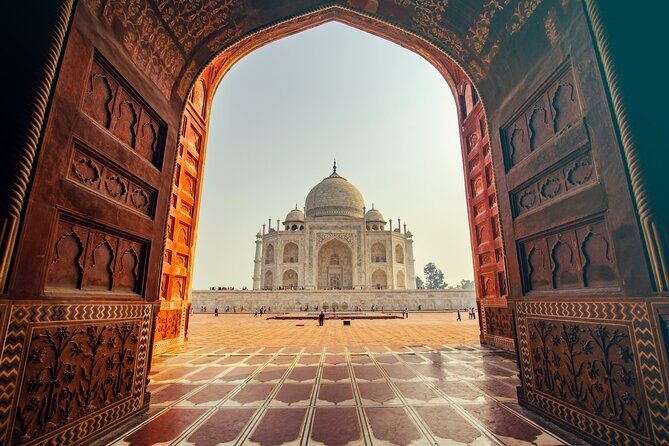
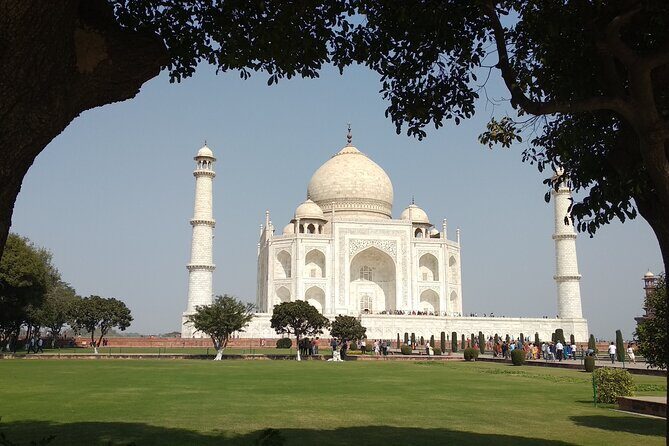
You’ll visit the Taj Mahal for about 2 hours. It’s described as an ivory-white marble mausoleum on the Yamuna’s right bank, commissioned in 1631 by Shah Jahan for Mumtaz Mahal, with Shah Jahan also entombed there.
This is where a good guide can change the whole experience from photo-taking to understanding. With the right explanation, you start noticing details: why it’s built where it is, what the design is doing, and how the symbolism connects to the story.
One practical caution based on real-world experience: visibility can be affected by smog, which can soften the view. If your dates line up with clearer air, great. If not, adjust your expectations and focus on angles that still capture the structure well.
Also, some guides have helped visitors handle early entry and efficient queuing for a sunrise-style experience. If early timing matters to you, ask when the plan can be arranged.
Agra Fort: the royal residence behind the fame
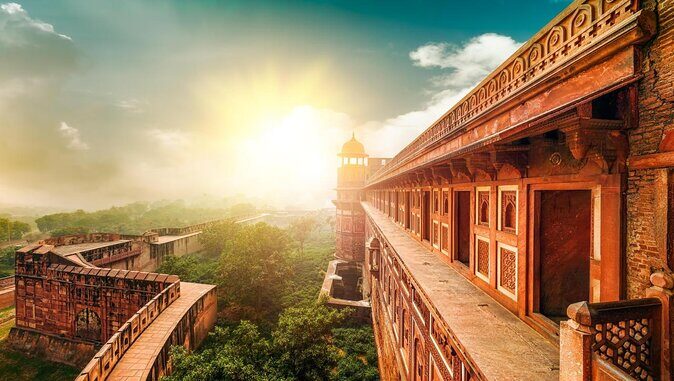
Next is Agra Fort for about 1 hour. It was the main residence of Mughal emperors until the capital shifted to Delhi in 1638, and it’s also UNESCO-listed.
Why this stop matters: it gives context for the Taj Mahal. You’re not only seeing the final romantic monument; you’re seeing the political and military seat that came with the same empire and era.
If you like fortifications and power architecture, this will feel like a meaningful follow-up rather than a second Taj.
Fatehpur Sikri (Panch Mahal area): Mughal grandeur beyond one gate
The third stop is Panch Mahal and Fatehpur Sikri, scheduled for about 2 hours. Fatehpur Sikri is described as a small city founded by a 16th-century Mughal emperor, with red sandstone buildings clustered around its center. You’ll touch on multiple highlight areas:
- Buland Darwaza gate entrance to the Jama Masjid mosque
- Nearby Tomb of Salim Chishti
- Diwan-E-Khas hall with a carved central pillar
- Jodha Bai Palace described as a mix of Hindu and Mughal styles
- The 5-story Panch Mahal, overlooking the site
This stop is great for travelers who enjoy places that reward patient looking. It’s easy to walk through Fatehpur Sikri like a checklist, but with the right guidance, it becomes a story about how rulers wanted to stage religion, ceremony, and architecture together.
The consideration here is time management. Two hours sounds okay, but the site has multiple points. If you’re the type who likes to read everything, you’ll likely want to pace yourself and pick what you want to see most deeply.
Day 3 in Jaipur: City Palace, Hawa Mahal, and Jantar Mantar in one arc
Day 3 is designed as a Jaipur “core loop.” You start with a full sightseeing segment (about 4 hours) that mentions Fort, Jantar Mantar, City Palace, and Jal Mahal. Then the schedule breaks out key monuments for additional time.
This layout is practical. Jaipur’s sights are clustered enough that you won’t be constantly fighting long transfers. And if you’re interested in different types of royal design—ceremonial, scientific, and decorative—you get them in one day.
City Palace: the royal complex and administrative headquarters
You spend about 1.5 hours at City Palace. It’s described as a royal residence and former administrative headquarters of Jaipur’s rulers. Construction started after Jaipur’s founding, and the court moved from Amber to Jaipur in 1727 under Maharaja Sawai Jai Singh II.
Why I think it’s worth your time: City Palace is the connective tissue. It helps you understand Jaipur as more than a set of postcard buildings. You’re seeing where power lived and where decisions were made.
Hawa Mahal: the palace of winds, built for viewing
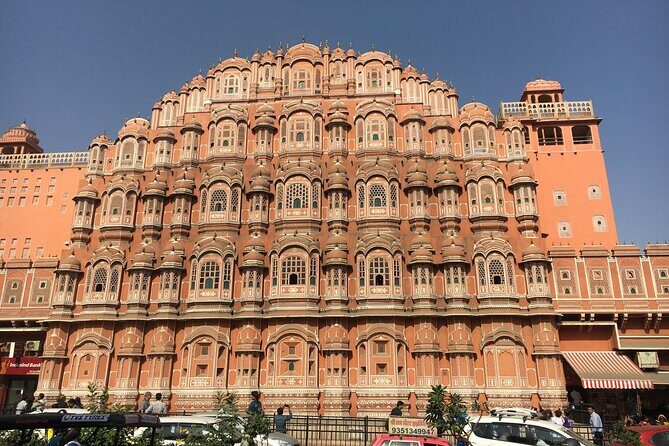
Then there’s Hawa Mahal (Palace of Wind) for about 30 minutes. It’s built from red and pink sandstone and sits at the edge of City Palace, extending to the women’s chambers (Zenana).
This stop is short by design, and that’s okay because Hawa Mahal is about the exterior look and the idea of those windows. If you want a deeper read on daily life or architecture, ask your guide what features to focus on, since you may not have much time to roam.
Jantar Mantar: 19 instruments and the big stone sundial
Finally, you hit Jantar Mantar for about 45 minutes. It’s a set of 19 astronomical instruments built by Sawai Jai Singh, completed in 1734. The description calls out the world’s largest stone sundial and notes it’s a UNESCO World Heritage Site near City Palace and Hawa Mahal.
If you like science in the shape of stone, this is the payoff. Jantar Mantar is the kind of monument that turns into fun when someone explains what you’re actually looking at.
A consideration: Jantar Mantar can be easy to skim without realizing what makes it special. So plan to slow down for a few key instruments rather than trying to see everything equally.
The guide factor: why names like Nick and Neeraj keep coming up
This tour is built around professional guides who meet you in each city. That matters because your time is limited. A great guide doesn’t just recite dates; they help you read the sites and move efficiently.
In particular, named guides such as Nick and Neeraj have been highlighted for being organized, patient, and focused on getting visitors to photo spots with good context. One standout theme is how guides help with navigating queue systems, including efficient handling for a sunrise-style Taj Mahal visit.
Even if your guide isn’t one of those names, the takeaway is useful for you: during the Taj and major monument stops, you’ll benefit most if you let your guide set the pace and priorities.
Comfort and logistics: private AC car, mobile tickets, and hotel breathing room
A private AC car is the big comfort lever in a route like this. You’re spending long stretches traveling between cities and between sites. When it’s hot, traffic moves slowly, and lines take time, the car becomes more than transport. It becomes recovery.
You’ll also have 2 nights in 4-star hotels with breakfast. That’s an underrated value piece. With breakfast included, you don’t have to solve where to eat before a packed day.
You’ll have a pickup, and after the tour you’ll be dropped off at the same pickup location or at the airport in New Delhi or Jaipur (as listed). That flexibility can be helpful if your flight timing is tight.
The only consistent gap in the comfort equation is meals: lunch and dinner aren’t included. That doesn’t mean you’ll struggle, but it does mean you’ll rely on the guide or your own planning for where and when to eat.
Who should book this Golden Triangle tour?
This works best if:
- You have a short trip window and want Delhi, Agra, and Jaipur in one run
- You prefer private pacing over shared group chaos
- You like having explanations while you see major monuments
- You want hotel comfort and included breakfast without managing logistics
You might think twice if:
- You want meals included for every day
- You hate brisk schedules and prefer long, slow wandering days
- You’re extremely budget-focused and plan to DIY everything for maximum savings
Should you book this 3-Day Private Luxury Golden Triangle Tour?
If your goal is to see the essentials with minimal hassle, I’d say yes, especially at $370 when you factor in 4-star hotels with breakfast, private AC transport, guide coverage across cities, and admission tickets listed as included.
Book it if you want structure and guidance, and you’re okay planning lunch and dinner on your own. The best moments tend to happen when you lean into your guide’s role, ask what to look for, and use the time you’re given at the Taj, Agra Fort, and Jaipur’s science-and-royalty sites.
If you’re sensitive to crowds, go in with that mindset on Old Delhi day and keep your expectations flexible for Taj views if the air quality isn’t ideal.
FAQ
How much does the 3-Day Private Luxury Golden Triangle Tour cost?
The price is listed as $370.00 per person.
What cities are included in the tour?
The tour covers New Delhi, Agra, and Jaipur.
Is the tour private?
Yes. It’s a private tour/activity, and only your group will participate.
Are hotel stays included, and what quality are they?
You get 2 nights of accommodation in 4-star hotels, and breakfast is included.
Is breakfast included?
Yes. Breakfast is part of the package and is included for 2 mornings.
Are admission tickets included for the main monuments?
Admission tickets are listed as included for the scheduled monument stops (with Rashtrapati Bhavan specifically listed as free).
Are lunch and dinner included?
No. Any meals like lunch and dinner are not included.
Do I get pickup and drop-off?
Pickup is offered, and after the tour you’ll be dropped off at the same pick-up location or at the airport in New Delhi or Jaipur.
What is the cancellation policy?
You can cancel for a full refund if you cancel up to 24 hours in advance of the experience’s start time. If you cancel less than 24 hours before, the amount paid is not refunded.