Three days, three empires, zero stress driving. This private Golden Triangle tour strings together Delhi, Agra, and Jaipur with a professional driver-guide setup, so you can focus on the sites (not logistics). I like the private pace and the fact that monument entrance fees are included for the listed highlights. The service also shows up with real human touches in the feedback, from punctual, patient drives (people like Dheeraj and Rajendra) to on-the-road help that keeps things moving.
One thing to plan for: the itinerary is packed, with long drives between cities, and lunch/dinner aren’t included. If you want a slower, more stop-and-sip kind of trip, this schedule may feel fast, especially on Day 1.
In This Review
- Key things worth knowing before you go
- Why This Delhi–Agra–Jaipur Route Works in 3 Days
- Delhi Day 1: Jama Masjid, Red Fort, Qutub Minar, Humayun’s Tomb
- Jama Masjid (30 minutes, ticket included)
- Red Fort (1 hour, ticket included)
- Qutub Minar (1 hour, ticket included)
- Humayun’s Tomb (1 hour, ticket included)
- India Gate (30 minutes, ticket included)
- Drive past Rashtrapati Bhawan (transfer moment)
- Transfer to Agra (about 240 km, 4 to 5 hours)
- Agra Day 2: Taj Mahal, Agra Fort, Fatehpur Sikri
- Taj Mahal (2 hours, ticket included)
- Agra Fort (1 hour, ticket included)
- Fatehpur Sikri / Panch Mahal (2 hours, ticket included)
- Transfer to Jaipur (about 205 km, about 5 hours)
- Jaipur Day 3: Albert Hall, Jantar Mantar, City Palace, Hawa Mahal
- Albert Hall Museum (1 hour, ticket included)
- Jantar Mantar (1 hour, ticket included)
- City Palace of Jaipur (2 hours, ticket included)
- Hawa Mahal (30 minutes, ticket included)
- Drive to Delhi airport (about 280 km, about 4 to 5 hours)
- Price and Logistics: What $288.35 Buys You
- Comfort on a Tight Schedule: How to Set Yourself Up for Success
- Service Quality You Can Actually Feel: Drivers Who Keep Days Moving
- Best Fit: Who This Tour Is For
- Should You Book This Tour?
- FAQ
- Where does the tour start, and what time?
- Is this a private tour?
- What’s included in the price?
- Are lunch and dinner included?
- How long are the main city transfers?
- What’s the cancellation policy?
Key things worth knowing before you go
- Private only for your group with a driver-guide to manage the day’s flow
- Entrance fees included for the major sites named in the itinerary
- A/C vehicle and mineral water during sightseeing and transfers
- Real time blocks at famous stops (often 30 minutes to 2 hours) so you’re not stuck waiting around
- Driver quality shows up in the details, with names like Anil Bana, Shishupal Singh, Hardayal Singh, Prem Singh ji, Dashrath, and Harveer Singh appearing in service feedback
Why This Delhi–Agra–Jaipur Route Works in 3 Days
The Golden Triangle is famous for a reason: it’s the fastest way to see three different faces of North India. In just 3 days, you hit Mughal Delhi, the big Agra landmarks, and Jaipur’s royal geometry—plus the trip stays in a mostly straight line. That matters, because bad routing kills time.
I also like that this tour is built around a private vehicle and private guided visits. You’re not playing musical chairs with strangers, and you’re not trying to decode what to do next while you’re already tired from travel.
The trade-off is density. You’ll move a lot, and you’ll get set times at each major sight. It’s ideal if you want “see the classics, done right,” and less ideal if you prefer wandering without a plan.
You can also read our reviews of more guided tours in New Delhi

Delhi Day 1: Jama Masjid, Red Fort, Qutub Minar, Humayun’s Tomb
Day 1 is a strong start because it shows multiple eras of Delhi in sequence, starting with one of India’s biggest mosques.
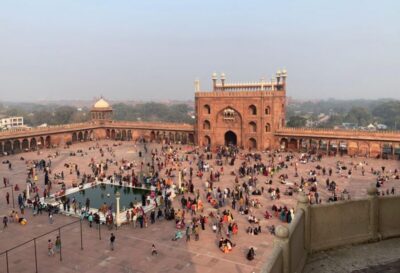
Jama Masjid (30 minutes, ticket included)
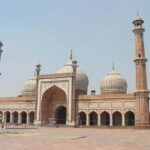
Jama Masjid is huge—large enough that the courtyard is designed to hold massive crowds at once. For your visit, think of it as a place for scale and atmosphere: the towering gates, the courtyard, and the way the complex frames the city around it. Because it’s a place of worship, dress modestly and be mindful in how you move and take photos.
Red Fort (1 hour, ticket included)
From the mosque to the fortress: Red Fort is the Mughal seat of power for over 200 years. Even if you’ve seen pictures, walking the approach and taking in the fort’s relationship with the Yamuna River gives it weight. If you like architecture, this is one of your best “look slowly” stops on Day 1.
Qutub Minar (1 hour, ticket included)
Next comes Qutub Minar, the tall symbol of the Qutub complex. It’s built with red sandstone and marble, and it rises to about 73 meters. One smart way to use your time here is to keep glancing back at the base and the tower structure from different points—your brain starts to map the whole complex quickly.
You can also read our reviews of more private tours in New Delhi




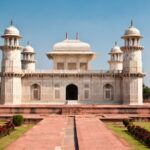
Humayun’s Tomb (1 hour, ticket included)
Humayun’s Tomb is one of Delhi’s most important Mughal tombs, commissioned by Empress Bega Begum. Here, slow down a notch. Tomb architecture rewards patience: the symmetry, the walkways, and the way the building sits within its planned gardens/space.
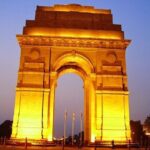
India Gate (30 minutes, ticket included)
India Gate is a war memorial, built to commemorate 82,000 soldiers who died during the First World War. This stop is shorter, but it gives you a breather after the Mughal heavy-hitters. It also works well if you want a place for quick photos and a pause before you head onward.
Drive past Rashtrapati Bhawan (transfer moment)
You also drive past Rashtrapati Bhawan, the President of India’s residence, formerly the Viceroy’s House. You won’t get the kind of on-foot access you get at the monuments, but the sight is useful for orientation. It’s the kind of landmark that helps you understand what you’re seeing across Delhi’s grand government area.
Transfer to Agra (about 240 km, 4 to 5 hours)
After Delhi, the day turns into road travel. You’ll drive to Agra (Taj city), arrive, and check into your pre-booked hotel for an overnight stay. That overnight part matters: it prevents the classic mistake of rushing into Agra late and losing Taj time the next morning.
Agra Day 2: Taj Mahal, Agra Fort, Fatehpur Sikri
Agra is the centerpiece of the Golden Triangle, so Day 2 is built like a highlight reel. You’ll start with the most famous landmark first thing the next morning, then balance it with fort views and a larger historical detour.
Taj Mahal (2 hours, ticket included)
You’re going to see why people obsess over this place. The Taj Mahal was built by Shah Jahan for Mumtaz Mahal and is a UNESCO World Heritage Site. A good way to use your two hours is to stop trying to do it all at once. Give yourself time to take in the main façade first, then use your second hour to watch how light and perspective change your view of the white marble and surrounding grounds.
If you care about photos, Taj time is always about angles and pacing. Plan to move at an easy rhythm so you don’t burn your energy before you’ve even gotten the best views.
Agra Fort (1 hour, ticket included)
Right after Taj, you shift to the fort. Agra Fort is a key Mughal-era stronghold and close enough to connect naturally with the Taj area. It’s also UNESCO-listed. Even with just an hour, you can get a strong sense of how the fort functioned as a royal home base—especially if you pay attention to the fort’s layout and vantage points.
Fatehpur Sikri / Panch Mahal (2 hours, ticket included)
Then you leave Agra for Fatehpur Sikri, a town in Agra district that served as the Mughal capital under Akbar and was abandoned around 1610. The stops here are a reminder that Mughal power wasn’t only about one city. The architecture is known for red sandstone, and it gives Fatehpur Sikri a different feel than the white marble you just saw at the Taj.
Also: this is where you’ll likely feel the pacing most. Two hours is enough for the major areas, but not for ultra-slow wandering.
Transfer to Jaipur (about 205 km, about 5 hours)
After Fatehpur Sikri, you road-trip to Jaipur and check in for an overnight stay. This is the day where comfort on the drive matters most, so the A/C vehicle and mineral water help more than you might think.
Jaipur Day 3: Albert Hall, Jantar Mantar, City Palace, Hawa Mahal
Jaipur is where the trip shifts from pure Mughal monument grandeur to Rajput planning, science, and palace design. Day 3 is shorter, but it’s still packed with major sights.
Albert Hall Museum (1 hour, ticket included)
Albert Hall Museum is named after the Prince of Wales and was founded in 1876. If you like seeing artifacts and crafts rather than only buildings, this is your palate cleanser. It’s a straightforward way to add context about what people made and collected in and around Jaipur.
Jantar Mantar (1 hour, ticket included)
Jantar Mantar is one of Jaipur’s UNESCO sites, known for geometric instruments used to measure time and track celestial movement. There are 14 main structures in the observatory, including the Samrat yantra, which was used to forecast time. Even if you don’t get lost in the science, the shapes and scale are impressive—and it’s a different kind of “wow” compared with forts and palaces.
City Palace of Jaipur (2 hours, ticket included)
City Palace is in the heart of the Pink City, blending Rajput and Mughal styles. It’s surrounded by huge enclosing walls and is one of the best stops for understanding how royal spaces worked. Two hours is a good length here because you can move between courtyards, interiors (where accessible), and viewing areas without feeling rushed.
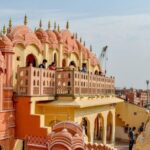
Hawa Mahal (30 minutes, ticket included)
Hawa Mahal, the Palace of Wind, is a five-story façade designed like a honeycomb with 953 small windows called jharokhas. Built in 1798 by Maharaja Sawai Pratap Singh, it’s famous for latticework and the idea of light and air moving through the windows.
At just 30 minutes, you’ll mainly take in the façade and its window rhythm. If you want a longer look from more angles, plan to arrive with energy.
Drive to Delhi airport (about 280 km, about 4 to 5 hours)
After Jaipur, you return to Delhi by road to reach Indira Gandhi International Airport. The route is long, so your last day depends on having a calm morning and not turning the Jaipur stops into a marathon.
Price and Logistics: What $288.35 Buys You
At $288.35 per person, the biggest question is whether you’re getting value beyond the price tag. Here’s what makes this tour feel fair for many people:
- It’s private transportation with an A/C vehicle, which becomes important on long transfers (Delhi–Agra 4–5 hours, Agra–Jaipur about 5 hours, Jaipur–Delhi about 4–5 hours).
- It includes all fees and taxes and the monument entrance fees for the sights listed.
- You get professional private tour guides cum driver for the excursions, which reduces confusion at ticket lines and helps you make sense of what you’re seeing.
- You get mineral water bottles, a small detail that helps on high-walking days.
What you should watch:
- Lunch and dinner are not included.
- Restroom on board is not included.
- Accommodation with breakfast is only mentioned as included if you select the option that includes hotels. So confirm what’s actually in your package.
Also remember the tour starts at 9:00 am at Indira Gandhi International Airport. If your flight lands late or you’re stuck at customs, you’ll want to make sure your travel timing matches the start time.
Comfort on a Tight Schedule: How to Set Yourself Up for Success
This itinerary has built-in time estimates for each site, like 30 minutes at Jama Masjid and India Gate, 1 hour at Red Fort and Qutub Minar, 2 hours at Taj Mahal, and 2 hours at City Palace. That’s a good structure if you’re visiting for the first time and want a solid cross-section of highlights.
Your biggest comfort factors will be:
- Expect lots of walking between areas within each monument complex.
- Expect long car stretches between cities.
- Bring your own flexibility for meals since lunch/dinner aren’t included.
If you’re traveling as a family, this kind of private tour can be easier than coordinating multiple tickets and meeting points yourself. If you’re a solo traveler, private can still work well if you value guided context and a dedicated driver.
Service Quality You Can Actually Feel: Drivers Who Keep Days Moving
The strongest praise in the experience feedback isn’t about fancy extras. It’s about people doing the basics well: punctuality, patience, and clean, comfortable driving.
In the feedback, names that come up include:
- Anil Bana, described as humorous and proactive
- Dheeraj, noted for being patient and assisting at places
- Shishupal Singh and Harveer Singh, mentioned for safety, professionalism, and being customer-focused
- Rajendra Singh, credited with being on time and knowledgeable while moving efficiently
- Hardayal Singh, mentioned for a clean car
- Prem Singh ji and Dashrath, mentioned for accommodative, safe, comfortable handling
That matters because on a route like Delhi–Agra–Jaipur, small issues (late starts, unclear directions, slow transitions) can snowball. When your driver is steady and your guide is organized, you feel it immediately.
Best Fit: Who This Tour Is For
This tour is a strong match if you:
- Want the Golden Triangle highlights in 3 days without self-planning
- Appreciate guided explanations at major sites
- Prefer a private vehicle so the day stays under control
- Want monument entrance fees handled for the listed stops
It may be less ideal if you:
- Want lots of free time in cities to roam independently
- Don’t like long road transfers and tight time windows
- Are traveling with a strong need for food/restroom stops on the go (since lunch/dinner and restroom on board aren’t included)
Should You Book This Tour?
If your goal is simple—see Delhi’s big Mughal landmarks, the Taj Mahal area, and Jaipur’s main royal sights with tickets handled—this is a sensible way to do it. The value is strongest when you’re using the included guidance and admission fees rather than paying for them separately yourself.
Before you book, I’d check two practical things:
1) Make sure your package includes the hotel option you want (breakfast inclusion depends on the option).
2) Plan your meals and expect a fast, drive-heavy schedule.
If that sounds right for your travel style, you’ll likely enjoy how cleanly this route covers the Golden Triangle without making you do detective work.
FAQ
Where does the tour start, and what time?
It starts at Indira Gandhi International Airport in New Delhi, with a start time of 9:00 am.
Is this a private tour?
Yes. It’s private, and only your group participates.
What’s included in the price?
Included items are an air-conditioned vehicle, private transportation, all fees and taxes, professional private tour guides cum driver for excursions, mineral water bottles, and monument entrance fees for the sights mentioned. Accommodation with breakfast is included only if you choose the option that includes hotels.
Are lunch and dinner included?
No. Lunch and dinner are not included.
How long are the main city transfers?
Delhi to Agra is about 240 km (about 4 to 5 hours). Agra to Jaipur is about 205 km (about 5 hours). Jaipur to Delhi airport is about 280 km (about 4 to 5 hours).
What’s the cancellation policy?
You can cancel for a full refund up to 24 hours in advance of the experience’s start time. If you cancel less than 24 hours before, the amount paid won’t be refunded.