REVIEW · NEW DELHI
2 Days Private tour of Delhi and Agra with Stay at 5 Star Hotel
Book on Viator →Operated by Taj Travel Services - Day Tours · Bookable on Viator
Two days, two cities, big wow factor. This private Delhi-and-Agra plan strings together the best hits—Qutub Minar, Delhi landmarks, and an early-feeling visit to the Taj Mahal—with airport or hotel pickup and a 5-star overnight stay, so you’re not stuck figuring out logistics mid-trip.
My favorite part is the human side: the guide team, especially Naveen in Agra. I like how he stays punctual and patient, and how he explains what you’re looking at in a clear, practical way, not a rushed monologue.
One consideration: monument fees are not included. The Taj Mahal, Agra Fort, and Qutub Minar have admission tickets that you’ll pay separately, so your final spend is a bit higher than the headline rate.
In This Review
- Key highlights to know before you go
- How this 2-day Delhi–Agra plan keeps the pace sane
- Day 1 in Delhi: Qutub Minar, India Gate, Rashtrapati Bhavan, Gandhi Smriti, Lotus Temple
- Qutub Minar: the tall brick landmark
- India Gate: war memorial along Rajpath
- Rashtrapati Bhavan: the President’s residence from the outside
- Gandhi Smriti: where the final chapter happened
- Lotus Temple: a modern symbol that welcomes everyone
- Day 2: the early Taj Mahal timing and what to do with your 2 hours
- Admission is extra, so budget for it
- A pro tip for the Taj visit: plan your eyes
- Agra Fort and smart souvenir time after lunch
- Admission not included, but the walk is worth it
- The market moment: where your souvenirs actually come from
- Hotel and private transport value: what you’re paying for
- Who this Delhi–Agra private tour fits best
- Should you book this 2-day private Delhi and Agra tour?
- FAQ
- How long is the Delhi and Agra private tour?
- Is this tour private or shared with other people?
- What is the price per person?
- What’s included in the price?
- Are monument tickets included?
- Which Delhi sights are visited on Day 1?
- Are there any Delhi stops with free admission?
- What is included in Agra on Day 2?
- What weather requirement is mentioned?
- What does free cancellation mean here?
Key highlights to know before you go
- Private pickup and drop-off so your day starts and ends with less hassle
- 5-star overnight accommodation in Delhi so you can actually rest before the big morning
- Agra guide support from Naveen and the team with strong explanations and on-the-ground care
- Prime Delhi landmarks: Qutub Minar, India Gate, Rashtrapati Bhavan, Gandhi Smriti, and Lotus Temple
- Easy souvenir time at Agra’s market after sightseeing
- Mobile tickets and group discounts that make planning feel more controlled
How this 2-day Delhi–Agra plan keeps the pace sane
Delhi and Agra are both famous enough to feel “must-do,” but doing both in two days can become a blur if your plan is loose. What I like here is the structure: you’re not hopping between cities with random schedules. You get private transport and a local guide, plus hotel pickup and drop-off, which usually means less time waiting around and more time seeing.
This is also the kind of tour where timing matters. Day 1 is built for Delhi’s big icons and easy viewing blocks. Day 2 shifts to Agra with an early start after breakfast, then you get the Taj Mahal experience before moving on to Agra Fort and heading back to Delhi for your onward travel.
Also, the tour is private, meaning it’s just your group. If you’re the type who hates being swept into someone else’s pace, that matters. It’s easier to ask questions, change tempo when needed, and keep the day comfortable—even when Delhi traffic tries to run your calendar.
You can also read our reviews of more private tours in New Delhi


Day 1 in Delhi: Qutub Minar, India Gate, Rashtrapati Bhavan, Gandhi Smriti, Lotus Temple
Delhi’s first day is a great mix of “old stone,” “nation’s stage,” and “quiet reflection.” You can feel that right away: the itinerary doesn’t treat Delhi like a checklist. It flows from one place to the next with short time blocks that let you enjoy the atmosphere instead of sprinting.
Qutub Minar: the tall brick landmark
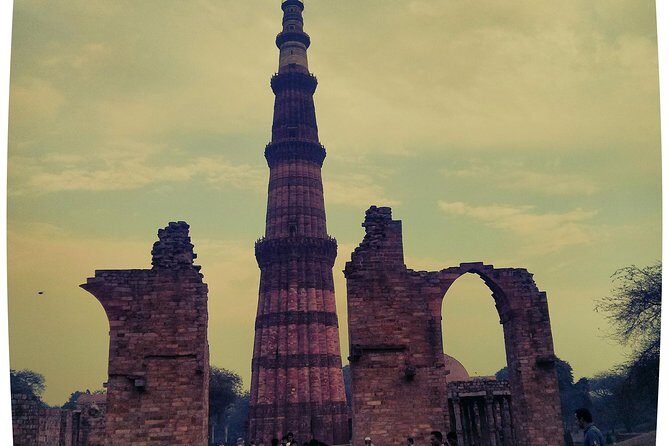
You start with Qutub Minar, often described as the tallest brick minaret in the world. It’s a striking way to get oriented because the building is tall enough that it pulls your attention even before you read any signage. Expect this as your heavier stop of the day: about 1 hour on site.
One practical note: Qutub Minar admission is not included, so plan for tickets separately. If you like taking photos and walking slowly around details, you might want that extra buffer, because the clock will still be moving.
India Gate: war memorial along Rajpath
Next up is India Gate, the war memorial sitting along the Rajpath ceremonial axis. It’s a quick stop—about 20 minutes—but it’s worth it because the setting is so symbolic. India Gate also works well as a “pause” after Qutub Minar. It gives your eyes a break: less intricate stonework, more open space and views along the main avenue.
Admission here is listed as free, so this is a clean win.
Rashtrapati Bhavan: the President’s residence from the outside
Then you head to Rashtrapati Bhavan, the official residence of India’s President, at the western end of Rajpath. The stop is short, about 20 minutes. That’s exactly right for most people. You get the visual context of the central government core area without turning the visit into a half-day event.
Admission is listed as free, so you’re mostly paying in time, not entry costs.
A few more New Delhi tours and experiences worth a look






Gandhi Smriti: where the final chapter happened
If the earlier stops are about landmarks, Gandhi Smriti is about meaning. This museum marks where Mahatma Gandhi spent his last 144 days and where he was assassinated on 30 January 1948. You’ll have about 1 hour here.
Admission is free, but don’t confuse free with casual. Give it time to land. Even if you’re not a museum person, this stop tends to shift the mood of the whole day.
Lotus Temple: a modern symbol that welcomes everyone
Day 1 ends with Lotus Temple, the Baháʼí House of Worship known for its flowerlike shape. It’s about 30 minutes, and admission is free.
This is a nice closing note because it’s open to all and feels calmer than the political landmarks. It’s also a great place to slow down, take in the architecture, and let your feet catch up.
After sightseeing, you’re taken back to your hotel to reset for Agra. That return-to-hotel rhythm is one of the quiet luxuries of a well-run private plan.
Day 2: the early Taj Mahal timing and what to do with your 2 hours
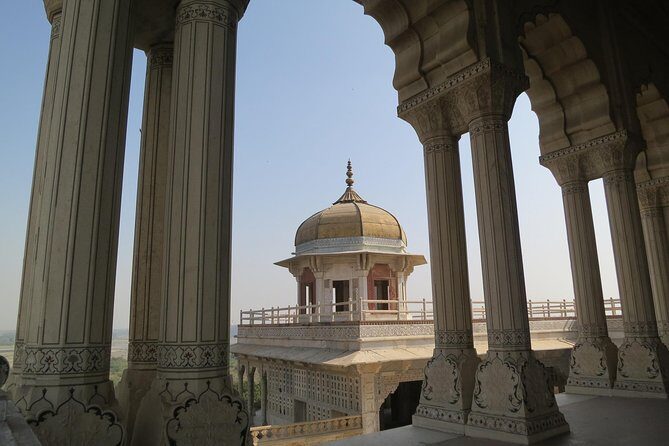
Day 2 is where Northern India shows off. After breakfast, you travel to Agra, arriving by 12:00 PM. From there, the plan gives you about 2 hours at the Taj Mahal.
The Taj Mahal is an ivory-white marble mausoleum on the Yamuna River, commissioned by Mughal emperor Shah Jahan in 1632 for Mumtaz Mahal. Even if you think you already know the story, seeing it in person tends to reorder your brain. Details pop out fast: the symmetry, the way light changes the marble, and the sense of scale.
Admission is extra, so budget for it
Taj Mahal admission is not included, so you’ll pay monument fees on top of the tour price. This is the main add-on cost for most people on this itinerary.
If you’re the type who wants photos without people crowds jamming your frame, focus on how you position yourself and move methodically through the main viewpoints. Two hours sounds short, but it’s enough to see the essentials and still have time to stand back and absorb the whole composition.
A pro tip for the Taj visit: plan your eyes
Since you’ve only got a limited window, don’t let your camera be the main character. Spend a few minutes getting your bearings, then do one slow pass for structure and one pass for details. It helps you leave feeling like you truly visited, not just watched a monument from one angle.
Agra Fort and smart souvenir time after lunch
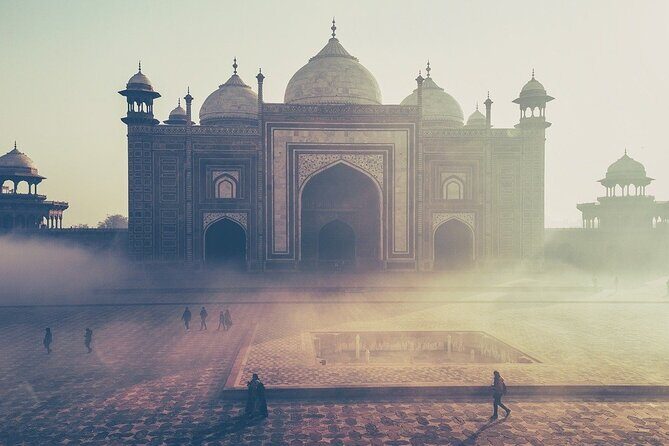
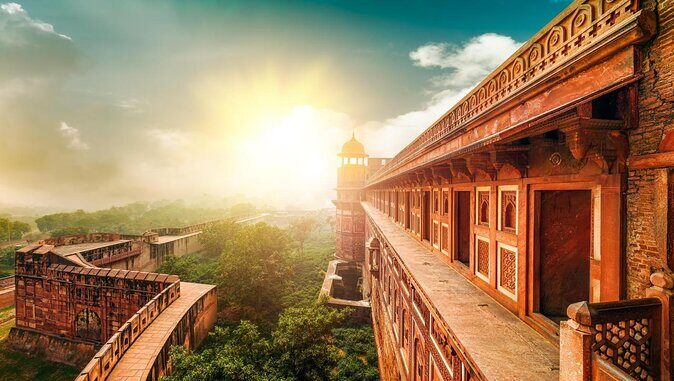
After the Taj Mahal and lunch, you head to Agra Fort, built by Mughal emperor Akbar. The fort is made of red sandstone and sits about 2 km from the Taj Mahal. You’ll have about 1 hour here.
This stop is valuable because it adds contrast. The Taj Mahal is pure elegance and romance. Agra Fort is sturdier and more fortress-like, which helps you understand the Mughal world as both artistic and strategic.
Admission not included, but the walk is worth it
Agra Fort admission is also not included. Still, the time slot of 1 hour fits the typical attention span for forts: you’ll get enough to appreciate the layout without turning it into a marathon.
The market moment: where your souvenirs actually come from
The itinerary also includes time to enjoy art and crafts and suggests picking up handicrafts as souvenirs from Agra’s market area. That’s one of those simple touches that makes the day feel complete. You’re not just seeing monuments; you’re also taking home something tangible that fits the place.
If shopping is not your thing, you can still use this time to break up the day. It’s a chance to rest your legs and reset.
Hotel and private transport value: what you’re paying for
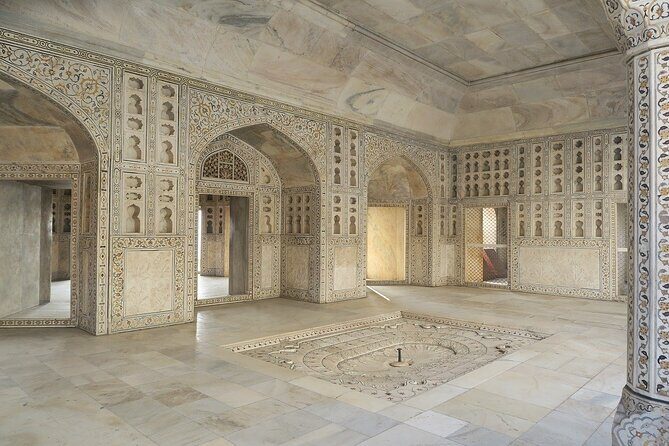
The headline price is $210.00 per person, and for many people, the value hinges on what’s included beyond sightseeing.
Here’s what you get that typically costs extra if you do it on your own:
- Overnight accommodation at a 5-star hotel
- Hotel pickup and drop-off
- Transport by private vehicle
- Local guide
- Airport/departure tax
That’s a lot of friction removed. You don’t have to coordinate separate drivers, manage intercity timing yourself, or hunt for a guide in each city. For a two-day trip, saving that mental load is often worth it.
Also, the tour includes a private setup and group discounts, plus a mobile ticket. Small details, big payoff: they reduce the number of things you must remember.
One more reason this tour often feels smooth: the guide team has a track record of organizing the experience in a way that keeps people comfortable. In particular, Naveen has been praised for being careful, patient, and supportive during the key Agra moments. That matters when you’re dealing with a packed itinerary and large crowds near top sights.
Who this Delhi–Agra private tour fits best
This is a strong fit if you want the highlights without the DIY chaos. It’s especially good for:
- First-time visitors who want the Taj Mahal and major Delhi landmarks in a short window
- Couples, friends, and small groups who prefer a private experience
- People who value a guide’s context so the monuments feel more meaningful than just photos
- Anyone who would rather pay for convenience than spend vacation time planning logistics
The tour notes also mention moderate physical fitness. That doesn’t mean you need to be an athlete, but it does mean you’ll be walking in and around major sites. If you have mobility constraints, it’s worth reviewing your comfort level with stairs, museum pacing, and sun exposure.
Should you book this 2-day private Delhi and Agra tour?
If your goal is maximum iconic value with minimum stress, I’d say this is an easy yes—especially because you get a 5-star overnight stay, private transport, and a local guide to connect the dots between Delhi’s political landmarks and Agra’s Mughal masterpieces.
The main reason to hesitate is also simple: monument fees are not included. If you’re budget-tight, those extra ticket costs for the Taj Mahal, Agra Fort, and Qutub Minar can change the math.
For many travelers, the balance works out well. You’ll see the big names, you’ll have a comfortable base for the night, and you won’t spend your limited time coordinating travel.
If you’re deciding, ask yourself two questions: Do you want help managing the timeline? And do you accept that you’ll pay entry tickets separately at key sights? If your answers are yes, book it and enjoy the payoff.
FAQ
How long is the Delhi and Agra private tour?
It runs for about 2 days.
Is this tour private or shared with other people?
It’s private. Only your group will participate.
What is the price per person?
The price is $210.00 per person.
What’s included in the price?
Included are overnight accommodation, airport/departure tax, a local guide, hotel pickup and drop-off, and transport by private vehicle.
Are monument tickets included?
No. Monument fees are not included. The Taj Mahal, Agra Fort, and Qutub Minar have admission tickets not included.
Which Delhi sights are visited on Day 1?
Day 1 includes Qutub Minar, India Gate, Rashtrapati Bhavan, Gandhi Smriti, and Lotus Temple.
Are there any Delhi stops with free admission?
Yes. India Gate, Rashtrapati Bhavan, Gandhi Smriti, and Lotus Temple are listed as free. Qutub Minar is not included.
What is included in Agra on Day 2?
You visit the Taj Mahal and then Agra Fort, plus time to enjoy arts and crafts and shop for handicrafts.
What weather requirement is mentioned?
The experience requires good weather. If it’s canceled due to poor weather, you’ll be offered a different date or a full refund.
What does free cancellation mean here?
You can cancel up to 24 hours in advance for a full refund. If you cancel less than 24 hours before the start time, the amount paid will not be refunded.