REVIEW · HAVELOCK ISLAND
Ancient Lava Stream Trek through dense Tropical forest.
Book on Viator →Operated by Seashell Habitat Institute Activity Centre · Bookable on Viator
A lava stream trek sounds wild, but it’s about details. You’ll walk through dense tropical forest and learn the island story—plants, people, and geology—while the trail gets properly slippery. I especially like the focused Andaman botany and geology explanations and the way the hike mixes nature with real working landscapes. One possible drawback: the rope-assisted parts can be physically tough, and it’s not for anyone with back, knee, or cardio issues.
This is a 2.5-hour guided trek that ends where you start, so it’s an easy block to fit into an afternoon on Havelock Island. The group stays small (up to 15 travelers), which means you’re more likely to get specific answers from the guide. Still, you should plan around weather, because the experience requires good conditions.
In This Review
- Key highlights you’ll feel on this hike
- Why an Ancient Lava Stream Trek Works on Havelock Island
- The 1:00 pm, 2.5-hour flow: what the trail rhythm feels like
- Coastal forest start: where you learn to look fast
- Areca (beetle) nut plantation stop: seeing work, not just scenery
- Dense tropical forest plus ropes: where comfort turns into strategy
- Freshwater stream ending: the payoff for finishing carefully
- Price and value: what $33.56 gets you (and what it doesn’t)
- Weather, tickets, and start-point reality checks
- Who should book this trek—and who should skip it
- The guide factor: why the explanations make the hike better
- Should you book the Ancient Lava Stream Trek?
- FAQ
- How long is the Ancient Lava Stream Trek on Havelock Island?
- What time does the tour start, and where does it end?
- How many people are in the group?
- Is the trek suitable if I have back, knee, or cardio issues?
- What is included in the price, and is transport included?
- What is the cancellation policy if weather is poor?
Key highlights you’ll feel on this hike
- Coastal forest start with endemic flora and fauna you can actually spot
- Areca (beetle) nut plantation peek into harvesting and daily island work
- Rope-assisted climbing and rappelling sections when the trail turns slick
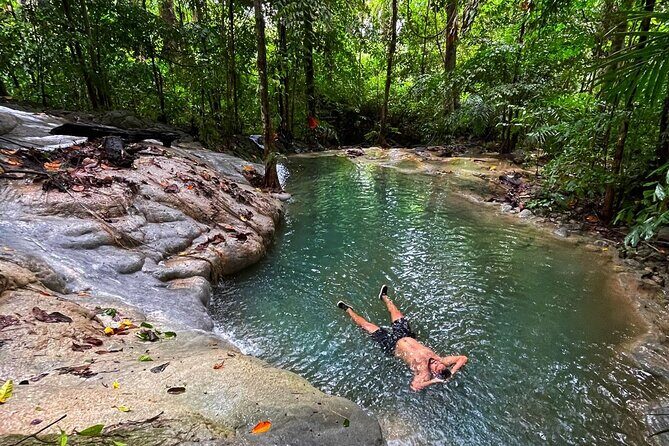
- Freshwater stream ending paired with explanations of island formation
- Small group size (max 15) for a more personal guided pace
- High satisfaction: 4.9 rating with strong repeat interest (58 reviews, 100% recommended)
Why an Ancient Lava Stream Trek Works on Havelock Island
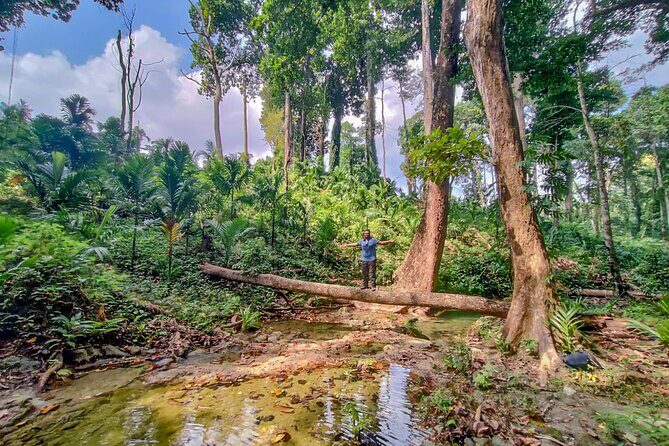
I like treks that explain what you’re seeing, and this one is built that way. You’re not just walking through greenery—you’re walking through a living classroom where forest plants, island formation, and wildlife connections get talked through as you go.
The word ancient matters here because you get evidence of how the islands formed. That’s the sort of background that makes a forest feel more real. When you learn why the island looks the way it does, the hike stops being a generic nature stroll and starts feeling like a map you’re actively reading.
The format also helps your time. It’s short enough (about 2 hours 30 minutes) to keep your energy for the harder bits, but long enough to pass through multiple habitat types—from coastal forest to dense inland jungle and then a freshwater area. That variety is part of the value.
And with a maximum of 15 people, you’re less likely to feel like you’re herding through a checklist. You’ll get a guide who can point things out without losing you in the crowd.
You can also read our reviews of more hiking tours in Havelock Island
The 1:00 pm, 2.5-hour flow: what the trail rhythm feels like
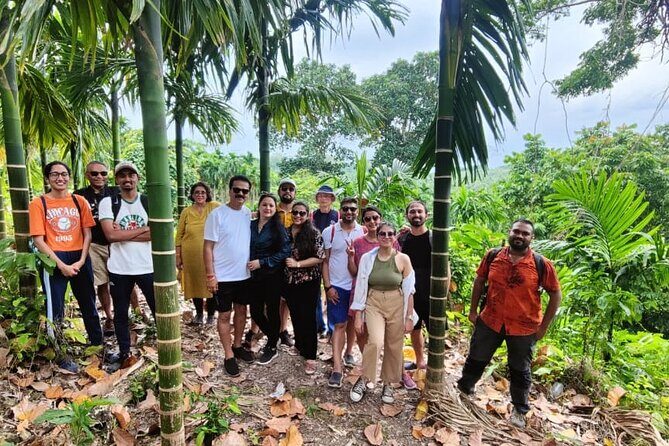
The experience starts at 1:00 pm and returns to the same meeting point. That’s a practical setup on Havelock Island: you can treat it like a focused excursion instead of a whole day project.
You’ll meet near Govind Nagar (the meeting point is listed with a map pin code) and then follow the trail through four big segments:
- coastal forest
- areca nut plantation area
- dense tropical forest
- freshwater stream finish
The big operational truth is that you’ll want to show up ready for movement. The itinerary includes rope-assisted climbing and rappelling, and the description is clear that sections get slippery. So the “2.5 hours” isn’t just walking time—it’s walking plus careful footwork.
Also note the pace is built for people with moderate physical fitness. That doesn’t mean it’s a race. It does mean you should be comfortable with uneven ground, hand-assisted sections, and short bursts of effort.
Coastal forest start: where you learn to look fast
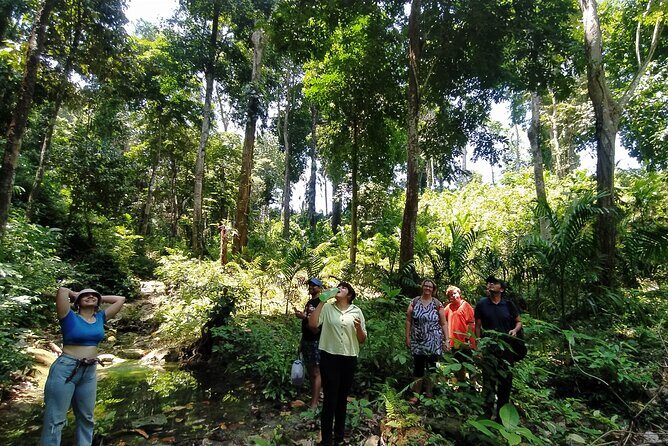
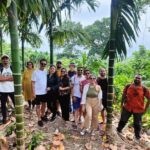
The trek begins in coastal forest, which is a smart choice. Coastal forests often pack a lot of variation into a short distance. Here, that translates into a first leg that sets the tone: you’ll be moving under dense tropical canopy while the guide points out unique and endemic plants and animal life adapted to island conditions.
This is one of those moments where you can either zone out—or you can train your eyes. The best experience comes when you slow down for the guide’s observations, especially around leaves, stems, and growth patterns. On an island, small differences can tell you a lot about how species survive salt air, humidity, and limited habitat.
You’ll also start getting context about wildlife history—how life on these islands developed and adapted over time. Even without technical geology names thrown at you, the effect is the same: the forest stops being “pretty” and becomes “purposeful.”
Practical tip: plan to keep your hands free when you can. Even if you won’t need ropes right at the start, you’ll appreciate not fumbling with bags during the later slippery sections.
Areca (beetle) nut plantation stop: seeing work, not just scenery
After the coastal forest, the trek shifts into an areca nut plantation area. The highlight here is the human side: you’ll get a peek into the life of people involved in beetle nut plantation and harvesting.
This part matters because it adds a reality check. You’re on a working island, and the same land that hosts endemic wildlife also supports agriculture. Seeing that side makes the hike more grounded. You’ll likely notice how people use space—what gets maintained, what’s cleared, what grows around the edges, and how the plantation fits into the surrounding vegetation.
It also changes the soundscape. Forest trails can feel quiet. Plantation areas feel more active and practical, which helps break the “always jungle” rhythm of the earlier segment. It’s a good moment to reset your focus before you move back into dense jungle.
Value-wise, this stop pairs nicely with the guide’s topic approach. If you’re the kind of person who cares about how ecosystems and economies overlap, you’ll get a lot out of this segment. If you’re only there for views, you’ll still enjoy it—just not as a postcard scene.
Dense tropical forest plus ropes: where comfort turns into strategy
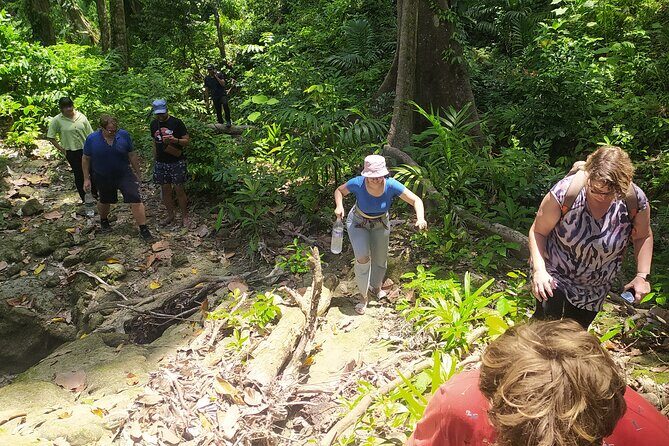
This is the part that determines who should book—and who shouldn’t. As the trek continues, you move through dense tropical forest where the ground becomes slippery at times. The experience includes rope-assisted climbing and rappelling.
That doesn’t mean it’s out-of-control extreme sports. It does mean you should treat it like a hike with technique. Your shoes, your grip confidence, and your knee and back comfort all matter. If you’re carrying a heavy day bag, you’ll feel it here.
The tour description specifically says it’s not recommended for anyone with physical issues, especially back, knee, or cardio vascular issues or general weakness. I’ll repeat that plainly: if stairs or uneven ground bother you at home, don’t gamble on this trek.
If you do go, use a simple strategy:
- Keep a steady pace even if others pass you.
- Place your weight before you trust your foot.
- Use ropes only as intended, not as a thrill lever.
- Assume you’ll need extra time on wet or slick patches.
One more point: rappelling and rope-assisted sections usually require mental calm. If you tend to panic when balance feels uncertain, this may not be your best day. Pick it only if you can stay focused on the steps in front of you.

Freshwater stream ending: the payoff for finishing carefully
The trek ultimately leads to a freshwater stream, which gives the hike a clean ending. Streams add a couple of things you can appreciate even without fancy nature knowledge: cooler air, more water-related plant life, and a natural reason to pause and look.
This ending segment also ties back to the story theme. You’ll observe evidence of how the islands formed and the history of wildlife on these islands. In other words, you’re not just finishing with a photo opportunity—you’re finishing with explanation.
A stream finish is also psychologically helpful. It signals the hardest parts are behind you, and that makes it easier to enjoy the last stretch. If the earlier rope sections had your attention, the stream gives you permission to shift into observation mode.
If you’re going for photos, aim to keep your hands free and your footing secure first. I’ve seen plenty of people lose good angles because they forget that wet ground doesn’t care about camera framing.
Price and value: what $33.56 gets you (and what it doesn’t)
At $33.56 per person, this trek is priced low for what you’re getting: a guided 2.5-hour hike through multiple habitat types, including plantation context and rope-assisted terrain. It’s also small-group (up to 15), and it includes all fees and taxes.
So where does the value come from?
- You’re not just walking—you’re getting specific explanations about plants, trees, and geology.
- You’re getting a hands-on style trail format (ropes/rappelling), not a gentle loop.
- You’re seeing both natural areas and a working areca nut landscape.
What’s not included matters too. There’s no air-conditioned vehicle listed, so transport to the start is on you. If you’re used to convenient transfers, plan your ride. The trek itself isn’t the place to solve transport logistics.
The booking timing also hints at demand: on average, this is booked about 6 days in advance. If you want a spot on a day with good weather, don’t wait until the last minute.
And you get a mobile ticket, plus confirmation at booking time. In plain terms: you should be able to sort this quickly without tons of paperwork.
Weather, tickets, and start-point reality checks
This is a good-to-know: the experience requires good weather. If it’s canceled due to poor weather, you’ll be offered another date or a full refund. Since the trail can be slippery, weather isn’t just “comfort” here. It can affect safety and whether the guide runs the route.
The tour is also confirmed at booking time, and you’ll have a mobile ticket. That’s helpful when you’re hopping around islands and don’t want to chase printouts.
The start point is clearly defined near Govind Nagar. Since the tour ends back at the meeting point, you don’t need to solve a second transport problem at the finish. Still, I’d treat the location pin as your friend: show up early enough that you’re not asking directions while the group is lining up.
Also, the tour takes place in the afternoon at 1:00 pm. If you get motion-sick on trails, avoid combining this with heavy late lunch plans that can make steep or slippery areas feel worse.
Who should book this trek—and who should skip it
This trek is for people who want a guided nature walk with hands-on trail sections. If you like botany, geology talk, and real-world island agriculture (not just untouched scenery), you’ll probably enjoy it a lot.
You should have moderate physical fitness. Think: you can walk on uneven ground for a couple hours, and you can handle slippery patches without freezing up.
Don’t book if you have:
- back problems
- knee issues
- cardio-vascular concerns
- general weakness
I’m not saying that to be dramatic. The rope-assisted climbing and rappelling create a different kind of effort than a typical forest walk. Your body needs to be ready to use both balance and core stability.
If you’re traveling with older family members or someone recovering from injury, sit this one out. Choose a gentler option instead and keep everyone safe and happy.
The guide factor: why the explanations make the hike better
One of the most praised aspects is how detailed the guide is—especially with plants and trees and the geology of the Andamans. The experience isn’t just a route; it’s a lesson that tracks with what you see on the ground.
That’s the difference between a hike where you learn nothing and a hike where you remember details. When the guide can explain why certain plants grow where they do, you start noticing patterns yourself. When geology comes into the story, you understand that the island isn’t random. It’s shaped, and life adapted around that shape.
For me, that’s the true value of a botany-focused trek: you don’t leave with just photos. You leave with mental labels you can reuse on other parts of the islands.
Also, high satisfaction (4.9 rating, 100% recommended, 58 reviews) is usually a sign that the guide keeps the pace workable and the explanations clear. Not every operator hits that balance, so it’s worth paying attention to.
Should you book the Ancient Lava Stream Trek?
Book it if you want an afternoon trek on Havelock Island that mixes dense tropical forest, plantation context, and a freshwater finish—plus guided talk about plants and island formation. At this price, with a small group and rope-assisted elements, it’s a strong value if you’re physically game for the trail.
Skip it if ropes and slippery ground make you nervous, or if you have back, knee, or cardio-vascular limitations. This isn’t the hike to “see how it goes.” It’s built for a specific kind of participant.
If you’re on the fence, use this rule: if you can confidently handle uneven, wet terrain for a couple hours and follow safety instructions without panic, you’ll likely enjoy it. If you’d rather stay dry and steady, spend your energy on a lower-impact walk and save this one for a time when you’re feeling strong.
FAQ
How long is the Ancient Lava Stream Trek on Havelock Island?
The trek lasts about 2 hours 30 minutes.
What time does the tour start, and where does it end?
It starts at 1:00 pm and ends back at the meeting point.
How many people are in the group?
The experience has a maximum of 15 travelers.
Is the trek suitable if I have back, knee, or cardio issues?
No. It is not recommended for anyone with physical issues, especially back, knee, or cardio vascular issues or weakness.
What is included in the price, and is transport included?
All fees and taxes are included. An air-conditioned vehicle is not included.
What is the cancellation policy if weather is poor?
You can cancel for a full refund up to 24 hours in advance. The experience requires good weather, and if it’s canceled due to poor weather, you’ll be offered a different date or a full refund.