REVIEW · NEW DELHI
12 Day Classic Rajasthan Tour – Taj Mahal Tigers Lakes & Wildlife
Book on Viator →Operated by Joyful Holidays · Bookable on Viator
Tigers, temples, and the Taj—stacked into 12 days. What I like about this trip is the way it mixes Ranthambore game drives with classic North India sights in a tight route across Delhi, Agra, Jaipur, Udaipur, Jodhpur, and the UNESCO fort country of Chittorgarh. It’s not just monuments on paper; it’s monuments plus wildlife time, with enough structure to keep things moving.
Two things I especially like are the sunrise Taj Mahal visit (arrive early and beat the day’s crowds) and the fact that you’re not left guessing—city tours are guided where it matters, and you get drivers for the in-between stretches. One drawback to plan for: monument entry fees and meals (lunch/dinner) are not included, so you’ll want a realistic daily budget for tickets and your own food stops.
In This Review
- Key highlights (what you’ll actually remember)
- Why this 12-day Rajasthan + Tigers route feels like a smart “first taste”
- Price and value: what the $1,479 covers (and what you’ll pay for separately)
- Getting around: AC comfort, real pickup, and the rhythm of early starts
- Delhi in a half-day format: old markets, major monuments, and one very full schedule
- Jaipur: Fort views, royal blends, and landmarks you’ll recognize instantly
- Jodhpur’s Mehrangarh: blue city vibes and the feel of real streets
- Udaipur via Ranakpur: marble carvings and then lake-time calm
- Pushkar and Chittorgarh: sacred lake rituals and a UNESCO-branded fort story
- Ranthambore safaris: how to maximize your morning and afternoon odds
- Agra: Fort, garden viewpoints, and the Taj Mahal at first light
- Hotels and daily comfort: what to expect from the package style
- Operator strengths: why this feels smoother than piecing it together
- Should you book this Rajasthan and tiger tour?
- FAQ
- Where does the tour start and end?
- Are pick-ups and transfers included?
- What hotel quality is included?
- Are breakfast meals included?
- How many safari drives are included at Ranthambore?
- What time is the morning safari?
- Is the Taj Mahal sunrise included?
- What’s not included in the price?
- Cancellation
Key highlights (what you’ll actually remember)
- Two Ranthambore safaris in shared jeep/canters for the best odds of tiger sightings
- Sunrise Taj Mahal time arranged early, with a battery bus ride from the Taj parking area
- Big-fort energy across Jaipur and Jodhpur, plus UNESCO Chittorgarh fort sights
- Udaipur by water with a Lake Pichola boat ride and classic palace-and-temple stops
- Well-timed structure that includes long travel days, but also real breaks to reset
Why this 12-day Rajasthan + Tigers route feels like a smart “first taste”

Rajasthan can be overwhelming at first. Forts everywhere, colors everywhere, and somehow you still need sleep and good timing. This tour is built to solve that. You get a straightforward geographic rhythm: Delhi for historical contrast, then Jaipur/Jodhpur for fort drama and city textures, then Udaipur for lakes and slower views, and finally Ranthambore for wildlife.
The wildlife piece is the main reason to choose this exact style of trip. You’re not just passing through; you’re dedicating time to two separate safaris. That matters because tiger sightings aren’t guaranteed, and daylight conditions can be different between the morning and afternoon.
And yes, you end with the Taj Mahal at sunrise. That’s not a “nice extra.” It’s a whole experience shift—light changes, the mood is calmer, and the timing helps you avoid the busiest parts of the day.
One more important note: the tour name includes Bundi, but the day-by-day stops here highlight Delhi, Jaipur, Jodhpur, Udaipur, Chittorgarh/Pushkar, Ranthambore, and Agra. If Bundi’s mural streets are a key reason you booked, I’d confirm with the operator that your departure actually includes it.
A few more New Delhi tours and experiences worth a look



Price and value: what the $1,479 covers (and what you’ll pay for separately)
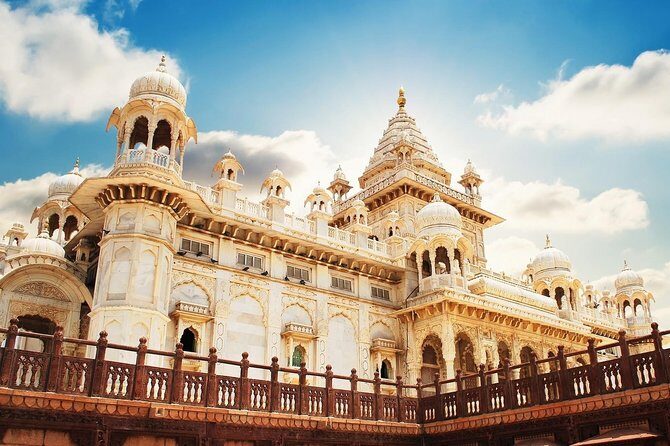
At $1,479 per person for about 12 days, this is priced like a “comfort + logistics” package. Here’s what’s genuinely valuable inside that number:
- Hotel accommodations in 3, 4, or 5 stars (depending on the option you choose)
- Air-conditioned vehicle with packaged drinking water
- Professional city tour guides for the planned sightseeing blocks
- Breakfast daily for most days (11 breakfasts)
- Two Ranthambore game drives in shared jeep/canters
- Battery bus ride from Taj parking
What is not covered:
- Monument tickets
- Lunch and dinner
- Anything not specifically listed above
So the real budgeting question is: are you comfortable paying entry fees and eating on your own for some meals? If yes, the package value is strong because you’re buying time-saving guides, transport, and safari logistics—not just “a driver and a map.”
Also, sunrise Taj visits and safari days are schedule-heavy. When a package includes those timing-critical elements (like the morning safari pickup and the Taj early meeting), it often saves you stress compared with piecing it together yourself.
Getting around: AC comfort, real pickup, and the rhythm of early starts
This tour is structured around one daily truth in India: mornings can be early, and the best sights often require you to move before the day gets hot and loud. You’ll typically start with breakfast, then meet your guide or driver, then ride to the next city or attraction.
Transport is air-conditioned, and you get packaged drinking water. That’s a quiet convenience, especially on longer transfer days like the drive from Jodhpur toward Udaipur, or getting from Agra back to Delhi at the end.
Two timing notes you should take seriously:
- Ranthambore safari day starts with pickup around 05:30–06:00, with the morning safari scheduled for 6:00 AM.
- Taj Mahal sunrise requires meeting in the lobby at 5:45 AM.
If you’re the type who sleeps through alarms, set backup alarms. Your body will thank you when tiger-spotting light hits.
Delhi in a half-day format: old markets, major monuments, and one very full schedule

Delhi day is designed as a concentrated highlight reel. You cover Old Delhi and New Delhi edges without trying to do everything.
You’ll start at Jama Masjid, the Friday Mosque commissioned by Shah Jahan. Then it’s into Chandni Chowk, with a rickshaw ride through the market lanes. This is one of those experiences where the point isn’t only the destination; it’s how quickly you feel the city’s pulse.
After that, you get classic photo stops and history markers:
- Red Fort from the outside (the tour notes that much of it is occupied by the Indian Army, so you’ll mostly see and photograph the exterior)
- Raj Ghat, the black marble memorial where Mahatma Gandhi was cremated
- India Gate, a war memorial for soldiers of the British Indian Army
- Qutub Minar, a UNESCO World Heritage site and one of the most famous early Islamic monuments in India
Then you transfer to Jaipur the same day. That means Delhi is not “slow sightseeing.” It’s efficient. If you’re sensitive to tight schedules, pack patience—and water—because the day packs a lot of landmarks into a short window.
Jaipur: Fort views, royal blends, and landmarks you’ll recognize instantly
Jaipur is the Pink City, and this program leans into the big visual signatures.
You’ll visit Amer/Jaipur Fort (the program frames it as Jaipur Fort). It’s a sandstone-and-marble palace complex on a rocky rise—perfect for understanding why Rajasthan forts dominate the skyline.
Then you’ll hit a stack of “you can’t miss” stops:
- Jal Mahal as a photo stop (the Water Palace view from the road)
- City Palace, where courtyards and museums show the mix of Rajasthani and Mughal styles
- Hawa Mahal for the honeycombed, pink facade—the Palace of Winds
You also go to Jantar Mantar, an observatory of geometric structures used to track the movement of stars and planets. Even if astronomy isn’t your hobby, it’s a good reminder that these places weren’t only built to impress—they were built to observe.
One practical consideration: some Jaipur highlights here are quick photo stops rather than long museum-style stays. That’s normal in multi-city tours, but if you want slow time in a single place, you may want to plan a bit of independent wandering in the evenings.





Jodhpur’s Mehrangarh: blue city vibes and the feel of real streets
Jodhpur earns its nickname, because the city’s old sections and hilltop fort energy are visually striking. This tour gives you one major fort day.
At the top is Mehrangarh Fort, described as one of the largest forts in India, positioned about 410 feet above the city and known for thick walls and latticed stone windows. It’s the kind of place where you start seeing Jodhpur as a system—walls, gates, vantage points—rather than just “a fort.”
Then you move to royal memorial and city-center stops:
- Jaswant Thada, a royal cremation site
- Ghanta Ghar (Clock Tower) and nearby old city streets
- Sardar Market, where you can ramble through lanes selling spices, sweets, textiles, handicrafts, and silver
This is also one of the best segments for “go slower” moments. The fort gives you history and scale; the market gives you texture and the everyday rhythm.
Udaipur via Ranakpur: marble carvings and then lake-time calm
The Udaipur approach includes an en-route stop at Ranakpur Jain Temple. The program calls out its marble complex and carvings, and this is a change of pace from the fort-heavy days. It’s quieter, more architectural, and a good reset before you reach lake country.
Then you arrive in Udaipur, described as the City of Lakes. You’ll have a hotel check-in and an overnight.
On the city sightseeing day, the highlights are classic Udaipur:
- Jagdish Temple
- City Palace, with museums and gardens overlooking Lake Pichola
- Lake Pichola, including a boat ride
You’ll also visit Sahelion Ki Bari, the garden built for the queen and her maids, with fountains, pools, pavilions, and marble elephants. It’s one of those spots where you can actually sit for a moment and stop scanning for the next landmark.
Why this matters: after fort days (Jaipur/Jodhpur/Chittorgarh), Udaipur’s pacing lets you breathe. Even if you’re the type who loves photos, your best Udaipur memories will probably come from the boat ride—light on water, temple silhouettes, and that slow-lake feeling.
Pushkar and Chittorgarh: sacred lake rituals and a UNESCO-branded fort story
The route shifts toward spiritual sites and one of Rajasthan’s biggest fort stories.
You start with Pushkar, including time at Pushkar Lake and the Brahma Temple (Jagatpita Brahma Mandir). The program highlights that this is one of the few temples dedicated to Brahma in the world and that the lake is surrounded by ghats where pilgrims bathe.
Then you continue to Chittorgarh Fort, a UNESCO World Heritage Site and a symbol of bravery. The program lists key sections you’ll focus on:
- Rana Kumbha Palace
- Meera Mandir
- Vijay Stambha
- Queen Padmini Palace
This day is more than sightseeing. Chittorgarh is the kind of fort where you start feeling the weight of place—how long these walls have watched history roll by.
The main drawback here is mental load. There’s a lot of meaning packed into fort sections, and on a tour like this, you’re moving quickly. If you like history but also need time to absorb, pick one stop inside Chittorgarh and give it extra attention.
Ranthambore safaris: how to maximize your morning and afternoon odds
Ranthambore is the centerpiece wildlife day, and the tour schedules two safaris, which is a big deal for wildlife trips.
Here’s the basic rhythm:
- Pickup for the morning safari around 05:30–06:00
- Morning safari in the park at 6:00 AM
- Return by around 10:30 AM, with breakfast back at the hotel
- Then lunch, followed by an afternoon safari starting around 2:30 PM
- You return to the hotel in the evening
You’re riding in shared jeep/canters, and that’s typical for Ranthambore. The advantage of having two drives is simple: animal behavior isn’t predictable, and light changes how comfortable you’ll feel outdoors.
Practical advice:
- Expect it to be cooler early, then warm up fast later.
- Bring sunglasses and a hat for the midday glare.
- Keep your camera/lens accessible. With early starts, you’ll lose time fumbling.
Also, temper expectations in a healthy way. The goal is tiger chances, not a guaranteed tiger photo. Two safaris improve the odds, but it’s still wildlife. When you treat it like a wildlife morning and not a photo guarantee, you enjoy it more.
Agra: Fort, garden viewpoints, and the Taj Mahal at first light
Agra is your final big city, and the tour’s plan hits the Taj’s gravity from two angles: earlier viewpoints and then sunrise itself.
Daytime Agra city time includes:
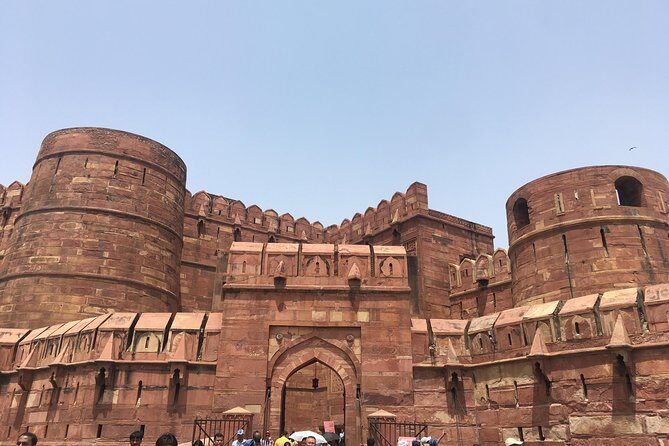
- Agra Fort, an architectural masterpiece and UNESCO site built by Akbar (the program notes it as Lal Qila / Qila-i-Akbari, built from red sandstone)
- Mehtab Bagh (Moonlight Garden) on the Yamuna river opposite the Taj Mahal
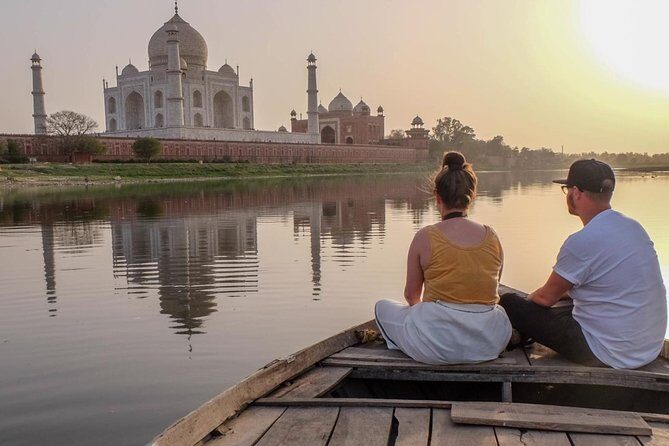
Then you do something you’ll feel in your bones: Taj Mahal sunrise. You meet at 5:45 AM in the hotel lobby and visit the Taj at first light. The program states the Taj shows different hues, including a pink shade at sunrise.
Two things to know from a traveler perspective:
- Plan for a lot of standing and walking. Sunrise visits are short on patience and long on steps.
- Taj entrance tickets are noted as not included here, so budget accordingly.
There’s also a battery bus ride from Taj parking, which helps reduce time and walking around the parking approach. That’s a small inclusion, but it matters when you’re arriving early and still waking up.
Hotels and daily comfort: what to expect from the package style
Your hotels are chosen from 3, 4, or 5 stars depending on your option. That means you should expect solid basics—private rooms, air-conditioning in the category you choose, and the kind of comfort that helps you handle early wake-ups and long transfer days.
A small but helpful operational detail is how check-in/check-out works. The tour notes a common pattern in India: many hotels handle check-in around noon and check-out around noon. If you arrive early, you may get some flexibility, or you may simply be doing a bit of light exploring before your room is ready.
This tour also includes breakfast on 11 days, which is a big deal when you’re moving quickly. It’s not just food—it’s fuel for safari time and long sightseeing days.
Operator strengths: why this feels smoother than piecing it together
One of the most praised aspects of this operator’s style is attention to the humans doing the driving and guiding. In other Joyful Holidays experiences, people have highlighted named team members and smooth transport—like driver Praveen being on standby, guide Atul in Agra, and other support including Sonia and the team’s coordination.
I like this approach because it shows up in practical ways:
- You’re not stuck dealing with loose ends between cities.
- Guides are provided for city sections where it helps.
- The transport is scheduled, so you spend energy on seeing instead of organizing.
It’s still a group-style plan (shared jeep/canters for Ranthambore), but it’s also described as private for your group, meaning you won’t be tossed into random crowds for the core touring blocks.
Should you book this Rajasthan and tiger tour?
Book it if you want a first serious Rajasthan trip that stacks major monuments, palace-city stops, lake scenery, and two Ranthambore safaris without you micromanaging tickets and transfers. The sunrise Taj timing is a particularly strong reason to choose this package style.
Don’t book it (or confirm details first) if you care deeply about having very slow, lingering time in only one or two places. This route moves. Also confirm whether Bundi is included on your exact departure, since the day-by-day plan provided here doesn’t show it clearly.
If you’re flexible, up for early mornings, and you like structured touring with guided context, you’ll likely find this an efficient, memorable way to see North India’s highlights—plus the wildlife piece that makes it feel like more than just history postcards.
FAQ
Where does the tour start and end?
It starts with arrival in New Delhi, and it ends with a drive back to Delhi where you’ll be dropped off at your hotel, Delhi Airport, railway station, or another preferred location in Delhi/Noida/Gurgaon.
Are pick-ups and transfers included?
Yes. A chauffeur assists with transfer to your pre-booked hotel in Delhi, and the tour also includes pickup for safari and guided sightseeing as scheduled.
What hotel quality is included?
The tour includes hotel accommodations in 3, 4, or 5 stars, depending on the option you select.
Are breakfast meals included?
Yes. Breakfast is included on 11 days of the 12-day tour.
How many safari drives are included at Ranthambore?
Two game drives are included at Ranthambore in shared jeep/canters.
What time is the morning safari?
The pickup is scheduled for about 05:30 AM–06:00 AM, with the morning safari in Ranthambore National Park at 6:00 AM.
Is the Taj Mahal sunrise included?
Yes, you meet at 5:45 AM for a sunrise visit. The Taj Mahal admission ticket is listed as not included.
What’s not included in the price?
Monument tickets, lunch, and dinner are not included, along with anything not mentioned in the inclusions list.
Cancellation
You can cancel up to 6 days in advance for a full refund. Canceling 2–6 days before start time gives a 50% refund, and cancellations less than 2 days before start time are not refunded.