REVIEW · NEW DELHI
10 Day Private Luxury Golden Triangle with Khajuraho and Varanasi
Book on Viator →Operated by Golden Triangle Tours India · Bookable on Viator
Golden Triangle plus two holy cities feels like a shortcut through time. I like that this is truly private (your group only, with pickup and drop-off), and I also like the way the trip builds around UNESCO sites with enough time to actually look, not just pose. One thing to plan for: monument entrance tickets and meals aren’t included, and a couple of days involve long travel stretches that you’ll feel in your schedule.
What makes this itinerary especially workable is the balance: big-ticket icons (Delhi’s Mughal and Sultanate landmarks, the Taj Mahal at sunrise, Varanasi at night) plus quieter stops like stepwells and temple sculptures. You get private local guides in each city, and on past departures the driving has been handled by friendly, safety-focused pros like Surendra, Ajay, Man Singh, Deepak, Himmett, and Maan.
In This Review
- Key Points at a Glance
- Why This Golden Triangle Plus Khajuraho and Varanasi Works
- Day 1 in Delhi: Gurudwara Bangla Sahib as Your Calm Start
- Day 2 in Delhi: Qutub Minar, Lotus Temple, Jama Masjid, and Chandni Chowk
- Day 3 Jaipur: Temples First, Then a Hotel Night to Reset
- Day 4 Amber Palace to Hawa Mahal: Rajasthan in One Organized Sweep
- Day 5 Chand Baori and Fatehpur Sikri: The Detour That Makes Agra Mean Something
- Day 6 Sunrise Taj Mahal and the Agra Fort Circuit
- Day 6 Into Day 7: Arrive Khajuraho for Temple Sculpture With Teeth
- Day 8: The 400 Km Drive to Varanasi You’ll Actually Appreciate
- Day 9 in Varanasi: Kashi Vishwanath, Sarnath, Ganges Walk, and Ganga Aarti
- Day 10: Drop-Off in Varanasi and a Final Day That’s Actually Yours
- Price and Logistics: What This Tour Includes (and What to Budget)
- Should You Book This Tour?
- FAQ
- Is this tour private?
- What’s included in the price?
- Are monument entrance tickets included?
- How are hotels arranged?
- How long is the drive from Khajuraho to Varanasi?
- What vehicle do we use?
- Is free cancellation available?
Key Points at a Glance
- Private local guides every step of the way so you’re not wandering with a guidebook and guesses
- Sunrise Taj Mahal setup, plus an included battery bus ride from the parking area up to the monument
- UNESCO-heavy routing across Delhi, Agra, Jaipur, and Khajuraho, with a second spiritual layer in Varanasi
- Comfort-first transport in an air-conditioned private vehicle (sedan, wagon, or minivan depending on group size)
- Value in the details: bottled water during journeys and daily breakfast if you book the hotel option
Why This Golden Triangle Plus Khajuraho and Varanasi Works

This route earns its “Golden Triangle” name in spirit, even though it stretches beyond the usual Delhi–Agra–Jaipur loop. You’ll still hit the headline sights, but the best part is pacing. Each day has a theme, and the stops are organized so you’re not constantly backtracking.
Also, private guiding matters a lot here. Delhi alone can swallow your day if you don’t know where to go first. With a local guide, you get the meaning behind the buildings: why Qutub Minar was built, what the Mughal rulers left behind, and how the city’s religious landmarks fit together.
If your dream trip is “see a lot, but don’t feel rushed,” this is the right format. If you’re hoping for fully included monument tickets and meals, you’ll want to budget separately.
You can also read our reviews of more private tours in New Delhi

Day 1 in Delhi: Gurudwara Bangla Sahib as Your Calm Start
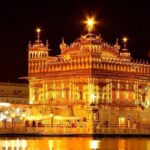
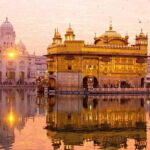
You begin at Gurudwara Bangla Sahib, a strong choice for day one because it sets a tone of calm and everyday faith. The site is known for a story tied to 1664, when the eighth Sikh Guru is said to have visited and helped during outbreaks by distributing water from the tank.
What you’ll like here is the rhythm: it’s not only about architecture. You get a sense of how the community uses the space. Admission is listed as free, and you’ll spend about 30 minutes before moving into the rest of Delhi’s highlights later on.
Practical tip: dress respectfully (shoulders and legs covered is a safe bet), and keep your water handy. Delhi days can start cool and get warm fast.
Day 2 in Delhi: Qutub Minar, Lotus Temple, Jama Masjid, and Chandni Chowk
Day two is your “Delhi classics” day, and it’s packed in a good way. You’ll start with Qutub Minar, a UNESCO World Heritage site and a 73-meter tall five-storey tower built in 1193 by Qutub-ud-din Aibak. Even if you’ve seen photos, seeing the scale in person changes how you read the place.
Next up: the Lotus Temple. It’s free, open to everyone regardless of religion, and it’s designed with a flower-like form. It’s a quiet contrast after the tower’s heavy stone presence.
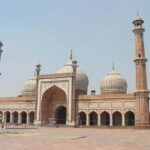
Then you shift into the city’s political and Mughal-era heart. You’ll pass India Gate, a war memorial that doubles as a popular picnic spot. You’ll also visit Jama Masjid, one of the largest mosques in Delhi, commissioned by Shah Jahan between 1650 and 1656. That time period comes through when you look at the layout and scale.
You’ll also make time for smaller stops that many big tours skip:
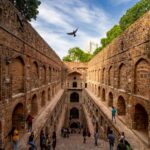
- Agrasen Ki Baoli (stepwell): free and about 15 minutes, a protected monument that feels like a cool pocket of old Delhi
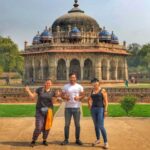
- Humayun’s Tomb: about an hour, another Mughal landmark worth lingering over
- Chandni Chowk: about an hour, where the markets can hit you with sights and smells—spices, dried fruit, silver jewelry, and narrow lanes busy with daily life
Consideration: this is a long day with multiple neighborhoods. Wear shoes you can walk in for real. If you’re sensitive to crowds, you’ll want to move with purpose during Chandni Chowk and use your guide to keep your bearings.
Day 3 Jaipur: Temples First, Then a Hotel Night to Reset
On day three, you begin Jaipur with the Monkey Temple, also known as Galtaji (the Abode of Monkeys). It’s famous not only for animals but for the temple complex and its three sacred pools of water.
Then you’ll visit Birla Mandir, a white marble temple with intricate latticework dedicated to Lord Vishnu. It’s also a good spot for photos if you like clean lines and crisp details.
After that, you arrive in Jaipur and check in. That’s a smart choice: you get a cultural warm-up, then you’re done for the day without forcing another full circuit. The itinerary gives you around three hours on this Jaipur-arrival day.
Practical tip: since you’ve already started with temples, keep your afternoon lighter—save heavy shopping for when you’re fully awake.
Day 4 Amber Palace to Hawa Mahal: Rajasthan in One Organized Sweep
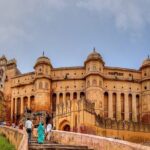
Day four is the classic Jaipur highlight day, and it’s built around iconic form and viewpoint. You’ll start at Amber Palace (Amer), with about a two-hour guided tour through palaces and monuments. This is a place where details matter: courtyards, decorative elements, and the sense of how power was displayed.
You’ll also stop by Jal Mahal, the water palace in Man Sagar Lake. The listing notes it as a Rajput structure tied to the lake’s setting. Even if you’re not going to spend long here, it’s a good break for your eyes after Amber’s dense palace energy.
Next: Jantar Mantar, a UNESCO site built in 1734 by Rajput king Sawai Jai Singh II. The star here is the collection of nineteen astronomical instruments. If you like science history—or you just enjoy seeing how people measured the world before digital age—this will land well.
Then you’ll visit:
- City Palace (about an hour), originally the administrative and ceremonial seat of the Maharaja
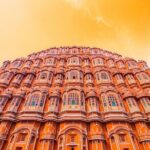
- Hawa Mahal, the Palace of Breeze, built with red and pink sandstones and shaped like a five-storey pyramid
- Albert Hall Museum, where the stop is short but useful for grounding Jaipur’s art and museum culture
What to watch: several of these sites involve stairs, uneven surfaces, and long sun exposure. Bring sunscreen and a hat. Also, monument entrances aren’t included, so set aside some cash or card time for entry fees.
A few more New Delhi tours and experiences worth a look




Day 5 Chand Baori and Fatehpur Sikri: The Detour That Makes Agra Mean Something
This day adds a different kind of “wow.” You start with Chand Baori in Abhaneri, a stepwell that drops about 30 meters and stretches roughly 30 meters into the ground. Stepwells aren’t just architecture—they’re engineering for water storage and survival. You’ll have about an hour here.
Then you travel to Fatehpur Sikri, the late 16th-century Mughal complex built by Akbar, and once the capital for about a decade. It’s listed with about an hour, and it’s the kind of stop that helps you understand why the Mughal style in Agra and Delhi looks the way it does.
Finally, you head to Agra and check in. The rest of the day is free at leisure, which is exactly what you want after a packed sightseeing stretch.
Practical tip: use your free time in Agra to adjust to local routines—meals, rest, and an early night if you’re doing the Taj sunrise next day.
Day 6 Sunrise Taj Mahal and the Agra Fort Circuit
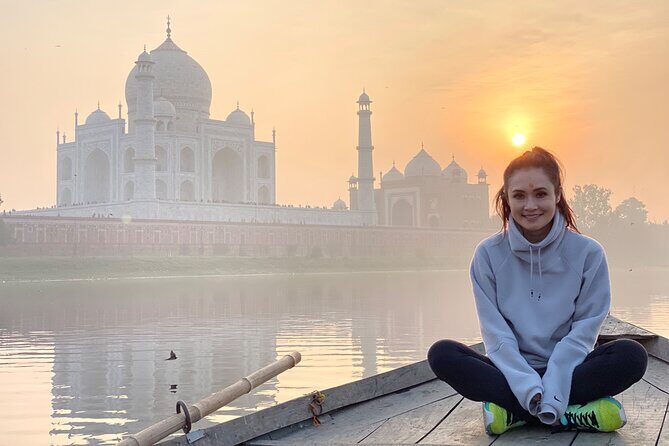
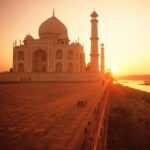
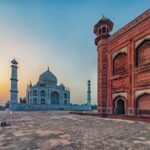
Day six is built around the Taj Mahal, and it’s structured like you want it: watch the sun rise, then get a guided tour inside for about two hours. The guided portion is where the Taj becomes more than a postcard. You’ll get context on the tomb’s purpose and the Mughal emperor Shahjahan’s role, and it helps you notice details you’d otherwise miss.
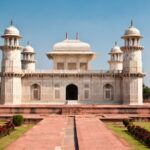
The itinerary also includes Agra Fort (about an hour) and Itmad-ud-Daula, often called Baby Taj, with about 30 minutes. Those two stops are valuable because they show the broader Mughal world beyond the Taj. You see the power system, not just the final monument.
Plus, you get a battery bus ride from Taj Mahal parking up to the monument area. That saves energy and time, especially if you’re arriving early.
Consideration: sunrise means early. If you’re the type who struggles before breakfast, plan for it now. Also, monument entrance tickets aren’t included, so this is one of the days where budgeting matters.
Day 6 Into Day 7: Arrive Khajuraho for Temple Sculpture With Teeth
You travel from Agra to Khajuraho and check in the same day. The itinerary calls the transfer part of day six, then day seven is where you really hit Khajuraho.
Day seven starts with Lakshmana Temple (about an hour), built by Chandela ruler Yashovarman in the 10th century, with the main idol described as Lord Vaikuntha with three heads and four arms. Even if you’re not deep into iconography, the listing’s detail hints at why this site became famous: you’re looking at stone sculpture that’s both devotional and artistically specific.
Then you move to Kandariya Mahadev Temple (about an hour). It’s attributed to Chandela king Vidyadhara in the early 11th century. The listing notes the region faced invasion and destruction earlier, so seeing the temple in that context helps you understand why these builders made such bold statements.
Later you’ll do the Khajuraho Temples circuit for about five hours. This is the part that makes the entire itinerary feel justified. You came for the Golden Triangle, but Khajuraho gives you something different—temple art as storytelling in stone.
Practical tip: bring a light layer even if it’s warm. Temple visits can stretch into times of changing weather and light.
Day 8: The 400 Km Drive to Varanasi You’ll Actually Appreciate
From Khajuraho to Varanasi is about 400 km and takes around 7 hours. That’s long, no way around it, but the good news is the tour keeps you moving on a private air-conditioned vehicle, not a chaotic public transit slog.
When you arrive, you check in and then you have time for Varanasi activities later in the day (the plan lists additional time, but the exact segment isn’t fully shown). Either way, plan for an evening that feels intense in its own way—Varanasi isn’t a “quiet museum city.”
Practical tip: pack snacks and plan for bathroom stops. Bottled water is included during journeys, but your own extras make the ride more comfortable.
Day 9 in Varanasi: Kashi Vishwanath, Sarnath, Ganges Walk, and Ganga Aarti
Day nine is the heart of the spiritual side of the trip. You begin at Kashi Vishwanath Temple, described as a riverside Shiva landmark with an 18th-century gold-plated spire and a sacred well. The guide time here is about learning what the place means to worshippers.
Then you visit Sarnath around noon. It’s a significant Buddhist pilgrimage site and the location where Lord Buddha first preached the Dharma after enlightenment. You’ll explore the ancient ruins of monasteries.
After that, you go to the Ganges River and take a walk along the river bank for about an hour. This is where you feel the living culture—people moving with purpose, daily rituals, and the river as the center of it all.
The day ends with the Ganga Aarti. You’ll witness the evening ceremony with the best view from your seat. The itinerary lists it as about an hour.
Consideration: if you get overwhelmed by crowds, plan to keep your pace calm during river areas. Also, photography rules can vary in sacred spaces, so follow your guide’s cues.
Day 10: Drop-Off in Varanasi and a Final Day That’s Actually Yours
Your final day is simple: breakfast, check-out, then drop-off to any desired location in Varanasi. That matters because it lets you connect the tour with your next plan—airport timing, extra nights, or a quick rest before flying out.
Private drop-off also helps avoid the last-day scramble, which is usually the moment a lot of trips fall apart.
Price and Logistics: What This Tour Includes (and What to Budget)
At $623.07 per person, the value here isn’t just “transport and hotels.” It’s the combination of private vehicle, private local guides, daily breakfast (if you book the hotel option), and the way it packs major sites without making you fight the logistics alone.
Here’s what’s included:
- 9 nights accommodation when you choose the hotel-inclusive option
- Private air-conditioned transport with a driver
- Hotel or airport pickup and drop-off
- All sightseeing with private local guides
- Daily hotel breakfast (if hotels are included)
- Battery bus ride to and from the Taj Mahal parking area up to the monument
- Bottled mineral water during journeys
- Basic “personal care and attention”
What’s not included:
- Monument entrance tickets
- Meals beyond what’s specifically included
- Tips for the driver/guide and laundry/personal expenses
Room setup is typically twin-sharing, and for groups of three it’s triple-sharing by default unless you pay extra for two rooms.
How I’d budget: this kind of trip usually becomes more expensive than people expect once you add site entry fees, a few meals out, and tips. Still, you’re paying for guides who can interpret what you’re seeing, and that often saves time and confusion.
Should You Book This Tour?
Yes—if you want North India’s biggest hits with a guide doing the heavy lifting. This itinerary is a strong choice for first-timers because the stops are recognizable, UNESCO-driven, and spaced so you can absorb them.
I’d say think twice if:
- you want every ticket and meal included in the price
- you’re extremely sensitive to early mornings (sunrise Taj Mahal will require you to be up)
- you dislike long day transfers (the Khajuraho to Varanasi drive is about 7 hours)
One more useful note: the tour organizer behind this experience is described in prior bookings as flexible about adding extras. For example, some people asked about a Jhalana leopard safari in Jaipur through their contact (Gopal). That’s not listed as part of the base plan you provided, but it’s a good sign that you can request optional add-ons if you want more nature time between cities.
FAQ
Is this tour private?
Yes. It’s a private tour/activity, meaning only your group participates. The transport is also arranged specifically for your group size.
What’s included in the price?
Included elements are private air-conditioned transport with a driver, hotel or airport pickup and drop-off, private local guides for sightseeing, daily hotel breakfast (if you book with hotels), bottled mineral water during journeys, and a battery bus ride to and from the Taj Mahal parking area up to the monument.
Are monument entrance tickets included?
No. Monument entrance tickets are listed as not included, and the Taj Mahal time on the schedule also indicates admission is not included.
How are hotels arranged?
Rooms are generally provided on a twin-sharing basis. If you book for 3 people, rooms are typically triple-sharing by default, unless you pay an additional charge to get 2 rooms.
How long is the drive from Khajuraho to Varanasi?
The drive is about 400 km and takes around 7 hours.
What vehicle do we use?
For groups of 1 or 2, it’s a 4-seater sedan. For groups of 3 or 4, it’s a 6-seater wagon. For groups of 5 to 10, it’s a 10-seater minivan.
Is free cancellation available?
Yes. You can cancel up to 24 hours in advance for a full refund. If you cancel less than 24 hours before, the amount paid is not refunded.