REVIEW · NEW DELHI
Taj Mahal And Agra Overnight Tour From Delhi By AC Car
Book on Viator →Operated by Dream India Trip · Bookable on Viator
Sunrise at the Taj Mahal feels like a cheat code. This Delhi-to-Agra overnight tour is built around Mughal highlights you can actually fit into two days: Agra Fort, Itimad-ud-Daula, and a Taj view timed from Mehtab Bagh. I like the convenience of pickup anywhere in Delhi (and nearby cities) and I like the way the itinerary pairs sunrise and sunset-style viewing options. One thing to keep in mind is the schedule twist around closures, so you may not always get a sunrise Taj depending on which day you book.
This is a private format, so you’re not stuck in a big cattle-car group. In at least some departures, the driving and guiding level is strong, with a safe, punctual driver named Goldy and a helpful guide named Imran, plus quick booking contact from Arwaz Khan. That matters, because the difference between a smooth Agra visit and a stressful one is often timing, not ticket lines.
The biggest practical drawback is also simple: lunch and dinner are not included, so you’ll want to plan meals (or choose the option you booked that’s closest to where you can grab food). If you pick an accommodation option, twin-sharing rooms with breakfast are available; otherwise, you’ll want to make sure your overnight plan is covered.
In This Review
- Key things you’ll notice on this overnight tour
- Delhi to Agra in an AC Car: The Pace and Comfort
- Where the Money Goes: Price and What to Double-Check
- Day 1 in Agra: Agra Fort, Itimad-ud-Daula, and a Mehtab Bagh Sunset Angle
- Agra Fort: a Mughal seat of power
- Itimad-ud-Daula: quieter and more intimate
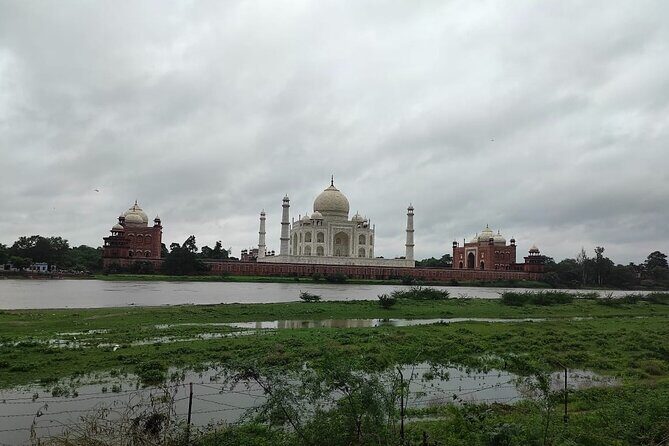
- Mehtab Bagh: the Taj from across the river
- Day 2 Sunrise at the Taj Mahal and the Fatehpur Sikri Stop
- Taj Mahal visit: why sunrise (and why timing matters)
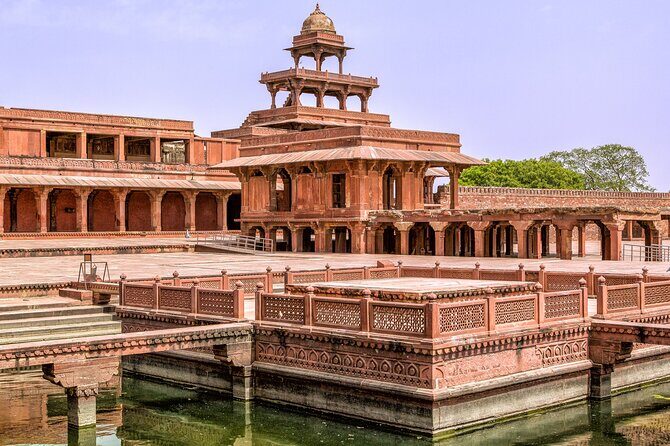
- Fatehpur Sikri: red sandstone and a side of Akbar’s capital
- Return to Delhi
- Timing Gotcha: Thursday vs Friday Taj Mahal Changes
- Guides, Drivers, and the Value of a Smooth Day
- Practical packing and on-site tips that matter for Taj and UNESCO stops
- Who this overnight tour is best for (and who should think twice)
- Should you book this Delhi to Agra overnight by AC car?
- FAQ
- How long is the Delhi to Agra overnight tour?
- What is included in the pickup and drop-off?
- Will I get to see the Taj Mahal at sunrise?
- Are the monument entrance fees included?
- Is lunch or dinner included?
- What vehicle will I travel in?
Key things you’ll notice on this overnight tour

- Yamuna Expressway transfer: about 3 hours each way, with AC transport and tolls/parking handled.
- UNESCO-focused route: Agra Fort, Itimad-ud-Daula, Taj Mahal, plus Fatehpur Sikri.
- Two Taj viewing angles: sunrise at the Taj Mahal (when scheduled) and a sunset viewpoint from Mehtab Bagh.
- Private guide + skip-the-line support: more time spent looking, less time stuck.
- Hotel option with breakfast: twin-sharing stays in 3/4/5-star categories if you select it.
- Day-of-week Taj schedule change: Taj Mahal is closed on Friday, so Thursday bookings shift the Taj timing.
Delhi to Agra in an AC Car: The Pace and Comfort
This tour is built for people who want the Agra highlights without doing the math of trains, taxis, and ticket counters. The transfer is by an air-conditioned private vehicle, and the plan is straightforward: you’re picked up in Delhi (or nearby areas) and driven to Agra via the Yamuna Expressway. Expect around 3 hours for the drive, and you’ll have the comfort of someone handling tolls, fuel, and parking.
Group size matters here, because your vehicle depends on how many people are in your party. For smaller groups it’s a four-seater sedan; larger groups use bigger cars or a mini van. If you’re traveling with family or friends, this setup keeps everyone together and usually reduces the waiting that comes with mixing schedules.
What I like about the pacing is that day 1 isn’t only “ride to Agra and crash.” You get sights immediately after arrival, so the time doesn’t feel stolen by traffic and check-ins. The overnight portion then lets you do an early start on day 2 for the Taj visit, which is usually when the experience feels most special.
You can also read our reviews of more tours and experiences in New Delhi.



Where the Money Goes: Price and What to Double-Check

The price is listed at $87.70 per person, and it’s typically booked about a week in advance on average. That timing tells me the operator expects demand—so it’s worth booking earlier if your dates are firm.
Here’s the value logic: you’re paying for the whole package—pickup and drop-off, AC vehicle with taxes and tolls included, a private guide, and an overnight stay option (if you choose it). On top of that, the tour mentions skip-the-long-lines support and provides mineral water bottles.
What you should verify before you go is how the inclusion works for admission fees and meals:
- Entrance fees: the package says monument entrance fees are included if the option is selected. In the itinerary structure, some sights are marked as admission included while one stop is marked free. Your confirmation is the final word on which tickets are covered.
- Meals: lunch and dinner are not included. Breakfast is included only if you select a hotel option with breakfast.
So, even though this is a “value” style tour, you still need to budget for your own lunches/dinners and plan around the meeting times your driver and guide confirm.
Day 1 in Agra: Agra Fort, Itimad-ud-Daula, and a Mehtab Bagh Sunset Angle
Day 1 has a classic Mughal flow: power first, then elegance, then the Taj view.
Agra Fort: a Mughal seat of power
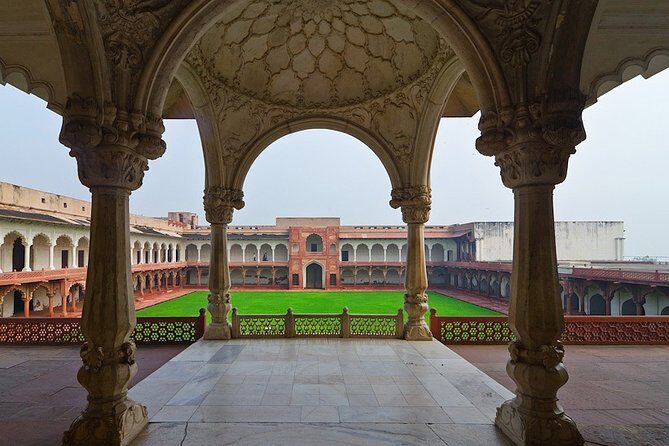
Agra Fort is treated as the major opener. It’s described as a residential palace of the Mughal emperors, and it’s also UNESCO-listed. The practical win is that it gives context for what you’re about to see later. Even if you’re not a “history lecture” person, you’ll get a sense of scale—fortifications, palace spaces, and the sheer effort that went into making Agra a center of empire.
Time-wise, plan on about an hour here. That’s enough for the highlights without turning your day into a museum marathon. The guide helps you keep your bearings, and since this is a private tour, you can ask questions without worrying about holding up a big group.
Itimad-ud-Daula: quieter and more intimate
Next comes Itimad-ud-Daula (also spelled Itmad-ud-Daula/Itimad-ud-Daula depending on the form). This tomb is built by Empress Nur Jahan on the Yamuna River bank, honoring her father Ghiyas-ud-Din Beg. It’s one of those places where the details tend to land harder than the monuments that people rush through.
Expect about 40 minutes. That’s a good length because you can slow down, look at materials and symmetry, and still have energy left for the late-day viewpoint.





Mehtab Bagh: the Taj from across the river
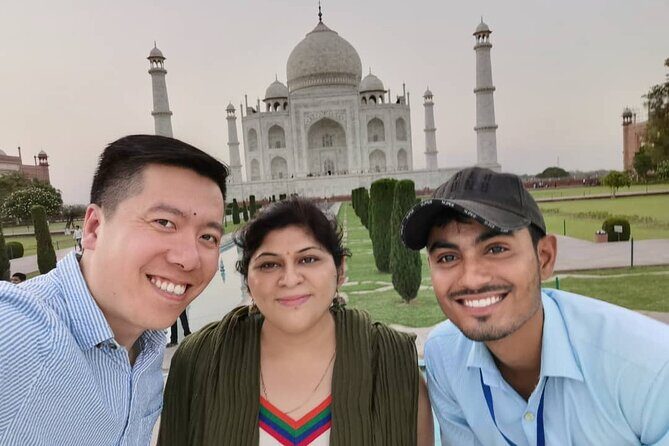
Then you shift from tomb elegance to Taj viewing. Mehtab Bagh is positioned across the Yamuna river, and it’s timed for sunset. The plan notes that sunset is believed to be the best time to view the Taj Mahal from here, and that timing is the whole point: the light changes your perception of the white marble in a way daytime visits don’t.
You’ll get about an hour here. The practical strategy for making this work is simple: come ready to stand and look. If you’re chasing photos, arrive with enough patience for crowds and angle-finding, but still keep space for enjoying the view without obsessing over the perfect shot.
Day 2 Sunrise at the Taj Mahal and the Fatehpur Sikri Stop
Day 2 is where the tour earns its reputation: Taj Mahal first, then a detour to Fatehpur Sikri before returning to Delhi.
Taj Mahal visit: why sunrise (and why timing matters)
The Taj Mahal time is the headline. When your schedule lines up, you’ll visit at sunrise for about two hours. That two-hour block is key—it gives time for entering, taking in the architecture, and not feeling like you’re sprinting through the experience.
This tour also includes skip-the-line support, which can be a big deal at popular sites. Even with line support, you’ll still want to be ready for security checks, so it’s wise to keep your entry routine simple.
One detail that can change everything: Taj Mahal is closed on Friday. If you book for a Thursday, you may not get the usual sunrise timing—your plan can shift so you see the Taj at sunset on Thursday instead.
Fatehpur Sikri: red sandstone and a side of Akbar’s capital
After the Taj, the tour goes to Fatehpur Sikri. This place is described as an older city founded by Mughal emperor Akbar, built in red sandstone, and it served as a capital during Akbar’s time.
You’ll have about 1 hour 30 minutes here. That’s enough to appreciate the main layout and get the feel of why UNESCO lists it. The main drawback is also typical for a stop like this: it can feel like a lot to cover in a short time if you want deep, slow exploration of every courtyard and building. The guide helps you choose what matters most for your interests, which is the best way to make limited time feel intentional.
Return to Delhi
After Fatehpur Sikri, you’re driven back to Delhi, with drop-off in Delhi, Gurgaon, Noida, or Faridabad. The drive is roughly 3 hours, so you’ll want to treat day 2 as a full travel day, not a “linger” day.
Timing Gotcha: Thursday vs Friday Taj Mahal Changes
This is the one planning issue worth taking seriously.
The tour notes that Taj Mahal is closed on Friday, and if you book on Thursday, the Taj viewing shifts: instead of sunrise, you’ll see it at sunset on Thursday. The takeaway is not “avoid Thursday,” but “choose your priority.”
If sunrise is your must-have moment, you should confirm what day-of-week you’re booking and how it affects Taj timing. If sunset viewing is just as appealing, then the schedule shift is less of a problem—and in some ways, it can make your visit feel different rather than “wrong.”
When you contact the operator after booking, ask for the exact plan for your date: sunrise or sunset, and which day you’ll visit the Taj Mahal. That small question saves disappointment later.
Guides, Drivers, and the Value of a Smooth Day
The most praised part of the experience, based on real-world feedback patterns, is how quietly the trip runs. People tend to notice two things fast in India road travel: safety and punctuality, and then how helpful the guide is once you’re at the monuments.
In at least one strongly positive experience, a driver named Goldy handled the transfer with a safe, polite approach and stayed on time. A guide named Imran added the kind of on-the-ground knowledge that makes Agra Fort and Itimad-ud-Daula feel like more than pretty buildings. Another key detail: booking communication can be quick and steady, with Arwaz Khan acting as a point of contact.
The private format also helps. You don’t need to negotiate your own timing with a crowd. If you want a few extra minutes at a tomb detail or want to move on before you’re tired, the flow is easier to manage.
Practical packing and on-site tips that matter for Taj and UNESCO stops
You don’t need a complicated packing list for this trip, but a few practical points can improve your day:
- Bring a valid photo identity for monument checks.
- Plan for an early start if your Taj time is sunrise. Your “morning self” matters more than your outfit plans.
- Wear comfortable shoes. You’ll be doing plenty of walking inside and between monuments.
- If you select the hotel option, remember you’re getting twin sharing with breakfast. Decide whether you want one of the 3/4/5-star categories based on your comfort level for the overnight.
- Bring a simple plan for meals, since lunch and dinner aren’t included. You’ll likely be eating near where the day’s timing places you.
Small preparation beats big stress. And since you’re doing multiple UNESCO sites in a short window, that mindset makes the trip feel enjoyable instead of rushed.
Who this overnight tour is best for (and who should think twice)
This tour is a strong fit if you want a focused, high-impact Agra visit and you value hassle-free logistics.
Best suited for:
- First-timers to Agra who want the biggest hits in a tight schedule.
- Couples, families, or friends traveling together who prefer private AC transport.
- Travelers who want a guide to make sense of the monuments without reading a book in a queue.
You might think twice if:
- You’re the kind of traveler who wants long, slow time in one monument rather than covering multiple UNESCO sites.
- You’re very strict about sunrise Taj only on specific dates—because the Friday closure can shift timing for Thursday bookings.
Should you book this Delhi to Agra overnight by AC car?
I’d book it if you want the convenience of pickup/drop-off, a private guide, and a route that hits the right mix of palaces, tombs, and viewpoint photography. At $87.70 per person, you’re paying for more than sightseeing—you’re paying for someone else to handle transport, timing, and the order of stops so you don’t burn your limited time wrestling logistics.
If Taj Mahal timing is your top priority, confirm the day-of-week details before you finalize. Once that’s squared away, this is a clean way to do Agra without turning the trip into an all-day scramble.
FAQ
How long is the Delhi to Agra overnight tour?
It runs about 2 days (approximately). You’ll travel from Delhi to Agra on day 1 and then return to Delhi after sightseeing on day 2.
What is included in the pickup and drop-off?
The tour includes pickup and drop-off to anywhere in Delhi, Noida, Faridabad, and Ghaziabad.
Will I get to see the Taj Mahal at sunrise?
The plan includes a Taj Mahal visit, typically at sunrise. However, the tour notes a schedule change: if you book on Thursday, you may visit the Taj Mahal at sunset instead, because the Taj Mahal is closed on Friday.
Are the monument entrance fees included?
Monument entrance fees are included if you select the option for them. The itinerary also indicates some sights as admission included and others as free, but your booking option will determine what’s actually covered.
Is lunch or dinner included?
No. Lunch and dinner are not included. Breakfast is included if you book the hotel option with breakfast.
What vehicle will I travel in?
Your vehicle depends on group size: a four-seater sedan for 1–2 people, a six-seater car for 3–5 people, a ten-seater mini van for 6–8 people, and a fifteen-seater van for 9–12 people.