REVIEW · JAIPUR
Amber Fort & Jaipur City Tour- Half or Full Day (with Guide)
Book on GetYourGuide →Operated by Rajasthan Tour Driver · Bookable on GetYourGuide
Amber Fort hits harder than any photo. This guided Jaipur route gives you the big names and the story behind them, from Amber Fort to the UNESCO clockwork of Jantar Mantar.
I love the payoff of a personal guide—stops make more sense and photos become easier. I also like the practical setup: pickup/drop-off, air-conditioned transport options, and free bottled water. One thing to plan for: entrance fees and lunch are not included, and Jaipur heat can turn even a short line into a long day.
When the guide is strong, like Shaukat, Akram, or Manesh, the monuments stop feeling like random buildings. Several guides in this format are known for clear explanations, good photo help, and telling the human side of royal life. Just remember you’re moving between sites, so bring comfortable shoes and expect a full-on sightseeing pace.
In This Review
- Key things I’d focus on before you go
- Price and what you actually get
- The route: from Amer (Amber) hill forts to Jaipur’s monuments
- Entering Amer (Amber) Fort: Rajput meets Mughal design
- Panna Meena Ka Kund: the stepwell that cools you down
- Jal Mahal on Man Sagar Lake: the Water Palace photo stop
- Royal Gaitor Tumbas: a calmer side of Jaipur
- Hawa Mahal: the honeycomb facade and why it was built
- Jantar Mantar UNESCO: 18th-century astronomy you can actually see
- City Palace: the final stop and the royal-family connection
- Transport and timing: why the driver quality changes the whole day
- Heat, shoes, and photo strategy (the practical stuff)
- Shopping stops: optional, and worth managing
- Who this tour suits best
- Should you book this Amber Fort & Jaipur City Tour?
- FAQ
- What’s included in the tour price?
- Are entrance fees to the monuments included?
- Is lunch included?
- How long is the tour?
- What are the main sites you’ll visit?
- Will I have a guide?
- Does it return you to the start location?
- Is there any shopping during the tour?
- Is it suitable for pregnant women or people with medical conditions?
Key things I’d focus on before you go
- Full-day structure or half-day flexibility: you can match the plan to your energy and time in Jaipur.
- Amber Fort + UNESCO Jantar Mantar: you get both the Rajput-Mughal fort spectacle and the 18th-century science.
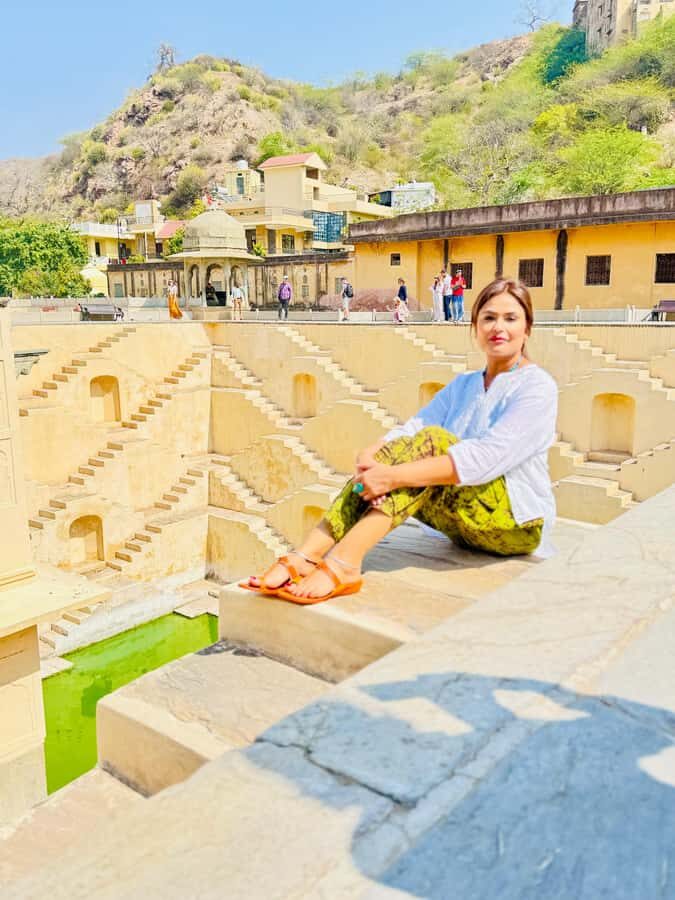
- Panna Meena Ka Kund stepwell: the geometry and cool shade are a smart break from sun-heavy stops.
- Jal Mahal at Man Sagar Lake: a short stop that looks amazing from the right angles.
- Guides matter a lot: people highlight guides such as Akram, Shaukat, Manesh, Abid, and Nadeem ji for storytelling and smooth pacing.
- No pressure shopping: some days include gemstone/fabric stops, but the better guides keep it low-key and respectful.
Price and what you actually get
This tour lists a price around $3 per person, which is unusually low for a guided day in a major city. The value is in the logistics and guiding, not the entrance tickets—those are not included. Think of it as paying for smart movement across Jaipur plus a guide who helps you make sense of what you’re seeing.
What you do get is solid: pickup and drop-off from your hotel or the airport, a private air-conditioned car (or a tuk-tuk with driver if you choose that), fuel/tolls/parking/taxes covered, and free bottled water. If you book the option with a guide, you also get interpretation at the sites, and that’s often where the day turns from sightseeing into understanding.
You can also read our reviews of more guided tours in Jaipur


The route: from Amer (Amber) hill forts to Jaipur’s monuments
This is a classic Pink City layout: you start outside the city at Amer/Amber, then work your way back through central Jaipur landmarks. The half-day or full-day option lets you decide how much you want to pack in—full day is best if you want unhurried time for photos and explanations.
The biggest practical difference between doing it on your own and doing it this way is timing. A driver who knows the flow helps you avoid some dead time, and a guide helps you prioritize what’s worth your steps. That matters because Jaipur can get hot fast, and you’re outdoors more than you might expect.
Entering Amer (Amber) Fort: Rajput meets Mughal design
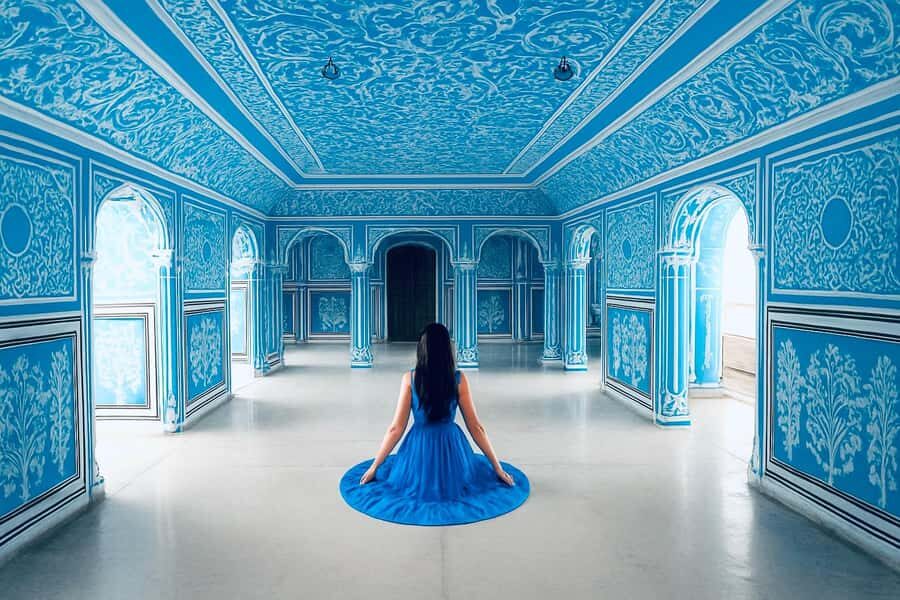
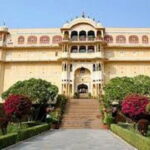
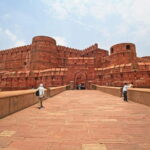
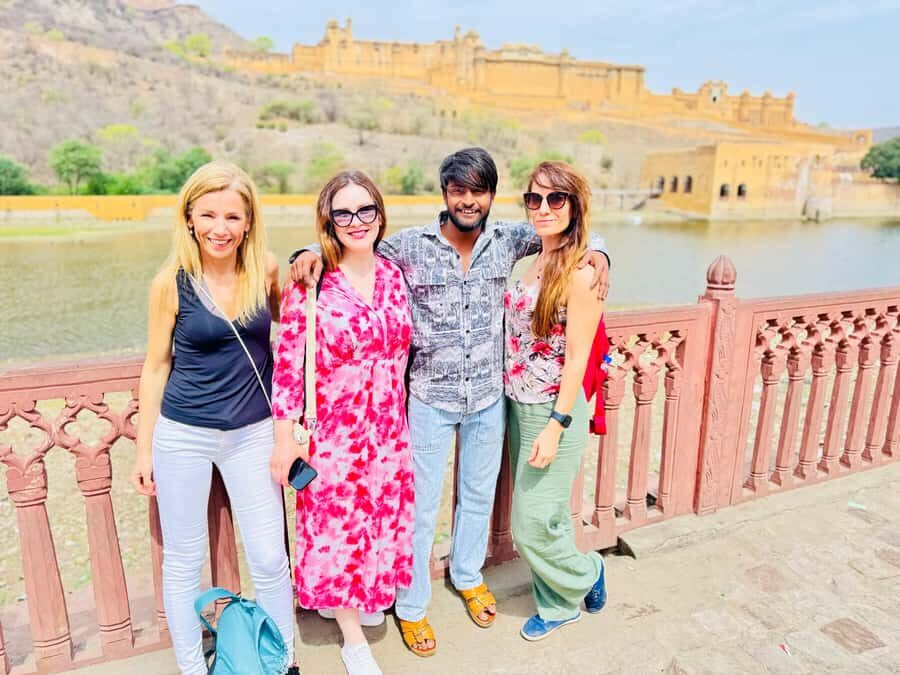
Your first major stop is Amer (sometimes spelled Amber), about 11 kilometers from Jaipur’s city center. Amer Fort is famous for mixing Rajput and Mughal architectural ideas, and the details are the point: intricate work, large courtyards, and frescoes that reward slow looking.
Because the fort sits on a hill, it also gives you big views over the surrounding area. Those panoramic angles are a big part of why this stop feels special, especially if you’re using your camera for more than postcard framing.
What to watch for: you’ll be walking through courtyards and ramps, and you’ll feel the sun. Choose comfortable clothes, keep water handy, and wear shoes you can stand in for a while.
Panna Meena Ka Kund: the stepwell that cools you down
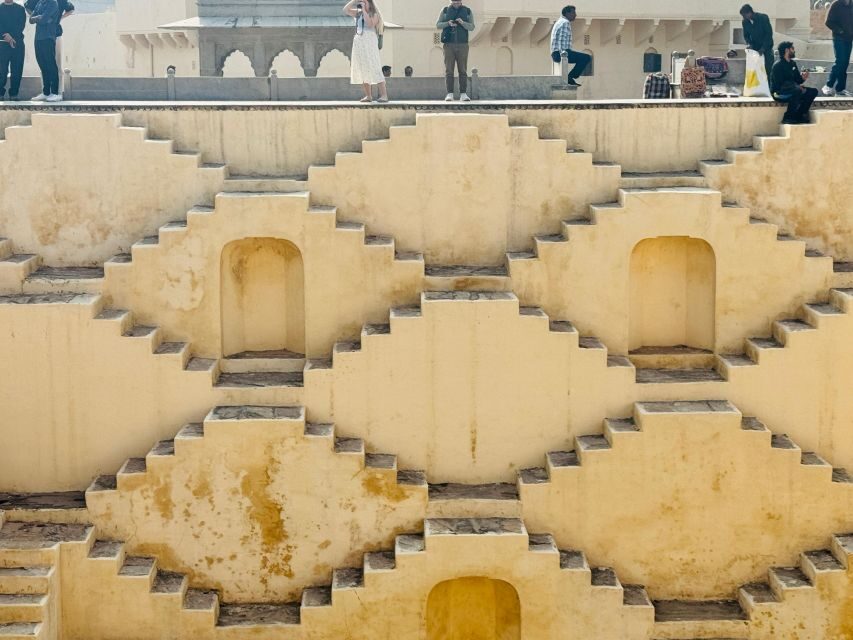
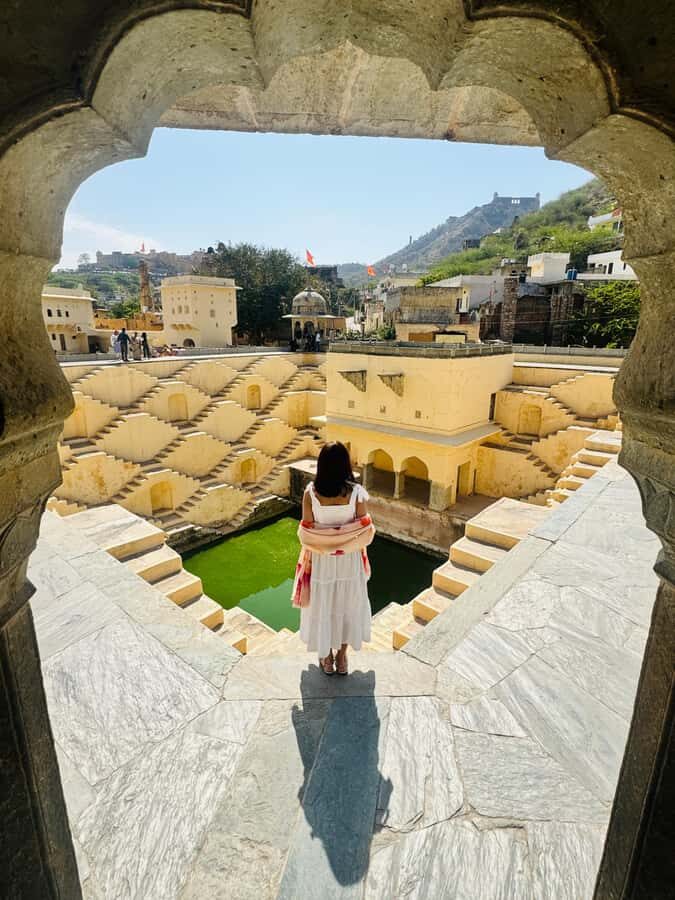
Next up is Panna Meena Ka Kund, an architectural marvel from the 16th century. It’s known for symmetrical crisscross staircases and geometric patterns, and it was used both as community space and a water storage system for an arid region.
In practical terms, this stop is a smart break. The interior stays cooler and shaded compared with the open fort areas, so it can reset your energy before the next sightseeing stretch. It also turns into a photo moment: the symmetry makes it easier to frame strong shots without needing a complicated setup.
Jal Mahal on Man Sagar Lake: the Water Palace photo stop
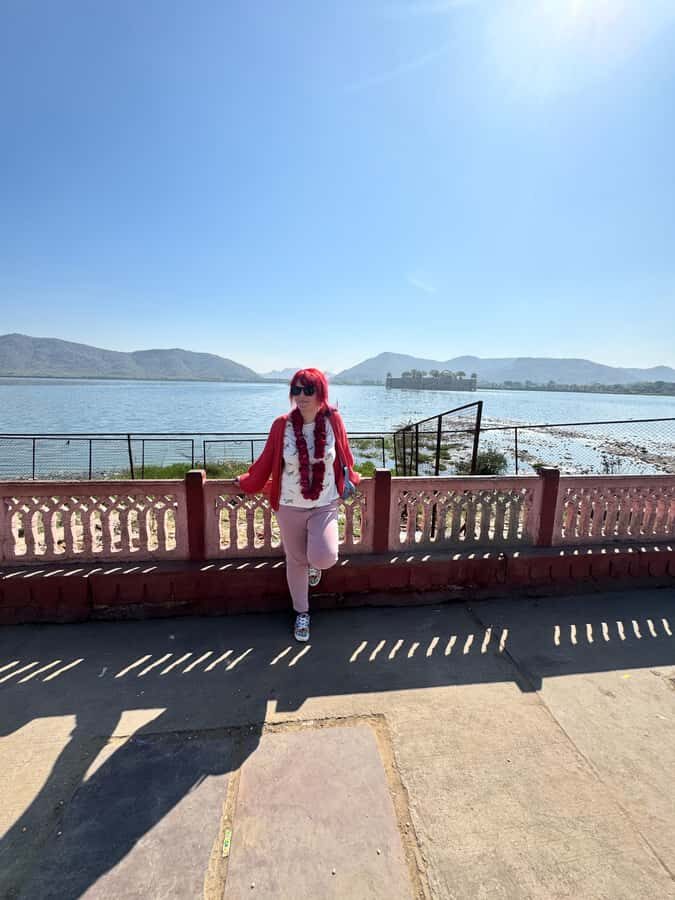
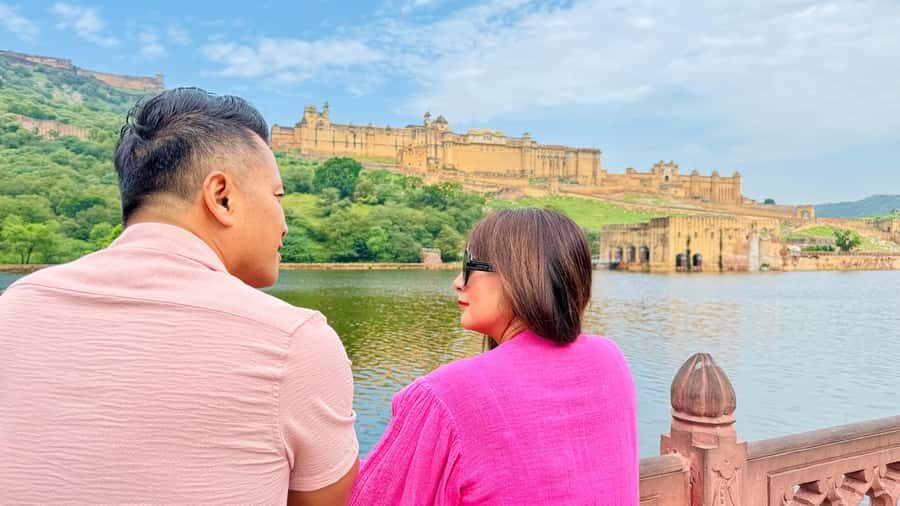
After Amer and the stepwell, you go to Jal Mahal, also called the Water Palace. It sits in the center of Man Sagar Lake, and the effect is the main attraction: the building appears to float on the water.
This is less of a “walk and explore every corner” stop and more of a “pause, look, and photograph” stop. Even if you only spend a short time here, it’s a beautiful contrast with the fort-and-palace day you just had.
If you’re serious about photos, be ready for waiting on the best angles—lake light changes quickly, and even small shifts in position can make the palace look more or less dramatic.
You can also read our reviews of more city tours in Jaipur



Royal Gaitor Tumbas: a calmer side of Jaipur
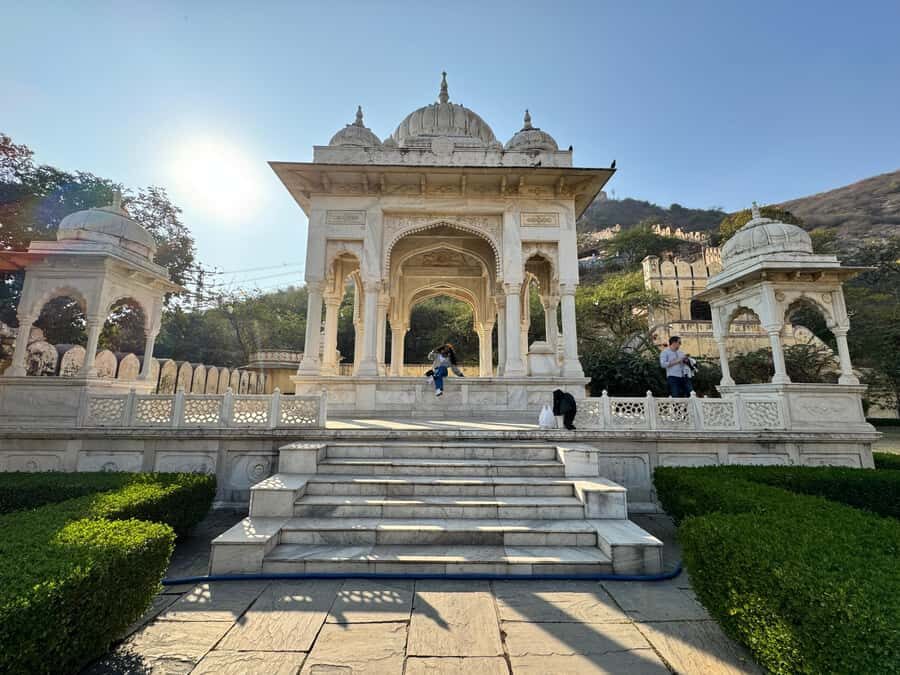
Then you head to Royal Gaitor Tumbas, a quieter site known for serene atmosphere and beautiful chhatris, or cenotaph-style structures, dedicated to Jaipur’s former kings. It’s described as being at the foot of Nahargarh Fort, which makes it feel tucked into the surroundings rather than stuck in a street-crowd feeling.
This is a good stop when you want variety. After the dramatic architecture of Amber and Hawa Mahal, Gaitor brings in a reflective mood and a different kind of royal story—less about power in action, more about memory and memorial design.
Hawa Mahal: the honeycomb facade and why it was built

Your next iconic landmark is Hawa Mahal, the Palace of Winds. The honeycomb-style façade is what most people recognize right away, and it’s one of Jaipur’s most photographed sights.
It was built in 1799 by Maharaja Sawai Pratap Singh. The original purpose is key to understanding the building: it was designed so royal women could watch city life below while staying unseen from street view. That design concept turns Hawa Mahal into more than a decorative exterior—it’s built around privacy, perspective, and urban observation.
Tip: plan some time for photos at different distances. The façade looks different depending on how you frame it, and a guide can help you find angles with less crowd obstruction.
Jantar Mantar UNESCO: 18th-century astronomy you can actually see
Jantar Mantar is next to the City Palace and it’s a UNESCO World Heritage Site. Built in the 18th century by Maharaja Sawai Jai Singh II, it features 19 instruments, including the world’s largest stone sundial.
This isn’t a museum where everything is behind glass. Many instruments are visible and large-scale, and a guide’s explanations are what make the patterns and measurements click. If you like science, this stop feels especially satisfying because you can connect the shapes to real uses—timekeeping, tracking celestial positions, and more.
Even if astronomy isn’t your thing, it’s still a strong contrast to the palaces and forts. It shows Jaipur flexing intellectual ambition, not just building beauty.
City Palace: the final stop and the royal-family connection
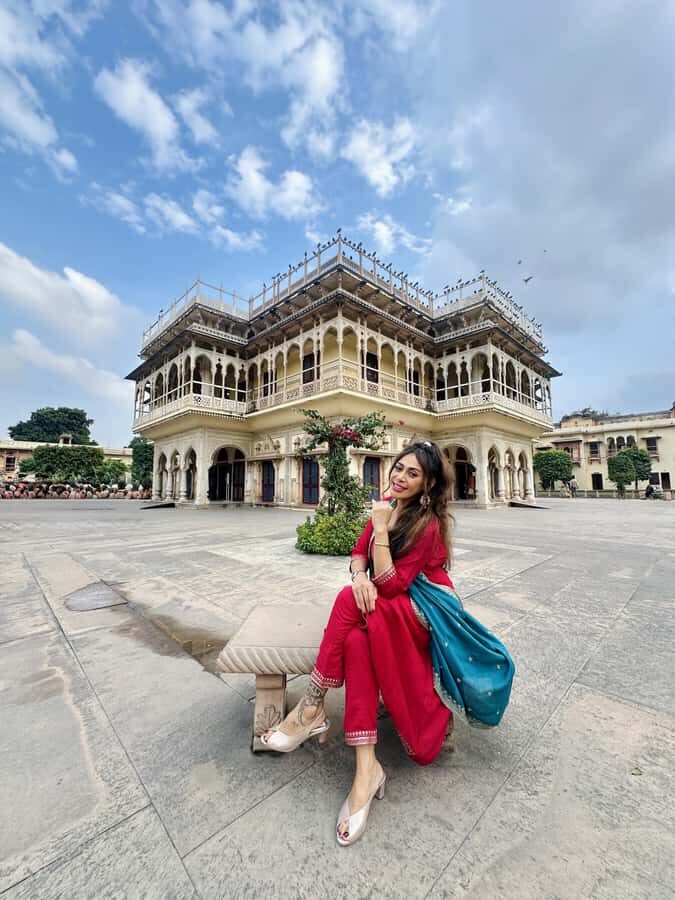
You wrap up with City Palace, a complex of museums, palaces, and gardens. It was built by Maharaja Sawai Jai Singh II, and it still functions as part of the residence of Jaipur’s royal family.
This is a good finish because it lets you broaden your view after the earlier highlights. Hawa Mahal shows the city-facing façade idea. Amber shows architectural power on a hill. Jantar Mantar shows scientific structure. City Palace ties it all together as one long-running royal setting.
What makes it worth it is the mix: museum elements, palace spaces, and gardens all in one place. You get variety without changing locations again and again.
Transport and timing: why the driver quality changes the whole day
The tour offers options: Sedan car for 1–2 people, SUV (Toyota Innova or similar) for 4–5 passengers, and Minivan for 6–10 passengers. All private cars are described as air-conditioned. If you pick a tuk-tuk option, you’ll still have a driver.
Drive quality matters more in Jaipur than you might think. Several guide/driver combinations are praised for safe driving and slow, patient handling—helpful when you’re moving between hill areas, lakeside points, and central streets. If you get a driver who’s calm, it changes how you experience every stop.
Also, you’ll likely cover a lot of walking. A relaxed transport setup reduces stress so you can focus on the monuments.
Heat, shoes, and photo strategy (the practical stuff)
Jaipur can get hot, so dress comfortably and plan around hydration. Bring a camera, comfortable clothes, and comfortable shoes—those are the essentials given for a reason.
If you’re building your own photo plan mentally, do this:
- Start with wide shots at Amber and Hawa Mahal.
- Then shift to pattern shots at Panna Meena Ka Kund and instrument details at Jantar Mantar.
- End with a slower look at City Palace where you can take time.
A guide who helps with photos can save you frustration, especially at tight angles or where you need a better line of sight. In the past, guides such as Manesh and others have been highlighted for helping with photos during key moments.
Shopping stops: optional, and worth managing
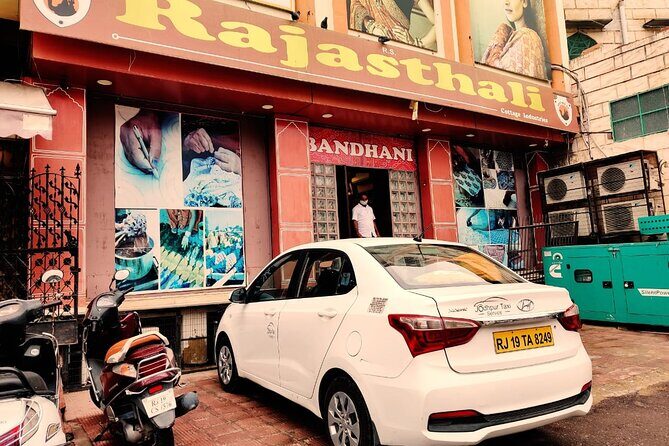
This tour can include visits to shops, such as gemstone and fabric stops. In at least some experiences, the pacing was respectful, with no rush and no pressure to buy.
If you dislike shopping detours, say so early. A good guide will adjust and keep the focus on the monuments. If you do want to shop, treat it like a culture bonus, not the main event—your money buys you a souvenir, while your ticket buys you the guide-led context.
Who this tour suits best
This is ideal for first-time visitors to Jaipur who want the major highlights without spending hours figuring out routes and timing. It also works well if you like a guided layer—especially for Jantar Mantar, Amer Fort, and the design story behind Hawa Mahal.
It may be less suitable if you’re sensitive to long walking days or if you have medical conditions or are pregnant, since the tour notes it is not suitable for those situations.
Language options include English, Hindi, Italian, and Spanish, which can make a big difference in how much you get from the explanations.
Should you book this Amber Fort & Jaipur City Tour?
If your top goal is a guided, efficient route through Jaipur’s must-see sites, this is an easy yes. The value is strongest when you choose the option with a guide, because the architecture and UNESCO science make much more sense with clear explanations. The day is also built for practicality: pickup/drop-off, bottled water, covered driving costs, and a flexible full-day/half-day approach.
I’d book it if you want:
- Amber Fort + Jantar Mantar UNESCO in one organized day
- a guide who can connect monuments to the story of Jaipur
- comfortable transport that helps you keep your energy
I’d think twice if you’re on a strict budget for entrance fees only, because the tour price doesn’t cover those. Also, if heat and walking are hard for you, plan your clothing and footwear carefully and consider the shorter duration.
FAQ
What’s included in the tour price?
You get pickup and drop-off from your hotel or the airport, air-conditioned private car or a tuk-tuk with driver (your choice), a guide if you select that option, free bottled water, and fuel/tolls/parking/taxes covered.
Are entrance fees to the monuments included?
No. Entrance fees for the monuments are not included.
Is lunch included?
No. Lunch at a multi-cuisine restaurant is not included.
How long is the tour?
It’s offered as a half-day or full-day customizable tour, depending on the option you choose.
What are the main sites you’ll visit?
The highlights listed include Amber Fort (Amer), Panna Meena Ka Kund, Jal Mahal, Royal Gaitor Tumbas, Hawa Mahal, Jantar Mantar, and City Palace.
Will I have a guide?
You can choose the option that includes a tour guide. The guide languages listed are English, Hindi, Italian, and Spanish.
Does it return you to the start location?
Yes. The tour ends back at the meeting point.
Is there any shopping during the tour?
Some experiences include stops at shops for gemstones and fabric, and in those cases the pace was described as not rushed.
Is it suitable for pregnant women or people with medical conditions?
No. The tour states it is not suitable for pregnant women and for people with pre-existing medical conditions.