REVIEW · NEW DELHI
Sultanpur The wonder of Birding from Delhi
Book on Viator →Operated by Discover Activities · Bookable on Viator
The calm hits fast the moment you leave Delhi. Sultanpur Bird Sanctuary is a serious bird watchers’ stop only about a 2-hour drive away, and it’s set up for real sightings, not just scenery. You get a guide-led walk around wetland and forest, with a chance to spot 250-plus bird species in one morning.
I especially like that it’s built around a focused 7:00 am start and about 3 hours on-site, so you’re not stuck watching the time clock. I also like the variety of bird types you can chase here—waders, ducks, storks, ibis, kingfishers, and more—so you’re rarely bored.
One consideration: if you’re a serious photographer, 3 hours can feel short, and the tour notes you may settle an extra per-hour charge with the guide if you want more time.
In This Review
- Quick hit: what makes this birding trip worth your morning
- Why Sultanpur Bird Sanctuary works so well near Delhi
- The 7:00 am plan and how the timing feels in real life
- Sultanpur wetland and forest: what you do once you’re there
- The species list you actually care about (and how to use it)
- Guide support: the real difference between seeing birds and spotting birds
- Transportation and what you should expect from the ride
- What’s included, what’s not, and how to pack smart
- Group discounts and how this works for your travel style
- Photography time: when 3 hours may not be enough
- Who should book Sultanpur birding from Delhi
- Should you book this Sultanpur Bird Sanctuary birding tour?
- FAQ
- What time does the tour start?
- How long is the birding experience?
- Is pickup from Delhi included?
- Can pickup and drop be arranged from Gurgaon?
- How long will I be in Sultanpur National Park?
- Is admission to the park included?
- What’s included in the tour price?
- What’s not included?
- What should I wear?
- Do I need a passport?
- Is there free cancellation?
Quick hit: what makes this birding trip worth your morning
- Sultanpur’s wetland focus means more action at the water’s edge
- A guide helps you spot fast, including smaller birds that blend in
- Built-in birding time: roughly 3 hours in the park
- Admission is included, so you’re not doing ticket math mid-trip
- Early start improves your odds for active birds
Why Sultanpur Bird Sanctuary works so well near Delhi
Sultanpur is the kind of place where your eyes adjust quickly. One minute you’re in Delhi traffic mindset; the next you’re scanning reed edges, shallow pools, and tree lines for movement. The setup matters: the area you’ll cover is described as a mix of wetland plus nearby forest, which naturally draws birds that feed, rest, and—during migration—stage in big numbers.
This is also a value-friendly way to do birding. You’re not paying for a long day of driving and sitting. The plan is straightforward: get picked up early, get to the reserve, and spend the prime morning hours outside looking and listening with a guide.
And while birding is always a bit weather-dependent, Sultanpur is known for winter migration. The experience description specifically calls out that each year more than 100 migratory species arrive there for feeding grounds and winter passage. That gives you a built-in theme for the morning: you’re not just looking for one bird—you’re in a place where many species overlap.
You can also read our reviews of more tours and experiences in New Delhi.



The 7:00 am plan and how the timing feels in real life
The tour starts at 7:00 am, with pickup from your Delhi hotel area. In practice, this early start is a big deal. Birds tend to be more active earlier, and mornings give you better light for noticing detail—especially if you like to identify birds by markings and shape rather than just catching movement.
You’ll be driven from Delhi to Sultanpur by private vehicle, and once you arrive, the guide takes you into the birding areas. The schedule is about 3 hours around the wetland and forest for spotting birds. Then you head back to Delhi after that.
That “about 3 hours” timing is not accidental. The tour notes that given the size of the park, 3 hours are enough for the birding tour. This is the practical sweet spot if you want a meaningful birding session without turning it into a whole vacation inside the reserve.
Sultanpur wetland and forest: what you do once you’re there
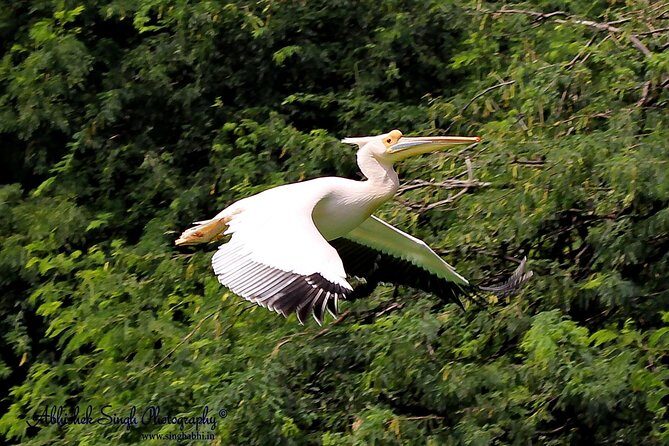
Your core experience happens inside Sultanpur National Park at the Sultanpur Bird Sanctuary. The guide leads you around the wetland and forest areas, with a goal of spotting as many species as you can within the morning window.
What you’ll be doing, in plain terms:
- Scanning open water edges and shallow wet areas for ducks, storks, ibis, and kingfishers
- Watching tree lines and perches for smaller songbirds and specialists
- Staying alert for movement in reeds, where waders and doves can appear suddenly
The description frames this as a place where migratory birds come to feed and pass the winter. That helps your mindset. Instead of guessing, you can expect the park to feel like a “mixing bowl” of birds. You might see big silhouettes from farther out, and then, with the guide’s help, start picking out smaller birds as you get closer to the right spots.
If you’re the type who likes identification, this is also a good environment for learning shapes and behaviors, not just names. For example, watching a bird’s feeding style—stabbing, probing, paddling, or hovering—often tells you more than color alone.
The species list you actually care about (and how to use it)
The experience description includes a long list of birds you may spot. That can be exciting, but it can also overwhelm you if you try to remember everything. Here’s a more usable way to think about it: treat the list as categories.
Big, showy birds you might look for include:
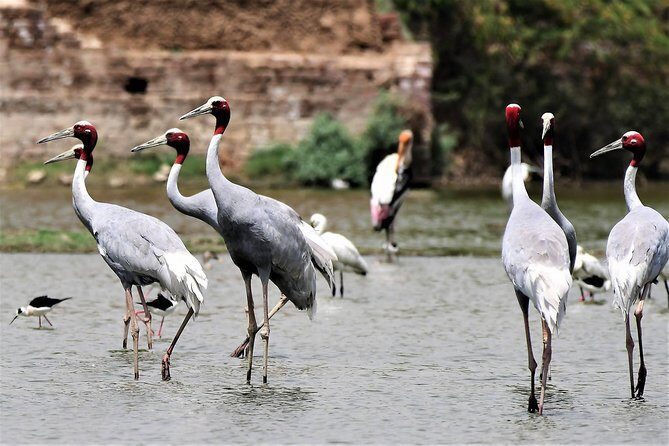
- Siberian Cranes
- Greater Flamingo
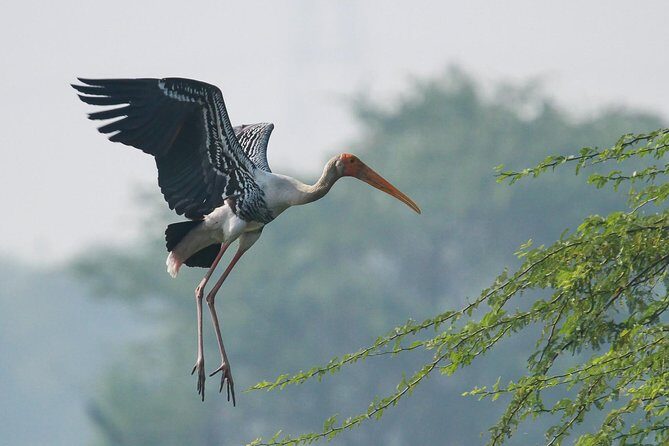
- Painted Stork
- White Ibis and Black-headed Ibis
- Spot billed Duck (spelled that way in the description)
- White-throated Kingfisher
Waders and shore birds are a major part of the action:
- Ruff
- Black-winged Stilt
- Northern Pintail, Northern Shoveler, Eurasian Wigeon
- Wood Sandpiper, Spotted Sandpiper
- Common Greenshank, Spotted Redshank
- Black-tailed Godwit
Smaller birds and perching species can appear too:
- Purple Sunbird
- Indian Roller
- Bluethroat and (as listed) “Read more” suggests additional species beyond the text provided
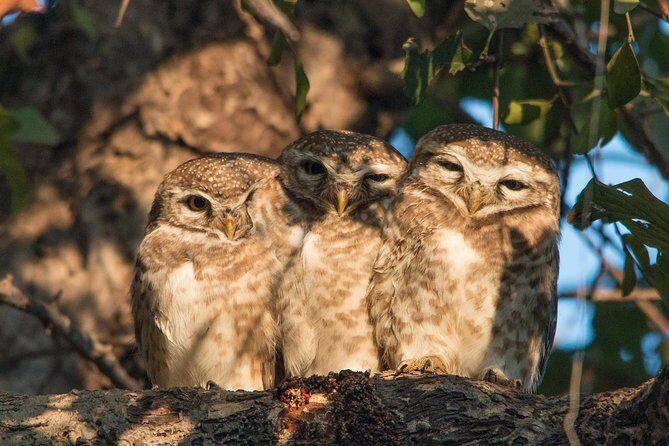
- Spotted Owlet
- Magpie Robin
- Eurasian collared Dove
- Eurasian Thick-knee
- Yellow Wagtail and White Wagtail
- Rosy Pelican
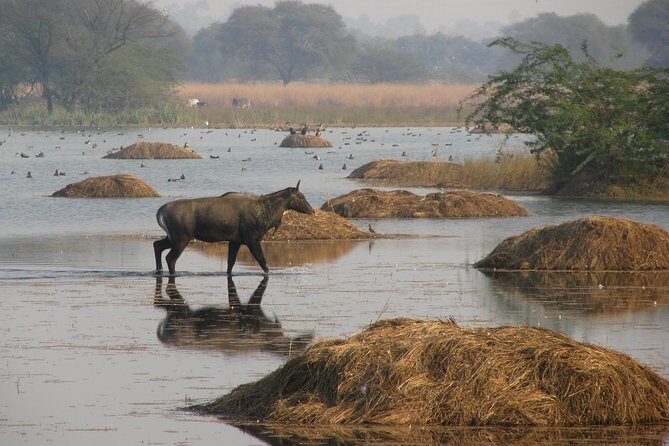
The list also mentions that you can spot a Blue buck as a fauna element. It’s not described in detail, but it’s worth keeping in mind as you scan for wildlife beyond just birds.
How to use all this without driving yourself crazy: pick 3 or 4 “targets” that you really want (for me it would be one kingfisher-type, one wader, one ibis/stork), and let the rest be bonuses. A guide can help you confirm what you’re seeing as conditions change.
Guide support: the real difference between seeing birds and spotting birds
A huge part of your success here is the guide. The tour includes a tour guide and positions them as central to your birding loop. When birding is done well, it doesn’t feel like random wandering with binoculars. It feels like being led to likely spots, then having help turning sightings into IDs.
One name that shows up in the experience feedback is Sachin, described as an amazing guide for Sultanpur National Park birding. The key point for you: don’t underestimate how much quicker you’ll get from “I saw a bird” to “I know what it is” when the person leading you knows the calls, movement patterns, and where birds tend to show up.
Also, because the park session is about 3 hours, you want efficiency. A good guide gives you that. You spend less time guessing and more time actually enjoying the sightings.





Transportation and what you should expect from the ride
This is a private vehicle day trip experience with pickup included. You’ll leave Delhi and head to Sultanpur, and then return after the birding session.
The important practical point: you’re paying for convenience here. Instead of relying on your own transport and trying to time the day around sunrise bird activity, you get a driver and a plan. That matters when you’re trying to be ready early and focused once you arrive.
The tour also notes you can get pickup and drop from the Gurgaon region too, which is helpful if you’re staying outside central Delhi.
If you’re the type who hates rushing, plan your morning so you’re ready a bit before pickup. Early starts can be smooth—or stressful—depending on how prepared you are.
What’s included, what’s not, and how to pack smart
Included in the experience:
- Bottled water
- Transport by private vehicle
- Tour guide
- Admission ticket is included (for the park time)
Not included:
- Food and drinks
That last part is where many mornings go sideways if you’re not ready. Since you’ll be out for about 5 to 6 hours total (including driving), bring a simple strategy: plan on eating before you go, and carry a snack if you expect to be hungry after a few hours of scanning birds. The tour includes water, but it doesn’t position itself as a full meal tour.
What to wear: the dress code is listed as smart casual. For birding, you’ll likely want comfortable clothes that can handle light walking around wet areas. If you wear something too formal or restrictive, it can make the walk less fun than it needs to be.
Binoculars help, and the vibe of the experience clearly assumes you’ll be ready to look closely—so pack them if you have them. If you don’t, you might still enjoy the outing, but IDs and scanning will be harder without gear.
Group discounts and how this works for your travel style
The experience lists group discounts and describes it as private in the sense that only your group participates. That’s a nice mix for value: it’s not a huge bus tour where you feel separated from your guide.
If you’re traveling with friends or another small group, this kind of setup can be great. You still get guidance, but you also keep your morning flexible within the tour’s planned structure.
If you’re traveling solo, you’ll likely still appreciate the guide and the transport, because those are the hard parts to improvise early on.
Photography time: when 3 hours may not be enough
Here’s the plain truth: the tour session inside the park is about 3 hours, and it’s explicitly called enough for a birding tour. But if you’re photographing, your pace changes. You’ll wait for the right angle, watch for a bird to land, and take repeated shots when light shifts.
The tour notes that customers who want more photography time can settle a per-hour extra charge directly with the guide. So if photography is your priority, don’t assume the standard time will cover all your needs.
My advice: decide what kind of photographer you are. If you mainly want identification photos and a few solid frames, 3 hours can be plenty. If you want long, patient waiting for one species, build in extra time mentally and plan for that potential added cost.
Who should book Sultanpur birding from Delhi
This trip is a good match if:
- You want a high-activity wildlife outing without a full-day commitment
- You like learning birds with a guide rather than guessing on your own
- You’re visiting Delhi and want something genuinely outdoorsy just outside the city
It also suits people with moderate physical fitness, since you’ll be walking around wetland and forest areas for a few hours. If you’re dealing with mobility limitations, you might want to think carefully about how much walking you can comfortably do during those 3 hours.
Should you book this Sultanpur Bird Sanctuary birding tour?
If you want a practical, early-morning birding experience that’s close to Delhi and built around a strong guide-led session, I think this is an easy yes. The value comes from the combination of private transport, park admission included, and a focused 3-hour birding window that’s long enough to feel satisfying.
Book it if your priority is seeing a range of species and using the guide to spot and identify quickly. Consider a different option or plan for extra time if you’re mainly going for photography and you know you’ll need more than the standard session.
One more small thing: bring your patience. Birding can be unpredictable. But Sultanpur’s mix of wetland and migration-focused timing gives you a solid shot at memorable sightings close to Delhi, without turning your whole day into a logistical headache.
FAQ
What time does the tour start?
It starts at 7:00 am.
How long is the birding experience?
You’ll spend about 5 to 6 hours total, including driving, with around 3 hours around the wetland and forest for bird spotting.
Is pickup from Delhi included?
Yes. Pickup is provided from your hotel in Delhi.
Can pickup and drop be arranged from Gurgaon?
Yes, the tour can also pickup and drop from the nearby Gurgaon region.
How long will I be in Sultanpur National Park?
You’ll spend approximately 3 hours around the wetland and forest for spotting birds.
Is admission to the park included?
Yes. The admission ticket is included.
What’s included in the tour price?
Included items are bottled water, transport by private vehicle, and a tour guide.
What’s not included?
Food and drinks are not included.
What should I wear?
The dress code is smart casual.
Do I need a passport?
A current valid passport is required on the day of travel.
Is there free cancellation?
Yes. You can cancel up to 24 hours in advance for a full refund. If you cancel less than 24 hours before the start time, the amount paid is not refunded.