REVIEW · JAIPUR
Skip The Line: Taj Mahal, Agra Fort & Baby Taj Tour From Jaipur
Book on Viator →Operated by Unseen Tours and Travels · Bookable on Viator
Fourteen hours, three UNESCO sights, one big wow. I love the early 6am pickup that turns Agra into a calmer experience, and I love having a private guide who helps you connect what you’re seeing to the Mughal story. The one drawback is obvious: it’s a long day, so you’ll want good sleep and a simple plan for meals.
This is a private full-day tour from Jaipur that strings together major stops in and around Agra with round-trip transfers. You ride in an air-conditioned vehicle, get water bottles along the way, and you’re not trying to coordinate taxis, tickets, and meeting points by yourself.
You’ll start with the Taj Mahal (time with your guide on site), then move through Agra Fort, make a stop at the Tomb of I’timād-ud-Daulah (often called Baby Taj), and finish with Fatehpur Sikri, the well-preserved former Mughal capital about an hour from Agra.
In This Review
- Key highlights that make this tour work
- How the 6am Jaipur pickup shapes your Agra day
- Taj Mahal: timing, context, and how to see more than a postcard
- Agra Fort: mosques, courtyards, and royal space you can walk through
- Baby Taj stop: why I’timād-ud-Daulah hits differently
- Fatehpur Sikri: a royal city that stopped moving
- Price and value: what $108 per person really buys you
- Practical tips for a smooth 14-hour loop
- Who should book this Jaipur to Agra private day tour
- Should you book this tour?
- FAQ
- What time is pickup in Jaipur?
- How long is the drive from Jaipur to Agra?
- Which places do you visit during the day?
- Are tickets included for the Taj Mahal?
- Is this tour private?
- Does the tour include food?
- How does cancellation work?
Key highlights that make this tour work
- 6am hotel pickup in Jaipur means less rushing and more efficient sightseeing
- Private guide at the Taj Mahal so you don’t just look, you understand
- Stops built around Mughal power: Taj Mahal, Agra Fort, and Fatehpur Sikri
- Baby Taj included for a more intimate, detailed contrast to the main mausoleum
- Round-trip private transfers in an air-conditioned vehicle with water bottles
How the 6am Jaipur pickup shapes your Agra day
This tour starts early, with pickup from your centrally located Jaipur hotel at 6am. That early start matters more than you’d think. Agra is not a place where you want to arrive late and wonder if you’ll catch the best light or the easiest entry times.
The ride itself is part of the value. You get a private, air-conditioned vehicle for the drive to Agra (about four hours). There’s no sharing the car with strangers, no waiting around for other hotel pickups, and no awkward guesswork about where to go when you arrive.
You’ll also feel the benefit of a guided format right away. Your local guide is set up for the big monuments you came for, and the day flows in a way that keeps you from turning every stop into a separate problem.
One practical note: food and drinks are not included. That means you’ll want to plan how you handle meals during the day. In a long day like this, I’d rather you bring a simple snack or accept that you’ll pay for convenience at your stops than spend time hunting for something edible when you could be looking at architecture.
A few more Jaipur tours and experiences worth a look


Taj Mahal: timing, context, and how to see more than a postcard
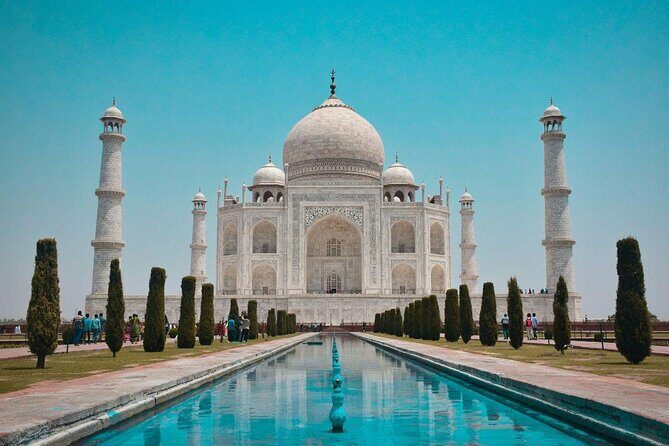
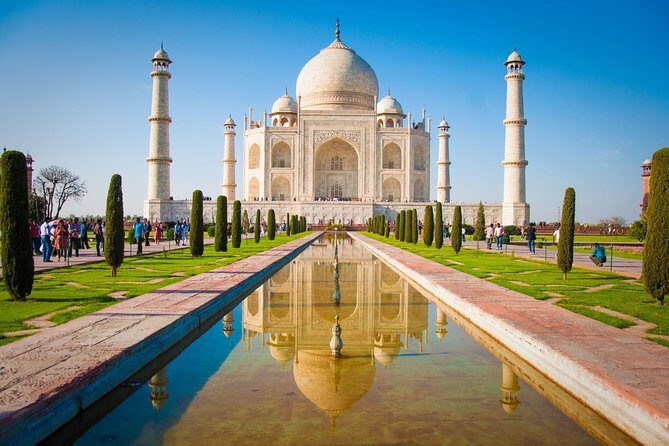
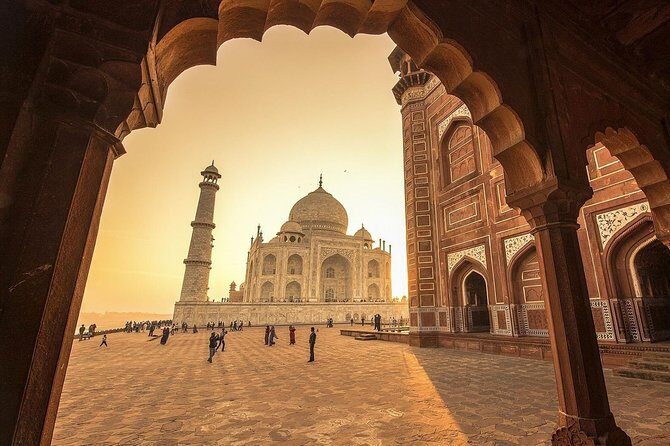
The Taj Mahal is the headline for a reason. It’s an ivory-white marble mausoleum on the south bank of the Yamuna River in Agra, commissioned in 1632 by Mughal emperor Shah Jahan for his wife Mumtaz Mahal. The same complex also houses Shah Jahan’s tomb.
On this tour, you get a guided visit of about two hours. That’s enough time to do two important things:
1) take in the big visual impact, and
2) slow down long enough to understand the details you’d otherwise miss.
A guide changes the experience here. Without help, it’s easy to focus only on the main dome and outer symmetry. With a guide, you get the Mughal context and the reason the Taj Mahal’s design feels so intentional—from the overall layout to the way the monument sits in its landscape setting.
Ticket details are also something to pay attention to. The tour includes the Taj Mahal entry ticket only if you select that option. If you didn’t, you’ll need to buy admission separately. Either way, your on-the-ground time at the Taj is still the core of the day, and the planning around it is where this tour earns its keep.
My advice for enjoying the Taj Mahal: don’t treat it like a quick check-in. Use the guided time to anchor yourself, then if your pace allows, use your own time at the end to revisit one spot you liked most—often the angle you can’t stop thinking about is where the details make the strongest impression.
Agra Fort: mosques, courtyards, and royal space you can walk through
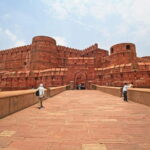
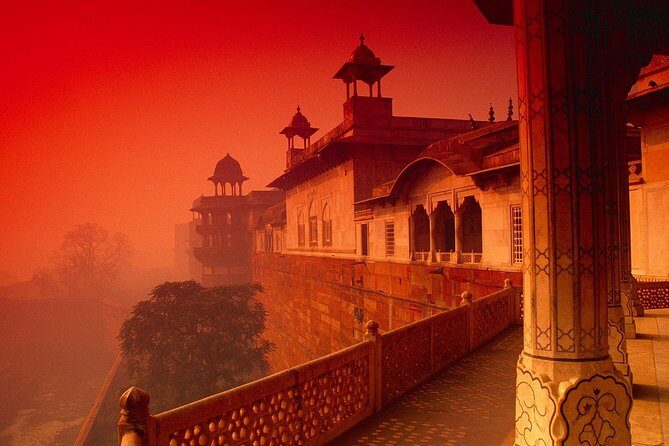
After the Taj Mahal, you move to Agra Fort, a massive historical fort complex tied to Mughal rule. It served as the main residence of Mughal emperors until 1638, when the capital shifted from Agra to Delhi. Before British control, the last Indian rulers to occupy it were the Marathas.
Your visit includes time to explore the fort’s mosques, courtyards, and private rooms within the larger complex. That word private matters. Agra Fort isn’t just public-facing scenery. It’s a place where you can sense the difference between ceremonial spaces and spaces meant for rulers and their inner circles.
In practical terms, the fort works well after the Taj because it shifts you from icon to structure. The Taj Mahal is about a single story told in marble. Agra Fort is about power—how space, walls, and movement supported an empire.
The tour allocates about 40 minutes at Agra Fort. That’s not enough to see everything in perfect depth, but it’s enough to get the layout and feel for how the complex functioned. If you try to rush, you’ll miss the quieter corners—things like the way courtyards frame views and how religious areas sit within the fort’s overall plan.
Admission for Agra Fort isn’t included, based on the tour’s stop details. So again, check your ticket setup before you go to avoid surprise costs on the spot.
Baby Taj stop: why I’timād-ud-Daulah hits differently
A smart addition here is the Tomb of I’timād-ud-Daulah, often called Baby Taj. It’s a Mughal mausoleum in Agra that many people describe as a draft or earlier stylistic cousin to the Taj Mahal.
You get about 30 minutes for this stop. Short, yes—but that’s exactly what makes it good. It’s a chance to slow down and look at intricate work without the pressure of a huge, single-monument time crunch.
If you loved the Taj Mahal’s marble and symmetry, the “Baby Taj” stop gives you a more intimate contrast. You’re seeing the Mughal design language in a different scale, and that helps you understand why the Taj Mahal looks the way it does—not just that it looks impressive.
Also, this stop is a good sanity break in a long day. You’ve had your “main attraction” hit already, then you shift to a smaller, detailed mausoleum. It’s a natural rhythm that makes the day feel less like a nonstop sprint.
Fatehpur Sikri: a royal city that stopped moving
The final major sightseeing stop is Fatehpur Sikri, located about one hour from Agra. This place is fascinating because it shows you an empire at its administrative peak—then what happens when that momentum ends.
Fatehpur Sikri is the well-preserved former Mughal capital, completed and then abandoned a short time after it was finished. That timeline gives the site a haunting logic: you can walk through a city built for a grand future, then see the signs of why it didn’t last.
The tour frames it as a chance to learn more about the Mughal Empire through architectural highlights. If you’re the kind of traveler who likes to connect monuments to politics and daily life, Fatehpur Sikri is where that connection starts to feel real.
One caution: you’ll have less time here than at the Taj Mahal because the day is packed. So treat Fatehpur Sikri like a guided orientation session. Look for the biggest forms first, then let your guide point out the specific features that help the story click. With the right pace, it becomes more memorable than if you try to see every corner and end up mentally exhausted.





Price and value: what $108 per person really buys you
At $108 per person, the biggest thing you’re paying for is convenience with structure: private round-trip transfers from Jaipur, an air-conditioned vehicle, and a driver and local guide.
If you compare this to doing it independently, the price starts to make sense. The hard parts of an Agra day trip are not just tickets. They’re timing, getting everyone from one site to the next without wasting hours, and having enough context to avoid turning each monument into a checklist.
This tour also includes water bottles. It’s a small line item, but on a long day it’s the kind of detail that keeps things smoother.
Be sure you understand the entry-ticket situation. The Taj Mahal entry ticket is included only if you select that option. Admission for sites like Agra Fort and the Baby Taj stop is not included in the stop-time details. In other words, you might end up paying some admissions separately depending on your booking choice.
If you’re traveling as a couple or as a family, the private format is where the value stands out. You’re not negotiating with a group schedule. You can move at a pace that works for your kids, your photo style, or your comfort level with walking and stairs.
Practical tips for a smooth 14-hour loop

This is a full-day circuit, so you’ll enjoy it more if you plan like it’s a marathon with breaks, not a sprint with snacks.
Start with sleep and hydration. The day begins at 6am and includes a long drive. Water bottles are included, but you’ll still want to drink steadily to stay comfortable.
Wear shoes you can walk in. You’ll be doing multiple monument sites in one day, including time in large complexes like Agra Fort and Fatehpur Sikri.
Plan meals around the fact that food isn’t included. If you prefer predictable budgeting, eat before you go and bring a simple snack for later. If you’re okay with occasional purchases, just don’t assume a full meal is part of the program.
Give your guide your attention at the Taj. Two hours goes fast when you’re scanning. Let the guide set the story, then return to what you personally find most beautiful.
Expect different moods at each stop. Taj Mahal is iconic and grand. Agra Fort is lived-in and structural. Baby Taj is detailed and quieter. Fatehpur Sikri is reflective and political. Treat each as a mood shift.
One small detail that comes through in the customer feedback is the professionalism and helpfulness of the staff. People have specifically thanked assistants and guides such as Mr Satyendra for being courteous and organized, and they’ve praised drivers like Pratap Sing for arriving on time. That kind of reliability matters most on a day trip, because the schedule only works if the timing stays tight.
Who should book this Jaipur to Agra private day tour
This tour is a strong fit if you want:
- an organized Jaipur to Agra day trip without the stress of self-planning,
- a private guide for better monument understanding,
- and a route that covers the big names plus a high-quality bonus stop (Baby Taj).
It’s especially suitable for families who want an adult guiding the logistics and explaining what you’re seeing. It’s also a natural choice for couples because the Taj Mahal visit is the centerpiece, and the private format keeps the day feeling personal rather than rushed.
If you hate early mornings or you’re easily wiped out by long drives and multiple sites, you might find this schedule tiring. But if you’re comfortable with a big day and want maximum value from limited time, it’s built for exactly that.
Should you book this tour?
Yes, if you want a well-structured private day from Jaipur to Agra that hits the major Mughal highlights without forcing you to micromanage transportation and entry timing. The combination of private transfers, guided Taj Mahal time, and the extra stop at I’timād-ud-Daulah (Baby Taj) makes it feel more complete than the basic Taj-only options.
Just go in with realistic expectations: it’s a long day, food isn’t included, and some site admissions may depend on what ticket options you choose. If you’re okay with that, this is a smart way to see the Taj Mahal and go beyond it.
FAQ
What time is pickup in Jaipur?
Pickup starts at 6am from your centrally located Jaipur hotel.
How long is the drive from Jaipur to Agra?
The drive to Agra takes about 4 hours.
Which places do you visit during the day?
You visit the Taj Mahal, Agra Fort, the Tomb of I’timād-ud-Daulah (Baby Taj), and Fatehpur Sikri.
Are tickets included for the Taj Mahal?
The Taj Mahal entry ticket is included only if you select that option. Admission ticket details for the stops indicate tickets may not be included depending on your selection.
Is this tour private?
Yes. It’s a private tour/activity with only your group participating.
Does the tour include food?
No. Food and drinks are not included.
How does cancellation work?
You can cancel for a full refund up to 24 hours in advance of the experience’s start time.