REVIEW · NEW DELHI
Same Day Private Tour: Taj Mahal, Agra Fort & Mathura Vrindavan
Book on Viator →Operated by Taj Mirror Tours · Bookable on Viator
Waking up at 2 AM is worth it. This private day trip strings together Taj Mahal, Agra Fort, and the Mathura–Vrindavan temple circuit with a driver, AC car, and live guidance so you’re not wasting time figuring things out.
I especially like how the plan gives you a real sense of place: you meet a local guide in Agra for focused context, and you get enough time at the Taj and fort to actually look (not just pose and rush). The main drawback is simple: it’s a long day—about 12 to 14 hours—and if you pick sunrise, you’ll start very early and temples require you to remove footwear.
In This Review
- Key highlights to know before you go
- The big idea: one car, three worlds
- Leaving Delhi early: the 2:00 AM sunrise choice
- Agra arrival: meeting your licensed guide and getting oriented
- Taj Mahal timing and entry: your 3-hour window
- Breakfast stop in Agra: keep energy up before Agra Fort
- Agra Fort in about an hour: red sandstone power
- Mathura drive: Krishna stories on the road
- Shri Krishna Janmasthan: the birthplace temple visit
- Dwarkadhish Temple: a lively Krishna worship stop
- Vrindavan arrival: devotion changes the air
- Banke Bihari Temple: the devotional centerpiece
- Prem Mandir: marble storytelling in white
- Price and value: $85 worth it if you want one guided, private day
- Comfort tips that make the day easier
- Who should book this tour (and who might not)
- Should you book? My honest take
- FAQ
- What is the duration of the private tour?
- Do I get pick-up in Delhi or nearby areas?
- Is this a private tour?
- Can I choose a sunrise departure for the Taj Mahal?
- Is Taj Mahal open every day?
- Are monument entry fees included?
- Do I need to bring a photo ID?
Key highlights to know before you go
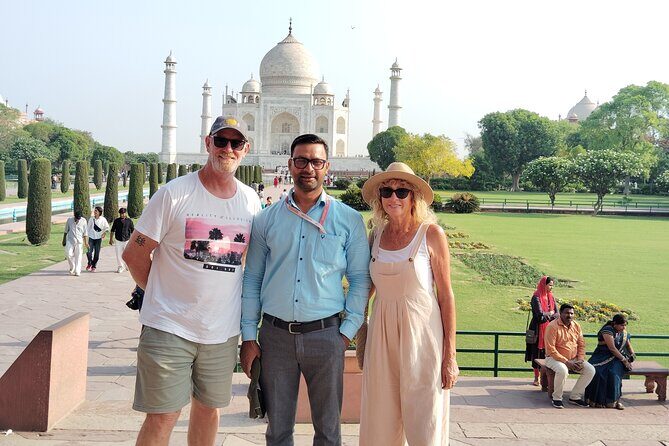
- Sunrise or daytime Taj Mahal timing: you can choose a very early departure (2:00 AM) for a quieter, softer-morning experience.
- Priority help in Agra: you meet your local guide in Agra and can use priority-style entry to reduce line time.
- Built-in rhythm, not a scramble: breakfast pause in Agra (guest’s choice) before you head to Agra Fort.
- Mathura to Vrindavan as a story trip: your drive includes Krishna-related context along the way.
- A temple sequence that covers different vibes: from Janmasthan and Dwarkadhish to Banke Bihari and the marble beauty of Prem Mandir.
- Private comfort from Delhi: pick-up and drop-off in Delhi/Delhi NCR/airport by a professional driver in an air-conditioned car.
The big idea: one car, three worlds

This is the kind of trip that works when you want the big-ticket sights without the day collapsing into logistics. You start in Delhi, ride in a private air-conditioned car, and move through three different “moods” in one go: Mughal grandeur at the Taj and Agra Fort, then devotional, Krishna-centered heritage in Mathura and Vrindavan.
You also get live commentary from guides and help at the main stops. That matters because Agra isn’t just “pretty buildings.” It’s architecture, power, and a layered religious map that becomes easier to read when someone explains what you’re looking at.
You can also read our reviews of more private tours in New Delhi



Leaving Delhi early: the 2:00 AM sunrise choice
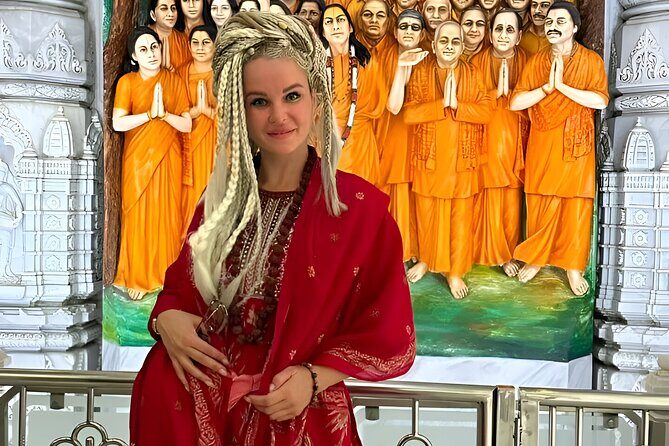
The itinerary is designed around an early start, and you can pick a 2:00 AM departure if you want a sunrise Taj Mahal. Even if you’re not a “sunrise person,” this timing is useful because it changes how the Taj feels. In early hours, the monument tends to feel more about light and symmetry than crowds and noise.
Practically, plan on a long stretch of driving. The tour length is listed as about 12 to 14 hours, and the day starts before most shops are awake. If you’re traveling with jet lag, bring a way to stay comfortable on the road—water, a light layer, and snacks if you personally need them (the tour includes a breakfast stop, but it doesn’t say drinks are provided).
Agra arrival: meeting your licensed guide and getting oriented
Once you reach Agra, you meet your local guide. This is one of the smarter parts of the plan. Without guidance, you can end up stuck in the common pattern: line up, walk in, and then admire the Taj without really understanding what you’re seeing.
With a guide, you can focus on the “why.” You’re also given a structured time block, and the tour notes skip-the-long-lines / priority access-style help. That’s not just about saving minutes—it helps you avoid the mental drain of waiting when you’d rather be looking.
Taj Mahal timing and entry: your 3-hour window

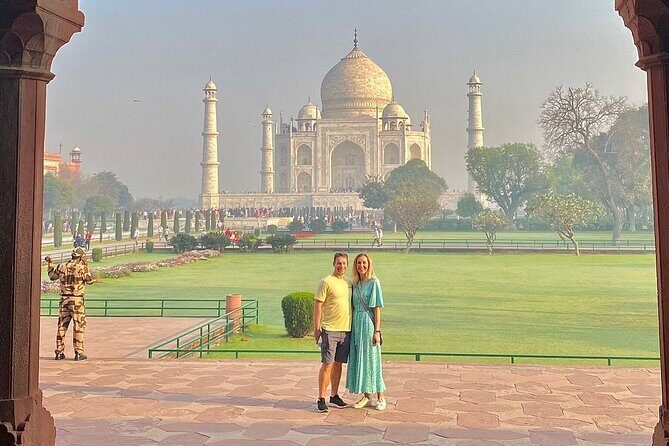
Your Taj Mahal visit is set for about 3 hours, and the monument ticket is listed as included (with entry fees depending on the option you choose). Taj Mahal is the centerpiece here, built in the 17th century by Emperor Shah Jahan for Mumtaz Mahal, and it’s recognized as a UNESCO World Heritage site.
What you should expect:
- More than photos: you’ll have time to look at the symmetry and details rather than treating it like a quick selfie stop.
- A clearer story: a guide can help connect the structure, the era, and the famous love story so the visit feels meaningful, not just scenic.
- Footwear rules: you’ll need to remove shoes at sacred places/temples. The Taj entry process also tends to involve shoe handling, so wear shoes that are easy to slip on and off.
One key consideration: Taj Mahal is closed on Friday. If your dates land on Friday, you’ll want to plan around that or confirm the alternative arrangement directly with the operator.
Breakfast stop in Agra: keep energy up before Agra Fort

After Taj Mahal, the itinerary builds in a 30-minute breakfast stop at a handpicked local restaurant. The meal is described as guest’s choice with options that can include traditional Indian, continental, or South Indian food.
Why I like this approach: it avoids the all-too-common problem where you spend early hours sprinting from one attraction to another, then pay for it later with cranky energy. A structured breakfast pause helps you enjoy the next stop—Agra Fort—without feeling like you’re dragging yourself.
If you’re planning dietary needs, it’s worth checking in advance what’s realistic at the restaurant. Also note: drinks with breakfast/lunch are not listed as included.






Agra Fort in about an hour: red sandstone power
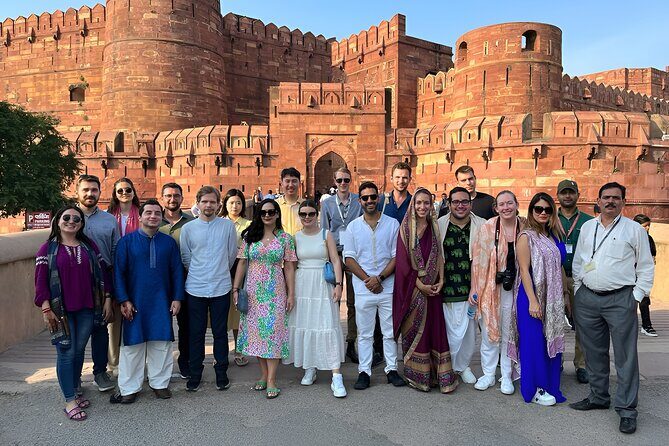
Agra Fort is the next UNESCO site, and your time here is about 1 hour with entry included (if you choose the option with monument entries). This fort was a main stronghold of the Mughal Empire before Delhi, built in red sandstone and later refined with marble.
What makes this stop worth it is contrast. The Taj Mahal is all about beauty and harmony. Agra Fort is about control—walls, layout, and the scale of power. In an hour, you won’t “see everything,” but you can still get the key sense of why it mattered.
Practical notes:
- Wear comfortable shoes. You’ll be doing walking and standing.
- Bring patience for crowds and the usual fort-area movement patterns.
- If you’re a history lover, tell your guide what you’re most curious about and let them steer the focus.
Mathura drive: Krishna stories on the road
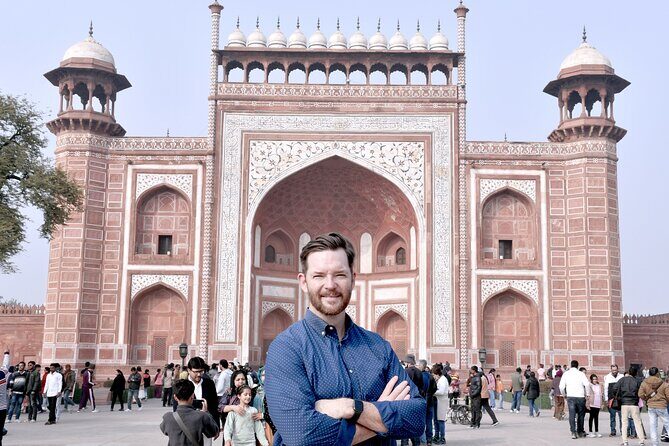
After Agra Fort, the plan shifts from Mughal architecture into Krishna-centered heritage. You’ll drive to Mathura (about 1 hour), and your driver is described as sharing Krishna’s story and the religious significance of Mathura and Vrindavan along the way.
This is a smart timing choice. It helps you mentally transition between monuments and devotion. Instead of arriving cold—eyes first, context later—you arrive already “reading” the significance of where you are.
Shri Krishna Janmasthan: the birthplace temple visit
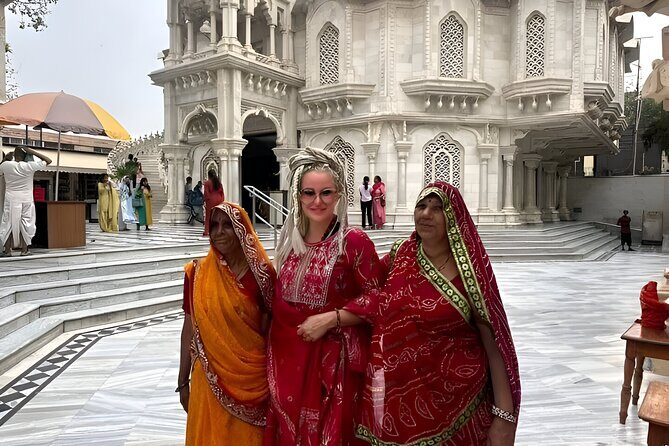
In Mathura, the itinerary includes Shri Krishna Janmasthan, described as the revered temple marking the birthplace of Lord Krishna. Your time here is about 30 minutes.
This kind of visit is usually less about architecture details and more about atmosphere and meaning. The complex matters because it anchors the legend in a specific place, and it’s central to the Mathura story.
As with other sacred sites, expect footwear rules. The tour guidance says you must remove shoes before entering temples/sacred places—so keep that in mind when choosing what to wear.
Dwarkadhish Temple: a lively Krishna worship stop
Next up is Dwarkadhish Temple, dedicated to Lord Krishna in his kingly form. The itinerary allows 30 minutes, and it notes the temple was constructed in 1814 with a blend of styles (Rajasthani and local arc details are mentioned).
This stop tends to feel different from Janmasthan because it’s more visibly “living”—you’re stepping into a worship space with its own daily rhythm. If you like seeing how heritage stays active rather than turning into a museum-only experience, you’ll likely enjoy this portion.
Vrindavan arrival: devotion changes the air
Vrindavan is just a short drive away (the plan gives you 15 minutes at the Vrindavan entry point). The description highlights how the atmosphere changes with flutes, flowers, and kirtans in the air.
That’s the point of the itinerary’s sequencing. Vrindavan is presented as the land of Krishna’s childhood leelas (divine play), and the tour is designed to move you from “what happened” to “how people celebrate and worship.”
If you’re sensitive to sound or crowds, go in with the right expectations: devotional spaces can feel intense in a good way, and they aren’t usually quiet like palace courtyards.
Banke Bihari Temple: the devotional centerpiece
Your next major stop is Shri Banke Bihari Temple in Vrindavan, allotted 30 minutes. The tour description calls it Vrindavan’s most visited and beloved shrine, worshipping Lord Krishna in a playful child form.
This is one of the most emotionally “alive” segments in the day. If you want to understand why Vrindavan draws people back again and again, this is where you’ll feel it.
Prem Mandir: marble storytelling in white
The final temple stop before heading back to Delhi is Prem Mandir (Shyama Shyam Dham), also 30 minutes. What stands out in the description is the “marble magic”: it’s built from pristine Italian white marble and depicts scenes from Krishna and Radha’s stories.
This is a good final stop because it offers something different from the older, more traditional temple sites. It’s still devotion, but the visual focus leans heavily toward grand, sculptural storytelling—so you end the day with images that stick in your memory.
Price and value: $85 worth it if you want one guided, private day
At $85 per person, this tour can be good value for what you’re trying to pack in. You’re paying for:
- private AC transport with pick-up and drop-off from Delhi/Delhi NCR/airport
- live tour guide support in multiple foreign languages (as stated)
- all parking fees, tolls, taxes, fuel, and interstate taxes
- a full-day plan that covers Taj Mahal, Agra Fort, Mathura, and Vrindavan
The catch is options. The tour notes entry fees are included if you choose the option with monument tickets, and meals like buffet breakfast/lunch at a 5-star hotel are also only included if that option is selected. So $85 may cover the core experience, but the total cost can change depending on what you tick during booking.
Also, there’s a specific note about the “only professional guide” option: it includes guide services in Agra city only, and it does not cover pick-up/drop-off, car/driver, monument tickets, or meals. So don’t accidentally book the lighter option if you want the full Delhi-to-Agra-to-temples package.
Comfort tips that make the day easier
This trip is doable, but the best experience comes from setting yourself up for the practical parts:
- Wear shoes you can remove quickly. Temples/sacred places require you to remove footwear.
- Bring a valid photo ID for monument checks.
- Plan for big swings in energy. You’ll be active early and then moving all day; take advantage of the breakfast pause.
- Avoid packing a tight schedule after the tour. You’ll likely be tired during the return drive to Delhi.
One more human detail: the trip report I saw credited the driver Mr. Dilip Kumar for being patient and efficient. That kind of steady driving matters a lot when your day starts at 2 AM.
Who should book this tour (and who might not)
This tour fits best if you:
- want a private day trip rather than figuring public transport
- care about having context while you see major sites
- want both Mughal monuments and Krishna religious heritage in one outing
- prefer a guided plan with set time blocks
You might reconsider if you:
- can’t handle very early mornings (especially the 2:00 AM sunrise departure)
- dislike long travel days
- prefer a slower pace with fewer stops
Should you book? My honest take
If you’re in Delhi with limited time and you want the Taj Mahal plus the Mathura–Vrindavan temple circuit without turning the day into a transport puzzle, this is a strong way to spend it. The private AC car, driver, and live guide guidance are what make the long route feel organized instead of overwhelming.
Just confirm two things before you commit: whether your dates avoid the Friday closure of the Taj, and which booking option includes the monument entry fees and meal upgrades. Get those right, and you’re buying yourself a very full day that still feels structured.
FAQ
What is the duration of the private tour?
The tour runs about 12 to 14 hours.
Do I get pick-up in Delhi or nearby areas?
Yes. Pick-up is offered from Delhi, Delhi NCR, the airport, or your desired location.
Is this a private tour?
Yes. It’s a private tour/activity, and only your group participates.
Can I choose a sunrise departure for the Taj Mahal?
Yes. There is a sunrise departure option listed at 2:00 AM.
Is Taj Mahal open every day?
No. Taj Mahal remains closed on Friday.
Are monument entry fees included?
Entry fees are included if you choose the option that includes monument entries. The Taj Mahal ticket is listed as included in the plan, depending on the selected option.
Do I need to bring a photo ID?
Yes. You should bring a valid photo ID to check at the monument.