REVIEW · NEW DELHI
Raj Tour- New Delhi Cycle Tour
Book on Viator →Operated by DelhiByCycle · Bookable on Viator
A morning bike ride can change how you see a city. This one threads together Old Delhi lanes and New Delhi’s official grandeur, with stops that tell a story about how Delhi actually works day to day. You’ll roll past historic gate remnants, ride through Paharganj’s backpacker energy, then finish near the Presidential Palace and the big, open avenues around India Gate.
I love the way the route gives you contrast in just a few hours: narrow, gritty alley vibes early on, followed by wide, well-planned roads later, where the Rashtrapati Bhavan area suddenly feels like a different planet. I also like the small comforts that make the ride easier to enjoy—well-kept bicycles, bottled water, and that chai-and-biscuits break that keeps the morning from feeling like just exercise.
One thing to consider: the first part involves getting used to tighter roads and steady traffic flow as you transition out of Old Delhi, so you’ll want to come with decent balance and be ready to follow the guides’ pace and instructions.
In This Review
- Key highlights you’ll feel right away
- Old Delhi to Lutyens Delhi on two wheels
- Getting rolling at Delhi By Cycle and that first chai reset
- Stop 1: Ajmeri Gate and the feel of Old Delhi’s protection walls
- Stop 2: Paharganj, backpacker streets, and daily city life
- Stop 3: Connaught Place and Janpath, where British-era planning meets modern brands
- Stop 4: Rashtrapati Bhavan area and that Presidential Palace finale
- Guides make or break the experience (and this one seems to deliver)
- Bicycles, helmets, and what comfort really means at 6:30 am
- Breakfast at Bengali Market: a vegetarian start that feels like Delhi
- Price and value: what $35 buys you in real time
- Itinerary pacing: short stops that still add up
- Who should book the Raj Tour (and who might want another option)
- Should you book this Raj Tour?
- FAQ
- How long is the Raj Tour- New Delhi Cycle Tour?
- What does the tour cost?
- Where does the tour start and end?
- Is hotel pickup or drop-off included?
- What’s included in the price?
- Do you offer vegetarian options?
Key highlights you’ll feel right away
- Old-to-new contrast in one smooth 3-hour arc, from Ajmeri Gate area to the Presidential Palace zone
- Supportive English/Hindi guides (I’ve seen names like Utkarsh, Ashutosh, Naman, and Himanshu pop up in great feedback)
- Chai, biscuits, and bottled water make the ride feel thoughtful, not rushed
- Vegetarian breakfast at Bengali Market gives you a real start after the first cycling stretch
- Beginner-friendly vibe with helmets optional on request (and baby seats available on request)
- Private tour format means it’s only your group, not a mixed crowd of strangers
Old Delhi to Lutyens Delhi on two wheels
Delhi is a city of sharp edges: old and new, narrow and wide, chaotic and planned. The Raj Tour leans into that. You start early (6:30 am), when streets are calmer than later in the day, which makes the ride more relaxed and easier to enjoy without fighting heavy heat or traffic as much.
What makes this tour especially fun is that it doesn’t treat sightseeing like a checklist. It moves like a story: you enter through Old Delhi’s street life, then gradually shift into government-and-empire planning in New Delhi. Along the way, the route gives you glimpses of how people live around official offices too, not just how monuments look from far away.
And yes, it’s a bicycle tour—meaning you’ll actually feel the city’s rhythm. On foot, you notice details; in a car, you mostly notice speed. On a bike, you get both: texture in the streets and sweep in the avenues.
You can also read our reviews of more cycling tours in New Delhi
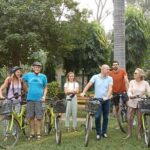

Getting rolling at Delhi By Cycle and that first chai reset
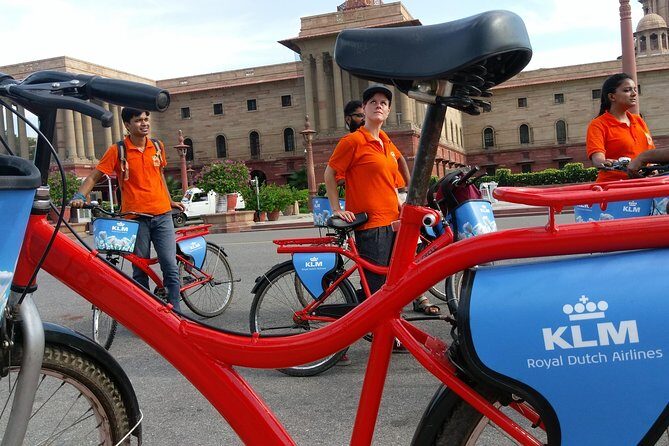
You meet at the Delhi By Cycle meeting point at Street 4B, Ansari Rd, Daryaganj, New Delhi (you can cross the road to the open parking lot area). There’s no hotel pickup, so plan to arrive on your own and be ready to start promptly.
The tour begins with the practical stuff done right: bike allocation, quick orientation, and a chai-and-biscuits break. That matters more than it sounds. A hot city can sneak up on you, even early, and starting with something warm in your system helps you settle in and not feel rushed.
You’ll ride comfortable city bicycles, and bottled water is included. Helmets are optional, but if you want one, request it—this is one of those simple choices that can make the whole experience feel safer with no downside.
Stop 1: Ajmeri Gate and the feel of Old Delhi’s protection walls
After the start, the first real historical stop is Ajmeri Gate, an old gate area that once connected to the wall that protected the city from outside. Even if you’re not a hardcore history person, gate architecture works on the senses. It gives you a mental frame for why Old Delhi feels the way it does—tight streets, packed movement, and a built environment meant to funnel people in and out.
This is where you’ll likely notice the biggest cycling contrast: the roads around Old Delhi can feel more maze-like than the wide avenues later in the ride. Expect slower navigation and more attention to turns. It’s not scary, but it does demand focus.
My advice: keep your eyes slightly ahead, not only on the wheel in front of you. The guides manage the group flow, but your job is to ride smoothly and listen for their cues.
Stop 2: Paharganj, backpacker streets, and daily city life
Next comes Paharganj, described as the former suburb of Old Delhi that has transformed into a backpacker district. This stop is short, but it’s a useful one because it shows you the city in transition: older lanes that still carry the feeling of Old Delhi, alongside modern cafes and shops that cater to visitors.
Paharganj is a place where you’ll understand Delhi as a living crossroads, not a museum. Even in a brief stop, you get enough time to notice the shift in storefronts, signage, and street energy.
The practical catch: you’ll be moving through busy pedestrian areas at points, especially if you’re there when people are up and about. Don’t try to sprint. This is exactly the kind of area where it pays to let the guides control timing and spacing.
Stop 3: Connaught Place and Janpath, where British-era planning meets modern brands
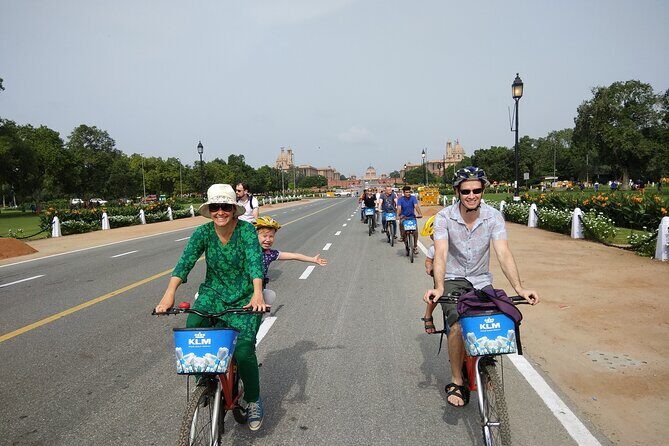
Then the tour shifts gears to Connaught Place / Janpath—an old market area designed under British planning, now filled with global brands. This is a relief after the narrow-lane feel of earlier parts, because the road layout is more open and predictable for biking.
Connaught Place also does something clever: it lets you see how New Delhi was shaped to be legible, official, and easy to navigate. From the saddle, you feel the difference immediately. The streets widen, the visual lines open up, and you can start enjoying the “big picture” of the city.
If you care about travel details (I do), this is one of the most useful stops. It helps you separate what’s historical form from what’s modern commercial function, so you don’t just see signs—you understand the urban design behind them.


Stop 4: Rashtrapati Bhavan area and that Presidential Palace finale
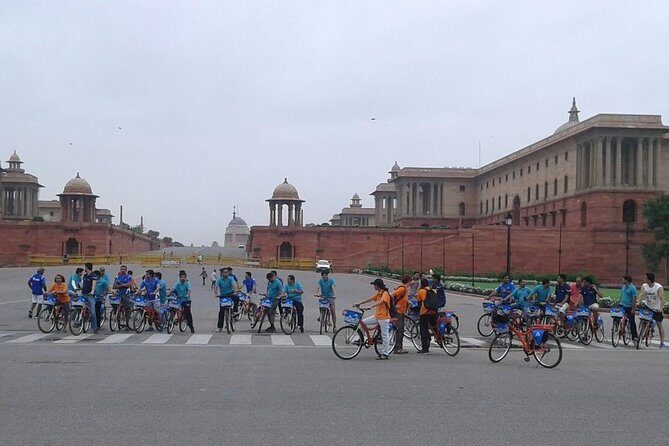
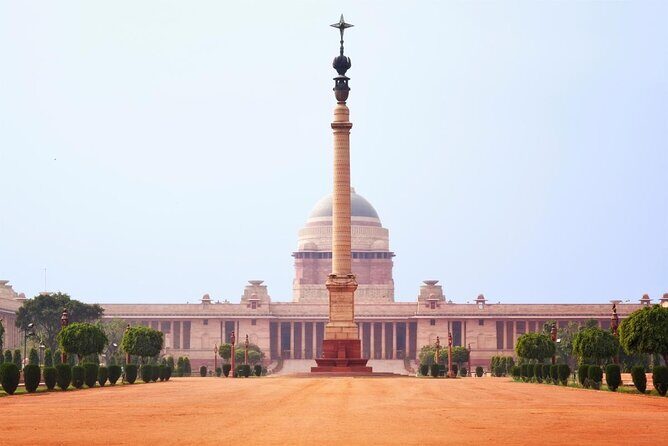
The ride culminates near Rashtrapati Bhavan, one of the biggest presidential palaces in the world and packed with stories. This is your wow moment—especially when the route takes you through the cleaner, tree-lined broad roads around the Presidential Palace and the India Gate zone.
In plain terms, you end up with a visual scale shift. Earlier you’re in close street quarters; here you’re in open ceremonial-space energy. It can feel like you’ve jumped from one city to another, even though you’re still in Delhi.
This final stretch is also where the guide’s storytelling pays off. The tour aims to connect buildings to the people and systems around them—so you don’t just stare at monuments. You get a framework for why this area looks the way it does and how it fits into the capital’s role.
Guides make or break the experience (and this one seems to deliver)
A strong bike tour lives and dies on how guides handle pace, group control, and explanation. Here, you get two English/Hindi speaking guides, and feedback consistently points to strong on-the-street leadership.
Names that came up in positive feedback include Utkarsh, Ashutosh, Naman, Himanshu, and Afsari—and the common theme is that the guides were supportive, humble, and good at explaining things in a way that keeps you interested without turning it into a lecture.
I especially like that the tour isn’t only rosy. Some guides come across as willing to be a little critical, which helps you see beyond postcard angles and understand what’s complicated about city life.
For you, this means you can ask questions while you ride. If you’re the type who wants context—why a neighborhood feels like it does, how planning changed, how people use these areas daily—you’ll likely get more out of this tour than someone who just wants photos.
Bicycles, helmets, and what comfort really means at 6:30 am
The bicycles are described as well maintained and comfortable city bikes, and that matters because you’ll be riding for close to three hours (about 3 hours, with some riders reporting around 3.5 hours and roughly 14 km). When the bike feels smooth, you relax. And when you relax, you actually enjoy the city.
Helmets are optional on request. If you’re unsure, request one when booking (or ask early at the start). Optional doesn’t mean unnecessary; it just means they give you the choice.
Also pay attention to timing and weather. The tour operates in all weather conditions, so you should dress appropriately. Mornings can still be cool-to-warm depending on season, but Delhi can shift fast—bring layers you can handle.
Breakfast at Bengali Market: a vegetarian start that feels like Delhi
One of the best parts of the tour package is the included breakfast at a famous Bengali restaurant at Bengali Market, described as a North Indian vegetarian restaurant. This is not just a token meal.
For me, breakfast is where you stop thinking about cycling and start thinking like a local: fuel first, then sightseeing second. And Bengali Market is a practical place for that—easy to orient, food options feel central, and the meal gives you a satisfying end to the earlier stops.
Vegetarian options are available (you’ll want to note it when you book), and bottled water is included too. If you’re traveling with dietary limits, this is one of the clearer inclusions in the package.
Price and value: what $35 buys you in real time
At $35 per person for about three hours, the value comes from the mix of things included—not from one single highlight.
Here’s what you’re paying for in practical terms:
- A guided route that covers multiple zones instead of repeating the same sights
- Two guides available in English/Hindi, which helps when you want clarification
- A steady set of extras: chai, biscuits, bottled water, and a vegetarian breakfast
- Comfortable bikes and a private-group format, meaning fewer disruptions
Compared to paying for separate entries or paying for a standalone guide without food, this package feels designed for convenience. If you’re trying to see both Old Delhi and New Delhi without spending your whole day planning transport, this is a strong use of a morning.
Itinerary pacing: short stops that still add up
Each stop is brief—think minutes, not half-day wandering. The point is to keep momentum. That style works because:
- The city changes fast as you move between areas
- You’re on a bike, so you benefit from a planned rhythm
- The guide storytelling fills in what you might miss if you were only passing through
The tradeoff is obvious: if you want to linger deeply at one exact spot, you may wish the stop durations were longer. But you still get enough time to orient yourself, take a few photos, and get a meaningful description of why that location matters.
In other words, this tour is built for getting the feel of Delhi in one compact session, not for slow museum-style exploration.
Who should book the Raj Tour (and who might want another option)
This tour is a great fit if:
- You like cities that change character as you move through different neighborhoods
- You’re comfortable riding a bicycle and want a morning plan that doesn’t eat your whole day
- You enjoy guides who explain context and answer questions while you move
- You want Old Delhi and New Delhi contrasts without juggling multiple taxis or transport plans
You might think twice if:
- You want long stop times to explore interiors at length (this is mostly street-and-sight based)
- You’re not comfortable with tighter roads early in the route
- You rely on hotel pickup; this tour starts and ends back at the meeting point
If you’re traveling solo, the feedback suggests the experience feels manageable, with safety and chit-chat mentioned as part of the vibe. And since it’s private, you only ride with your group, not random strangers.
Should you book this Raj Tour?
I’d book it if you want a high-value Delhi morning that mixes street atmosphere with major landmarks, all on a bike with included snacks and breakfast. The guide team quality seems to be the real driver of the satisfaction—names like Utkarsh, Ashutosh, Naman, Himanshu, and Afsari show up in strong recommendations, and multiple comments focus on how supported people felt.
Skip it if you need hotel pickup, you dislike road riding, or you want a slow, long-form experience at one single attraction. But if you’re aiming for a “see a lot, learn a lot, don’t waste time” kind of tour, this one makes sense.
FAQ
How long is the Raj Tour- New Delhi Cycle Tour?
It runs for about 3 hours (approx.), with some riders reporting around 3.5 hours depending on the group flow.
What does the tour cost?
The price is $35.00 per person.
Where does the tour start and end?
The tour starts at the Delhi By Cycle meeting point on Street 4B, Ansari Rd, Daryaganj, New Delhi, and it ends back at the same meeting point.
Is hotel pickup or drop-off included?
No. Hotel pickup and hotel drop-off are not included.
What’s included in the price?
You get well maintained comfortable city bicycles, two English/Hindi speaking guides, chai and biscuits, bottled water, helmets (optional, on request), a baby seat (optional, on request), and breakfast at a vegetarian Bengali restaurant at Bengali Market. GST 5% is also included.
Do you offer vegetarian options?
Yes. A vegetarian option is available—make sure you advise when booking.