REVIEW · NEW DELHI
Private Rishikesh and Haridwar Tour from Delhi
Book on Viator →Operated by MAM Holidays · Bookable on Viator
Ganga rituals feel close up on this long day. This private Delhi-to-Haridwar-and-Rishikesh day run gives you flexible pacing with pickup, and it includes an English-speaking guide in Rishikesh.
I like that you hit the spiritual highlights without wasting time hopping between stations. The big thing to plan for: it is an 18-hour day, so you’ll spend plenty of hours in the car, and you may need extra cash for small on-site costs.
In This Review
- Key things to know before you go
- A one-day Ganga sampler: why this route works
- Price and what you truly get for $115
- The 7:00 am start: managing the Delhi-to-Ganga time crunch
- Har Ki Pauri in Haridwar: where the lamps do the talking
- Sivananda Ashram and Geeta Bhawan: big ideals in brick and incense
- Lakshman Jhula and Ram Jhula: iconic bridges over Ganga
- Parmarth Niketan: the ashram most people recognize
- Ma Anandamayee Ashram and Swarg Ashram: a quieter side of the complex world
- The Har Ki Pauri second stop: more time, more feeling
- What to expect on the ground: walking, timing, and facilities
- Your biggest swing factor: the driver and English support
- Who this tour fits best (and who should skip it)
- Should you book this Delhi private tour to Rishikesh and Haridwar?
- FAQ
- What time does the tour start from Delhi?
- How long is the tour?
- Is hotel pickup and drop-off included?
- Are meals included?
- Are entrance fees included?
- Is this tour private or shared?
- Can I cancel for a full refund?
Key things to know before you go

- Private pickup and drop-off from your Delhi hotel keeps the day stress-free
- Har Ki Pauri aarti is a full-on sensory ritual, timed for viewing the lamps
- Rishikesh bridges (Lakshman Jhula and Ram Jhula) give you classic Ganga riverbank scenes
- Ashram stops include major names like Parmarth Niketan, with daily yoga on the schedule
- Long haul from Delhi means comfort matters more than speed
- English support in Rishikesh helps you make sense of what you’re seeing
A one-day Ganga sampler: why this route works
This tour is built for people who want the main spiritual beats of north India without adding a second hotel or planning multiple transfers. You start in Delhi early, then work your way up to Haridwar and Rishikesh in a single stretch. By the end of the day, you’ve seen river rituals, major ashrams, and the iconic hanging bridges that define Rishikesh.
The value here is the pacing. It’s private, so you’re not stuck waiting around for other group timing. A driver handles the road, you get a guided explanation of what you’re looking at, and the itinerary gives you a logical flow rather than random stops.
The trade-off is that this is not a relaxed day. It’s long. Think “marathon with meaningful stops,” not “easy sightseeing loop.”
You can also read our reviews of more private tours in New Delhi



Price and what you truly get for $115
At $115 per person, the pricing makes sense if you care about convenience and interpretation. What’s included is a lot of the stuff that usually costs extra when you DIY: hotel pickup and drop-off, air-conditioned private car transport, and English support (an English-speaking driver and an English-speaking guide in Rishikesh). Taxes and service charges are included too.
What costs extra is straightforward: food and drinks, personal expenses, and entrance fees. Since you’re visiting religious sites, it’s smart to assume there may be small ticketing or facilities charges along the way. A practical tip from real-world experience: keep a handful of small bills for temple and washroom fees.
So is it a bargain? If you’d otherwise pay for private transport anyway, the guide service and the packed itinerary bring it into good value territory. If you’re the type who doesn’t want a car-heavy day, you may find it better to split this into an overnight plan.
The 7:00 am start: managing the Delhi-to-Ganga time crunch
The tour starts at 7:00 am. That early departure is what makes the day possible. You’ll be in the car for a long stretch, and the road time is honestly the biggest variable in your mood.
Most people underestimate how tiring “one day” can be when it includes a big drive plus walk-throughs. Comfortable seating helps, but you’ll still want to treat this like a travel day: water, a light snack strategy, and a plan for when you’ll do a quick restroom stop.
The itinerary keeps things moving with short time windows at each stop, which is good for coverage. Just know that you’re trading linger time for seeing both towns in one shot.
Har Ki Pauri in Haridwar: where the lamps do the talking
Har Ki Pauri is the spiritual centerpiece in Haridwar. This ghat is considered one of the holiest in the country, tied to the belief that Ganga reaches the plains here after the Himalayas. You’ll hear references to Brahma Kund and the stone imprint connected with Lord Vishnu’s foot.
Then comes the part you can feel in your body: the aarti. The ceremony here is tied to a long-running tradition credited to Pandit Madan Mohan Malviya, and the lamps are moved in a clockwise rhythm. Even if you don’t follow every term, you’ll understand the flow: priests light the lamps, the reflections move across the water, and the crowd’s attention locks in.
A practical note: your viewpoint matters. The tour schedule places you across the banks for viewing the priests lighting the lamps and the lamp movement. That usually makes for good sightlines, but it can also mean standing for stretches. Wear footwear you can stand in comfortably.
Sivananda Ashram and Geeta Bhawan: big ideals in brick and incense
After Haridwar, the tour heads toward Rishikesh’s ashram zone, and that’s where the day shifts from “river ritual” to “spiritual institutions.”
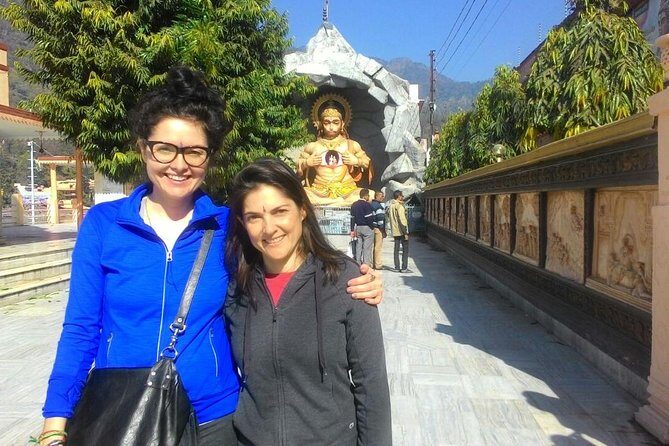
Sivananda Ashram is described as a major achievement of Swami Sivananda, built from 1936 brick by brick on principles like purity, integrity, nobility, and magnanimity. The point of this stop isn’t just architecture—it’s the idea that spiritual life is organized, taught, and practiced as a community.
Next, Gita Bhawan sits by the Ganga in Swargashram. It’s a large complex with discourse halls and many rooms for devotees. The practical takeaway: this isn’t a tiny temple courtyard; it’s a functioning place where people come to stay, listen, and practice.
Timing here is usually short, so your job is to slow down for the few things you notice most:
- how people move through space
- how the setting supports prayer or reflection
- what parts feel like community life vs. a purely tourist stop
Even a 30-minute stop can feel meaningful if you let the place breathe instead of trying to photograph everything.






Lakshman Jhula and Ram Jhula: iconic bridges over Ganga
Rishikesh is famous for its bridges, and this tour includes two of the big ones.
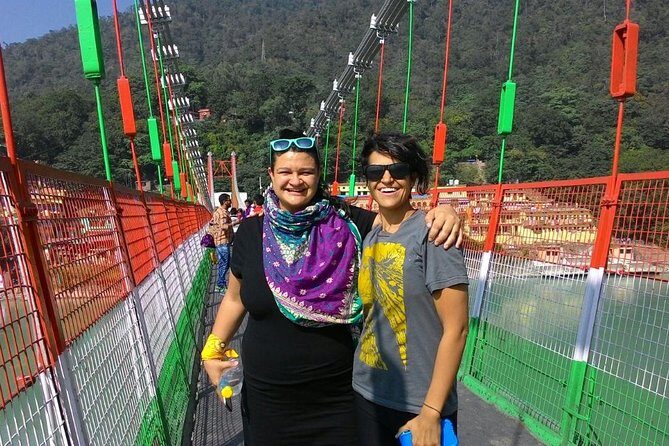
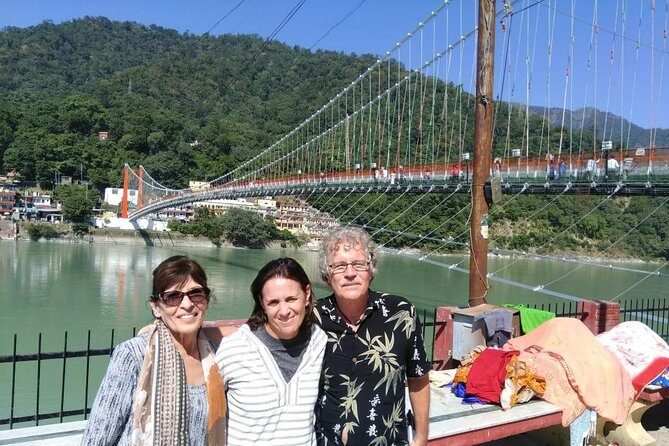
Lakshman Jhula is a hanging bridge about 450 feet long, elevated roughly 70 feet above the river, and around 3 km from the main town. It’s the kind of place where you can watch how locals and visitors frame the river with their photos—but it’s also useful for orientation. If you’re seeing Rishikesh for the first time, the bridge helps you map where the action and the riverfront scenes are.
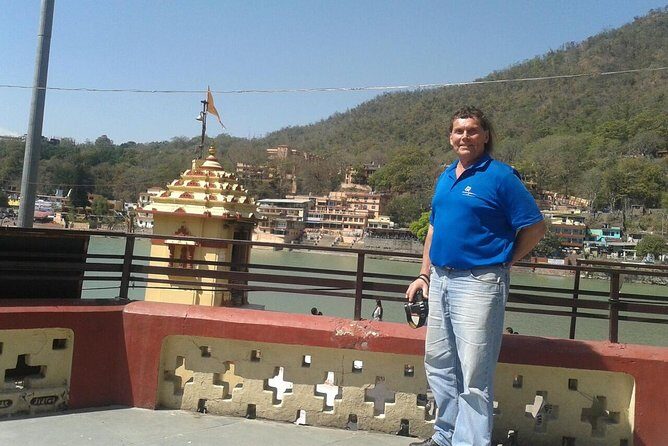
Later, you’ll visit Ram Jhula, an iron suspension bridge connecting Muni Ki Reti with Swargashram. It’s pedestrian-focused, but the tour description notes bikes can cross too. That detail matters because it changes how you walk: you’ll be sharing the bridge space.
What I like about including both bridges in one day is variety. Lakshman Jhula tends to feel more “classic Rishikesh postcard,” while Ram Jhula gives a clearer connection between riverbank areas.
Parmarth Niketan: the ashram most people recognize
Parmarth Niketan is described as the largest ashram in Rishikesh, with over 1,000 rooms and gardens that support large numbers of pilgrims. One of the best practical reasons to include it is that daily activities happen there—daily yoga is mentioned as part of the routine.
Even if you’re not joining classes, this is one of those places where you can watch daily rhythm. The atmosphere is meant to feel clean, pure, and sacred, with gardens that break up the hard lines of institutional life.
Because the tour time at each stop is limited, I treat Parmarth Niketan like a “reset moment.” Use it to:
- stand back and take in scale
- notice how people gather
- understand why people come back day after day
Ma Anandamayee Ashram and Swarg Ashram: a quieter side of the complex world
Not all the stops here are about big ceremonies. Some are about the feel of the ashram lifestyle.
Ma Anandamayee Ashram is described through personality and spirit, with a focus on compassionate love and a sense of closeness to all living creatures. For your visit, that means don’t rush through like it’s just another photo stop. Take a few minutes to sit, observe, and notice how the space supports contemplation.
Then there’s Swarg Ashram, which is more of a larger zone than a single building. The tour description includes details like stores, parks, meditation centers, Ayurvedic dispensaries, eateries, and inns. It also mentions wooded slopes and air described as free from city contamination.
This stop can be a big advantage for you if you need a break from constant ritual viewing. It’s easier to catch your breath here and let your brain transition from ceremony mode into calm mode.
The Har Ki Pauri second stop: more time, more feeling
Har Ki Pauri appears again in the schedule. That gives the day something important: breathing room. In practice, it means you can see more of the ghat atmosphere and not just the flash of lamps.
When you arrive, you’ll see the scale of worship and the rhythm of movement along the steps. The aarti is again the key moment, with lamps lit and moved clockwise and reflections visible on the Ganges.
If you’re sensitive to crowds, plan to manage your time here. Arrive ready for sensory input: sound, movement, incense, and people. If you can keep your posture relaxed, it makes a major difference in how you experience the ceremony.
What to expect on the ground: walking, timing, and facilities
This is not a “sit in a bus until the next stop” tour. You’ll walk at the ghats and on the bridges, and you’ll move through ashrams. The tour says moderate physical fitness is enough, but you should still expect uneven stone steps near riverfront areas and some standing time for viewing.
Facilities aren’t described in detail, but there are real-world mentions of restroom timing being tighter on a long day. My advice is simple:
- don’t assume every stop has a convenient restroom window
- carry a small amount of cash for washrooms if needed
- keep your water intake steady, but don’t chug right before long transfers
This is one of those days where small planning prevents stress.
Your biggest swing factor: the driver and English support
A private tour lives or dies by the driver. The good news: this tour format is set up for smooth navigation with an English-speaking driver, and it includes an English-speaking guide in Rishikesh.
From past experiences shared with this operator, names like Ajay and Rahul show up as excellent driver-helpers, with fluent English and safe, calm driving. Others like Rana, Rajpal, and Raj Pal have been praised for punctual pickup and clear explanations. That matters because religious sites can feel confusing if you only catch a few facts here and there.
Also, language can vary around ashrams and local guides. The tour includes English support, but if you need very detailed explanation in English, I’d treat that as a reason to communicate your preferences clearly when you book.
Who this tour fits best (and who should skip it)
This works best if you:
- want Haridwar and Rishikesh in one day without planning logistics
- enjoy spiritual sites and want a guide to translate the meaning
- like the comfort of private car transport and pickup/drop-off
- don’t mind a long day with short stop durations
You might want to skip it if you:
- dislike long driving days
- want lots of free time to roam slowly
- need a schedule with minimal standing and minimal walking
It’s also a reasonable fit for people visiting Hindu temples and rituals specifically, since the day’s highlights are anchored to Ganga worship and major ashram environments.
Should you book this Delhi private tour to Rishikesh and Haridwar?
Book it if you want one packed day with real spiritual landmarks, private transport, and English help so you understand what you’re seeing. The price feels fair for the combination of hotel pickup, private air-conditioned driving, and the guided stops across two Ganga towns.
Don’t book it if your priority is “rest and relax.” The driving time is the main challenge, and the day is long enough that you’ll want to arrive mentally ready.
If you’re deciding, I’d make your call based on two questions:
1) Can you handle an 18-hour rhythm where the highlights come fast?
2) Do you value guidance and convenience over slower, self-directed wandering?
If the answer is yes, this is a solid way to get the Ganga’s most famous moods in a single day.
FAQ
What time does the tour start from Delhi?
The meeting start time is 7:00 am.
How long is the tour?
The duration is approximately 18 hours.
Is hotel pickup and drop-off included?
Yes. The tour includes hotel pickup and drop-off from the Delhi city area.
Are meals included?
No. Food and drinks are not included.
Are entrance fees included?
No. Entrance fees are not included.
Is this tour private or shared?
It’s a private tour/activity. Only your group participates, with a maximum of 10 people per booking.
Can I cancel for a full refund?
Yes, you can cancel for a full refund up to 24 hours before the experience’s start time. If you cancel less than 24 hours before, the amount paid is not refunded.