REVIEW · NEW DELHI
Private Half Day Delhi City Tour with Entrance Fees
Book on Viator →Operated by Tour Guide Delhi · Bookable on Viator
Delhi clicks into place fast on this half-day run. I like the private guide approach because you’re not stuck waiting for a crowd, and the entrance fees included setup means fewer tickets to juggle. You’ll see major sights with just enough time to enjoy them, not just sprint past them.
The comfort side is solid too. You ride in a private air-conditioned car with a driver, plus you get cold, unlimited bottled water, which matters in Delhi’s heat. And the plan is tight enough to be beginner-friendly while still feeling like a real tour, not a checklist.
One consideration: some stops are quick photo-and-walk moments, so if you love slow travel, you’ll want to treat this as a highlights tour and plan a longer visit on another day. The good news is that Qutub Minar gets the longer time.
In This Review
- Quick hit checklist
- How the private pickup and car time saves your day
- Gurudwara Bangla Sahib: the Sikh temple stop that feels meaningful
- Agrasen Ki Baoli: a stepwell you’ll want to see up close
- India Gate: war memorial photos with a British-Indian story
- Rashtrapati Bhawan and Parliament House: photo drives with real purpose
- Qutub Minar: the one-hour anchor you’ll actually remember
- What the timing feels like in real life (4 to 5 hours)
- Price and value: what $99 buys beyond the ticket cost
- The guide is the real difference-maker
- Who this half-day tour is best for
- Should you book this Delhi half-day private tour?
- FAQ
- How long is the Private Half Day Delhi City Tour?
- What time does the tour start?
- Is pickup included?
- Is this tour private or shared?
- Are entrance fees included?
- What transportation is provided?
- Is bottled water included?
- Which major sights are included?
- Is there a mobile ticket?
- Can I cancel for a full refund?
Quick hit checklist
- Pickup where you’re staying in Delhi, Gurugram, or Noida, then start right away
- Bangla Sahib gives you the heart of Sikh religious life, including the community kitchen concept
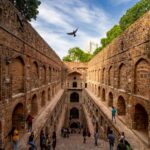
- Agrasen Ki Baoli is a short but striking stop at a stepwell with 108 steps and ornate stone details
- India Gate and Rashtrapati Bhawan are built for quick photo breaks from the car
- Qutub Minar is the time anchor, with a full hour at this UNESCO-listed landmark
How the private pickup and car time saves your day
This half-day tour is built around convenience. You start at 09:00 AM (or another time you choose), and the tour picks you up from a location of your choice within Delhi / Gurugram / Noida. That matters in a city like Delhi, where the distance between sights can be misleading if you’re going on your own.
You travel in a private, air-conditioned car with a professional chauffeur. Translation: you spend less time figuring out routes, and more time looking at what’s outside the window. On top of that, the tour includes parking, tolls, taxes, allowances, fuel, and interstate taxes, so you’re not stuck negotiating small payments or surprise fees.
One small but smart touch is the bottled water. It’s cold and unlimited, which is exactly the kind of thing that keeps a half-day from turning into a grumpy scramble.
If you’re arriving by plane and want a smooth first morning or last afternoon, this is the kind of tour that feels made for airport-to-city momentum—without over-planning your day.
You can also read our reviews of more city tours in New Delhi


Gurudwara Bangla Sahib: the Sikh temple stop that feels meaningful

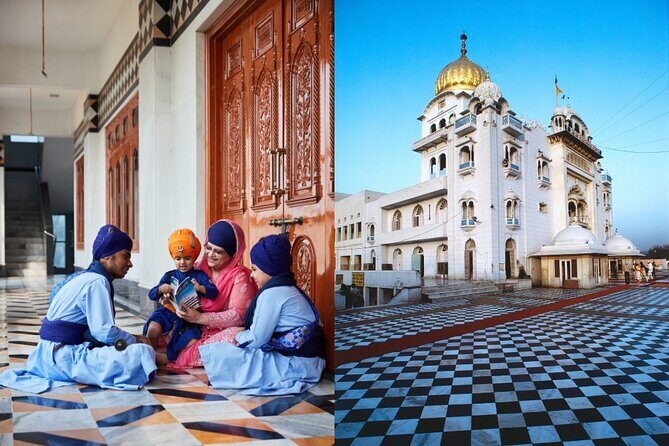
Your first major religious stop is Gurudwara Bangla Sahib, a Sikh temple and one of the faith’s important sacred shrines. This isn’t presented as a quick sightseeing nod. You spend about 40 minutes here, long enough to get beyond the gate and actually understand what you’re looking at.
The tour frames this as a chance to learn about tradition and customs of Sikh religion, including the idea of one of the world’s community kitchens. That community kitchen concept (often discussed as a core part of Sikh practice) is what gives Bangla Sahib a very human feel. Even if you’re not there to study theology, you’ll likely notice how the place is about more than architecture.
A practical tip: treat this like you’re entering a working place of worship. Dress modestly, move quietly, and follow whatever rules the staff asks you to follow on-site (head covering, shoes, or photography limits if posted). With the right mindset, this stop becomes the most “real” moment of the day, not just a photo stop.
Agrasen Ki Baoli: a stepwell you’ll want to see up close
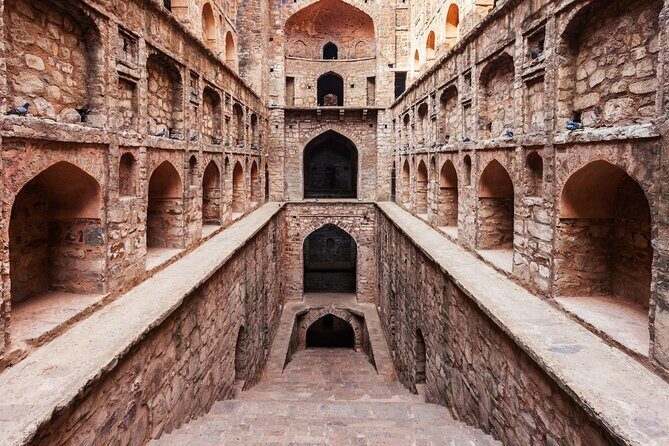
After Bangla Sahib, the tour moves you to Agrasen Ki Baoli, an ancient stepwell. This is the kind of place that doesn’t look like much from a distance—but once you’re there, the details pull you in.
You’ll have about 15 minutes, which is brief, but the payoff is visual. The stepwell is described as roughly 60 meters long, 15 meters wide, and built with 108 steps. You’ll see ornate stone work and the feel of the space through the arched walls and alcoves.
Here’s how to get the most out of the short time: don’t just take one wide photo. Pause and look for the stonework patterns, the way the alcoves repeat, and the geometry of the steps. A guide helps, because they can point out what you’re seeing and why it was built this way.
If you love unusual architecture, this stop is one of the reasons the itinerary feels more interesting than the usual Delhi “big monument” route. If you hate rushing, try to show up ready to walk and accept that it’s a stop-in-and-look stop.
India Gate: war memorial photos with a British-Indian story
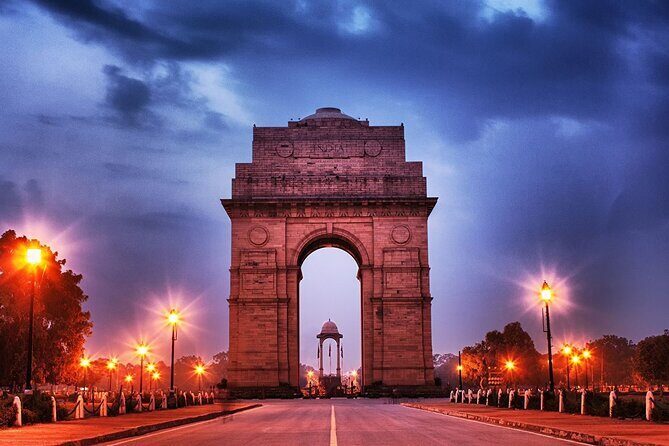
Next comes India Gate, with a 15-minute stop mainly for photos. The monument is described as a gate-like structure in the style of an Arc-de-Triomphe, with a height of about 140 feet. It was built as a war memorial for the 70,000 soldiers of the British Indian Army who lost their lives.
What I like about including India Gate is that it anchors a different layer of Delhi’s story: the capital’s relationship to British rule, and the long memory tied to public monuments. It’s not just a pretty skyline shot. It’s a reminder that city buildings can carry grief and history together.
Practical move: come prepared for sun and crowds. For this stop, you’re getting photos and a quick orientation, so keep your expectations aligned. If you want to read every plaque or spend real time here, you’ll likely want to return later.
Rashtrapati Bhawan and Parliament House: photo drives with real purpose
After India Gate, you’re in a photo-and-drive rhythm. You’ll pass Rashtrapati Bhawan, described as the Viceroy’s House before independence. You get about 15 minutes, and the tour uses the time for photos from the drive.
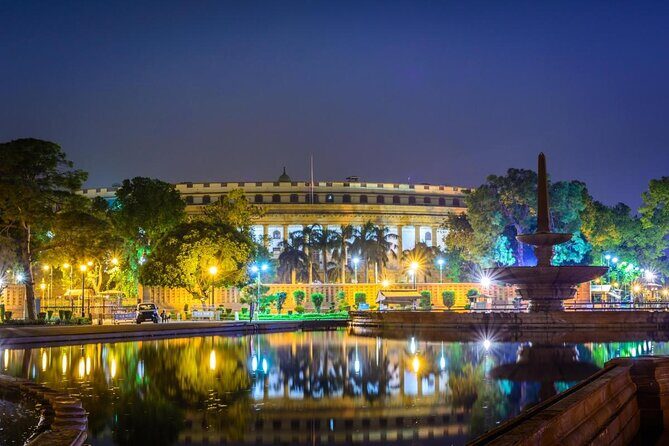
Then comes the Parliament House, also shared as a drive-by for photos. The description highlights the British architects Edwin Lutyens and Herbert Baker. It also notes what the building houses: the Lok Sabha, the Rajya Sabha, and a library hall.
Even if you don’t step inside, this part works. Delhi’s political buildings can feel abstract until someone explains what they were designed to symbolize. A good guide makes these moments click into place, turning them into more than backdrops.
A consideration: because this is a short photo window, you shouldn’t plan on deep exploration. If you’re the type who wants to read, sketch, and linger, you’ll feel the speed here. If you’re the type who wants the big visual hits and a clear story, this is efficient.
You can also read our reviews of more private tours in New Delhi





Qutub Minar: the one-hour anchor you’ll actually remember
The final big stop is Qutub Minar, with about 1 hour on-site. This is the center of gravity for the itinerary, and for good reason.
Qutub Minar is called a world heritage site, and the minaret is described as having been constructed in 1192 by Qutab-ud-din Aibak. The tour also emphasizes its importance as an example of Indo-Islamic Afghan architecture that has survived the ravages of time.
I like putting Qutub Minar near the end of the tour because your brain is warmed up. Earlier stops give you context for Delhi’s religious life and political architecture; Qutub Minar then shifts you into older, more complex architectural language.
How to make the most of an hour:
- Spend a little time on the wide views first, so you understand the site layout.
- Then move in closer to focus on texture and form—minarets reward attention.
- Use your guide. If you’re paying for a private tour, this is where the guide’s explanation is worth every minute.
This is also the stop most likely to deliver “I get it now” moments—when the architecture stops being just impressive and starts being understandable.
What the timing feels like in real life (4 to 5 hours)
This tour runs about 4 to 5 hours total. That range matters because Delhi traffic and site pacing can shift the experience.
The itinerary has a mix of:
- 40 minutes at Bangla Sahib
- 15 minutes at Agrasen Ki Baoli
- 15 minutes for India Gate
- 15 minutes for Rashtrapati Bhawan photo time
- drive-by photo time for Parliament House
- about 1 hour at Qutub Minar
So yes, the quick stops exist. But the itinerary isn’t just a hop-skip routine; it’s built so you get one meaningful religious stop, one unusual architecture stop, and one deeper landmark stop.
If you choose a later start time (instead of the standard 09:00 AM), you might find the light and photo conditions change—often for the better. If heat is a concern, aim earlier in the day.
Price and value: what $99 buys beyond the ticket cost
At $99 per person, this private half-day tour sits in the “you’re paying for convenience and a guide” category.
Here’s what you’re getting for your money:
- Private air-conditioned car with driver
- Professional private tour guide
- Pickup and drop-off
- Bottled water (cold and unlimited)
- Parking, tolls, taxes, allowances, and fuel handled
- Entrance fees to monuments included as per the itinerary
That last point is big. Delhi has enough ticket lines and small access rules that having entrances handled saves time and stress. Add a guide who can keep the schedule on track, and the value becomes less about the sight list and more about getting through the day cleanly.
You’re also booking a private experience, meaning it’s only your group. That typically helps with pace. Everyone can hear explanations without competing with a loud group rushing past.
There’s also mention of group discounts, which can help if you’re traveling with more people and can spread the cost.
My honest take: if you want a tidy overview of Delhi in a single half-day and you’d rather pay than plan, $99 can feel fair. If you like building your own route and don’t care about entrance logistics, you might find cheaper options—but you’d be trading away the calm.
The guide is the real difference-maker
The most consistently praised part of this experience is the guide’s impact. The tour is described as having an excellent, very informative guide who delivers clear oversight of Delhi while keeping everything on time. There’s also credit for great pickup, including from an airport hotel, and punctuality.
That matters because Delhi is not a simple city for first-timers. Even when landmarks are famous, the context can be confusing unless someone puts it into words: what was built when, why it looks the way it does, and how different eras shaped today’s capital.
You’ll get more out of the tour if you ask questions. Use the guide not just for facts, but for practical scene-setting: how to read the architecture, why this temple matters, and what to focus on at Qutub Minar.
Who this half-day tour is best for
This is a strong fit if:
- You want a private tour, not a group scramble
- You only have half a day and want key Delhi highlights
- You appreciate a guide who can turn monuments into stories
- You want entrance fees handled and don’t want admin work
It may be less ideal if:
- You hate short stop times and need long wandering sessions
- You want lots of interior time at every monument
- You’re planning a deep-dive into one site and aren’t interested in variety
In short: it’s a great first-or-last-day option for getting your bearings fast and leaving room for a return visit.
Should you book this Delhi half-day private tour?
Book it if you want an efficient, guided hit list that still includes the kind of stops you’ll remember—especially the religious and architectural ones. With pickup, air-conditioned transport, cold water, and entrance fees included, you can focus on the places instead of the logistics.
Skip it or consider a different format if you know you need long stays at monuments, or if your schedule is so tight that even a short photo stop will feel like a compromise. For most first-timers, though, this itinerary hits a sweet spot: enough context, not too much rushing.
FAQ
How long is the Private Half Day Delhi City Tour?
It runs about 4 to 5 hours.
What time does the tour start?
It starts at 09:00 AM, or at your given time.
Is pickup included?
Yes. Pickup is offered from a location you choose in Delhi, Gurugram, or Noida.
Is this tour private or shared?
It’s private. Only your group participates.
Are entrance fees included?
Yes. Entrance fees to monuments are included as per the itinerary.
What transportation is provided?
A private air-conditioned car with a professional chauffeur.
Is bottled water included?
Yes. You receive cold, unlimited bottled water.
Which major sights are included?
The itinerary includes Gurudwara Bangla Sahib, Agrasen Ki Baoli, India Gate, Rashtrapati Bhawan, Parliament House (photo drive), and Qutub Minar.
Is there a mobile ticket?
Yes. The tour includes a mobile ticket.
Can I cancel for a full refund?
Yes. You can cancel for a full refund up to 24 hours before the experience starts.