REVIEW · NEW DELHI
Epic Private Tour of Delhi with Premium Guide & Car
Book on Viator →Operated by The Epic Journeys · Bookable on Viator
Delhi clicks into place with this private circuit. You get a smart mix of Old Delhi chaos and New Delhi monuments, starting at Jama Masjid, sliding through Chandni Chowk on a rickshaw, then rolling into major UNESCO sights like Humayun’s Tomb and Qutub Minar. It’s a full-day-feeling itinerary built around major landmarks, but with enough variety to keep it interesting.
I also like that the tour is handled like a real plan, not just a checklist. Guides such as Lalit, Chetan, and Manoj Ahirwar are described as friendly, organized, and strong on history and culture, with some even working in multiple languages including Spanish. One consideration: it’s a 6 to 8 hour schedule with multiple religious sites and timed sightseeing, so you’ll want to come ready for walking, crowds, and a day where lunch isn’t included.
In This Review
- Key things that make this Delhi tour work
- Price and Logistics: what $50 really buys you
- The flow of the day: Old Delhi to UNESCO in one run
- Stop 1: Jama Masjid, built for scale and spiritual weight
- Stop 2: Khari Baoli spice market + rickshaw ride in Chandni Chowk
- Stop 3: Raj Ghat and the pause at Gandhi’s memorial
- Stop 4: Agrasen Ki Baoli, a 15th-century stepwell photo stop
- Stop 5: Gurudwara Bangla Sahib and Guru Ka Langar community kitchen
- Stop 6: Humayun’s Tomb, UNESCO scale with a guided pace
- Stop 7: Qutub Minar, 73 meters of Delhi identity
- Stop 8: Lotus Temple, Bahai House of Worship in 30 minutes
- Drive-by moments: India Gate and the war memorial context
- What makes the guide part feel worth it
- When this tour is the best fit for you
- Should you book this Delhi private tour?
- FAQ
- How long is the Delhi private tour?
- Is pickup included?
- Is this a private tour or shared group experience?
- What does the tour include?
- Are entrance fees included for the monuments?
- Is lunch included?
- What are the main stops on the itinerary?
- Does the tour include the Lotus Temple?
- Can I get a full refund if I cancel?
Key things that make this Delhi tour work
- Private guide + private car: you control the pace, and the ride saves energy between Old and New Delhi.
- Rickshaw through Old Delhi’s narrow lanes: a high-energy way to experience Chandni Chowk and Khari Baoli area.
- Real UNESCO lineup: Humayun’s Tomb and Qutub Minar anchor the New Delhi portion.
- Cultural depth beyond monuments: Gurudwara Bangla Sahib includes Guru Ka Langar community kitchen time.
- Photo stop with local history: Agrasen Ki Baoli brings you to a 15th-century stepwell.
Price and Logistics: what $50 really buys you
At $50 per person for a 6 to 8 hour private outing, the value comes from how much ground you cover without the headache of transit planning. A private car matters in Delhi: you’re moving between neighborhoods that feel like different worlds. Add a guide and a rickshaw ride, and this stops being just “sightseeing.” It becomes transport + interpretation, which is where a lot of tours fall short.
It’s also designed for small-group comfort. The experience is private, meaning only your group participates, and you get pickup offered. Parking fees, bottled water, and an air-conditioned vehicle are included, which helps a lot on hot days or when you want to reduce time spent figuring out logistics.
One practical heads-up: monument entrance fees are listed as not included, but admission tickets are also indicated as included for several stops in the itinerary, plus Lotus Temple is free. So the safest way to think about it is this: most major entrances on the plan are handled, and Lotus Temple won’t cost you anything. Still, keep a little flexibility in mind for any extra on-site costs that may apply.
You can also read our reviews of more guided tours in New Delhi

The flow of the day: Old Delhi to UNESCO in one run
This tour makes one smart bet: you’ll see Delhi as a story, not as disconnected points on a map. You start with Jama Masjid, then shift into market streets for the rickshaw ride area, then move to reflective memorial time at Raj Ghat. After that, it turns into a culture-and-community route at a Sikh temple and community kitchen, before closing with big stone monuments and iconic architecture in New Delhi.
That sequencing helps your brain. Old Delhi is sensory overload—noise, movement, smells, the works—so you get it early while you still have energy. Then the day shifts to major historical sites where you can slow down a bit and let the scale sink in.
With a schedule this packed, your guide’s role is more than facts. A good guide helps you hit the right pace, manage crowds, and keep you from wasting time at the wrong moment. The guides named in the experience feedback—Lalit, Chetan, and Manoj Ahirwar—are repeatedly described as attentive and organized, which is exactly what you want on a day like this.
Stop 1: Jama Masjid, built for scale and spiritual weight
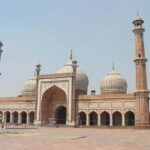
Jama Masjid is one of India’s largest mosques, built by Shahjahan—also tied to the story of the Taj Mahal. This stop is set for about 45 minutes, and that’s a fair amount of time to take in the main space and grasp why this mosque became such a landmark.
What I’d focus on here is scale and intention. This isn’t a quick photo pull; it’s a place that signals how monumental religious architecture can be. Because it’s an active sacred site, you should expect rules and practical etiquette. You might need to dress respectfully, and you may have to follow instructions about where to walk and what areas are open.
Tip for your photos: start with wider angles to capture the overall complex, then switch to tighter views once you understand the layout. That’s how you avoid ending up with a bunch of shots that look like they’re all the same distance.
Stop 2: Khari Baoli spice market + rickshaw ride in Chandni Chowk
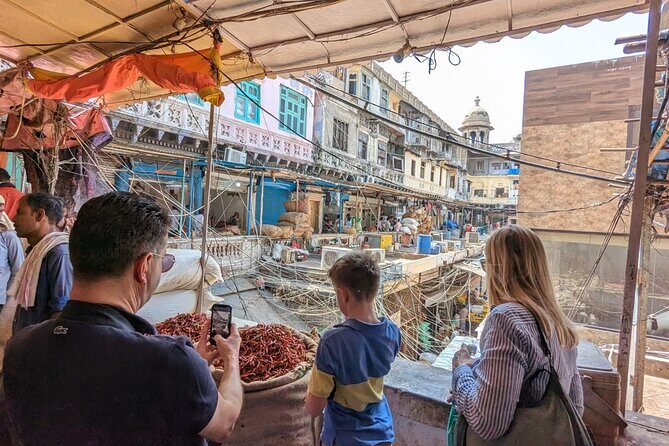
If you want Delhi with intensity, this is your first big hit. Khari Baoli is described as the largest spice market of South Asia, and the plan pairs it with a rickshaw ride through Old Delhi’s tight alleys around Chandni Chowk.
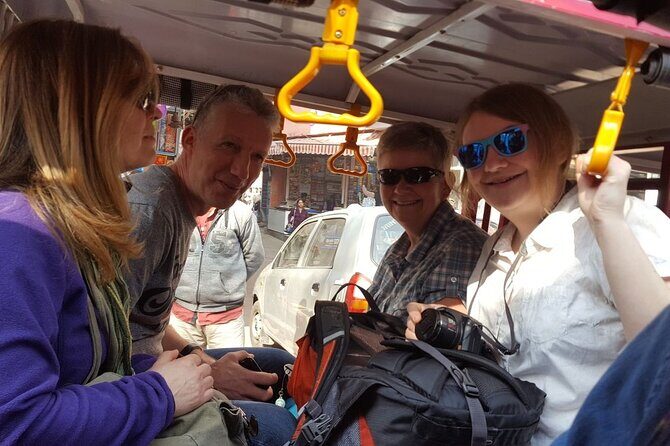
The rickshaw portion matters because it changes how you experience the streets. Walking would be slow and tiring; driving would miss the human-scale narrow lanes. Sitting in a rickshaw gives you a moving vantage point, so you get the rhythm of the market without doing the heavy physical work.
Time is about 1 hour here. That’s enough to see the market atmosphere and feel the way the area functions day-to-day, but not enough to become stuck in one stall for 45 minutes. If you have a shopping instinct, tell your guide early and they can steer you toward things worth stopping for.
Also, you should know that Old Delhi market areas can be crowded and noisy. Bring patience, and keep your belongings secure. A private guide and car help, because you’re not trying to coordinate your return to a meeting point on your own.
Stop 3: Raj Ghat and the pause at Gandhi’s memorial
Then the tour shifts tone. Raj Ghat is Gandhi’s memorial on the bank of the Yamuna River, and the stop is set for about 45 minutes. This is the kind of place where you feel the day changing: fewer sales pitches, more reflection.
What makes this stop valuable on a combined itinerary is contrast. You go from spice market intensity to a quiet, symbolic site tied to modern India’s moral and political history. Even if your interest in Gandhi is general, it gives context to what you’re seeing elsewhere in the city.
If you’re the kind of traveler who likes to learn while walking, this is where your guide’s narration really helps. Strong guides tend to connect the memorial to the broader historical arc of Delhi and India—not just list dates.
You can also read our reviews of more private tours in New Delhi



Stop 4: Agrasen Ki Baoli, a 15th-century stepwell photo stop
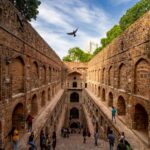
Agrasen Ki Baoli is a 15th-century stepwell and a short stop at about 15 minutes. The itinerary frames it as a favorite Instagram-style photo stop, but the real reason it’s worth your time is the function: it was originally built as a water reservoir.
Stepwells are a Delhi specialty, and they’re one of the easiest ways to understand how older cities solved practical problems without modern plumbing. You’re looking at engineering disguised as architecture—tiered stone steps, designed for access to water.
Since time is short, I’d use the stop for two things:
- a quick walk to understand the geometry
- a couple of photos from different angles (higher vs lower viewpoints)
If your group moves slowly or likes long photo sessions, tell your guide early so they can keep the rest of the timing on track.
Stop 5: Gurudwara Bangla Sahib and Guru Ka Langar community kitchen
Gurudwara Bangla Sahib brings a different kind of Delhi: spiritual life plus community service. The plan includes about 1 hour and specifically calls out Guru Ka Langar, the community kitchen that feeds thousands of people every day.
This is often where a guide’s storytelling adds real meaning. It’s not only about architecture. You’re seeing a living system of care—one that keeps running because people show up. Even if you don’t fully know Sikhism before the visit, you can leave with a clearer picture once someone explains the role of the temple and the idea of shared meals.
As with other religious sites, dress respectfully and follow any on-site instructions. The best attitude is simple: be calm, be polite, and let the experience be what it is, not a performance for your camera.
Stop 6: Humayun’s Tomb, UNESCO scale with a guided pace
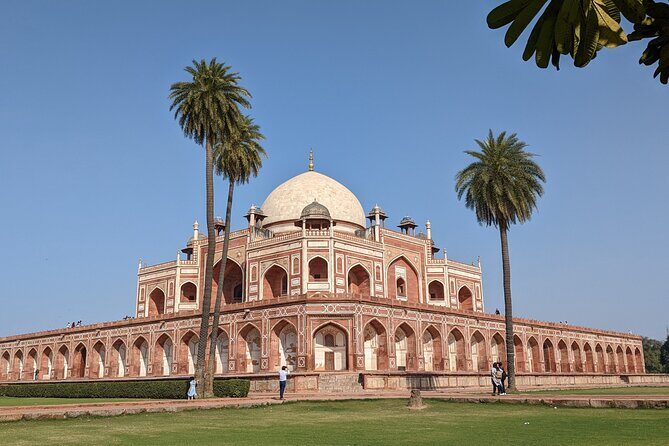
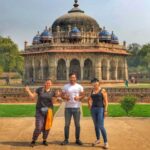
Humayun’s Tomb is a UNESCO World Heritage Site built in the 16th century, with a stop of about 1 hour. This is one of those monuments where the gardens, symmetry, and tomb design work together. A guide helps you see the structure as more than a photo subject.
A useful way to enjoy this stop is to let the story build in your head:
- where the tomb sits
- how the surrounding design frames it
- why it feels designed for contemplation
You’ll get time to absorb it without rushing. That matters because UNESCO sites in busy cities can turn into quick photo stops unless someone keeps you oriented.
Stop 7: Qutub Minar, 73 meters of Delhi identity
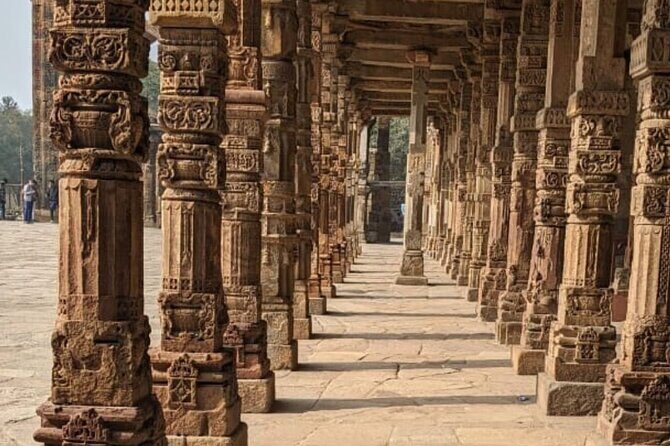
Qutub Minar is a 73 meter tall tower built in the 12th century, described as the tallest brick minaret in the world. The stop is about 1 hour, and it’s another UNESCO World Heritage site.
This is the stop where the city’s storytelling switches fully into “landmark mode.” It’s hard not to stare upward here. Your guide’s job is to help you notice details you might otherwise miss: construction style, historical significance, and why this monument sits at the center of Delhi’s architectural identity.
If you’re sensitive to crowding, go with a plan: take your wide-angle shots quickly, then spend the rest of the hour on observations and guided explanations. One hour is enough if you don’t burn the time only on photos.
Stop 8: Lotus Temple, Bahai House of Worship in 30 minutes
The Lotus Temple, also known as the Bahai House of Worship, is built in 1986 and often photographed. The tour keeps it to about 30 minutes, and it’s listed as free.
This is a good “breather” stop. After the heavier historical density of earlier monuments, Lotus Temple gives you a lighter, modern-feeling architecture moment. It’s also shorter, so you don’t lose the day if you’re tired.
If you want photos, this is where you’ll probably enjoy them most—just don’t let photography take over. Spend a few minutes just looking. The shape is the point, and your guide can often explain the design idea without turning it into a lecture.
Drive-by moments: India Gate and the war memorial context
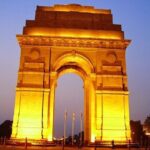
Between stops, you’ll also drive past India Gate. It was built by the British as a war memorial for World War I. Even as a drive-by, this is useful for orientation because India Gate is one of Delhi’s central visual anchors.
I like drive-by context stops because they help you understand where you are in the city’s layout. You get a landmark reference even if you don’t have time to do a full dedicated visit.
What makes the guide part feel worth it
The tour’s main value isn’t only the monuments. It’s the people telling you what you’re looking at. The guides named in the experience feedback—Lalit, Chetan, and Manoj Ahirwar—come across as more than “stand and point.”
You’ll especially appreciate it if you care about:
- history and culture explained clearly
- a guide who stays attentive to questions
- a sense of comfort and safety through busy areas
Some of the feedback also mentions language support, including Spanish. If you’re not traveling with English as your strongest comfort zone, that’s an underrated advantage because it changes the quality of your learning time.
When this tour is the best fit for you
This is a strong choice if you want:
- a structured first trip to Delhi that covers Old and New Delhi
- private transport to reduce stress
- major UNESCO stops without having to coordinate separately
- a market experience that includes a rickshaw, not just a walk
You might choose a different style of tour if you prefer slow travel, lots of time in shops, or you want to skip religious sites. This itinerary is built for a full day of sights and movement.
Also, if your group loves photos, you’ll enjoy the mix: Chandni Chowk/rickshaw motion shots, Agrasen Ki Baoli geometry, and the big vertical lines of Qutub Minar and Lotus Temple. Just keep an eye on pacing so you don’t fall behind.
Should you book this Delhi private tour?
I’d book it if it matches your travel style: you want one guide-driven day that connects the city’s stories from Jama Masjid to Qutub Minar, with a rickshaw ride and a meaningful stop at Raj Ghat and Gurudwara Bangla Sahib. At $50 per person with private car support and water included, it’s a practical way to maximize your time—especially on a first visit.
I wouldn’t book it if you hate tight schedules or you want a relaxed, open-ended day with minimal walking and no dense itinerary. This one is designed to move, so come with energy and you’ll get your money’s worth.
FAQ
How long is the Delhi private tour?
The tour runs about 6 to 8 hours.
Is pickup included?
Pickup is offered.
Is this a private tour or shared group experience?
It’s private, so only your group participates.
What does the tour include?
It includes an air-conditioned vehicle, parking fees, private transportation, bottled water, and a rickshaw ride in Old Delhi.
Are entrance fees included for the monuments?
Admission tickets are listed as included for the major stops mentioned, and Lotus Temple is free. Lunch and monument entrance fees are listed as not included, so it’s best to confirm any extra charges that might apply on the day.
Is lunch included?
No, lunch is not included.
What are the main stops on the itinerary?
Key stops include Jama Masjid, Khari Baoli/Chandni Chowk via rickshaw, Raj Ghat, Agrasen Ki Baoli, Gurudwara Bangla Sahib, Humayun’s Tomb, Qutub Minar, and Lotus Temple, plus a drive past India Gate.
Does the tour include the Lotus Temple?
Yes. Lotus Temple is included as a 30-minute stop, and it’s free.
Can I get a full refund if I cancel?
Yes. You can cancel up to 24 hours in advance for a full refund. If you cancel less than 24 hours before the start time, the amount paid is not refunded.