REVIEW · NEW DELHI
Private Full Day Tour of Old and New Delhi
Book on Viator →Operated by Kuldeep Guía Español · Bookable on Viator
Delhi hits you fast, then surprises you more. This private 8-9 hour route pairs Old Delhi icons with New Delhi landmarks, plus markets and local food so you see more than just monuments. I especially like the way the day starts at Jama Masjid and quickly moves into Chandni Chowk, so the culture changes right in front of you. Another big plus is the mix of major sites (Red Fort, Humayun’s Tomb, Qutub Minar) with softer, human stops like Bangla Sahib’s kitchen.
One drawback to plan for: while many stops list no admission, a few places can have small on-site fees (for example Jama Masjid charges 300 INR per chamber), and lunch is not included.
In This Review
- Key highlights you should know
- A one-day game plan for Old and New Delhi
- Jama Masjid to Chandni Chowk: mosque grandeur and market energy
- Khari Baoli: the spice market that smells like Delhi
- Red Fort to India Gate and the presidential zone
- Agrasen Ki Baoli and Bangla Sahib: steps, service, and calm
- Humayun’s Tomb to the Lotus Temple: UNESCO sights with different moods
- Qutub Minar Archaeology Complex: the tower, the tombs, and the iron pillar
- Food stops, tasting rules, and small costs to expect
- Price and logistics: where the $55 value really comes from
- Should you book this private full-day Old and New Delhi tour?
- FAQ
- What’s included in the private car setup?
- How long is the tour?
- Is lunch included?
- Are there entrance fees at the monuments?
- Do we ride a rickshaw in Old Delhi?
- Is this tour private?
- What should I wear for Jama Masjid?
- What’s the cancellation policy?
Key highlights you should know
- A true private setup with a car, driver, and guide just for your group, plus bottled water, snacks, and onboard WiFi
- Old Delhi on two speeds: an early market run on foot, then quick rides through the tight lanes
- Jama Masjid to Chandni Chowk without wasting time—you get big sights and street-level context in the same morning
- Religious sites with the full experience: prayer viewing at Bangla Sahib and entry into the Lotus Temple
- UNESCO-heavy lineup: Humayun’s Tomb and Qutub Minar get proper time, not just a photo stop
- Food that’s built into the route with a focused stop around parantha wali gali and time for tasting
A one-day game plan for Old and New Delhi
This tour is built for people who want the best of Delhi in a single long day without playing transport roulette. You’re in an air-conditioned vehicle with a driver, so you can actually keep up with the schedule while Delhi traffic does its thing.
What makes this route especially smart is the contrast. Old Delhi brings you to mosques, spice stalls, and narrow bazaars. New Delhi shifts the mood to memorials, planned architecture, and major Mughal-era sites. By the end, you understand the city as a story of tradition changing over time, not just a checklist of places.
You also get small comforts that matter on a full day: bottled water, car snacks (chips and cookies), and even mask/disinfectant. That kind of practical support helps when you’re doing temples, markets, and walking in heat.
You can also read our reviews of more private tours in New Delhi


Jama Masjid to Chandni Chowk: mosque grandeur and market energy
You start at Jama Masjid, the big-name mosque built by Emperor Shahjahan. It’s a powerhouse of Indo-Islamic architecture, and the scale is the first lesson—this place was meant to hold a city’s worth of worshippers.
Here’s the practical part: there’s no entrance fee for the mosque itself, but they charge 300 INR per chamber. For foreign ladies, the mosque advises wearing a simple robe, which the authorities provide. If you know you’ll need it, go in with comfortable, easy clothing so the robe slip-on is painless.
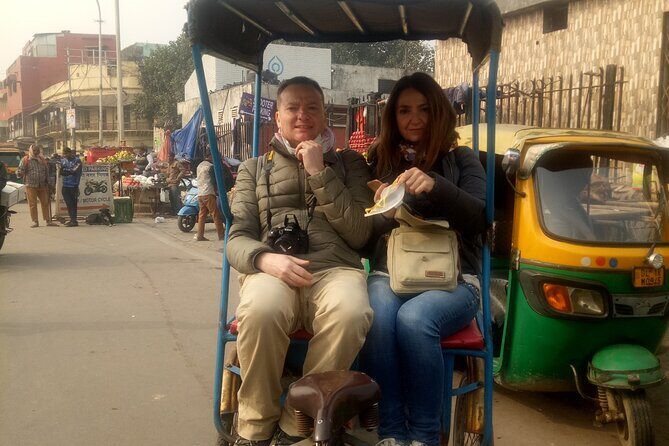
From there, the tour turns you loose in Chandni Chowk on a rickshaw ride through tight, colorful lanes. Chandni Chowk is described as the Moonlight Market, created in the 17th century, and even the brief look at heritage buildings around the area helps you see why the market became such a magnet.
A standout here is the focus on food—specifically a stop near parantha wali gali, a famous street for stuffed bread. You’ll have a chance to taste local bites rather than just watching people eat.
If you’re sensitive to crowds, treat the market portion like a sensory workout: keep your pace steady and give yourself a few seconds to recover between stops.
Khari Baoli: the spice market that smells like Delhi
Next up is Khari Baoli, North India’s major spice market. The big idea isn’t just shopping—it’s the smell and the energy. The tour keeps it quick, but it’s long enough for you to understand what people mean by Delhi being about masala and spices.
You’re there to smell the spices and feel the vibe, and then you get a short ride through the area. With more than 3,000 shops mentioned—spices, tea and coffee, dried nuts, sweets, pickles, and masala—you won’t see it all. But you’ll get the core reality: this is a working marketplace, not a staged souvenir street.
This is also a good reset point after the bustle of Chandni Chowk. Even though it’s busy, spice stalls give you something more specific to focus on: aromas, colors, and the way vendors talk shop.
Practical tip: if you’re considering purchases, keep an eye on cash/receipt expectations and don’t leave with only what you can carry.
Red Fort to India Gate and the presidential zone
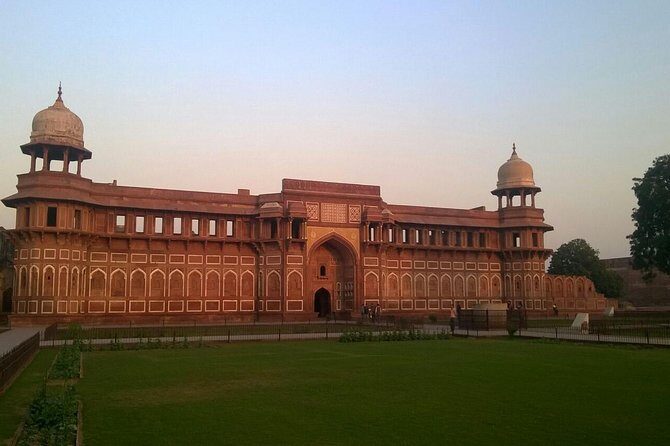
Then the day shifts into monuments. The tour heads to the Red Fort, UNESCO-listed, once the residence of Mughal royalty for centuries. The story turns darker with the British capture in the mid-19th century, when many royal palaces were demolished—but what remains is still jaw-dropping.
You don’t just glance from outside. You explore on foot around the fort, and the defensive walls are the kind of detail that makes you stop and look up. It’s one of those places where the architecture does the explaining.
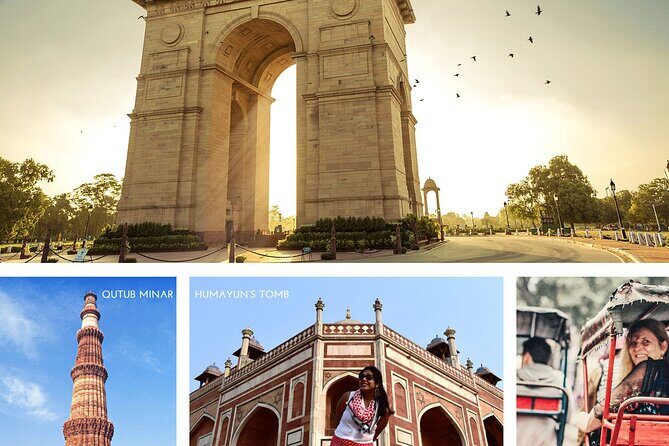
After that, the tour moves to India Gate, a war memorial built in 1931 and inspired by the Arc de Triomphe idea. Nearby you also get time around notable war memorial spots such as the King George Memorial area and the Tomb of the Unknown Soldiers—even if you only see them briefly, it adds weight to the stop.
Then comes the presidential photography zone: you’ll pass the President’s House, built in the early 20th century by the British. Normally tourists can’t enter, so the tour keeps it realistic—often you’ll see it from outside, and if you get a permit, there may be a bit more walking. You’ll also pass through the parliament area, but you can’t stop there; photos are the goal from a nearby angle.
This stretch is great if you want Delhi to feel like a capital city, not only a historical city.
Agrasen Ki Baoli and Bangla Sahib: steps, service, and calm
After the grand monuments, you get a quieter, more human pause at Agrasen Ki Baoli, a stepped well built in the 8th century. The tour emphasizes the steps—about 100 steps down to get water. Even if you don’t go down, the structure gives you a different kind of Delhi view: older, cooler, and more intimate.
If you don’t like steep descents, this is still worth it for photos and for the chance to slow down. It’s the kind of stop that balances the earlier intensity.
Then you head to Gurudwara Bangla Sahib, the largest Sikh temple in Delhi. This part is powerful because it’s not only architecture. You’ll see live prayer, and you get to understand Sikh community life through the kitchen operation. The tour mentions serving over 30,000 people every day, which is a mind-set shift from tourism to service.
There’s also an option to volunteer in the kitchen for a few minutes if you want. Even a short moment here changes how you think about what you’re seeing—less spectator mode, more shared human experience. And the sacred lake inside the complex adds calm around the edges.
Wear something comfortable for temple visits. You’ll likely spend time standing and watching, and you’ll want your legs to feel okay.
A few more New Delhi tours and experiences worth a look





Humayun’s Tomb to the Lotus Temple: UNESCO sights with different moods
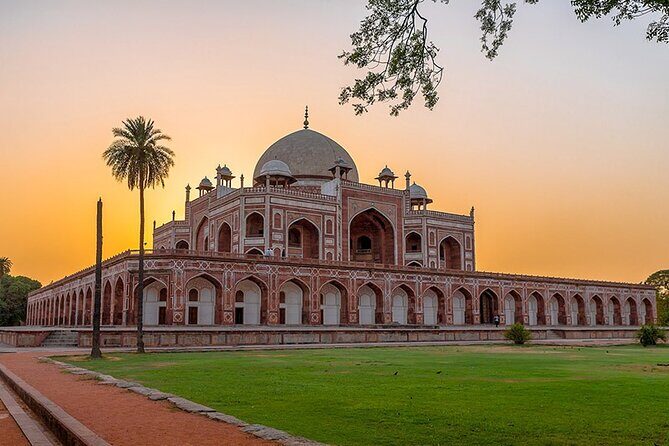
Next the tour lands at Humayun’s Tomb, another UNESCO World Heritage site. Humayun was the second Mughal emperor, and the tomb was built by his wife Hamida Bano Begum. The tour frames it as part of a wider architectural story: some accounts say the Taj Mahal took inspiration from Humayun’s Tomb, and you’ll see similarities in the design language.
You’re guided through the complex, including additional features like the Tomb of Isa Khan, the Barber’s grave, and other related tombs and mosque elements. This is where you slow down and get the time that the site deserves—especially if you like Persian-style symmetry and gardens around major tombs.
After that comes Lotus Temple, a Bahá’í house of worship. The tour notes the temple’s inspiration and the fact that you can go inside to explore. It’s also an area where you might meet Bahá’í people or check the information center.
The mood shift is the point. Humayun’s Tomb can feel heavy and historical; Lotus Temple feels lighter and modern, almost like stepping into a quiet park. If your feet need a breather, this is a good stop because it’s less about climbing and more about calm wandering.
Qutub Minar Archaeology Complex: the tower, the tombs, and the iron pillar
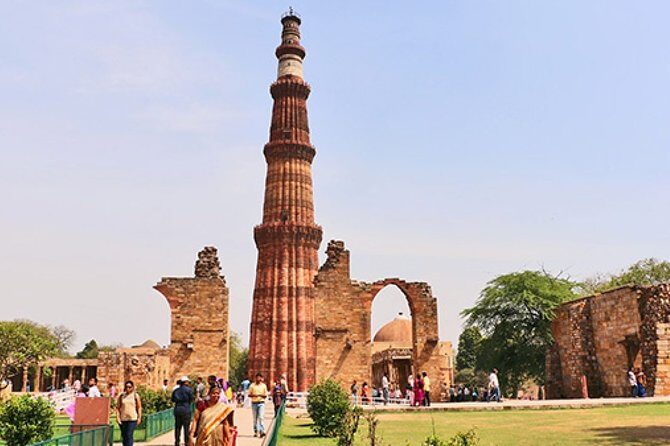
You end with Qutub Minar, another UNESCO site described as almost 800 years old. The tour frames it as the start of the day’s South Delhi era, and it’s a serious finale: Qutub’s archaeological complex includes the tower plus many related monuments.
You get guided access to the key sights inside the complex, including Alai Minar, the Tomb of Iltutmish, a first mosque, a first cemetery, and more. There’s also mention of an Iron pillar (a 4th century pillar), plus structures like Alai Darvaza and multiple tombs.
This is the moment where you can feel Delhi stretching across centuries in one view. The tower isn’t just a landmark; it’s a reference point for the entire complex. The guide’s job here is to make the layout make sense, so you’re not just looking at scattered ruins and wondering what’s what.
If you’re planning your photos, wear shoes you can rely on—this is the type of place where small walking distances add up.
Food stops, tasting rules, and small costs to expect
Food is not an afterthought on this tour. Old Delhi’s route includes time around street food and market-style eating: sweet shops, street stalls, and restaurants in the general flow of the day. The highlight callout is the stop around parantha wali gali, but you’ll also get broader chances to taste local Delhi flavors.
Still, do a quick reality check on what’s included. The tour includes snacks in the car, but lunch is not included, so you’ll want to budget either for a sit-down meal or for a street-food style lunch with the guide’s help.
Also watch the small-cost items. The tour data says entrance fees to monuments are not included, even though many stops list admission ticket as free. When a site lists a specific fee—like the 300 INR per chamber at Jama Masjid—assume that fee is real. The tour also lists bicycle rickshaw rates as not included, so if you’re thinking of extra rides beyond what’s planned, ask first and keep it simple.
And about photos: the tour data lists camera as not included, so bring your own. If you’re using a phone, charge it before you leave.
Price and logistics: where the $55 value really comes from
At $55 per person, this is aiming at people who want time saved and headaches avoided. You’re paying for a private car with an experienced setup: driver and guide, air-conditioning, bottled water, WiFi on board, parking fees, and guide/chauffeur fees.
The fact that the tour is private matters more in Delhi than in many cities. Public transport works, but it’s a time sink. A full day with multiple widely separated sights means you either spend your day commuting or you spend it seeing.
A couple value notes that are easy to miss:
- You get onboard support like snacks and disinfectant, which helps you keep moving.
- Many stops are listed as admission free, so your main costs may be the specific on-site fees and your meal.
The main tradeoffs are also clear: lunch isn’t included, some entrance situations can cost extra, and you’re committing to a long day (8-9 hours). If you want a slower pace with more inside time at fewer places, you might find this schedule pushes you a bit.
For language, the provider is branded as Guía Español, and in practice, the guide has been praised for doing the tour in Spanish and being patient and organized.
Should you book this private full-day Old and New Delhi tour?
I’d book it if you want a well-structured one-day mix: big sights plus markets, plus at least two places where you experience culture through more than just photos. It’s especially worth it if you’re short on time and you’d rather pay for comfort and guidance than gamble on routes.
Skip it or plan carefully if you dislike long walking stretches, don’t like crowds around Old Delhi markets, or you’re trying to keep the day ultra-cheap. Also, confirm any on-site fees you might face (Jama Masjid chamber charge is specifically mentioned), and plan for lunch since it’s not included.
If you’re traveling with a group and want privacy, this kind of tour tends to deliver the best balance: you get control, a guide who can explain what you’re seeing, and a route that makes sense for a first-time Delhi visit.
FAQ
What’s included in the private car setup?
The tour includes air-conditioned vehicle, private transportation, a driver and guide fees, bottled water, snacks in the car (chips and cookies), mask and disinfectant, and WiFi on board. It also lists parking fees and GST.
How long is the tour?
It runs for about 8 to 9 hours (approx.).
Is lunch included?
No, lunch is not included.
Are there entrance fees at the monuments?
Entrance fees are listed as not included. Some stops may have small on-site charges, such as 300 INR per chamber at Jama Masjid.
Do we ride a rickshaw in Old Delhi?
The itinerary includes a rickshaw ride in Old Town, but bicycle rickshaw rates are listed as not included, so additional costs may apply depending on what you choose.
Is this tour private?
Yes. It’s a private tour/activity, meaning only your group participates.
What should I wear for Jama Masjid?
Foreign ladies are advised to wear a simple robe, and the mosque authorities provide it.
What’s the cancellation policy?
You can cancel for a full refund up to 24 hours in advance. Within 24 hours, the amount paid is not refunded. The experience requires good weather, and if canceled for poor weather you’ll be offered a different date or a full refund.