REVIEW · NEW DELHI
Private Full-Day Tour of Old and New Delhi
Book on Viator →Operated by Car Rentals Agra · Bookable on Viator
Delhi feels personal on this private day. You’re not just hopping between landmarks; you’re seeing how Old Delhi works at street level and how New Delhi was designed for power and ceremony. I especially like the combination of UNESCO-listed stops and the rickshaw ride through Chandni Chowk, where the city’s pace and smells hit you in the best way.
What makes this tour click is the human factor. With a private local guide (the kind who can explain what you’re looking at), you get clearer context at big, confusing sites like the Red Fort and Jama Masjid, and you’re not guessing your way through the older lanes.
One possible drawback: it’s a full day, so you’ll spend a lot of time traveling and moving between stops. Also, monument fees and lunch aren’t included, so you’ll want to plan for those extras.
In This Review
- Key highlights you’ll feel right away
- A smart way to see Old and New Delhi in one day
- Red Fort (Lal Quila): Mughal power, museums inside, and serious walls
- Jama Masjid: a gigantic mosque still alive with daily prayer
- Chandni Chowk by rickshaw: Old Delhi shopping lanes at street speed
- Raj Ghat: the eternal flame and Gandhi’s last recorded words
- Humayun’s Tomb: early Mughal design and a clear link to the Taj Mahal
- Qutub Minar: the victory tower that makes scale real
- India Gate: WWII remembrance built in red stone and granite
- Parliament House and the President’s Residence: iconic from the road
- Your guide makes or breaks the day
- Price value: what $70 includes and what you still need to budget
- Logistics that matter: pickup, pacing, and comfort
- Who should book this tour
- Should you book this Old and New Delhi private tour?
- FAQ
- What is the duration of the private Old and New Delhi tour?
- How much does the tour cost?
- Is pickup and drop-off included?
- What’s included in the tour price?
- What’s not included?
- Can I cancel for a full refund?
Key highlights you’ll feel right away
- Private guide + private vehicle: you set the pace and skip the usual “wait around and herd cats” feeling.
- Rickshaw ride in Chandni Chowk: a front-row seat to one of Delhi’s oldest market streets.
- Big Mughal-era stops: the Red Fort and Humayun’s Tomb connect dots across time.
- Qutub Minar scale test: a 73-meter tower that changes how you think about medieval Delhi.
- WWII memory at India Gate: a serious landmark with strong architectural presence.
- Good New Delhi photo angles: you’ll view major government buildings from the road without wasting time.
A smart way to see Old and New Delhi in one day
Old Delhi is crowded, layered, and full of narrow lanes. New Delhi is cleaner, wider, and built on a more planned sense of space. This tour stitches those two worlds together with a private driver and guide, which matters because Delhi isn’t easy to navigate if you’re trying to do everything on your own.
You’ll get an air-conditioned vehicle plus bottled water for the travel legs. That doesn’t sound exciting until you’re sitting in traffic, watching the day unfold around you. The pace stays realistic for an 8-hour day, and you’re not forced to rush through the major monuments just to “cover the checklist.”
You can also read our reviews of more private tours in New Delhi


Red Fort (Lal Quila): Mughal power, museums inside, and serious walls
The day often starts at the Red Fort, or Lal Quila. This is the Mughal emperor’s residence for nearly 200 years, and the whole place feels built for authority—thick walls, grand scale, and a layout that makes you understand why rulers needed fortress-level protection.
You’ll see it as more than just a photo stop. The fort houses several museums, so if you like going from headline to details, this is a strong point to slow down. The tradeoff is that forts can take time—so if you’re the type who hates crowds, plan to move with patience and keep your expectations grounded.
Jama Masjid: a gigantic mosque still alive with daily prayer
Next comes Jama Masjid, described as India’s largest mosque. Built in 1656 by Shah Jahan, it’s not a museum-quiet site. Thousands of Muslims offer prayers daily, and the courtyard can hold up to 25,000 devotees.
That daily life is the key value here. You’re not only looking at architecture; you’re seeing a living religious space that’s active long after the courtiers left. It’s also a great contrast to the Red Fort experience—same era, different purpose. One caution: because it’s actively used, timing and crowd levels can vary, so expect a bit of flow and movement.
Chandni Chowk by rickshaw: Old Delhi shopping lanes at street speed
Then you switch gears for the rickshaw ride in Chandni Chowk Bazaar. This is one of Delhi’s oldest traditional markets, and the lanes feel like a maze—tight, busy, and full of that layered “things have been here for ages” feeling.
A rickshaw is the practical move. Walking the whole time would be exhausting, and taking a car through the tightest bits doesn’t always work well. By riding, you get a different perspective: you can watch street activity unfold without getting stuck in the thickest foot traffic.
If you enjoy shopping, this is also where you get the best sense of the market as a system, not just a souvenir stop. Even if you don’t plan to buy much, it’s worth noticing how the shops and lanes “organize” around demand.
Raj Ghat: the eternal flame and Gandhi’s last recorded words
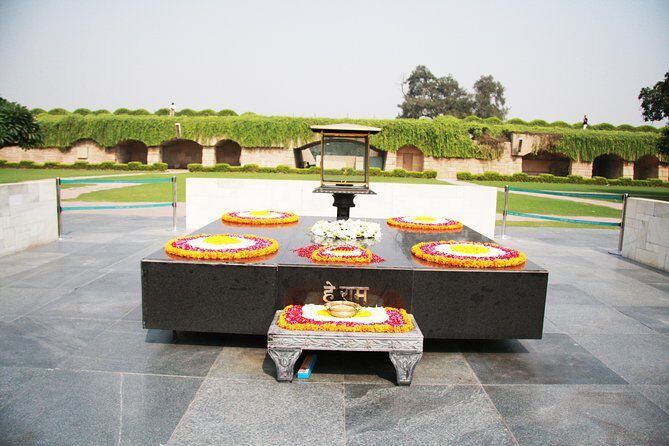
Raj Ghat is a quieter stop, but it hits hard. This is where Mahatma Gandhi was cremated, and the atmosphere here is different from the bustle of Old Delhi.
The key detail you’ll want to look for is the eternal flame. It contains the epitaph He Ram, and it’s connected to the last word spoken by Gandhi after he was shot. For many people, that specific line turns the visit from general remembrance into a more personal moment.
Because it’s a memorial, it’s also a good pause in the itinerary. If your day has been loud and fast, Raj Ghat gives you space to reset your head before you move into New Delhi.
A few more New Delhi tours and experiences worth a look





Humayun’s Tomb: early Mughal design and a clear link to the Taj Mahal
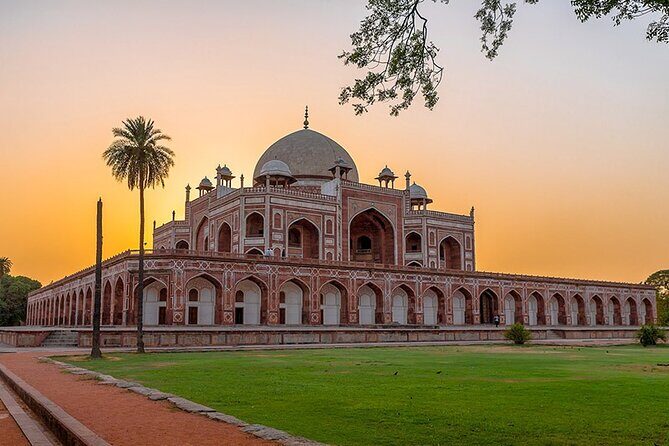
Humayun’s Tomb is another UNESCO World Heritage site and an early example of Mughal architecture. It’s especially interesting if you’ve seen the Taj Mahal or even just studied photos, because the design ideas here helped shape what came later.
What I like about placing Humayun’s Tomb after Raj Ghat is that it shifts your mind from one kind of national memory to another—power and artistic ambition expressed through architecture. This stop also helps connect the story between Old Delhi and the larger Mughal legacy across the region.
A practical note: tombs can mean more walking and standing, depending on your pace and crowd levels. If you want to linger, you’ll need to stay aware of time so you don’t feel rushed later.
Qutub Minar: the victory tower that makes scale real
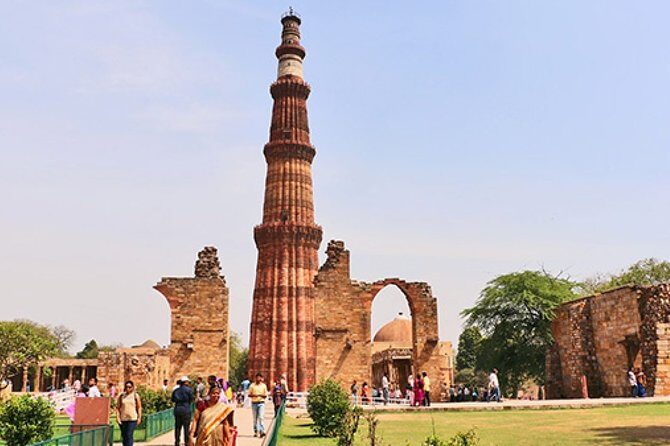
Qutub Minar is one of those landmarks where the numbers matter because they show you how tall and dramatic it is. Construction began in 1193, right after the defeat of the last Hindu Kingdom in Delhi, and the tower is nearly 73 meters high.
It tapers from a 15-meter-diameter base down to about 2.5 meters at the top. That shape is part of why it looks so sharp and unstoppable in the skyline.
This is also a great stop for your guide to work their magic. When someone explains what you’re seeing in plain terms—why it’s built this way, what the timing meant—you end up understanding more than just the postcard facts.
India Gate: WWII remembrance built in red stone and granite
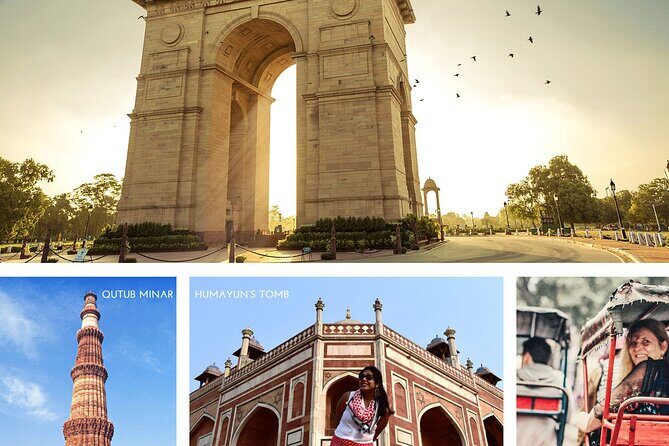
India Gate is a national monument with a heavy story attached. It was constructed in memory of 90,000 British-Indian soldiers who fought in World War II, and it was built under the leadership of Sir Edwin Lutyens.
Architecturally, the complex is made of red stone and granite. That material choice makes the monument feel grounded and sturdy, even when you’re driving past or stopping briefly for photos.
This is a stop where you’ll feel the difference between moving through a memorial area and standing still with it. If you only glance while the car rolls, you’ll miss the emotional weight. If you take a few minutes, India Gate becomes a much more meaningful pause.
Parliament House and the President’s Residence: iconic from the road
For New Delhi, you’re not only visiting monuments—you’re also seeing the government machine at work in the way Delhi presents itself. The tour includes a drive past the official residence of the President of India and the Parliament House.
The President’s House is a major attraction, and the tour notes that it remained the home to the former British Viceroy of India until 1950. That line helps you connect the colonial-era administrative legacy to modern governance.
The Parliament House is circular, colonnaded, and designed in an Imperial Style. You’ll also hear details that matter: it has an open verandah with 144 columns, plus it currently houses ministerial offices, committee rooms, and an excellent library. You see it from the outside, so you won’t get interior time—but the architectural description helps you understand what you’re looking at.
Your guide makes or breaks the day
One consistent theme from recent guide experiences is professionalism. In the notes I saw, the car and driver were on time and friendly, and the guides focused on insights rather than just reciting dates. One guide name that came up was Harsh, described as fantastic. Another was Pooja, with feedback that the day felt great for discovering culture and history.
That’s exactly what you want for a day like this: someone who can point out the “why,” not only the “what.” With a private setup, those explanations feel personal, and you can ask questions when something catches your eye—whether it’s the scale of Qutub Minar or the reason Jama Masjid’s courtyard is designed to hold so many people.
Price value: what $70 includes and what you still need to budget
The price is $70.00 per person for a private full-day tour (about 8 hours). For a day that includes a private guide, an air-conditioned vehicle, pickup and drop-off, bottled water, parking fees, and the rickshaw ride in Chandni Chowk, this can be a solid value—especially if you’d otherwise spend time hiring transport while trying to line up multiple entrances.
Two items to budget for:
- Monument fees are not included.
- Lunch is not included.
Also, the tour includes a mobile ticket. That can save a bit of friction at checkpoints and help you keep things organized.
Another value factor: group discounts are mentioned, so if you’re traveling with friends or a small group, ask about how that pricing works for your party size. Private tours can get pricey fast, so any discount helps.
Logistics that matter: pickup, pacing, and comfort
Pickup and drop-off are included, and you’re traveling by private transportation with parking covered. In Delhi, that matters more than it sounds, because getting from site to site without wasting time is half the battle.
The day is built around a realistic sequence: fortress and mosque in Old Delhi, market lanes by rickshaw, then a reflective memorial, followed by UNESCO architecture and major New Delhi monuments. It keeps your mental shift manageable. You’re not going from a loud bazaar directly into a quiet tomb without a break.
Comfort tip, based on how these stops usually work: you’ll be out of the vehicle multiple times. Wear comfortable walking shoes and keep a light layer for indoor/outdoor temperature swings.
Who should book this tour
This is a strong fit if:
- You want a private guide instead of navigating on your own.
- You want the “old lanes + big monuments” mix, not just one side of the city.
- You like UNESCO sites but also want the human, street-level experience of Chandni Chowk.
- You’re short on time and want a full-day hit of the major landmarks.
It might feel like a lot if:
- You prefer slow travel and long stops at fewer locations.
- You hate crowds and are easily overwhelmed by busy public sites.
Should you book this Old and New Delhi private tour?
If you want the best value from a limited time window, I think this is an easy yes. The tour’s strongest move is the pairing: UNESCO-grade landmarks plus the rickshaw ride that lets you feel Old Delhi’s pace instead of just viewing it from a distance.
The one reason to hesitate is the extras. You’ll need money for monument fees, and you should plan lunch yourself. If you can handle those, the day’s structure and private setup make it feel efficient without feeling like a rushed checklist.
FAQ
What is the duration of the private Old and New Delhi tour?
The tour is listed as approximately 8 hours.
How much does the tour cost?
The price is $70.00 per person.
Is pickup and drop-off included?
Yes. Pickup and drop-off are included.
What’s included in the tour price?
It includes an air-conditioned vehicle, bottled water, private transportation, parking fees, a local guide, a rickshaw ride in Chandni Chowk, and pickup/drop-off. A mobile ticket is also included.
What’s not included?
Lunch and monument fees are not included.
Can I cancel for a full refund?
Yes. You can cancel up to 24 hours in advance for a full refund.