REVIEW · JAIPUR
Private Full-Day Jaipur Tuk-Tuk Tour with the Monkey Temple
Book on Viator →Operated by Travel to Jaipur · Bookable on Viator
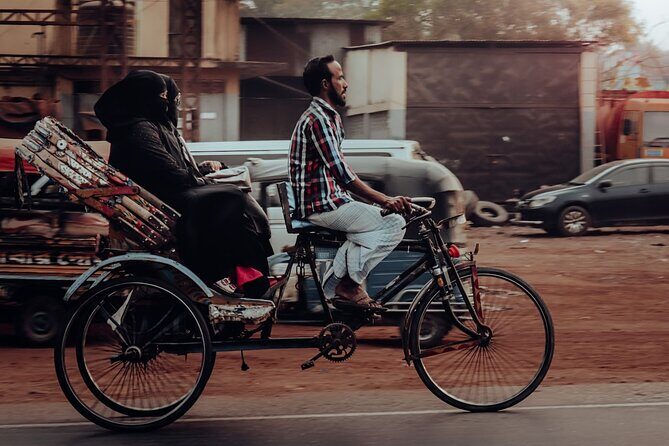
Jaipur by tuk-tuk feels like a moving postcard. I like the on-time pickup and how the driver—Abdul—handles Jaipur traffic with steady confidence. The one drawback: it’s a full 9 hours, and several major sites list entry as not included, so you’ll want a bit of cash for tickets and quick breaks.
What I love most is the mix of big-name classics with stops that feel a little more local. You’ll do the must-sees like Hawa Mahal and Jantar Mantar, then slow down for the Monkey Temple hilltop sanctuary and the white-marble cenotaphs at Royal Gaitor.
In This Review
- Key points before you go
- How this private tuk-tuk day actually works
- Amer (Amber) Fort: the fort you can feel from a distance
- Panna Meena ka Kund stepwell: a calm hour below the glare
- Jal Mahal at Man Sagar Lake: the palace that plays hide-and-seek
- Royal Gaitor (Gaitore Ki Chhatriyan): white marble cenotaphs with Rajput-Mughal style
- Monkey Temple hilltop: nature, spirituality, and small chaos
- Hawa Mahal: the wind palace and its 953 windows
- Jantar Mantar UNESCO observatory: big instruments, quick time
- City Palace Jaipur: Rajput-Mughal blend plus a museum stop
- Albert Hall Museum: your final cultural “pause”
- Price and value: why $7.20 can make sense
- Who this Jaipur tuk-tuk day suits best (and who should skip)
- Should you book this Jaipur tuk-tuk tour?
- FAQ
- How long is the Jaipur tuk-tuk tour?
- Is this tour private?
- Do you get pickup and drop-off?
- What’s included in the price?
- Are entrance fees included?
- What are some of the main stops?
- Is there a mobile ticket?
- What time of day is the Monkey Temple stop?
- Can I cancel for a full refund?
- How far in advance do people usually book?
Key points before you go
- Private tuk-tuk day in Jaipur with pickup and drop service, so you don’t waste time figuring out routes.
- Driver Abdul’s calm traffic style plus temple guidance makes the day feel easier than it looks on a map.
- Free entry listed for two stops (Amer and Panna Meena ka Kund), helping keep costs down.
- A smart mix of viewpoints: Amer Fort, Jal Mahal at Man Sagar Lake, and the Monkey Temple views.
- Short museum and palace pacing: enough time to see, not enough time to get bored.
How this private tuk-tuk day actually works
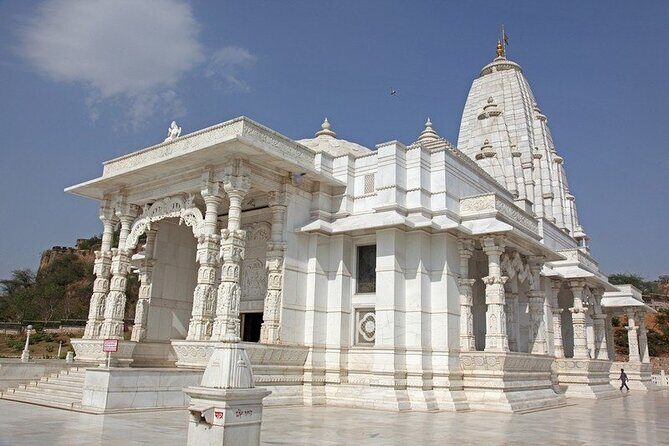
This is a private, full-day tour (about 9 hours) done by tuk-tuk, which is a super practical way to move around Jaipur when roads get chaotic. You’re picked up from wherever you are in the city, and you get taken to a set route of major sights plus a couple of quieter, more atmospheric stops.
The value here is not just the low listed price. It’s that you get the essentials covered—bottled water, coffee or tea, and pickup/drop—while still keeping flexibility with a private vehicle. With a group setup, you often spend time waiting. Here, you’re just your own small party and your day is driven by a plan, not by other people.
There’s also a mobile ticket. That matters because it’s one less thing to worry about mid-day.
Plan for heat and walking. Even when stops are “only” 45 minutes, you’ll still be moving: stairs at viewpoints, uneven ground near monuments, and the occasional crowd squeeze at the most famous places.
You can also read our reviews of more private tours in Jaipur


Amer (Amber) Fort: the fort you can feel from a distance
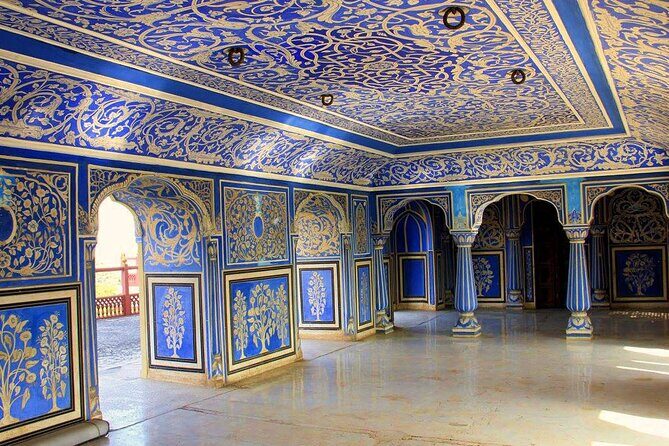
Amer is about 12 km from Jaipur, and the whole place feels like it’s built to be seen. The fort area is a working showpiece of courtyards, grand halls, and ornate palaces, with huge views over the surrounding hills.
You get about 2 hours here, which is a good amount for taking in both the structure and the atmosphere. You can move through the courtyards and halls without feeling rushed, and there’s time to notice details like the way the architecture layers and changes as you walk. The stop also includes mention of Maota Lake and the Jagat Shiromani Temple in the Amer area, so it’s not only walls and gateways.
Good to know: entry is listed as free for Amer in this itinerary. That’s a real cost saver.
When to go inside: aim to step into key areas early in the stop if you can. The light can be harsh later in the day, and you may find yourself moving faster just to beat the heat.
Panna Meena ka Kund stepwell: a calm hour below the glare
Next up is Panna Meena ka Kund, an old stepwell dating to the 16th century. What makes it interesting is the structure: steps on three sides and a multi-storied balcony on the fourth. It’s an 8-story design, and there’s also a community space where you can pause and just watch the light fall through the angles.
You get about 1 hour, and that’s exactly right for a place like this. This isn’t a “run-and-gun” stop. It rewards a slower pace. If you like architectural details, you’ll spot patterns in the stair layout and the way the space changes as you move around.
Entry is listed as free here, and the opening window is listed as 7:00 am to 6:00 pm. That’s useful because it gives you some breathing room if the tour timing shifts earlier or later.
If you’re photographing: keep an eye on the sun. Stepwells often look best with consistent light, not overexposed glare.
Jal Mahal at Man Sagar Lake: the palace that plays hide-and-seek
Jal Mahal is famous for one thing—it looks like a palace floating in the lake. The palace sits in the middle of Man Sagar Lake, built in Rajput style as a hunting lodge. The twist is that when the lake is full, only the top story remains visible. The lower stories disappear underwater, which is why the view can look almost unreal from shore.
This stop is geared toward visuals, especially sunrise or sunset views, and the palace is described as open all-day in the itinerary info. In practice, you’ll likely get a short window to see it from outside and take photos.
Don’t expect a long “walk through” experience. This is one of those stops where you enjoy the setting and the geometry: the way the palace sits within the water, the framing of arches and windows, and the reflections if conditions are right.
Tip: keep your camera ready, but also take a moment to just watch. Jal Mahal’s charm is in how it changes with light.
Royal Gaitor (Gaitore Ki Chhatriyan): white marble cenotaphs with Rajput-Mughal style
After the lake scene, you head to Royal Gaitor, known as Gaitore Ki Chhatriyan. This is a lesser-known stop compared with the big-name forts, and that’s part of the appeal. You get white marble chhatris (cenotaphs) with a blend of Rajput and Mughal architectural styles.
You’ll have around 1 hour here. That’s enough time to walk around and notice how the architecture stays crisp and clean while still feeling ceremonial. The upkeep and the design details make it feel like a quieter counterpart to the more crowded palace stops later in the day.
Entry is listed as not included for this stop, and the itinerary notes timing of 10:00 am to 5:30 pm. If your day runs late, you’ll want to make sure you still have enough time within that window.
If you like places that feel a bit off the main tourist circuit, this is where the day gets more interesting.
A few more Jaipur tours and experiences worth a look
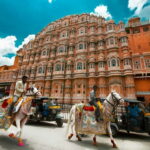


Monkey Temple hilltop: nature, spirituality, and small chaos
The Monkey Temple stop is one of the most memorable parts of this itinerary. It’s a hilltop sanctuary with playful monkeys, sacred water tanks, and views. The vibe is more spiritual and nature-focused than the palace-and-fort route, and it gives you a reset.
You get about 1 hour here. That timing usually works well because it’s long enough to wander, look at the tanks, and enjoy the viewpoints without turning it into a whole afternoon detour.
Entry is listed as not included. So again, have a little flexibility for fees.
Practical advice: keep your belongings secure and be mindful around monkeys. They’re part of the scene, but they also behave like… monkeys. Loose items, food in pockets, and casual handling can invite attention.
If you’re photographing, be ready for quick changes in position. The monkeys move fast, and you’ll want to hold your framing without getting too close.
Hawa Mahal: the wind palace and its 953 windows
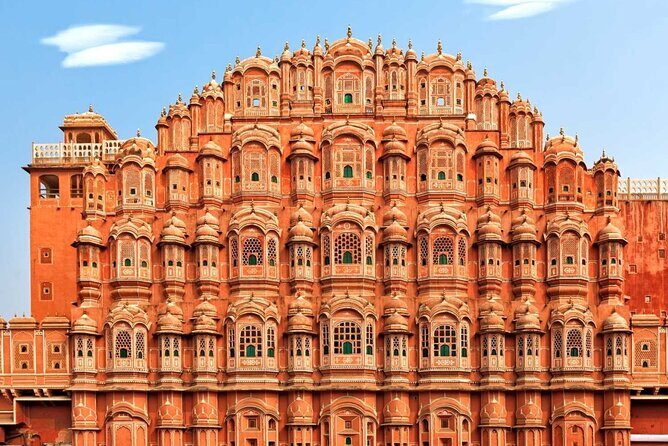
Hawa Mahal is pure Jaipur icon. It’s a five-storied pyramidal structure built from red and pink sandstone, created in 1799 by Maharaja Sawai Pratap Singh. The famous detail is the 953 small windows. The building looks like a honeycomb hive, and the interior rooms are described as staying cool because of the window design.
You’ll have about 45 minutes here. That sounds short, but it’s enough time to see the exterior symmetry and step inside (if you choose to) to understand the design logic behind the windows. Don’t plan on a long lingering session. Think of it as a concentrated hit of architecture and photo angles.
Entry is listed as not included, with hours noted as 9:00 am to 4:30 pm.
Where to focus: if you can’t do everything, prioritize the window pattern and the perspective from street level. That’s the image everyone comes for, and it’s also where you’ll understand why the structure is so distinctive.
Jantar Mantar UNESCO observatory: big instruments, quick time
Jantar Mantar is an astronomical observatory dating to 1734, built under Maharaja Sawai Jai Singh II. This is where Jaipur’s precision side shows up. The site includes the world’s largest stone sundial and 19 other astronomical instruments, and it’s listed as a UNESCO World Heritage Site.
You get about 45 minutes here. That’s plenty if you keep your expectations realistic. You don’t need hours to understand the “wow” factor: these aren’t decorative statues. They’re tools, built for measuring time and celestial positions.
Entry is listed as not included, with timing 9:30 am to 4:30 pm.
Two things to pay attention to:
- The Samrat Yantra (the main sundial) for scale.
- How the instruments are arranged, so you can keep turning your head and connecting what you’re seeing to how someone would use them.
If you’re the type who likes learning by looking, Jantar Mantar will be fun. If you just want photos, it’s still a strong visual stop.
City Palace Jaipur: Rajput-Mughal blend plus a museum stop
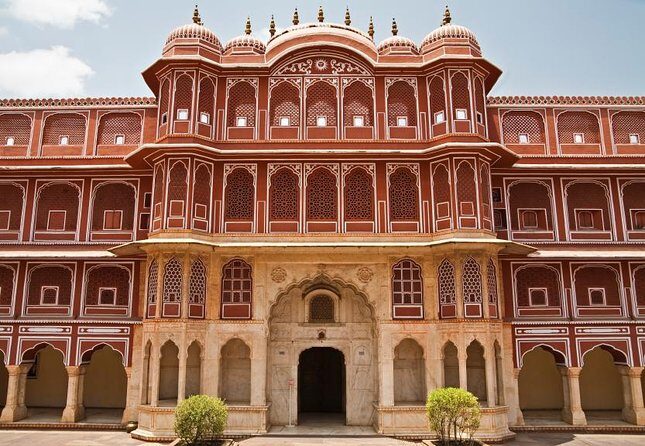
City Palace sits in the heart of Jaipur and mixes Rajput and Mughal architecture. You’ll see courtyards, halls, royal residences, and art galleries, with engraved details that feel more “lived-in” than a purely ceremonial monument.
You get about 1 hour here, and the itinerary specifically notes a museum inside that includes royal garments used by Maharaja Sawai Man Singh II. That small museum angle gives you context for what you’re seeing beyond the buildings themselves.
Entry is listed as not included, and hours are noted as 9:30 am to 5:00 pm.
In a 1-hour visit, I’d focus on two zones: one main architectural highlight area and then the museum corner where you can connect objects to people and power. Trying to do everything quickly can make this stop feel like a blur, so choose what you want most.
Albert Hall Museum: your final cultural “pause”
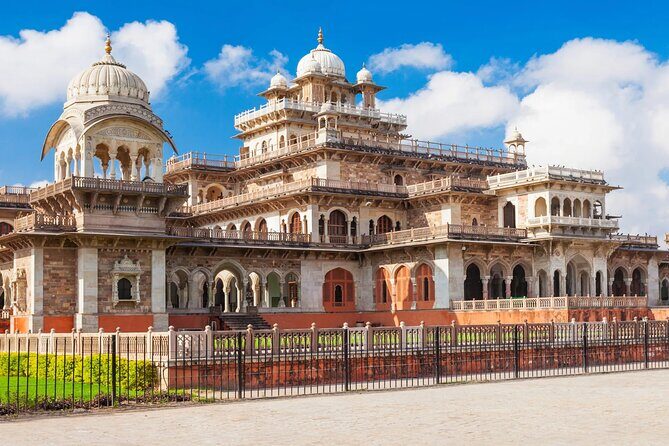
To wrap the day, you’ll stop at Albert Hall Museum. It’s described as the oldest museum in Rajasthan and a treasure trove of artifacts that show the region’s heritage. The museum is named after Prince of Wales, Albert Edward, and it includes items like paintings, ivory pieces, and sculptures. There’s also mention of an Egyptian mummy exhibit.
You get about 1 hour, which is a workable duration. This is not a giant museum day—you want a calm finish, not a sprint.
Entry is listed as not included, with hours listed as 9:00 am to 5:00 pm and also 7:00 pm to 10:00 pm. Your tour timing will likely land you in the daytime hours, but it’s good to know the museum can run evening hours.
If you’re museum-leaning, you’ll appreciate the chance to see artifacts after a day heavy on forts and monuments.
Price and value: why $7.20 can make sense
At $7.20 per person, this tour is priced for affordability, especially because it includes private transportation plus the basics like bottled water and coffee/tea. For a full 9-hour day with pickup and drop included, the structure is pretty clear: the tour operator handles driving and the route; you handle any listed entry fees at specific stops.
Two stops are listed as free (Amer and Panna Meena ka Kund). That helps anchor the value early, so even if you pay for a few later sites, the total still often feels manageable.
One more practical note: the itinerary is built around a sequence that hits major Jaipur icons without forcing long backtracking. When you’re on a tuk-tuk, time matters, and the route is designed to keep the day moving.
Who this Jaipur tuk-tuk day suits best (and who should skip)
This tour is a strong fit if you want a single full-day plan that covers classic Jaipur and a couple of more atmospheric stops. It’s also great if you don’t want to negotiate traffic or coordinate transport across sites.
It may be less ideal if you hate long days, strong sun, or quick stop windows. Several key places are listed with 45-minute to 1-hour timeframes, and that can feel rushed if you like to linger for details.
Should you book this Jaipur tuk-tuk tour?
I’d book it if your priority is a well-rounded Jaipur day with pickup, private tuk-tuk comfort, and a route that hits the highlights plus the Monkey Temple and Royal Gaitor. It’s also a good option if you appreciate calm driving and someone who helps you navigate temple behavior, like Abdul did for my group experience.
I wouldn’t book it if you’re planning to treat Jaipur as a slow read of one or two monuments only. This is a full itinerary day, built for seeing a lot.
If you do book, pack for a long day: water, sun protection, and a mindset for short-but-satisfying site visits.
FAQ
How long is the Jaipur tuk-tuk tour?
The tour is listed as about 9 hours.
Is this tour private?
Yes. It’s a private tour/activity, and only your group will participate.
Do you get pickup and drop-off?
Yes. Pickup and drop service is included, and the chauffeur picks you up at any location in the city.
What’s included in the price?
Included items are private transportation, bottled water, coffee and/or tea, and pickup and drop service.
Are entrance fees included?
Not all of them. Amer and Panna Meena ka Kund are listed with admission ticket free, while several other stops note that admission tickets are not included.
What are some of the main stops?
The itinerary includes Amer, Panna Meena ka Kund, Jal Mahal, Gaitore Ki Chhatriyan, Monkey Temple, Hawa Mahal, Jantar Mantar, City Palace, and Albert Hall Museum.
Is there a mobile ticket?
Yes. The tour includes a mobile ticket.
What time of day is the Monkey Temple stop?
The itinerary doesn’t list a specific time for Monkey Temple, but the overall tour duration is about 9 hours.
Can I cancel for a full refund?
Yes. Free cancellation is available, and you can cancel up to 24 hours in advance for a full refund.
How far in advance do people usually book?
The experience is typically booked about 34 days in advance on average.