REVIEW · NEW DELHI
Private City Tour to Old and New Delhi
Book on Viator →Operated by Ashok Tour · Bookable on Viator
A plan like this turns Delhi into one connected story. You get a private, air-conditioned ride with bottled water, plus stops across Old and New Delhi. The big downside to plan for: entrance fees aren’t included for most monuments.
I also like the way the route balances major landmarks with breaks in between. You’ll spend about an hour each at places like Qutub Minar and Humayun’s Tomb, then shorter visits at free classics like Lotus Temple and India Gate—so you’re not stuck sprinting all day.
One more thing to keep in mind is that your pace will depend on traffic and the exact order of stops that day. Delhi driving can be stop-and-go, so this tour works best when you give yourself a little mental cushion for delays.
5 things that make this Old and New Delhi tour worth your time
- Private group for up to 5: quieter, more flexible, and easier to manage with kids or mixed ages
- Air-conditioned vehicle + bottled water: helpful in Delhi heat and with long travel blocks
- UNESCO and Mughal highlights: Qutub Minar and Humayun’s Tomb are true anchor stops
- Money-saving free visits: Lotus Temple (free) and India Gate (free) help balance the paid entries
- Akshardham has strict entry rules: no bags, cameras, or electronics inside the complex
In This Review
- Why This Old-and-New Delhi Plan Works
- Price and Logistics: What You Pay for (and What You Still Need)
- Qutub Minar: A Sultanate Tower You Can See from Far Away
- Humayun’s Tomb: Mughal Architecture Before the Taj
- Lotus Temple: Free Entry and a Calm Reset
- India Gate and Amar Jawan Jyoti: A World-War Memorial in Red Stone
- Red Fort and Jama Masjid: Two Mughal Icons, One Big Contrasting Day
- Swaminarayan Akshardham: The Bigger-Than-Expected Detour (With Security Rules)
- Lodhi Garden: A Real Break Between Monuments
- How to Think About Timing: Picking 4 vs. 8 Hours
- Local Food and Small Detours: What Helps the Experience Feel Human
- Who This Private Old-and-New Delhi Tour Fits Best
- Should You Book This Private City Tour?
- FAQ
- What’s the price for the Private City Tour to Old and New Delhi?
- How long is the tour?
- Where do we meet, and does the tour end nearby?
- Is pickup included?
- Are entrance fees included?
- Is food or drink included besides water?
- Are cameras allowed at Swaminarayan Akshardham?
- Can I cancel for a full refund?
Why This Old-and-New Delhi Plan Works
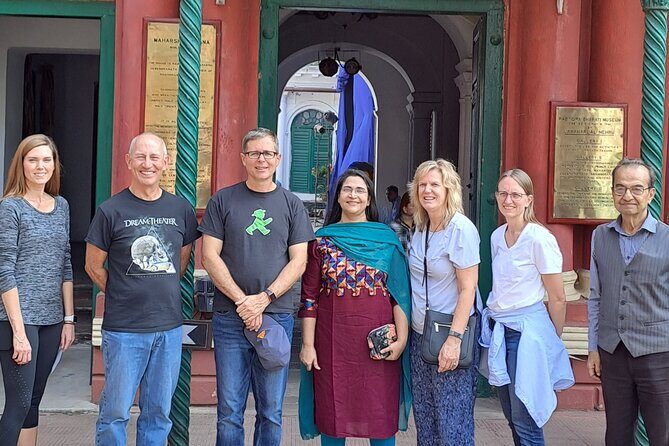
Delhi can feel like two different cities. Old Delhi hits you with Mughal-era architecture and big religious sites packed into tight areas. New Delhi spreads out the story with grand memorials and calmer, planned layouts. This tour stitches both sides into one practical day without forcing you to piece it together yourself.
The private format matters more than you might think. When you’re in a small group (up to 5), you can adjust timing based on what you care about: more time at the monuments, less time in lines, or simply a slower pace when you want photos. And with an air-conditioned vehicle and bottled water included, you’re not spending your whole day fighting the weather.
Price and Logistics: What You Pay for (and What You Still Need)
This is $65 per group (up to 5 people). That’s the type of price that makes sense when you’re traveling with at least one other person, because you’re not paying full-day costs per individual for transport.
Here’s the trade-off: most entrances are not included. The listing notes entrance fees of $50 for two persons, and the tour duration includes plenty of major ticketed sights. Some stops are free, though—Lotus Temple and India Gate are free—so your actual total can land better than you’d expect if you budget broadly and then adjust based on what’s free on the day.
You’ll also get a mobile ticket, and the tour includes pickup (with the tour starting from Connaught Place). The trip ends back at the meeting point, which is a relief because Delhi traffic can turn “just one more thing” into a long ride home.
You can also read our reviews of more city tours in New Delhi



Qutub Minar: A Sultanate Tower You Can See from Far Away
Qutub Minar is a UNESCO World Heritage Site and one of Delhi’s most recognizable landmarks. It was started in the early 13th century by Qutub-ud-din Aibak, completed by Iltutmish, and later enhanced by rulers including Firoz Shah Tughlaq and Sikandar Lodi.
What makes it special is the scale and detail. The tower is about 73 meters tall, built from red sandstone and marble. Even if you don’t know the dates by heart, the proportions are what hit first: a wide base that narrows dramatically as you look upward.
You’ll also hear about the famous Iron Pillar nearby, and it’s the kind of thing that gives you a tangible sense of how long this area has mattered. Note: this stop is listed for about an hour, so use that time to get your bearings, take the key photos, and don’t try to sprint through everything. This is one place where a steady look is better than speed.
Humayun’s Tomb: Mughal Architecture Before the Taj
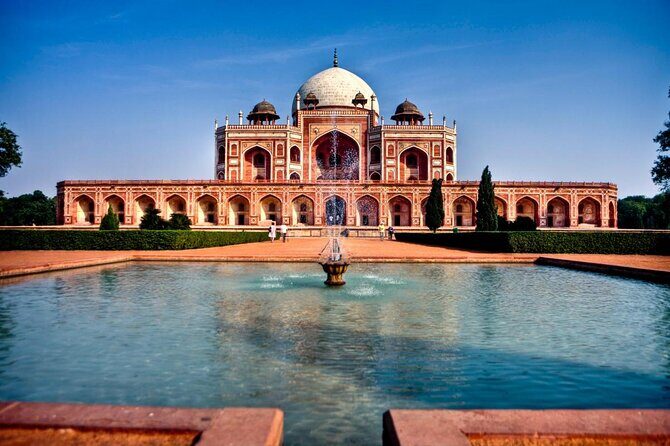
Humayun’s Tomb is the Mughal highlight that often convinces you Delhi can be more than quick sightseeing. It was commissioned by Empress Bega Begum, completed in 1572, and designed by Persian architect Mirak Mirza Ghiyas.
The big idea here is influence. Humayun’s Tomb is widely regarded as a precursor to the Taj Mahal style, mixing Persian and Indian elements into a perfectly balanced setting. The result is architectural symmetry you can feel even when you’re just walking through the space.
This stop is about an hour. That’s enough time to appreciate the layout, understand the why behind Mughal design choices, and still have a breather before the next change of scenery.
Lotus Temple: Free Entry and a Calm Reset
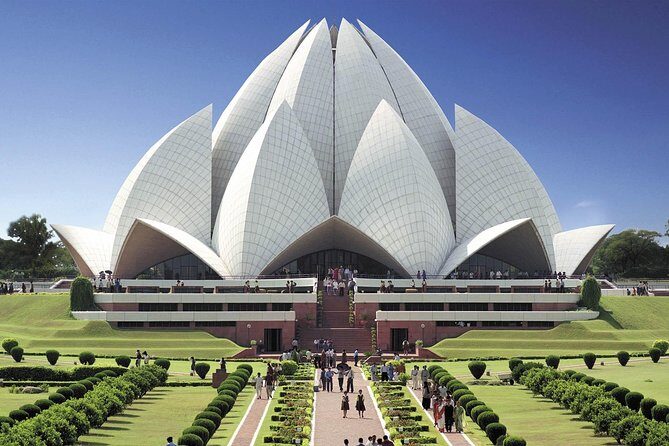
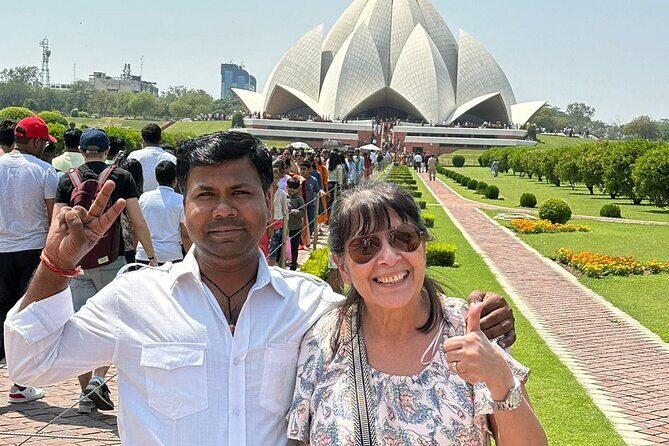
Lotus Temple is a Bahá’í House of Worship, and it’s open to all people regardless of religion. It’s designed for meditation and prayer, so the atmosphere inside tends to be quieter than you might expect from a major tourist site.
The shape is the headline: the temple is known for its lotus-flower design, built of white marble and completed in 1986 by Iranian architect Fariborz Sahba. Since it’s free and scheduled for about 30 minutes, it’s a great “reset” stop in the middle of a busy day.
Practical tip: plan to enter calmly and keep voices low. Even when it’s crowded outside, this place works best when you treat it like a place of worship rather than a photo set.
India Gate and Amar Jawan Jyoti: A World-War Memorial in Red Stone
India Gate is a classic New Delhi landmark, and it’s more meaningful than it looks. It was built as the All India War Memorial, with the foundation stone laid in 1921 and completed in 1931.
The design is inspired by the Arc de Triomphe in Paris, but the names carved into the arch make it instantly local. The inscription includes more than 13,516 soldiers killed in the Afghan war of 1919—British and Indian.
At the base is the Amar Jawan Jyoti, an eternal flame. If you want one quick stop that adds emotional weight without taking half your day, this is it. The tour allots about 30 minutes here, which works well for a walk around the monument area and a moment at the flame.
You can also read our reviews of more private tours in New Delhi





Red Fort and Jama Masjid: Two Mughal Icons, One Big Contrasting Day
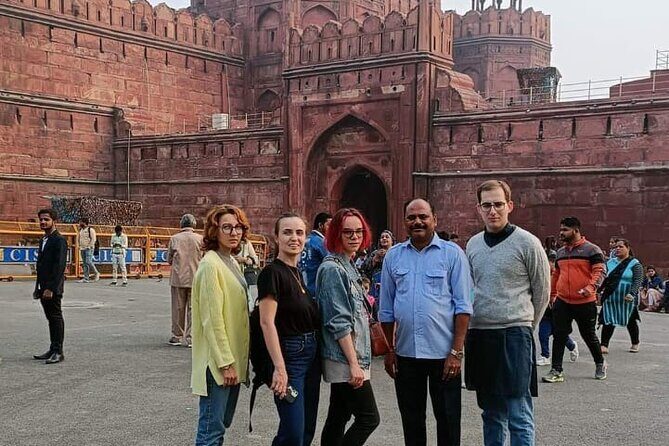
Red Fort is where Mughal power turns into a visual stage set. Construction began in 1638 and finished in 1648 under Emperor Shah Jahan. It served as the main residence of Mughal emperors for nearly 200 years.
You can see the style in the materials: red sandstone walls with white marble inlays. It’s also packed with named spaces, including the Diwan-i-Aam (Hall of Public Audience) and Diwan-i-Khas (Hall of Private Audience). If you only have an hour, focus on the overall layout and key façades first; don’t get lost trying to read every detail.
Jama Masjid shifts the mood. This mosque was commissioned by Shah Jahan and construction started in 1650, taking six years to complete. It was inaugurated in 1656. The mosque’s Mughal mix of red sandstone and white marble continues the theme of bold contrast, and the grand main gateway is the Buland Darwaza.
The tour schedules about an hour for Red Fort and about 30 minutes for Jama Masjid. That’s usually enough to understand the difference: Red Fort is about imperial residence and ceremony, while Jama Masjid is about religious space, gateway scale, and visual rhythm.
Swaminarayan Akshardham: The Bigger-Than-Expected Detour (With Security Rules)
Akshardham was inaugurated on November 6, 2005 and built by the BAPS organization, inspired by Pramukh Swami Maharaj. The main temple is the Akshardham Mandir, dedicated to Bhagwan Swaminarayan.
What you’ll notice first is sheer detail. The complex is described as having 234 intricately carved pillars, 9 domes, and over 20,000 statues. That scale is part of why the visit is longer here—about 1 hour 30 minutes.
The practical catch is security. Due to security concerns, visitors are not allowed to carry bags, cameras, or electronic devices inside. There’s a secure facility where you can leave belongings. So keep your day light: bring only what you need and plan on storing your camera rather than relying on it for every photo.
Lodhi Garden: A Real Break Between Monuments
After the major monument stops, Lodhi Garden is a nice curve in the road. It’s named after the Lodhi Dynasty and includes monuments from that period. The garden covers about 90 acres, and it’s a popular place for walking, jogging, and just moving your body after hours of standing in crowds and waiting in traffic.
The listing places it between Khan Market and Safdarjung’s Tomb. Even without getting lost in architectural trivia, it’s a practical stop because it gives you shade, open space, and a calmer pace before you head back.
This stop is about 30 minutes, which is enough for a short walk and a scenic reset rather than a full park day.
How to Think About Timing: Picking 4 vs. 8 Hours
The duration is listed as roughly 4 to 8 hours. That’s a huge range, so your expectations matter.
If you’re short on time, you’ll likely spend more effort on the “must see” core: Qutub Minar, Humayun’s Tomb, Lotus Temple, India Gate, and then at least one major Mughal site like Red Fort or Jama Masjid.
If you have a longer window, the full arc makes more sense—especially with Akshardham (1.5 hours) and the chance to slow down at each stop. Either way, the tour is structured so shorter stops (around 30 minutes) balance the longer ones (around an hour or more).
One smart move: decide in advance what you’d rather cut if traffic runs late. In Delhi, that happens. If you’re trying to do everything, you’ll end up exhausted instead of impressed.
Local Food and Small Detours: What Helps the Experience Feel Human
This tour style is set up for comfortable movement and fewer hassles. In the operator’s service approach, you can often expect help finding a typical Indian meal and keeping the day flowing rather than treating each site like a checklist item.
You might also be steered toward smaller shopping stops that are easy to reach from your route, including one market-style option under a viaduct mentioned in the operator’s past service experiences. The point is simple: use the time between monuments well. If you’re not hungry yet, don’t grab random snacks out of convenience—ask to be taken to something local and straightforward.
Because bottled water is included, you’re already halfway to avoiding the usual Delhi “what’s a safe drink?” worry.
Who This Private Old-and-New Delhi Tour Fits Best
This tour makes a lot of sense if you want a guided route through major landmarks without the stress of arranging drivers, maps, and transfers. It’s also a strong fit for small families or small groups who want control over pacing.
I’d especially recommend it if:
- you’re seeing Delhi for the first time and want a balanced mix of Sultanate, Mughal, religious, and modern memorial sites
- you prefer private transport with an English-speaking driver and a calm rhythm (operator experiences mention polite, helpful drivers and professional planning)
- you’d like a low-friction route from a central meeting point like Connaught Place
If you’re the type who loves spending 2–3 hours at one museum or shrine, you may find the monument visits feel timed. In that case, ask for a longer day and be ready to drop one stop.
Should You Book This Private City Tour?
Yes, if your goal is a smooth introduction to Delhi’s biggest landmarks with a private, air-conditioned setup. The price is reasonable for a group of up to five, and the route is thoughtfully balanced—UNESCO heritage, Mughal masterpieces, a free religious stop at Lotus Temple, and India Gate’s memorial meaning.
Book it with a little planning brain, though: entrance fees are a real line item, and Akshardham’s security rules mean you’ll need to leave bags and electronics behind. If you want photos, bring a plan for what you’ll store and what you can still capture outside restricted areas.
If that all sounds manageable, this is one of the easier ways to connect Old and New Delhi into a single memorable day.
FAQ
What’s the price for the Private City Tour to Old and New Delhi?
It costs $65 per group, for up to 5 people.
How long is the tour?
The tour lasts about 4 to 8 hours, depending on the day’s flow.
Where do we meet, and does the tour end nearby?
The tour starts at Connaught Place, New Delhi, and it ends back at the same meeting point.
Is pickup included?
Pickup is offered, and the tour is designed around a central meeting point near Connaught Place.
Are entrance fees included?
No. Entrance fees are not included, with an estimate of $50 for two persons. Some stops are free, like Lotus Temple and India Gate.
Is food or drink included besides water?
Bottled water is included. No other meals are mentioned as included.
Are cameras allowed at Swaminarayan Akshardham?
No. Visitors aren’t allowed to carry bags, cameras, or electronic devices inside the temple complex, but there is a secure place to leave items.
Can I cancel for a full refund?
Yes. You can cancel up to 24 hours in advance for a full refund.