REVIEW · UDAIPUR
Private 7 Day Tour of Udaipur Chittorgarh Pushkar and Jaipur
Book on Viator →Operated by Udaipur Tour And Taxi · Bookable on Viator
A Rajasthan road trip can feel chaotic fast. This private 7-day loop keeps things organized while you hit the standout sights in Udaipur, Chittorgarh, Pushkar, and Jaipur with a local guide and a dedicated, air-conditioned vehicle. It’s a smart way to see more of “Kingdom Rajasthan” without relying on trains, transfers, or guesswork.
I really like the way the plan mixes big-ticket monuments with real local culture. You’ll get classic palace and temple time, but you also get evening experiences like the Dharohar folk dance show at Bagore-ki-Haveli and Rajasthan cultural evenings in Jaipur. The one catch to plan for: monument entry fees and hotel stays aren’t included, so your total budget will be higher than the tour price.
In This Review
- Key Highlights You’ll Actually Notice
- A Private 7-Day Rajasthan Route That Stays Manageable
- Day 1 in Udaipur: Easy Arrival Plus Lake Pichola by Night
- Day 2 in Udaipur: City Palace, Temples, Gardens, and a Folk-Dance Evening
- What to watch for on Day 2
- Day 3: Chittorgarh Fort (UNESCO) Plus Town Market Time
- The main consideration for this day
- Day 4: Pushkar’s Brahma Mandir and a Stroll by Pushkar Lake
- A tip for Pushkar day
- Day 5 in Jaipur: Hawa Mahal, Jantar Mantar, City Palace, Albert Hall, Chokhi Dhani
- The one practical drawback
- Day 6 in Jaipur: Amer Fort and Jal Mahal for Royal-Setting Views
- A simple way to plan your evening
- Day 7: Drop-Off in Jaipur and a Clean Finish
- Price and Logistics: What You’re Really Paying For
- How to budget in real terms
- Guide and Driver Quality: The Difference Between a Trip and a Hassle
- Should You Book This 7-Day Private Tour?
- FAQ
- What’s included in the tour price?
- How big is the group for this private tour?
- Are monument entry fees included?
- What does the itinerary cover across the 7 days?
- Where does the tour end?
- What’s the cancellation policy?
Key Highlights You’ll Actually Notice
- Door-to-door comfort with hotel/airport pickup and drop-off, plus bottled water
- Lake Pichola time in Udaipur paired with City Palace and temple visits
- Chittorgarh Fort as a UNESCO day without transport headaches
- Pushkar’s Brahma Mandir and lake area for a more spiritual change of pace
- A packed Jaipur classics day featuring Hawa Mahal, Jantar Mantar, City Palace, and Albert Hall
- Two cultural evenings (Bagore-ki-Haveli and Chokhi Dhani) so the trip feels lived-in, not only “photo stops”
A Private 7-Day Rajasthan Route That Stays Manageable
The value of a private itinerary like this is simple: you spend your energy looking at places, not figuring out logistics. With a private air-conditioned vehicle, fuel, parking, and taxes handled, your days run on the tour’s rhythm rather than whatever public transport feels like on that day.
The route also makes sense geographically. You start in Udaipur (lake-and-palace vibe), then move to Chittorgarh for the massive fortress story, shift to Pushkar for the sacred and calm feel, and finish in Jaipur where the architecture and markets are the main event. If you hate being rushed, you still get plenty to do—but the plan is built as a steady flow across four cities.
One practical note: your “tour day” can include a lot of walking and temple-stair climbing. The itinerary is attraction-heavy, so plan for comfortable shoes and a water-and-rest rhythm. The operator provides bottled water, but you’ll still want to pace yourself.
You can also read our reviews of more private tours in Udaipur


Day 1 in Udaipur: Easy Arrival Plus Lake Pichola by Night
Day 1 is designed to help you land softly. You arrive in Udaipur, get transferred to your hotel, and you’re not forced into a marathon schedule immediately. That matters because Rajasthan travel can be tiring—especially if your flight or train timing leaves you with limited energy.
In the evening, you get two things that set the mood quickly: exploring the local market and taking a boat cruise on Lake Pichola. This is a great combo because it works on two levels. The market helps you get oriented with the city’s pace, while the lake cruise gives you that classic Udaipur look in a relaxed, low-effort way.
If you’re coming straight from travel, I suggest keeping your first-night goals small: pick up a few essentials, grab dinner near where you’re staying, and treat the boat cruise as your “wow” moment. It’s a nice way to start without overplanning.
Day 2 in Udaipur: City Palace, Temples, Gardens, and a Folk-Dance Evening
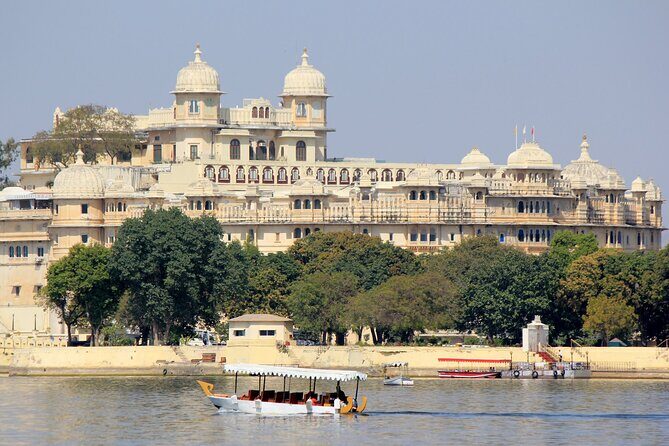
Udaipur on Day 2 is all about palace viewpoints, carved-stone spirituality, and gardens—then a cultural show to wrap it up.
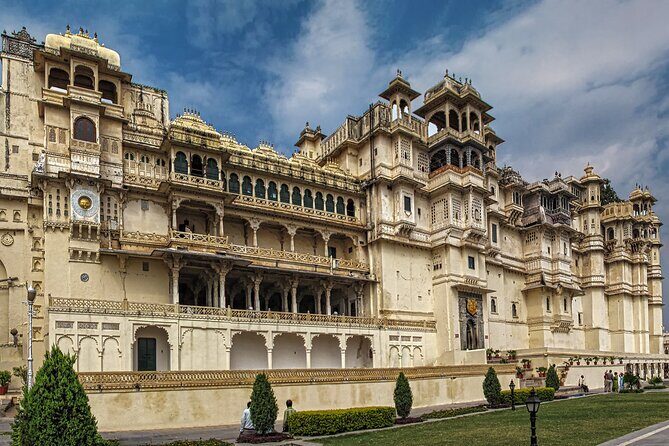
You start with the City Palace of Udaipur, a standout example of Rajasthani architecture built over nearly 400 years. Even without getting lost in every detail, the scale and design give you the sense that this city was built for ceremony, power, and display.
Next comes Jagdish Temple, known for its striking Hindu iconography and tall stonework. It’s a short visit, but it’s the kind of stop that changes how you see the surrounding area—temples make the whole city feel “mapped to meaning,” not just sightseeing.
From there you shift to leisure and landscape. Sahelion Ki Bari (Saheliyon ki Bari) is a famous garden with fountains and lawns, a reminder that royal life wasn’t only forts and battles. Then you head to Sajjangarh Monsoon Palace, perched on a hill overlooking Fateh Sagar Lake—perfect for people who like viewpoints more than shopping stops.
For variety, you also visit the Vintage Collection of Classic Cars Museum. That’s an unusual add-on in Rajasthan, and I like it because it breaks the “only palaces and temples” rhythm.
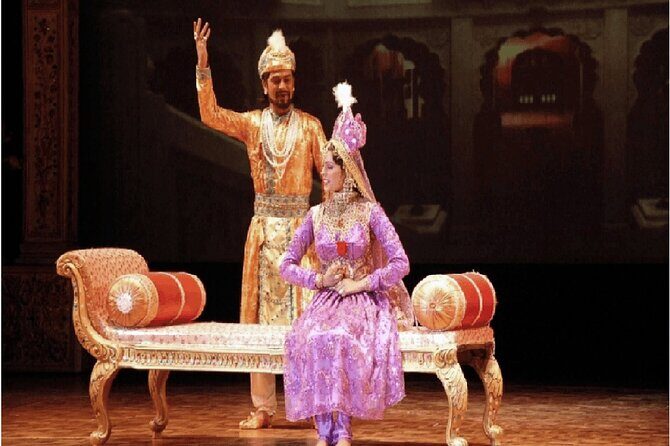
Then you finish with a cultural evening at Bagore Ki Haveli, where the Dharohar folk dance show brings traditional music and performance into the trip. It’s one of those experiences that feels less scripted than a museum and more like a real slice of local life.
What to watch for on Day 2
This day is long and visually intense. If you’re sensitive to heat or crowds, take the garden and viewpoint moments slowly, and don’t try to rush every photo. You’ll enjoy the palace and temple architecture more if you leave a little space for quiet looking.
Day 3: Chittorgarh Fort (UNESCO) Plus Town Market Time
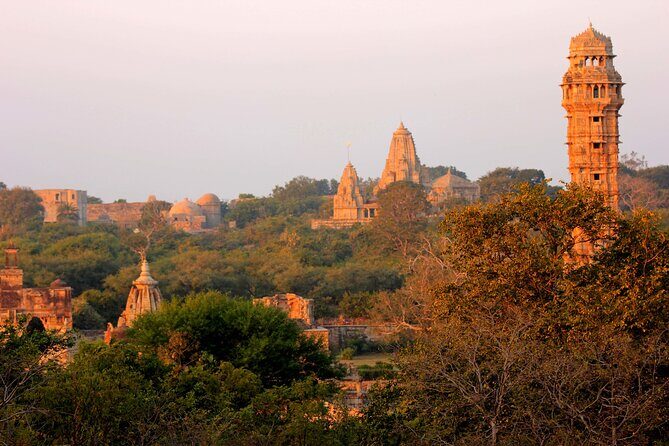
Chittorgarh Fort is the headline here, and it’s an excellent choice for a dedicated day. After breakfast, you travel from Udaipur to Chittorgarh by road, and once you arrive, you get a UNESCO World Heritage Site day focused on palaces and memorial areas.
This is the kind of place where the big picture matters. The fort’s scale and the way the complex is laid out help you understand why it has such a lasting role in Rajasthan’s story. If you like history, you’ll naturally want to linger. If you’re more into architecture and views, you’ll still get plenty—forts tend to deliver both.
After the fort, the itinerary adds Chittorgarh District time with market browsing. You can stop by Sadar Bazaar and other local lanes like Gandhi Chowk and Rana Sanga Market. This is a good counterbalance: after walls, courtyards, and memorial spaces, you get normal-day city energy and a chance to shop at your own pace.




The main consideration for this day
Fort days mean stairs and uneven walking. Wear shoes you trust, and plan for a steady pace. The day is packed with meaning, but you’ll have a better experience if you don’t treat it like a race.
Day 4: Pushkar’s Brahma Mandir and a Stroll by Pushkar Lake
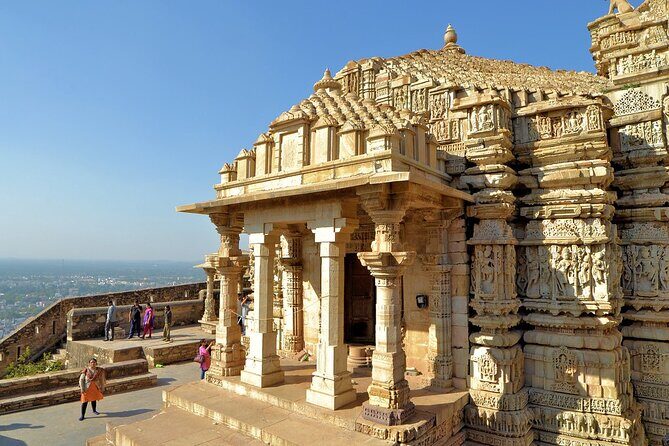
Day 4 shifts the mood. You make a scenic drive to Pushkar and start with Jagatpita Shri Brahma Mandir—the only temple dedicated to Lord Brahma. That uniqueness is valuable. It’s one thing to see a temple; it’s another to see a temple with a singular identity tied to a specific deity.
The spiritual vibe is reinforced by the stop around Pushkar Lake, an artificial lake dating back to the 12th century when a dam was built on the Luni River. Even if you don’t go deep into the engineering story, the lake’s presence shapes how the city feels and how people move through the area.
The overnight in Pushkar helps too. You’re not just doing a day trip that turns sacred places into checkboxes. Having a night in town lets you reset and enjoy the evening atmosphere at your own pace.
A tip for Pushkar day
If you want photos, think about timing. The lake area tends to feel better when you’re not rushed. If you’re visiting temples, take the slower route—observing how people enter, pray, and move often teaches you more than reading signage.
Day 5 in Jaipur: Hawa Mahal, Jantar Mantar, City Palace, Albert Hall, Chokhi Dhani
Jaipur is where the itinerary gets big. The good news: the day is arranged so you hit the essential icons before the cultural night.
You start with Hawa Mahal (Palace of Wind), famous for its five-story façade with many windows and jharokhas. It’s basically a design machine—this building shows you how architecture can work like a ventilation concept and a visual statement at the same time.
Next is Jantar Mantar, an astronomical observatory constructed in the early 18th century. The site’s about fixed instruments (around 20 main ones), which is a refreshing change from the typical “look but don’t touch” museum experience. If you like science history, you’ll have fun spotting how the instruments are meant to measure and predict.
You then visit City Palace of Jaipur, commissioned and built by Maharaja Sawai Jai Singh II, founder of Jaipur. The palace complex is a strong capstone after Hawa Mahal because it helps you connect façade design with the bigger royal world behind it.
After that, you go to Albert Hall Museum, where you can see artifacts, paintings, sculptures, and other pieces tied to Rajasthan’s heritage. This is a helpful stop when you want more context without needing a full-day lecture.
Finally, you head to Kalagram Chokhi Dhani, a Rajasthani village resort style experience. You get folk dance performances and Rajasthani cuisine (as part of the experience). This is the cultural closer that turns Jaipur from “architecture day” into “Rajasthan night.”
The one practical drawback
This is a lot for one day. If you’re the type who needs quiet between stops, you may want to pick fewer “must-do” photos. The itinerary covers the key sights, but you’ll enjoy it more if you don’t turn everything into a checklist.
Day 6 in Jaipur: Amer Fort and Jal Mahal for Royal-Setting Views
Day 6 focuses on Amer and the lakeside scenery that makes Jaipur feel theatrical.
You visit Amer (Amer Palace and Fort), located about 11 kilometers from Jaipur city. This is one of those places where you feel the fort’s role as both defensive structure and royal residence. Plan for time on the grounds so you can absorb the architecture without feeling trapped by the crowd flow.
Next is Jal Mahal, the palace in Man Sagar Lake. Built around 1699 and later expanded by Maharaja Jai Singh II in the early 18th century, it’s famous for the way it appears as part of the lake’s visual line. Even if you’re not spending a long time there, it’s the kind of stop that changes your photo perspective for the whole day.
In the evening, you get some flexibility with shopping in Jaipur markets. That’s a smart way to end: after temples, forts, and monuments, markets let you pick up textiles, small gifts, and snacks without needing a ticketed entry.
A simple way to plan your evening
If your energy is low, keep shopping casual and aim for one main market area near where you’re staying. If you have energy, you can walk a bit more—but don’t sacrifice sleep. Day 7 is a travel day.
Day 7: Drop-Off in Jaipur and a Clean Finish
Day 7 is straightforward: you’ll be dropped off at the airport or railway station, or another desired location in Jaipur. That’s a good design feature because it avoids the common problem where you start your departure with a half-day of rushed sightseeing.
This also helps if you have evening flights or trains. You know you’re finishing with logistics rather than adding one more “must-see” stop that could scramble timing.
Price and Logistics: What You’re Really Paying For
The tour price is $752.50 per group (up to 3). Here’s the useful way to think about it:
- If you travel with 3 people, the tour is roughly $250 per person.
- If it’s 2 people, it’s roughly $376 per person.
- If it’s 1 person, it’s the full $752.50 for the private vehicle and guide.
That cost mostly covers what makes private travel work: a private air-conditioned vehicle, fuel, parking, taxes, and hotel/airport pickup and drop-off, plus bottled water. It also covers having a local guide along the way, which matters for navigation, pacing, and explaining what you’re actually looking at.
What’s not included is the big budgeting variable: hotel accommodations, food and drinks, and monument entry fees. So if you’re comparing against cheaper options, make sure you compare “total trip cost,” not just the tour line item.
How to budget in real terms
To avoid surprises, set aside money for:
- Hotels for the nights in Pushkar and Jaipur (and any additional nights you might add)
- Meals and drinks each day
- Entrance tickets for the major sites (City Palaces, temples, observatories, museums, and fort areas)
If you’re traveling as a pair or solo, a private vehicle may still be worth it if you value comfort and a plan that runs on your time. If you’re okay with public transport and constant schedule changes, a cheaper group option might win. But for most people doing a first Rajasthan circuit, private tends to feel easier and safer.
Guide and Driver Quality: The Difference Between a Trip and a Hassle
A private itinerary lives or dies by the person handling timing. In the feedback, names like Mr Vishal (local guide) and drivers such as Bittu, Kailash, Tejsingh, and Yaswant come up for being helpful, friendly, and knowledgeable. The common theme is simple: you get guided movement from stop to stop and help when you need it, including finding good places to eat.
This matters because Rajasthan travel isn’t only about monuments. It’s also about getting to the right place at the right time and not losing half your day to confusion. With a dedicated driver and guide, you spend more energy enjoying and less energy handling small emergencies.
One practical suggestion: when you book, ask your guide what they recommend for pacing—especially on the fort and palace days. If you’re prone to fatigue, you can plan a slower route inside the same visit structure.
Should You Book This 7-Day Private Tour?
Yes, if you want a classic Rajasthan hit list with less stress. This route works especially well for couples, small families, or friends who want privacy and comfort, and who would rather pay a little more to reduce friction. You’ll get a balanced mix: Udaipur lakes and palaces, Chittorgarh’s fortress weight, Pushkar’s Brahma Mandir uniqueness and lake calm, and Jaipur’s big-name architecture plus a real cultural night.
Think twice if you’re on a tight budget for entrances and hotels, because those add up fast. Also consider whether you prefer “fewer stops, more slow time.” This plan is attractions-heavy, so it’s best for travelers who enjoy packing a day with meaningful sights.
If you want a straightforward, well-paced Rajasthan sampler across four cities, this private 7-day tour is a strong fit. You’ll come away seeing the main icons—and feeling like the logistics were handled, not you.
FAQ
What’s included in the tour price?
The tour includes a private air-conditioned vehicle, fuel charges, parking fees, taxes, bottled water, and hotel/airport pickup and drop-off. Monument entry fees, food, drinks, and hotel accommodations are not included.
How big is the group for this private tour?
It’s a private tour/activity, and only your group participates. The price is per group, up to 3 people.
Are monument entry fees included?
No. Monument entry fees are not included, so you’ll need to budget for tickets for the sites you visit.
What does the itinerary cover across the 7 days?
It covers Udaipur, Chittorgarh, Pushkar, and Jaipur. Highlights include City Palace and Lake Pichola in Udaipur, Chittorgarh Fort, Pushkar Brahma Mandir and Pushkar Lake, and major Jaipur sights like Hawa Mahal, Jantar Mantar, City Palace, and Albert Hall, plus cultural evenings.
Where does the tour end?
On the final day, you’re dropped off at the airport or railway station, or at your desired location in Jaipur.
What’s the cancellation policy?
Free cancellation is available. You can cancel up to 24 hours in advance for a full refund; if you cancel within 24 hours of the start time, there’s no refund.