REVIEW · NEW DELHI
Old & New Delhi Private Tour with Slum Visit
Book on GetYourGuide →Operated by India Tour · Bookable on GetYourGuide
Delhi moves fast, so this tour packs in meaning. You get a guided hit list across Old Delhi’s major landmarks and New Delhi icons, with enough time to learn what you’re seeing instead of just snapping photos. I especially like the combination of UNESCO sites and the practical, hands-on Old Delhi parts like Jama Masjid and a rickshaw ride.
Two things I really value: first, the architecture stops are not random stops. You’ll see Qutub Minar and Humayun’s Tomb as part of a bigger story about Delhi’s evolving empires, and your guide ties details to what matters. Second, the Old Delhi section is built for orientation—markets, temples, spices, and street food streets—so you won’t feel lost in Chandni Chowk.
One possible drawback to plan around: you’re doing a lot in one day. With crowded bazaars and an escorted walking slum visit at Sanjay Colony, this may feel like hard work if you hate crowds, dislike close-up cultural encounters, or prefer a slower pace.
In This Review
- Key points worth your attention
- Price and value: how $12 can work (and when it won’t)
- The New Delhi landmark run: where the skyline tells a timeline
- Qutub Minar: the 73-meter lesson in early Delhi power
- Lotus Temple: a quiet reset from the streets
- India Gate and the gardens: a memorial you can actually walk
- Rashtrapati Bhavan (pass by): the “from-the-road” reality check
- Humayun’s Tomb: the Mughal prototype feeling
- Old Delhi with purpose: Jama Masjid to Chandni Chowk without getting lost
- Meeting at Jama Masjid Gate 2: your entry point is key
- Jama Masjid: go up for the sweep
- Chandni Chowk: rickshaw or walking through the pulse
- Sri Digambar Jain Lal Mandir: a temple stop with meaning
- Paranthe Wali Gali: stuffed flatbread culture in one street
- Khari Baoli: Asia’s largest wholesale spice market
- Major stops you’ll appreciate for context (even if they’re brief)
- Gurudwara Sis Ganj Sahib and the langar
- Red Fort (pass by): the outside view that sets expectations
- Raj Ghat: a reflective stop in the route
- The Sanjay Colony slum visit: how it’s handled matters
- Getting around smoothly: the private AC car, included rickshaw, and timing reality
- What to bring (and what to avoid) for an easier day
- Who this tour suits best (and who should look elsewhere)
- Should you book? My straightforward call
- FAQ
- How long is the tour?
- Where do I meet the guide?
- Is this tour private?
- What languages are the guides?
- Do you include transportation?
- Is a rickshaw ride included?
- Is food included?
- Which major UNESCO sites are included?
- Does the tour include Chandni Chowk and Old Delhi markets?
- What items or dress rules should I know about?
- Does the tour include a slum visit?
Key points worth your attention
- UNESCO pair: Qutub Minar and Humayun’s Tomb both come with guided context, not just photos.
- Old Delhi navigation: Jama Masjid, Chandni Chowk, spice markets, and temples are tied together so you get the lay of the land.
- Rickshaw ride included: It’s a real Old Delhi experience, not a token stop.
- Responsible slum visit: You get an escorted walk in Sanjay Colony focused on everyday life and community schemes.
- AC comfort between zones: You get a private car with driver to cover distances without cooking in traffic.
- Food on your own: No meals are included, so budget time and money for snacks or lunch breaks.
Price and value: how $12 can work (and when it won’t)
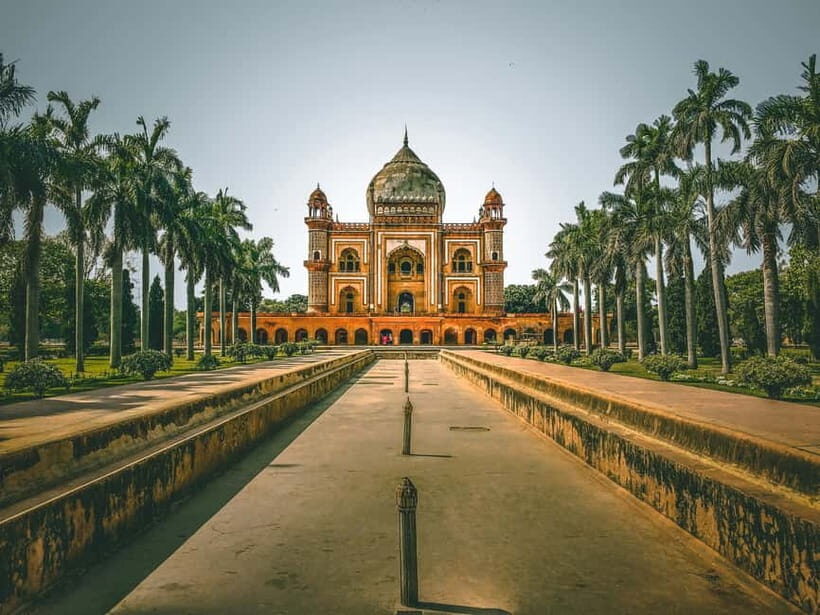
At around $12 per person, this is one of the more aggressive-value ways to cover both Old and New Delhi in a single stretch. The price makes sense because it’s designed as a “highlights” tour: you’re not lingering for hours inside every monument. Instead, you get guided time at many major stops, plus transport, a guide, parking, and a couple of included set pieces like the rickshaw ride.
What you should watch: “4–8 hours” is a wide range. If you book for the shorter option, expect more quick stops and fewer walking sections. If you book for the longer option, you’ll likely get better pacing for the markets, the views, and the more sensitive parts of the day like the slum visit.
Also, food and drink aren’t included. That’s not a deal-breaker, but you should plan on buying water, snacks, and possibly a meal during breaks. The tour does include a water bottle, which helps, but you’ll still want a little cash and flexibility.
You can also read our reviews of more private tours in New Delhi



The New Delhi landmark run: where the skyline tells a timeline
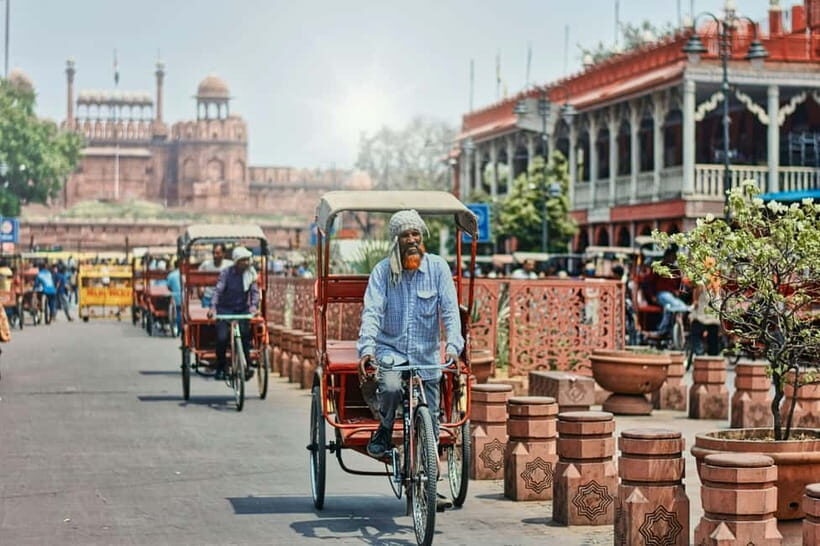
This tour uses New Delhi’s big names to help you read the city like a timeline. You’ll see a mix of Mughal-era influence, British-era memorials, and modern religious architecture—so the “what” and the “why” start to click.
Qutub Minar: the 73-meter lesson in early Delhi power
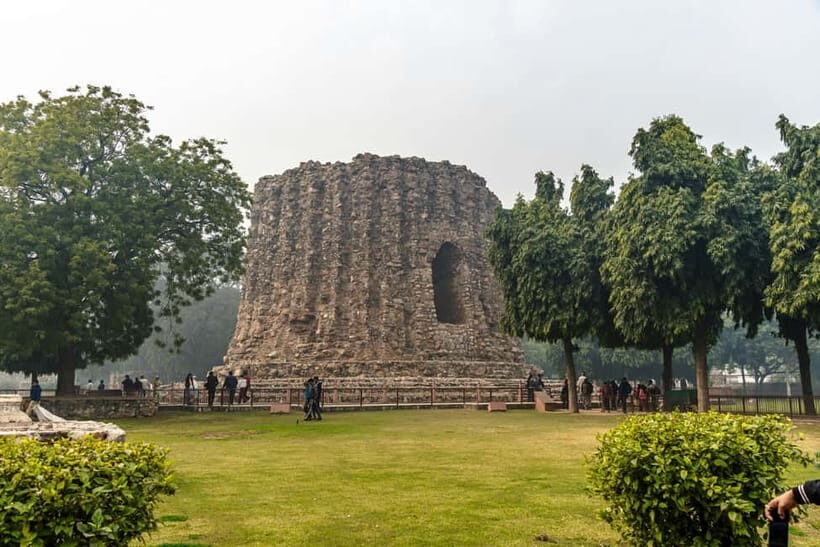
Your day is anchored by Qutub Minar (a UNESCO World Heritage Site). It’s the 73-meter-tall minaret from the early 13th century, and the guide helps you focus on what’s worth noticing: ornate carvings, the scale, and the fact that this structure became part of Delhi’s long architectural identity. Even if you’re not a hardcore architecture person, it’s one of those landmarks where guidance saves time. You’ll know where to look and what details mean.
If you’re sensitive to heat or strong sun, come prepared—this is one of those stops where you’ll want good shade timing, because you may be outside for photos and walking around.
Lotus Temple: a quiet reset from the streets
Next is the Lotus Temple, known for its flower-shaped design. It’s a Bahá’í House of Worship, and it tends to feel like a breather after busier areas. This stop isn’t about climbing or sprinting; it’s more about watching how people move through a calm space. If you like religious architecture that’s about form and serenity rather than size alone, you’ll appreciate this one.
The only caution: dress norms and respect rules apply at all religious sites. The tour already notes short skirts aren’t allowed, so keep that in mind.
India Gate and the gardens: a memorial you can actually walk
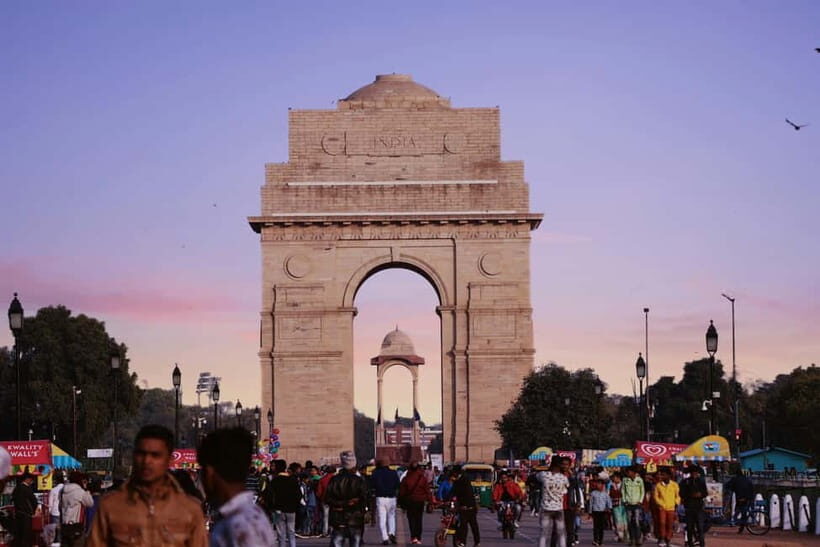
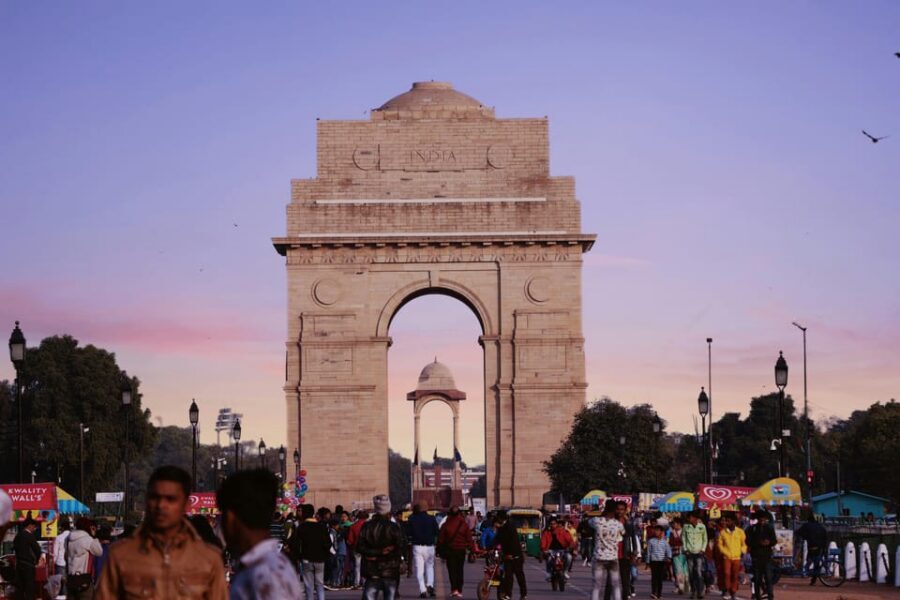
You’ll stop at India Gate, a World War I memorial. Take the walking time around it and through the gardens. The practical win here is that it breaks the pattern of “big monument, quick photo, move on.” If you have even 20–30 minutes of calm attention, it’s easier to understand the monument beyond the postcard view.






Rashtrapati Bhavan (pass by): the “from-the-road” reality check
You’ll pass Rashtrapati Bhavan, the President of India’s residence. This is a classic photo opportunity, but it’s not a guided walk inside. Still, your guide should help you connect what you’re seeing to the Mughal-style influence in the surrounding area and the idea of planned grandeur.
Humayun’s Tomb: the Mughal prototype feeling
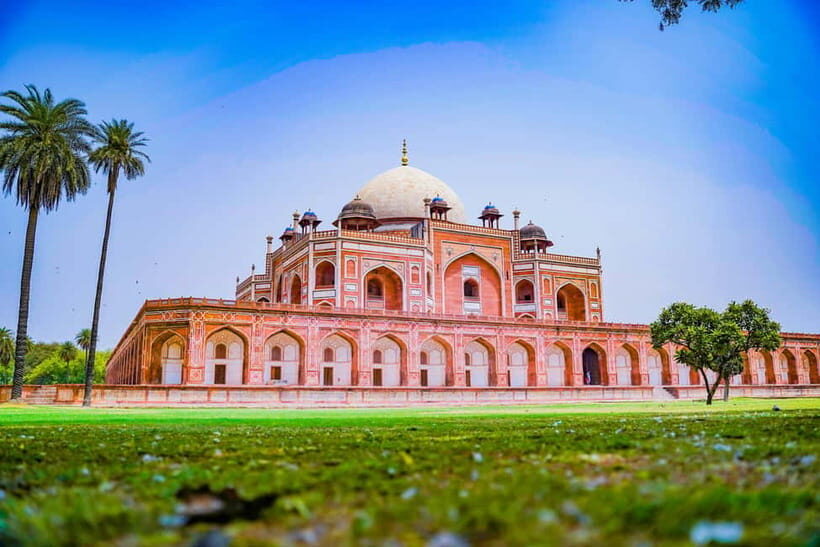
Then comes Humayun’s Tomb, another UNESCO World Heritage Site. It’s a 16th-century garden tomb and a key predecessor in the Mughal tradition—often described as a forerunner to the Taj Mahal. The garden setting matters here. You’re not just looking at a building; you’re looking at how water, paths, and layout shape the experience.
The drawback: like most tomb complexes, you’ll do some walking and standing in open spaces. If you’re traveling in hot months, start hydration early and wear comfortable shoes.
Old Delhi with purpose: Jama Masjid to Chandni Chowk without getting lost
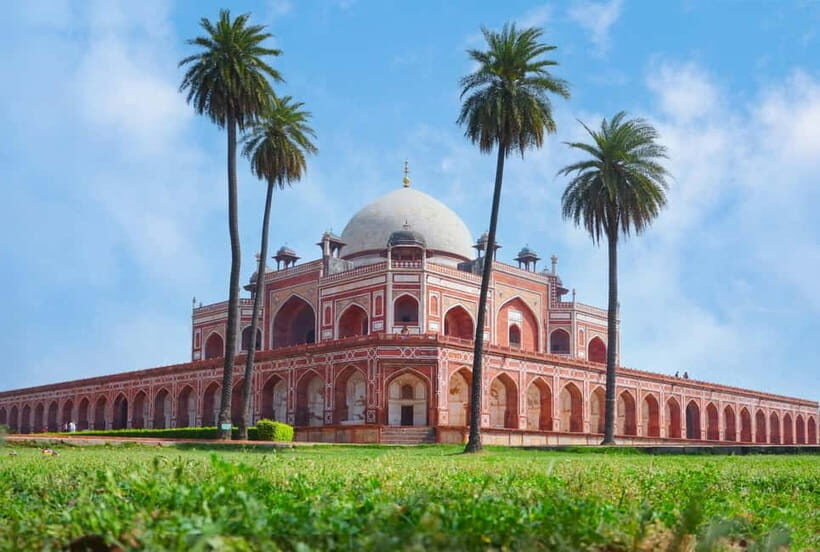
Old Delhi can swallow your day if you wander without structure. This tour avoids that by moving you between major anchors: mosque, markets, temples, spice bazaars, and one of the best-known old-food streets.
Meeting at Jama Masjid Gate 2: your entry point is key
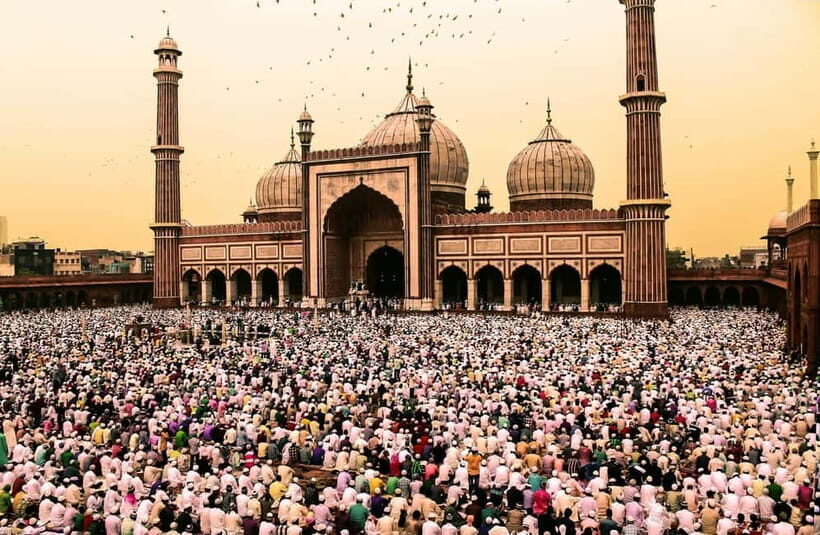
You meet at Jama Masjid Gate Number 2. It’s a smart start because Jama Masjid isn’t just another mosque—it’s India’s largest and one of Delhi’s finest. With a guide, you’ll learn what to notice before you’re inside the crowds.
Jama Masjid: go up for the sweep
The plan includes a guided visit and going up to the minaret for sweeping views of Old Delhi. That’s not just sightseeing. It helps you understand how the market grid and street patterns work. Once you see the layout from above, the chaos down below becomes easier to navigate.
Chandni Chowk: rickshaw or walking through the pulse
You’ll reach Chandni Chowk, one of Delhi’s busiest market areas. You’ll have the choice to ride a rickshaw or walk through crowded lanes with shops and street food stalls.
My practical take: rickshaw is a great option if you want motion and photos without getting boxed in by foot traffic. Walking is better if you want to stop more, ask questions, and take in the details of shops and spices.
Sri Digambar Jain Lal Mandir: a temple stop with meaning
You also visit Shri Digambar Jain Lal Mandir (an important Jain temple, described as the oldest and most prominent Jain temple in Delhi). Even if you’ve never visited a Jain temple before, the guided context helps you recognize that this is a living place of prayer, not a museum stop.
Paranthe Wali Gali: stuffed flatbread culture in one street
Then comes Paranthe Wali Gali, famous for its stuffed parathas. This is one of those Old Delhi experiences where the tour’s timing matters. You’ll get the street experience—what you can see and what you can smell—without pretending you’re going to eat your way through it in one go (since the tour doesn’t include food).
Khari Baoli: Asia’s largest wholesale spice market
Your spice stop is Khari Baoli, described as Asia’s largest wholesale spice market. The colors and scents here are obvious, but what’s less obvious is how spices connect to daily life and local enterprise. Your guide can help you interpret what you’re seeing, from dried goods to how these businesses operate.
Major stops you’ll appreciate for context (even if they’re brief)
Some of the best learning moments in this tour come from “small time, high impact” stops.
Gurudwara Sis Ganj Sahib and the langar
You’ll visit Gurudwara Sis Ganj Sahib in Chandni Chowk. A key highlight is seeing the community kitchen (langar) and experiencing Sikh traditions of service and equality.
This one can move you a bit because it’s practical generosity in action. You’re not just looking at a temple exterior; you’re seeing a working tradition.
Red Fort (pass by): the outside view that sets expectations
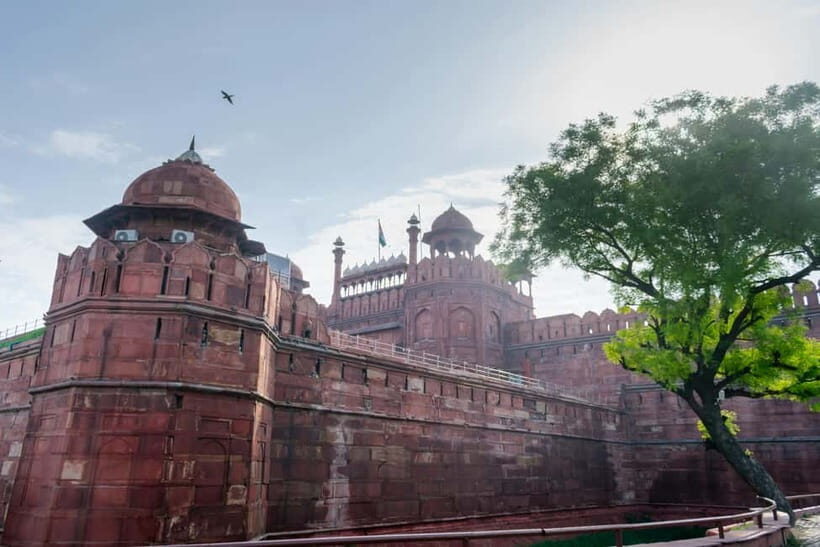
You’ll pass the Red Fort. A full visit takes longer, and the plan notes that this is an outside appreciation for Mughal architecture and historical significance. That’s actually useful. If you later return for a longer Red Fort day, you’ll remember where to focus.
Raj Ghat: a reflective stop in the route
You’ll stop at Raj Ghat for a photo stop and guided visit. It’s shorter, but it adds a human, reflective layer to a day full of monuments and markets.
The Sanjay Colony slum visit: how it’s handled matters
This tour includes an escorted walking tour of Sanjay Colony, a small but vibrant slum society. The focus is on daily life, local enterprise, and community schemes, with the intent of promoting responsible tourism.
Here’s how to think about it before you go: this isn’t a casual “look and gawk” stop. If you treat it with patience and respect, you’ll come away with a clearer view of how communities organize, work, and support each other. If you prefer distance and scripted sightseeing only, this section may feel uncomfortable—and the tour already marks it as not suitable for pregnant women, which tells you it’s active and requires discretion.
Practical advice: wear respectful clothing, keep your voice calm, and follow your guide’s direction. If you want to ask questions, do it thoughtfully and only when invited.
Getting around smoothly: the private AC car, included rickshaw, and timing reality
One of the simplest wins here is logistics. You get air-conditioned transportation with a driver, plus a tour guide for interpretation. That combination matters because Delhi distances can drain you. The AC ride helps you stay functional for walking and photo stops.
You’ll also have hotel pickup and drop-off, which saves time. If pickup is optional in your plan, make sure you choose what reduces your morning stress. With a meeting point at Jama Masjid Gate 2, starting near Old Delhi can also cut down transfer time.
The tour includes all parking fees and taxes, which means fewer “wait while they sort it out” moments.
There’s also a “skip the line” element via a separate entrance. That’s a quiet value-add. It doesn’t turn a famous monument into a fast track, but it can reduce standing around with no information.
What to bring (and what to avoid) for an easier day
This is an outdoors-and-walking mix, especially in Old Delhi. You’ll feel better if you pack like you’ll be walking a lot.
Bring:
- Passport or ID card (a copy is accepted)
- Comfortable shoes for walking and uneven sidewalks
- Something modest for religious sites (the tour notes short skirts aren’t allowed)
Avoid:
- Anything that conflicts with site dress rules. The short skirt restriction is explicitly stated, so plan around it.
Also, since food and drink aren’t included, consider planning small snack breaks. You’ll get a water bottle, but you’ll still want extras.
Who this tour suits best (and who should look elsewhere)
This tour fits best if you want breadth, guidance, and a sense of Delhi’s contrasts in one day.
You’ll likely love it if:
- You only have a limited window and want Old and New Delhi highlights together
- You like architecture with explanation, not just sightseeing
- You want a guided slum visit done with an escorted approach rather than guesswork
- You enjoy markets and spices with structure (Jama Masjid → Chandni Chowk → Jain temple → spice market)
You might not enjoy it as much if:
- You want full, slow museum-style time at just one monument (like Red Fort interior)
- You hate crowds and continuous walking
- You prefer your cultural experiences to be strictly traditional tourism with no community visits
- You’re pregnant (the tour is explicitly marked not suitable)
Should you book? My straightforward call

If your goal is a guided “best of” day that connects landmarks across Old and New Delhi—plus a real, escorted look at community life—this is a strong option for the money. The value isn’t just the low price; it’s that you’re paying for transport, a guide, and multiple guided stops with major religious and UNESCO sites.
Book it if you’re flexible, comfortable with walking, and respectful during the Sanjay Colony section. Skip or choose something else if you want long, uncrowded time inside sites, or if you don’t feel good about community-based visits.
If you do book, a good mindset helps: treat the day as a guided course in Delhi’s layers—mosques, gardens, memorials, markets, and people—rather than a checklist to finish.
FAQ
How long is the tour?
The duration is listed as 4 to 8 hours, depending on the selected option.
Where do I meet the guide?
You meet at Jama Masjid Gate Number 2.
Is this tour private?
Yes, it’s described as a private group.
What languages are the guides?
The tour is listed as English.
Do you include transportation?
Yes. You get air-conditioned transportation with a driver, plus hotel pickup and drop-off (pickup optional depending on your option).
Is a rickshaw ride included?
Yes, there is a rickshaw ride in Old Delhi included in the tour.
Is food included?
No. Food and drink are not included.
Which major UNESCO sites are included?
Qutub Minar and Humayun’s Tomb are both UNESCO World Heritage Sites and included on the itinerary.
Does the tour include Chandni Chowk and Old Delhi markets?
Yes. It includes Jama Masjid, Chandni Chowk, Paranthe Wali Gali, and Khari Baoli.
What items or dress rules should I know about?
You should bring a passport or ID card (copy accepted). Short skirts are not allowed, and the tour is not suitable for pregnant women.
Does the tour include a slum visit?
Yes. It includes an escorted walking tour through Sanjay Colony.