REVIEW · NEW DELHI
Old Delhi Haveli with live Classical dance, music & cuisine
Book on GetYourGuide →Operated by Discover Activitis · Bookable on GetYourGuide
Three hours, and Old Delhi feels close. This tour strings together live Kathak dance, a live tabla and sitar music set, and visits to restored havelis—plus a lunch that tastes like the neighborhood. One thing to keep in mind: it runs on a tight schedule and you’ll be doing some walking and public-style getting-around (tuk-tuk and tube/metro), so comfy shoes matter.
What I like most is how the performances happen in an old, preserved setting instead of a generic stage. I also like that you’re not just sitting and watching—you get a guide-led walk that includes Khari Baoli and Chawri Bazar before the music and dance portion. If you’re hoping for an effortless, door-to-door pick-up, note that hotel pickup is only included if you book that option; otherwise you’ll meet at a scheduled pickup point.
The lunch part is handled with the same vibe: old-town food in an antique haveli atmosphere, where the meal feels like part of the show rather than an afterthought. And if you end up with a small group, it can turn more personal—English support from Jai (a name that comes up again and again) helps you connect the dots between art, architecture, and daily life in Old Delhi.
In This Review
- Key things you’ll notice right away
- How the tuk-tuk and tube ride sets the tone in Old Delhi
- Khari Baoli and Chawri Bazar: where the tour finds its pulse
- The haveli staircases: a museum feeling without the fuss
- Live classical music: tabla and sitar up close
- Kathak dance performance: stories told with hands and feet
- Lunch in an antique haveli: where food becomes part of the show
- The second haveli visit and the old-world “nothing changed” feel
- Tour timing and group size: why 3 hours feels just right
- Price and value: what you’re paying for at $98
- Who should book this Old Delhi haveli experience
- Should you book it
- FAQ
- How long is the Old Delhi haveli tour?
- What transport do you use to reach the Old Delhi area?
- Where do I meet the guide?
- What performances are included?
- Is lunch included, and are drinks included?
- Do I have to visit Jama Masjid?
- How big is the group and what language is the tour guide?
- Can I change my plans?
Key things you’ll notice right away
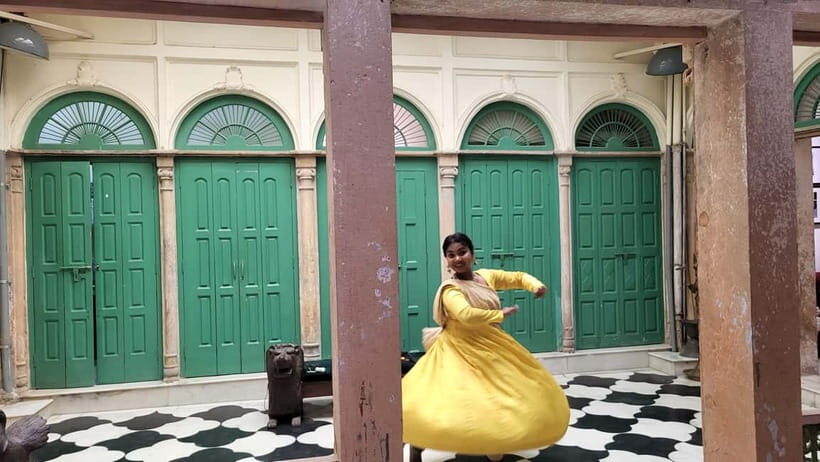
- Live Kathak inside a restored haveli setting, with expressive footwork and storytelling through movement
- Tabla and sitar duet performed live, so you hear the music at close range
- Two haveli visits that feel like small museums, with carefully preserved old artifacts
- Old Delhi walking stops that break up the day: Khari Baoli, then Chawri Bazar
- Lunch with local delicacies served in the haveli setting, not at some detached restaurant
How the tuk-tuk and tube ride sets the tone in Old Delhi
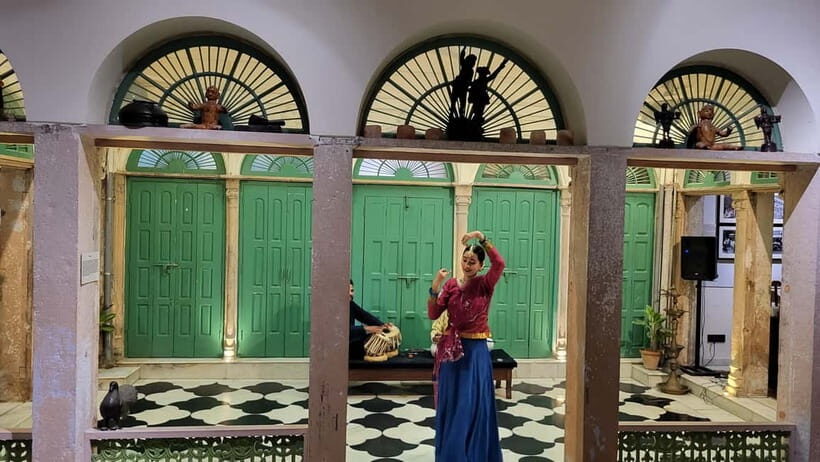
The tour starts with your representative meeting you at your pickup point, and from there you head toward Old Delhi using a mix of tuk-tuk and tube/metro style travel. Then it’s into the bylanes on foot.
This matters more than you might think. Old Delhi isn’t just a place you visit, it’s a place you move through. The short transit pieces plus the walking segment help you avoid the feeling of being dropped into one big blur. You get time to adjust to the rhythms of the area—sounds, streets, and that layered sense of old meets everyday.
A practical tip: plan for being on your feet for part of the morning/afternoon window. Even if the walking segments are not long, cobblestones and uneven pavement are common in this kind of neighborhood. Comfortable shoes will make the whole experience smoother, especially when you’re going up and down small steps around the havelis.
You can also read our reviews of more tours and experiences in New Delhi.



Khari Baoli and Chawri Bazar: where the tour finds its pulse
One of the best parts of this 3-hour format is the way it balances culture with actual street scenes. You do a guided visit through Khari Baoli (a focused segment), then you transition toward Chawri Bazar, where the dance show timing slots in.
Khari Baoli is the kind of place that makes you understand why Delhi has such a strong food and spice culture. You don’t just hear about traditions; you get a sense of how commerce and daily life feed into the arts. Even in a short guided walk, you’ll likely pick up context about the neighborhood’s character and how people live around centuries-old structures.
Chawri Bazar is another layer—more energy, more people, and a stronger sense that the area is still operating like a working part of the city. It’s a good setup for what comes next. By the time you’re seated for dance and music, you’ve already been “in the neighborhood” for long enough that the performance doesn’t feel like a separate planet.
The haveli staircases: a museum feeling without the fuss
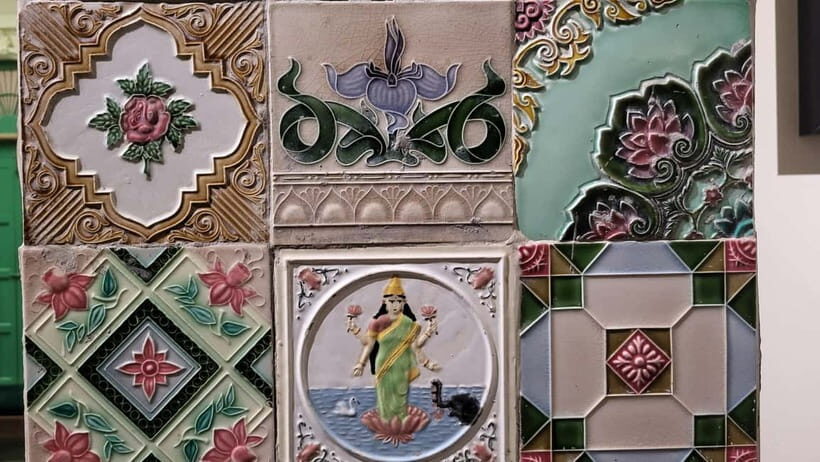
The tour’s core experience happens in restored ancient homes known as havelis—palatial old houses that now function as cultural spaces. When you reach the stairs of the first haveli, you get that quick time-warp effect: old artifacts, preserved interiors, and a feeling that the building itself is part of the storytelling.
This is a big reason the night feels different from a standard theater show. The performance isn’t competing with a modern hall. Instead, you’re surrounded by textures of the past—things you can see up close, not just read about.
You’ll also have a little “museum feeling” as you settle in. That’s useful if you’re not deeply into classical arts yet, because the space gives you context before the music starts. If you like architecture, this is one of the most satisfying parts of the tour.
Live classical music: tabla and sitar up close
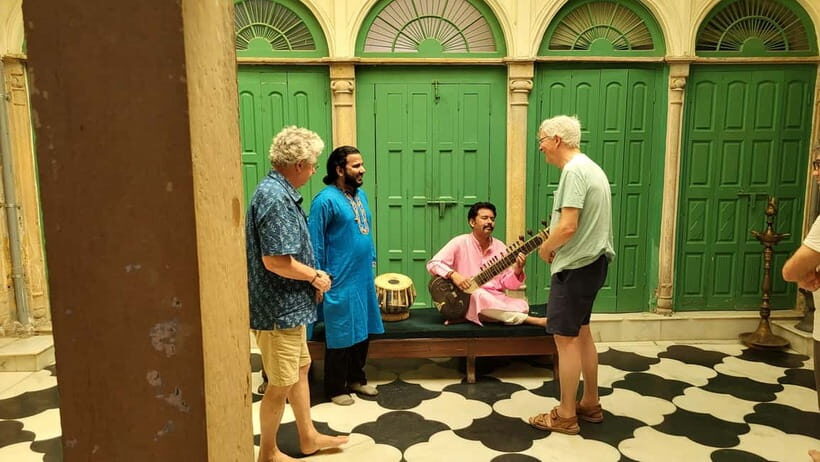
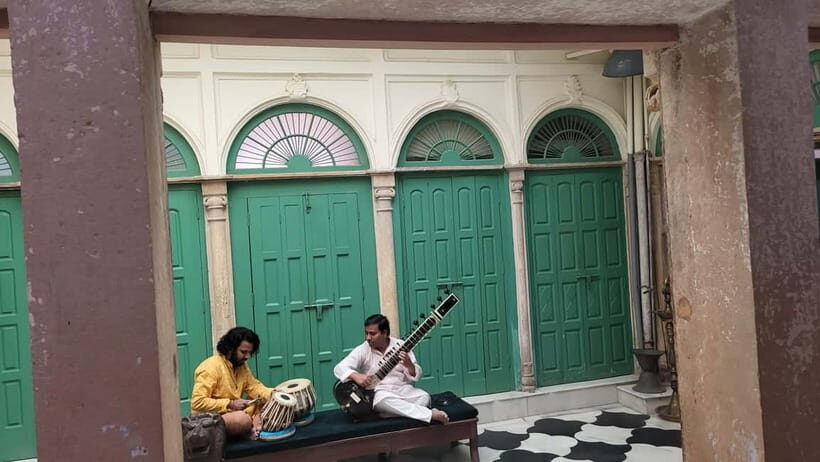
Once you’re seated, the live music section comes in with a duet format: one musician plays tabla (hand drums that are central to Indian classical percussion) and the other plays sitar (a plucked string instrument with an identity that’s instantly recognizable to most people who’ve heard Indian music at all).
Hearing tabla and sitar live changes the experience. Recorded music is smooth and repeatable; live music is breathing, with details in timing and resonance. In a compact haveli setting, that closeness matters. You can pick up the conversation between percussion and melody, and you’re not relying on sound drifting across a large space.
If you’re new to classical music, don’t worry about catching every term. The value here is that you’re watching how the musicians perform together, and you’re hearing how the rhythm and string patterns interact in real time.
Kathak dance performance: stories told with hands and feet
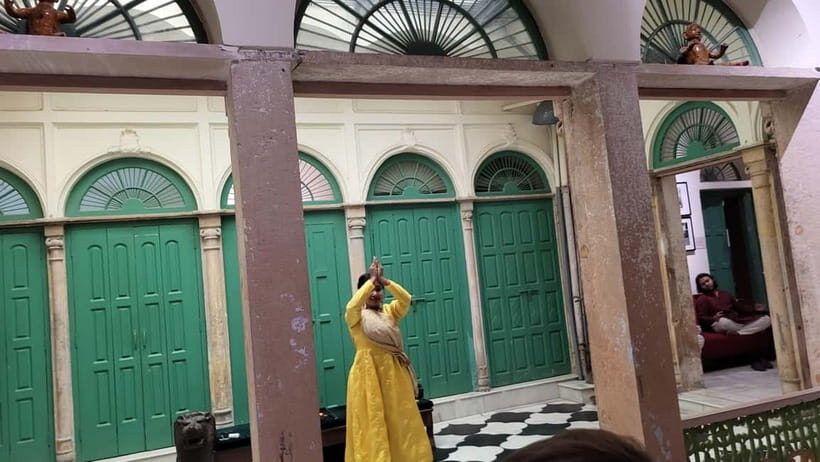
Next comes the Kathak dance performance. Kathak is known for expressive storytelling through hands, face, and a lot of precise footwork. In this format, the dancer communicates with folk stories plus elegant movement patterns, and the stage setting helps those details land.
What makes Kathak fun on a first visit is that you can understand it even without prior knowledge. The hand gestures create meaning, the facial expressions carry emotion, and the footwork gives you a sense of skill and tempo. In the haveli setting, you’re close enough to see the body control that makes Kathak feel both graceful and technical.
The performance is one of the most highly praised parts of the experience in the feedback you provided. People consistently describe the performance as a highlight—especially the way the dance and music feel coordinated, not bolted on.





Lunch in an antique haveli: where food becomes part of the show
After the dancing and music, lunch is served inside the haveli environment. You’ll eat while surrounded by antique ambience—old walls, preserved character, and that calm that only shows up in a well-kept historic space.
This is not just about calories. It’s about pacing. By the time lunch arrives, you’ve already walked through old streets and sat through live music, so a sit-down meal helps everything click into place.
Lunch is included, and it’s built around local delicacies. Drinks are not included, so if you want a beverage, plan on paying separately. Also, since it’s served as part of the cultural program, keep in mind the overall tour timing is tight. If you tend to linger at the table, you’ll want to keep one eye on the schedule so you don’t slow the group.
The second haveli visit and the old-world “nothing changed” feel
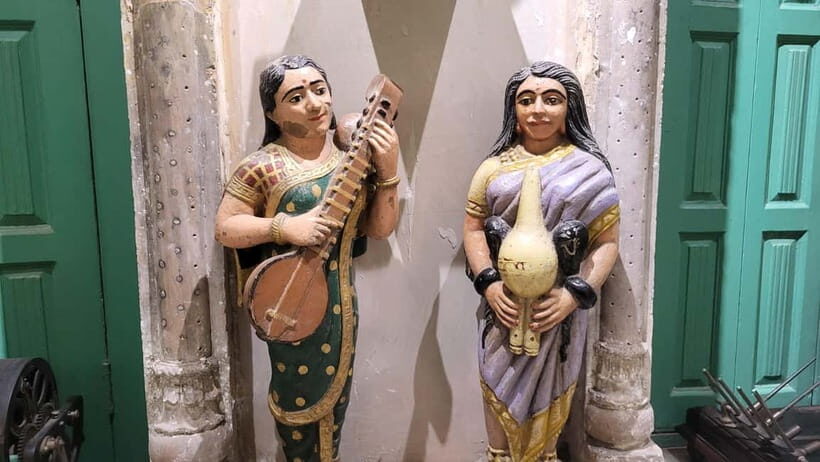
A second ancient haveli visit is part of the program, adding to the sense that you’re not seeing one set piece—you’re walking through multiple restored spaces.
This stop is especially valuable if you like comparing spaces. The idea here is to experience the old world with minimal modernization. In the provided details, the second haveli is described as offering a time-capsule feeling, where traditions, cuisine, dressing, and community rhythms continue to shape daily life.
Even if you don’t go deep into architecture, you’ll still get something out of it. Restored havelis are a rare chance to see how wealthy households used to be organized, decorated, and protected, and how those design choices affect mood and movement through the home.
And there’s a social angle too: you can ask questions about culture and architecture, and the guide responds with enthusiasm. That Q-and-A time can turn a performance tour into a genuine cultural conversation.
Tour timing and group size: why 3 hours feels just right
The tour runs 3 hours from pickup to finish. Within that window, you’ll cover:
- a short get-there phase using tuk-tuk and tube/metro, then walking,
- a guided look through Khari Baoli,
- the Chawri Bazar dance show segment,
- the music and Old Delhi concert portion,
- lunch in the haveli,
- and additional haveli time before heading back.
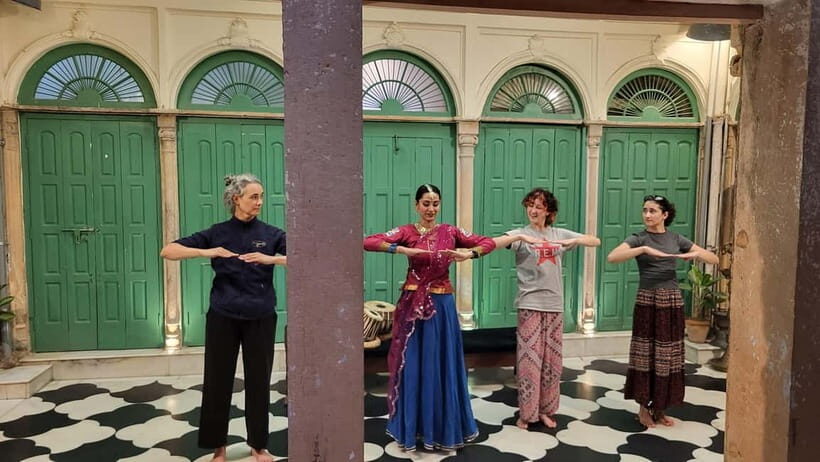
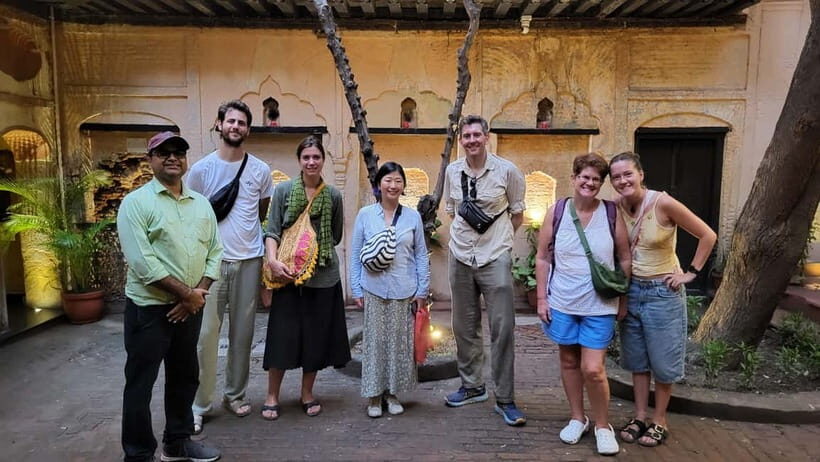
The small group size—limited to 7 participants—helps a lot. In this kind of cultural venue, you want room to hear, room to see, and room for questions. A small group also keeps the walk smoother and reduces that “herded through” feeling that can ruin a good evening.
If you’re someone who likes structure but doesn’t want a long day, this format is a solid match.
Price and value: what you’re paying for at $98
At $98 per person for a 3-hour program, you’re paying for a bundle: live performances (Kathak plus live music), guided walking time, haveli visits, and lunch.
Here’s why that can be good value: many tours in big cities force you to choose between a “show” or a “walk.” This one combines both in a compact window, and the haveli setting is part of what you’re paying for. You’re not only buying entertainment; you’re buying access to restored historic spaces and a guide who can connect what you’re seeing to how the neighborhood works.
Could it feel pricey if you only care about the music and dance and not the walking and haveli context? Sure. But if you want a short, well-rounded cultural evening, the price makes sense because you’re getting multiple components in one ticket.
Also consider the hidden cost factor: you might not be starting with included hotel pickup unless you choose that option. So check how you’re getting to the meetup point. If you’re already near the pickup options (like Chanakyapuri or Rajiv Chowk), the logistics can stay easy.
Who should book this Old Delhi haveli experience
This tour fits best if you want:
- live classical arts in an atmospheric setting (not a generic hall),
- a guided look at Old Delhi through short, meaningful stops,
- lunch included with local flavors,
- and a small group experience in English with a guide who can answer questions.
It may be less ideal if:
- you strongly prefer private, door-to-door transportation,
- you hate any walking on uneven streets,
- or you want a long, slow museum-style day instead of a tight 3-hour culture sprint.
Should you book it
I’d book it if you’re visiting Delhi for the first time and you want one high-impact cultural night that doesn’t require deep prep. The combo of live Kathak, live tabla and sitar, haveli visits, and included lunch is hard to beat in just 3 hours—especially when the venue itself is part of the experience.
If you’re sensitive about scheduling or want maximum comfort in transport, plan your meetup carefully and wear shoes you can move in. Do that, and you’ll likely end the evening feeling like you saw Old Delhi as a living place, not just a postcard.
FAQ
How long is the Old Delhi haveli tour?
The total experience runs for 3 hours, from pickup until the end.
What transport do you use to reach the Old Delhi area?
You travel using a combination of tuk-tuk and tube ride, followed by walking through the bylanes.
Where do I meet the guide?
Your representative meets you at your hotel. If hotel pickup is not booked, there are listed pickup locations including Chanakyapuri and Rajiv Chowk.
What performances are included?
You’ll see live classical music (with tabla and sitar) and a Kathak dance performance.
Is lunch included, and are drinks included?
Lunch with local delicacies is included. Drinks are not included.
Do I have to visit Jama Masjid?
Entry to Jama Masjid is not included, and going inside is not compulsory.
How big is the group and what language is the tour guide?
It’s a small group limited to 7 participants, and the tour guide speaks English.
Can I change my plans?
Yes. The experience offers free cancellation up to 24 hours in advance for a full refund, and it also supports reserve now & pay later.