REVIEW · NEW DELHI
New Delhi: Sanjay Colony Slum Tour with Locals
Book on Viator →Operated by Delhi by Locals · Bookable on Viator
A real-world Delhi lesson starts at the metro. This local-led walk into Sanjay Colony helps you understand daily life in a place home to about 60,000 people, with clear context along the way. You’re not just seeing streets; you’re hearing how people manage work, faith, and basic needs day after day.
I love the way guides such as Badal and Sukhmani keep the tone respectful, especially when topics feel personal. I also like the Learning by Locals stop, where you get a grounded look at education and the kind of community projects that try to change outcomes for young people.
One possible drawback: the school time is short and you view the s.d.m.c primary school from outside, so it’s more of a snapshot than a full visit inside.
In This Review
- Sanjay Colony highlights you’ll care about
- Why this walk feels different from a typical city tour
- Getting there: Harkesh Nagar Okhla Metro Gate logistics that actually matter
- Stop 1: arriving at the neighborhood from Metro Gate no. 2
- Learning by Locals: where education becomes real-world context
- Stop 3: s.d.m.c primary school from outside, and what you can learn anyway
- What you’ll learn on the walk: water, religion, home life, and clothing-industry work
- Tea and water: small comforts that keep the tour from feeling heavy
- Respect and safety: how the guide keeps things humane
- Price and value: what $12 really buys you here
- Who should book this slum tour, and who may want a different option
- Should you book Sanjay Colony with Locals?
- FAQ
- How long is the Sanjay Colony slum tour?
- How much does the tour cost?
- Where does the tour start and end?
- Is pickup offered?
- What’s included in the price?
- How big are the groups?
- What’s the cancellation policy?
Sanjay Colony highlights you’ll care about
- Small group size (max 6 per booking) so you can ask questions without shouting over the crowd
- Tea and water provided, so you can stay focused instead of worrying about hydration
- Learning by Locals NGO stop for an education-focused, community-centered perspective
- A primary school stop from outside that still teaches you a lot about the education setup
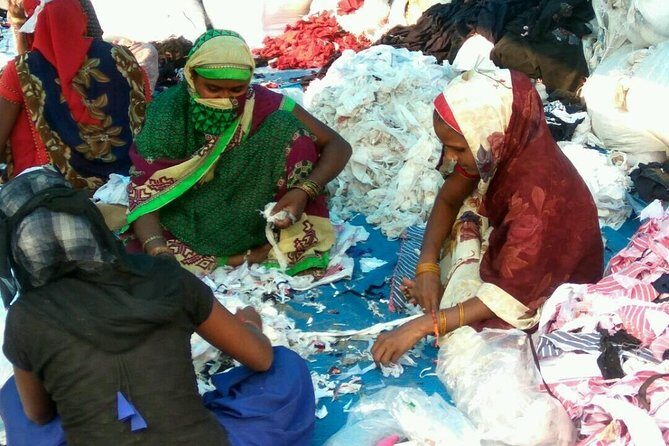
- Daily-life topics like finding water, religion, home life, and work tied to the clothing industry
- Meeting and drop-off near the Okhla Metro makes the experience easy to plug into your day
Why this walk feels different from a typical city tour

New Delhi has over 700 slums, and Sanjay Colony is one of the larger ones—roughly 60,000 people live there. What makes this tour meaningful is that it’s framed as a learning walk about daily challenges, not a sightseeing detour.
You’ll get context on how people handle basics like water, how faith shows up in community life, and what daily routines look like. The guide also brings in stories about home life and local education, so the walk becomes a conversation you can follow—not a checklist.
This is also a safer way to explore an area most visitors never see. A local guide keeps you oriented, answers questions in real time, and helps maintain respectful boundaries while you’re learning.
You can also read our reviews of more tours and experiences in New Delhi.



Getting there: Harkesh Nagar Okhla Metro Gate logistics that actually matter
You start at Harkesh Nagar Okhla Metro, Gate no. 2 (near the Harkesh Nagar area of Okhla). The end point is back at the metro area near Gate G-16, close to Harkesh Nagar in Okhla Phase II.
Why this matters: you’re not relying on a mysterious pickup location in traffic. You’re using a known public transport hub, and the tour is designed around it.
If pickup is offered for your booking, you’ll get that option at the start, and there’s a plan to drop you back—either at the metro station gates or with help coordinating an Uber or taxi if you chose the private car option. The tour also uses a mobile ticket, and you should receive confirmation at booking, so you’re not scrambling on arrival.
Group size is another practical win: it’s kept small, with a maximum of 10 travelers for the activity and up to 6 people per booking. That means you spend time with the guide, not with the group herding problem.
Stop 1: arriving at the neighborhood from Metro Gate no. 2
At the start point—Harkesh Nagar Okhla Metro Gate no. 2—the tour typically begins with a quick orientation. Even though you’re only there for a short time, that first moment sets the tone: you’re stepping into a lived-in neighborhood with rules of respect, not into a theme park.
The guide helps you get your bearings fast and explains what you’ll be paying attention to as you walk. Expect the conversation to start shifting toward real daily routines: work, school, faith, and what “normal” looks like when resources are limited.
This is the moment you’ll feel the difference between a casual walk and a guided one. With a guide, you can ask questions as they come up. Without that, it’s easy to look without understanding what you’re seeing.
Learning by Locals: where education becomes real-world context
Next comes Learning by Locals, a local NGO stop included in the tour. You spend about 15 minutes here, and it’s built to connect what you’ve been learning on the street with what the community is trying to improve.
This is one of the most praised parts of the experience because it reframes the whole visit. Instead of stopping at hardship, the tour shows effort—especially around youth education and empowerment work. The guide also shares information about community projects, which helps you understand that people aren’t just living with problems; they’re also working toward solutions.
You’ll likely hear the kind of details that don’t show up in a quick photo-stop. It’s the difference between seeing a school sign in passing and understanding why education support matters in places where every day is a balancing act.
Good to know: this is still a short stop. You won’t walk out knowing everything about Delhi’s nonprofit ecosystem. But you will leave with a clearer idea of how learning projects operate on the ground.
Stop 3: s.d.m.c primary school from outside, and what you can learn anyway
The school stop is brief (about 5 minutes) and happens as an outside view. That might sound limiting, but it actually fits the tour’s overall style: it’s a snapshot meant to teach you what the education system looks like from the street and through the guide’s explanation.
From outside, you can still pick up important signals: the presence and role of a public school, how education shows up as part of daily life, and why the tour connects schooling to long-term choices for families.
If you’re hoping for classrooms, that’s not what this is. Plan for observation plus explanation, not a full inside-school visit. The benefit is that you get to keep your focus on learning rather than crowding sensitive spaces.





What you’ll learn on the walk: water, religion, home life, and clothing-industry work
The tour’s core theme is daily life—especially the challenges people face and the systems they rely on. Expect the guide to cover issues like finding water and how that shapes everyday decisions.
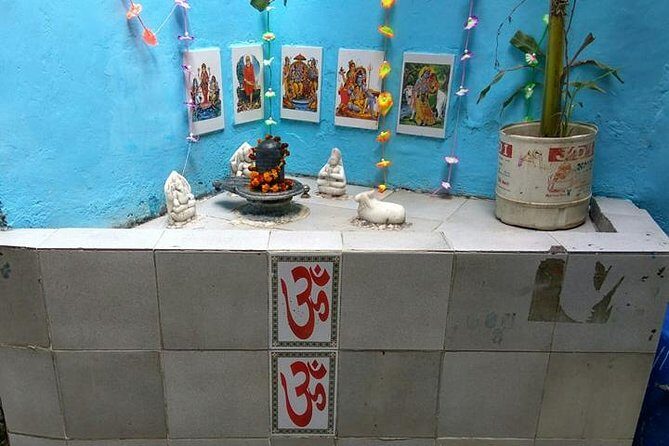
Religion also plays a role in the tour context. You’ll visit a temple as part of the experience, and the guide explains how faith fits into the rhythms of community life rather than treating it like an object to photograph.
Home life and daily routine come up too. You’ll get personal stories in a way that’s meant to be informative and respectful, so you understand the human side of what you’re seeing—not just the external conditions.
Work is part of the story as well. One of the highlights is seeing how people work in the clothing industry. Even if you’re not an industry expert, the guide’s framing helps you understand how local skills and jobs connect to household survival and community stability.
Tea and water: small comforts that keep the tour from feeling heavy
You’ll be provided local tea and a water bottle. That sounds minor, but it changes the feel of the walk. You’re better able to pay attention when you’re not overheating or rationing water.
This is especially useful because you’ll be hearing about difficult daily realities. Staying hydrated doesn’t fix those realities, but it keeps the experience from turning into a stress test.
If you have a sensitive stomach or strong preferences, it’s smart to note how you react to tea in general. But in normal conditions, this kind of included refreshment is exactly what you want on a walking tour with meaningful content.
Respect and safety: how the guide keeps things humane
A slum tour can raise understandable concerns—mainly about dignity and whether the visit turns into gawking. What helps here is the emphasis on learning through a guide, not wandering on your own.
Guides such as Badal and Sukhmani are noted for handling the experience with respect. That shows up in the way questions get addressed and in how the visit stays grounded in explanation, not spectacle.
Another thing that stands out is adaptability. In at least one case, the guide arranged an extra guide to support a person who wasn’t feeling well. That doesn’t mean you should treat this like a medical service, but it does suggest the team pays attention to the needs of the group and works to keep the experience possible and considerate.
Price and value: what $12 really buys you here
At $12 per person, this tour is priced as an access-and-education experience, not a luxury walking show. For that cost, you get a local guide, local tea, and a water bottle, plus the stop at a local NGO and a primary school view.
The biggest value isn’t the tea—it’s the structure. In areas where it would be easy to get lost or miss context, having a guide with a local lens turns the visit into something you can actually learn from.
The time is also reasonable: about 1 hour 45 minutes. It’s long enough to get a real sense of daily life, but short enough that it won’t dominate your whole day in Delhi.
Main consideration on the value side: this is not a multi-hour deep documentary. It’s a guided introduction. If you want long, detailed access, you may still crave more time afterward—but for the price, you’re getting a strong first look.
Who should book this slum tour, and who may want a different option
This tour is a good match if you want to understand how real communities function—through work, education, faith, and everyday challenges. If you ask thoughtful questions and prefer learning with a guide, you’ll likely enjoy it.
It also suits people who want a smaller group. With limits like up to 6 per booking and a cap around 10, you’re less likely to get stuck in a noisy crowd. It’s also marked as suitable for most people, so you shouldn’t need special prep beyond normal comfort planning.
You might consider another activity if you need a tour that’s mostly about monuments. This one is about daily life—and it may feel emotionally weighty for some people. The visit includes difficult topics, even though the tone is meant to be respectful and educational.
Should you book Sanjay Colony with Locals?
If you’re in New Delhi and you want something real—something that explains daily life instead of just showing it—this tour is an excellent choice. The small group size, the included guide support, and the NGO stop make it feel purposeful, not random.
I’d book it if your priority is understanding education and community resilience, and you’re comfortable hearing about challenges like water and work realities. Skip it only if you strongly prefer traditional sightseeing or you know this topic will hit you too hard.
If you do book, plan to go with curiosity and respect. Bring your questions, keep an open mind, and let the guide do what they’re trained to do: connect what you’re seeing to how people actually live.
FAQ
How long is the Sanjay Colony slum tour?
It runs for about 1 hour 45 minutes (approximately).
How much does the tour cost?
The price is $12.00 per person.
Where does the tour start and end?
It starts at Harkesh Nagar Okhla Metro Gate no. 2 and ends back near the metro at Metro Gate, G-16, Okhla Phase II.
Is pickup offered?
Yes, pickup is offered. The tour also notes dropping you back at the metro station gates or helping with getting an Uber/taxi if you booked the private tour with a car.
What’s included in the price?
Included are local tea, a water bottle, and a local guide.
How big are the groups?
The tour is kept small, with a maximum of 6 people per booking and a maximum of 10 travelers for the activity.
What’s the cancellation policy?
You can cancel for free up to 24 hours in advance of the experience for a full refund. If you cancel less than 24 hours before the start time, the amount paid is not refunded.