REVIEW · AGRA
Agra, The City through Poetry
Book on Viator →Operated by Agra Heritage Walks · Bookable on Viator
Agra has a second soundtrack: poetry. This private walk traces poet birthplaces and literary crossroads, starting at Jama Masjid and moving through the older, everyday parts of the city while you learn about writers like Nazir Akbarabadi, Ghalib, and Mir Taqi Mir. You’re not just hearing famous names. You’re seeing where their ideas were shaped and how Urdu and Mughal-era culture flowed into daily life.
Two things I really like: the walk mixes faith and literature in a way that feels practical, not academic. And the guide focus can be personal—ask questions, take photos at your pace, and leave with a handout of poetry verses and photographs. In the feedback I read, guide Kaleem comes up often for being genuinely invested in the city and connecting the dots across multiple sites.
One thing to consider: this is a walking tour (with a moderate fitness level needed) and it depends on good weather. If your schedule is tight or you hate walking in old streets at dusk, plan accordingly.
In This Review
- Key highlights you’ll care about
- Agra After 5 pm: Why this poetry walk works
- Finding the route at Jama Masjid and why the starting point matters
- Mirza Ghalib’s birthplace: more than a stop on a list
- Urdu calligraphy workshop: turning letters into texture
- The 16th-century shopping street and Nazir Akbarabadi’s street-level poetry
- Khankhana Katra and Abdur Rahim Khankhana’s poetic world
- Photos, handout, and why private pace beats a group script
- Price and value: what $44.28 buys you in real terms
- Who should book this poetry walk
- Should you book Agra, The City through Poetry?
- FAQ
- What time does the poetry walk start?
- How long does the tour take?
- Where does the tour meet?
- Is it a private tour?
- What’s included besides the walking and guide?
- What if the weather is bad or I need to cancel?
Key highlights you’ll care about
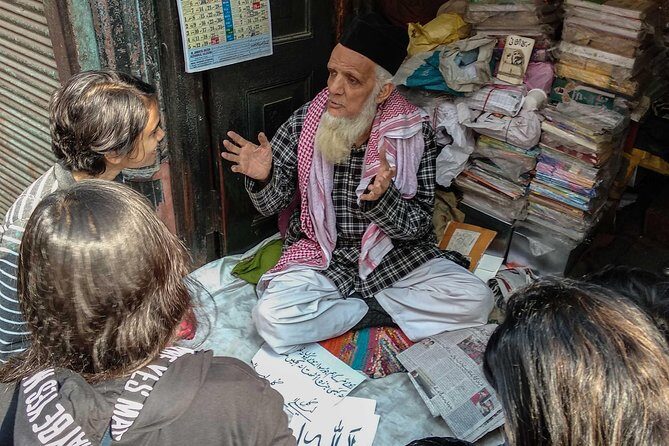
- Starts at Jama Masjid at 5:00 pm, then moves through Agra’s older lanes
- Poet-focused stops including Mirza Ghalib’s birthplace and references to Mir Taqi Mir and Nazir Akbarabadi
- Urdu calligraphy workshop visit, tied to how language developed during Mughal rule
- 16th-century silk-route shopping street, where verses connect with everyday commerce
- Photo help and Q&A from your private guide, plus a take-home handout
- Private group setup, so the route and pace can actually match your questions
Agra After 5 pm: Why this poetry walk works
Agra at late afternoon has a different feel than the marble-and-postcard version. The light softens, and the lanes around major monuments feel more human—vendors, shopfront conversations, and the kinds of small moments that make literature feel real.
This walk is built for that shift. You start at Jama Masjid at 5:00 pm and keep moving through older parts of town for about 2–3 hours. Because it’s private, you’re not stuck sprinting from one landmark to the next. Your guide can pause, answer questions, and help you frame photos without making you feel rushed.
You’ll also get a clear structure: poets and their settings, then specific stops that connect to language—especially Urdu—so the ideas don’t float in the abstract. Instead, they attach to places: a birthplace, a workshop, a market street, a courtyard-like stop tied to a poet. That’s what makes the experience different from a typical “monuments only” day.
You can also read our reviews of more city tours in Agra



Finding the route at Jama Masjid and why the starting point matters
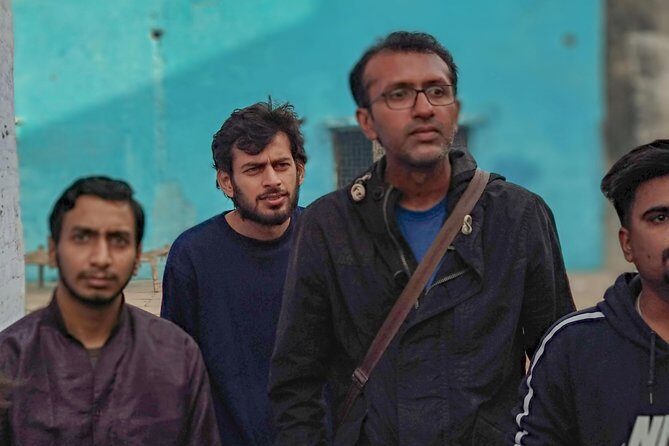
The walk begins at Jama Masjid Agra, right in the older city area (Subash Bazar, Kinari Bazar, Hing ki Mandi, Mantola are all part of the neighborhood web nearby). That matters because your first impression of Agra shapes the whole evening.
Jama Masjid isn’t just a starting pin on a map. It sets a tone for the theme: poetry, faith, and public life were always close. Urdu literature rose and evolved in the Mughal period, but the city’s institutions—religious and civic—formed the backdrop where people listened, traded stories, and read.
From the meeting point, you head toward poet-related sites and literary touchpoints. Expect a steady walking rhythm through old streets rather than a series of car drops. The payoff is that you experience Agra as a lived-in city, not a museum circuit.
Practical note: the tour requires moderate physical fitness. The streets can involve uneven footing and more walking than a quick sightseeing loop. If you’re comfortable with an evening stroll through older neighborhoods, you’re in good shape.
Mirza Ghalib’s birthplace: more than a stop on a list
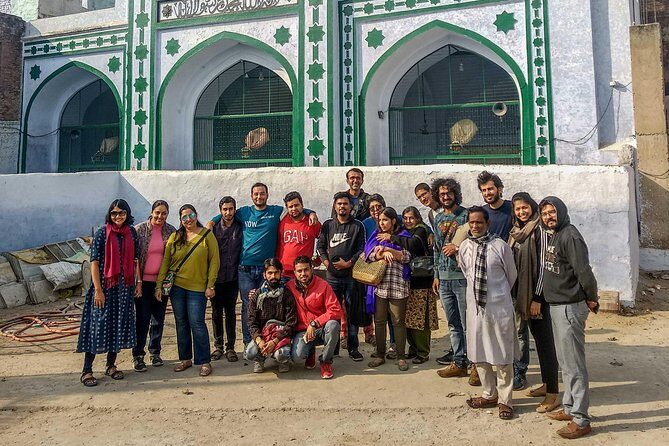
One of the main anchor points is Mirza Ghalib’s Birthplace. Here’s where the walk does something smart: it doesn’t treat Ghalib as a name on a poster. You learn about the writing genre and how Urdu poetry developed in the late Mughal period.
That context is useful because Ghalib’s reputation can feel like a finished product—people either adore him or quote him. On this walk, you get the process angle: how the late Mughal world shaped literary expression, and why Urdu became such a powerful cultural language.
You also benefit from a private setup. If you’ve got questions—about genre terms, why certain poetic themes show up, or how Urdu traveled through different social spaces—your guide can answer on the spot. This kind of Q&A is where a poetry walk can either become a fun lecture or stay memorable. The best guides keep it conversational, and Kaleem stands out in the feedback I read for tying history to what you can actually see around you.
Urdu calligraphy workshop: turning letters into texture
After Ghalib’s birthplace, you visit a calligraphy workshop focused on Urdu. The point isn’t just to look at beautiful writing. You discuss why Urdu is known for its unique calligraphic script and how language and literature developed during Mughal rule.
This stop is valuable for a simple reason: poetry is often taught as words on a page. Calligraphy reminds you that Urdu has a visual rhythm too—strokes, spacing, and style choices that change how you read the same language with your eyes.
Even if you don’t plan to buy anything, the workshop visit gives you a sensory connection. You’ll start noticing details you might otherwise miss in street signage and printed text as you keep walking.
If you enjoy crafts, scripts, or anything to do with the “how” behind literature, this part of the walk is a big win. It also works well as a mental reset after the more site-based parts of the journey.
The 16th-century shopping street and Nazir Akbarabadi’s street-level poetry
Next comes a walk down a 16th-century shopping street that was once important for the silk route. This is where the experience becomes very Agra: poetry meets commerce.
Here, you read a couple of verses from Nazir Akbarabadi and learn how he documented the city’s socio-economical details. That connection is key. When you hear poetry tied to trade routes and daily transactions, you stop thinking of literature as distant culture. It becomes a record of how people lived—what moved through the city, who benefited, and how society felt in that period.
This stop also helps you understand what a “poetry walk” can do at ground level. You’re not only getting literary names. You’re getting a lens, and then you’re using it while you walk.
Drawback to keep in mind: market streets mean more movement and more people nearby. If you’re prone to getting overwhelmed in busy areas, pace yourself and use the private format to ask your guide to slow down when you want clearer photo angles.




Khankhana Katra and Abdur Rahim Khankhana’s poetic world
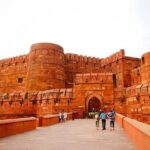
The walk also includes Khankhana Katra. This is linked to Abdur Rahim Khankhana, and you’ll read from his poetry as part of this stop.
This segment matters because it shifts the theme slightly—from seeing poetry as a single literary tradition to experiencing how different poets contributed their own voices and viewpoints. Rahim’s place in the story helps show why Mughal-era literature wasn’t one straight line. It was a conversation across genres, social circles, and languages.
One advantage of a private guide is how they can keep these poetic figures from feeling like separate museum objects. Kaleem, in the feedback I read, is praised for historical context at each site and for tying it back to the bigger theme of culture and place. When that happens, you leave with a stronger sense of how the city’s identity was shaped—not just memorized.
If you’re the type who likes to connect cultural dots (who influenced whom, what language was gaining prestige, and how poets fit into the broader story), this stop adds real weight.
Photos, handout, and why private pace beats a group script
A good walking tour is half route and half rhythm. This one gives you both.
You can explore at your preferred pace, and your guide can help you take photos. That matters more than you think, especially in old city streets where the best angles come from moving just a bit, stepping aside, or waiting for foot traffic to thin.
You also take home a handout with selected poetry verses and photographs. This turns the evening into something you can keep. You’re not leaving with only memories that blur after a Taj photo spree. The handout helps you review the poets and lines later, when you’re back at your hotel or reading casually in the next day’s spare time.
And because it’s private, you can ask follow-up questions without worrying about holding a group back. If you’ve got curiosity—about Urdu, calligraphy, Mughal-era culture, or the meaning behind a verse—this setup supports that.
Price and value: what $44.28 buys you in real terms
At $44.28 per person, this is not a budget sightseeing add-on, but it also isn’t a heavy splurge. The value comes from what’s included in the experience format:
- A private guide for about 2–3 hours
- Multiple poet-linked stops in Agra’s old area
- A calligraphy workshop component tied to language history
- Time for questions and photo help
- A take-home handout with verses and photos
- A route that’s designed to feel authentic rather than only monument-focused
If you compare this to a standard sightseeing walk that only tells you dates and facts, the difference is the theme and the materials. Poetry + language + place is harder to fake with generic commentary, and the workshop makes it tangible.
One more value point: the tour uses a mobile ticket, so you’re not stuck with paperwork. Tiny detail, but it reduces friction.
Who should book this poetry walk
This tour is best for you if:
- You like literature and want context, not just famous names
- You enjoy walking tours that show you how people lived in an older city
- You care about Urdu language and calligraphy as more than decorative art
- You want a private guide who can answer questions in real time
It’s also a strong pick if you’re already doing major monuments but want a different side of Agra. The Taj Mahal can dominate your trip in a very loud way. This experience gives Agra a quieter voice—words, scripts, and the places where they matter.
If you don’t enjoy walking or you dislike discussions about poetry and language, you might find it less satisfying. But if that theme sounds like your kind of cultural travel, you’re likely to come away with something you can reread later.
Should you book Agra, The City through Poetry?
I’d book it if you want Agra beyond monuments and you enjoy culture you can connect to specific places. The combination of poet birthplaces, a calligraphy workshop, and street-level verses is a smart way to learn without turning the city into a checklist.
The main caution is practical: it’s a walking tour with moderate fitness needs and it depends on good weather. If you’re flexible and okay with an evening stroll in older streets, the experience should feel focused and personal—especially with a guide like Kaleem, who’s specifically noted for caring and for linking history across multiple sites.
If you’re craving a deeper Agra story in just a couple of hours, this one fits.
FAQ
What time does the poetry walk start?
It starts at 5:00 pm and ends back at the meeting point.
How long does the tour take?
Plan for about 2 to 3 hours.
Where does the tour meet?
The tour meets at Jama Masjid, Agra (Jama Masjid Agra, Subash Bazar, Kinari Bazar, Hing ki Mandi, Mantola, Agra, Uttar Pradesh 282003, India).
Is it a private tour?
Yes. It’s private, so only your group participates.
What’s included besides the walking and guide?
You’ll visit poet-related sites and a calligraphy workshop, and you’ll receive a handout with selected poetry verses and photographs. The tour also mentions photo help from your guide.
What if the weather is bad or I need to cancel?
The experience requires good weather. If it’s canceled due to poor weather, you’ll be offered a different date or a full refund. Cancellation is free up to 24 hours in advance for a full refund; within 24 hours, the amount paid won’t be refunded.