Delhi hits fast with sacred energy.
This 12-day route pairs airport pickup with a packed sequence of Delhi monuments, Rajasthan forts, and Ganga rituals, so you get the spiritual India people talk about and the everyday India you can’t stop staring at. I especially like the way the itinerary balances big-ticket sites (Qutub Minar, Red Fort, Taj Mahal) with quieter pauses in places like Humayun’s Tomb and the Lotus Temple. I also like that you get a real “spiritual arc,” from Sikh and Sufi sites in Delhi to sunrise time by the ghats in Varanasi. One thing to consider: the schedule is dense, with many structured stops and long sightseeing days, so if you hate rushing, this may feel like a sprint rather than a slow wander.
You’ll move through seven cities—Delhi, Mandawa, Jaipur, Agra, Orchha, Khajuraho, and Varanasi—each with its own mood and crowd pattern. The tour is private (only your group), and it includes admission tickets for most of the listed sights, plus a few free stops that help you keep momentum without feeling nickeled-and-dimed. Also, past clients praised practical details like a punctual driver (Bhanwar Singh) and a professional guide (Sandeep), which matters on a trip like this where timing is everything.
In This Review
- Quick Hits: What Makes This Journey Work
- Why This Route Feels Like Two Indias at Once
- Delhi in Two Days: Qutub Minar, Humayun’s Tomb, and Religious Landmarks
- Mandawa’s Havelis: Heritage Walks Without the Big-City Noise
- Jaipur’s Fort Ring and Stone Science: Amer, Jantar Mantar, and Beyond
- Agra’s Taj Mahal Day: Forts, the Bachcha Taj, and a Sunset View
- Orchha’s Fort Complex and River-Bank Chhatris
- Khajuraho’s UNESCO Temples and Your Evening Choice
- Varanasi at Sunrise: Ghats, Boat Ride, and Sarnath
- Varanasi Beyond the Ghats, Then One More Day in Delhi
- Price and Value: What $1,404 Buys You on This 12-Day Circuit
- How to Make This Trip Easier on Your Body (and Your Mind)
- Should You Book Mystic Paths of India?
- FAQ
- Where does the tour start?
- Is airport pickup included?
- How long is the trip?
- Which cities are included?
- Are entrance tickets included?
- Do you visit Khajuraho in the evening?
- Is there a sunrise activity on the Ganges?
- Is the tour private?
- Is there time for shopping or extra sights in Delhi?
- Who provides the experience, and is it non-refundable?
Quick Hits: What Makes This Journey Work
- Delhi’s highlights in two styles: Mughal-era monuments plus Sikh, Jain, and Baháʼí worship spaces
- Rajasthan forts without the fluff: Amer and Jaigarh views, plus Jantar Mantar’s stone sky tools
- Orchha’s river-bank atmosphere: chhatris, temple stops, and Sunder Mahal
- Khajuraho at night: a choice between a cultural dance program or the light-and-sound show
- Varanasi sunrise by the Ganges: early morning boat ride before the day fully wakes up
- Private-group flow: only your group participates, which helps keep logistics smoother
Why This Route Feels Like Two Indias at Once
Part of what makes this trip special is the push-and-pull between the monumental and the personal. You’ll stand in places built for power—towers, forts, imperial tombs—and then you’ll step into places meant for devotion, reflection, and community. In Delhi alone, you bounce between UNESCO-level Mughal architecture, a Baháʼí House of Worship shaped like a lotus, and major religious hubs for Sikhs and Muslims.
The route also gives you a clear geographic story: the Mughal center around Delhi and Agra, the desert-edge heritage of Shekhawati (Mandawa), the Rajput world of Jaipur’s forts and astronomical instruments, and then the river spine of Orchha and Varanasi. If you like a trip where each day has a theme, you’ll like how the “mystic path” concept turns into a real itinerary.
The tradeoff is stamina. You’ll spend real chunks of time on-site—some days with 6–8 hour blocks—so bring patience for crowds, walking, and switching mindsets quickly. This is less “one museum, one café” and more “keep moving, keep seeing.”
You can also read our reviews of more tours and experiences in New Delhi.



Delhi in Two Days: Qutub Minar, Humayun’s Tomb, and Religious Landmarks
Day 1 is all about landing in Delhi and getting your bearings with top sights that set the tone. After airport pickup with a signed board under your name, you’re taken to your hotel to recover. If you arrive early, you may have the option to explore, which is a nice cushion.
Then the sightseeing starts with Qutub Minar, a UNESCO World Heritage Site and a minaret/victory tower in the Qutb complex. It’s the kind of stop where you quickly understand why people photograph it from multiple angles—you’re looking at a single vertical statement wrapped into a larger historical complex.
Next is Humayun’s Tomb. This one tends to land differently than Qutub. Humayun’s last refuge feels like a palace first, tomb second, and it’s noted as the first example of Mughal architecture in India. Expect a slow walk where symmetry and garden layout do a lot of the talking.
You also visit Gandhi Memorial Hall (short stop) and then the Lotus Temple, a Baháʼí House of Worship dedicated in 1986. The Lotus Temple’s flowerlike form makes it an easy “wow” moment, but the real value is the shift in mood—from imperial stone to spiritual quiet.
Day 2 keeps you moving along Delhi’s grand axis. You start with India Gate, a war memorial for 70,000 soldiers of the British Indian Army who died in World War I. From there, the Red Fort gives you the imperial backbone: commissioned by Shah Jahan in 1638 when the capital shifted from Agra to Delhi.
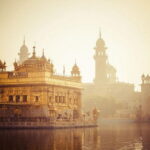
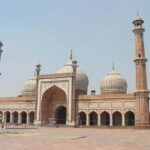
After the forts, you shift again—this time through multiple faiths. Swaminarayan Akshardham is described as a spiritual and cultural campus focused on devotion and learning, while Gurudwara Bangla Sahib is tied to Guru Har Krishan and the “Sarovar,” a holy river inside the complex. Then you move to Jama Masjid, one of India’s largest mosques.
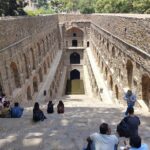
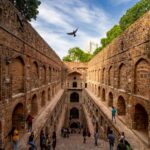
Two more stops round out the “Old Meets Quiet” feeling: Agrasen ki Baoli (a protected stepwell monument) and Lodhi Garden (mausoleums against greenery). You end Day 2 at Laxmi Narayan Temple (Birla Mandir) and finish at Hazrat Nizamuddin Aulia (Nizamuddin Dargah), a Sufi shrine drawing thousands of pilgrims each week.
Consideration: Delhi is a lot of institutions in a short time. If you’re easily overwhelmed by switching contexts, wear comfortable shoes and treat the day like a sequence of scenes, not one continuous event.
Mandawa’s Havelis: Heritage Walks Without the Big-City Noise
Day 3 goes north to Mandawa in Rajasthan’s Shekhawati region. This is where the trip changes texture. Instead of one landmark, you get an “outdoor museum” feeling as you walk around the decorated havelis—traditional mansions built and decorated during the Silk Route era.
The stop is long enough to matter—about 8 hours—so you’re not just taking a quick glance. You’ll have time for heritage walks and time to absorb how Mandawa’s architecture tells stories through painted façades, intricate detailing, and street-level context.
You also get a stay at a Mandawa Kothi property (included as part of the experience framework). That detail matters on an itinerary like this: when you’re moving daily, a comfortable base helps you actually enjoy the next day instead of just surviving it.
Practical tip: If you like photography, Mandawa is one of those places where back streets and close-up details often beat the big wide shots.
Jaipur’s Fort Ring and Stone Science: Amer, Jantar Mantar, and Beyond
Jaipur is built for people who like structure—fortifications, geometry, and viewpoints. Day 4 gives you the “classic” royal hits in a smart order.
You start with the City Palace of Jaipur, now home to the Maharaja Sawai Man Singh II Museum and still connected to the royal family. Then you head to Amber Fort (Amer Fort), known for artistic style elements and its ramparts and gates. The fort overlooks Maota Lake, which is described as the main source of water for Amer Palace—so you’re seeing the design tied to practical life, not just decoration.
Then Hawa Mahal—the Palace of Wind—shows you the pink/red sandstone elegance and the “breeze” idea behind the architecture. After that, Jantar Mantar is a highlight if you enjoy science dressed as stone. It’s a collection of nineteen astronomical instruments built by Sawai Jai Singh II and is UNESCO-listed, with the world’s largest stone sundial mentioned in the itinerary notes.
Day 4 also includes Jaigarh Fort, which overlooks Amer Fort and Maota Lake from the Cheel ka Teela promontory. That viewpoint payoff is real: you’re looking across the fort system and imagining how the defense ring worked.
Day 5 continues with temple-and-fort rhythm, mixing city sights with nearby spiritual stops. Albert Hall Museum gives you a museum break that still feels tied to regional culture. Birla Mandir (white marble) is another spiritual pause, dedicated to Lakshmi and Vishnu, with images and selections from the Gita and Upanishads described as part of the temple’s interior.
Galtaji Temple adds a pilgrimage feel about 10 km away, with temples built into a narrow crevice in hills around Jaipur. Govind Devji Temple is listed for morning worship. Then Nahargarh Fort returns you to views over Jaipur, and Royal Gaitor Tumbas ends the day in a valley setting with a majestic white marble exterior.
Consideration: Jaipur days can feel like “steps within steps”—fort walls, gates, and uphill areas. If your legs are sensitive, build in slow-down moments and plan your pacing around the walk quality rather than the site labels.
Agra’s Taj Mahal Day: Forts, the Bachcha Taj, and a Sunset View
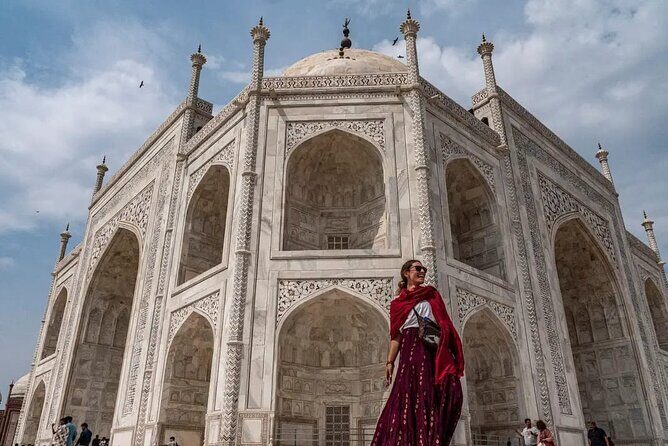
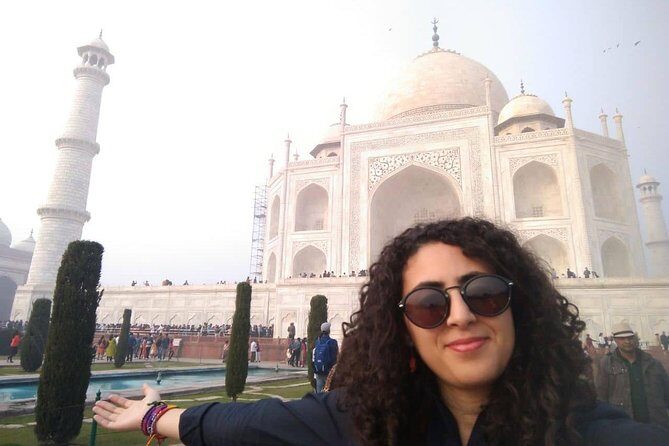
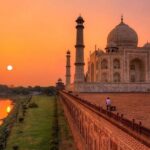
Agra concentrates the itinerary’s grandest statement. Day 6 begins with the Taj Mahal, commissioned in 1632 by Shah Jahan for Mumtaz Mahal and housing Shah Jahan’s tomb as well. You’ll get about two hours there, which is enough to take in both the main composition and the details around it—without turning the visit into a checklist.
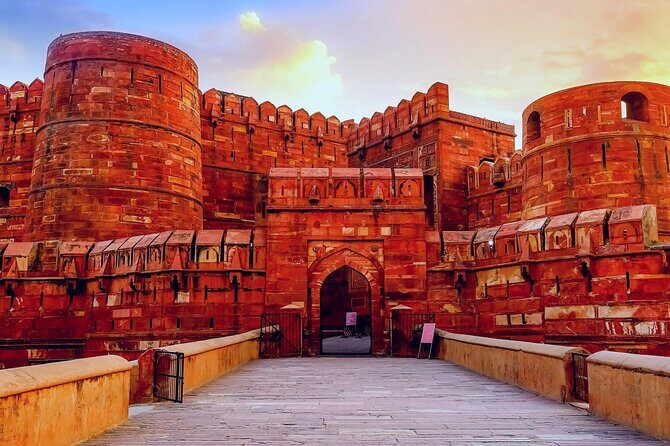
Next comes Agra Fort, described as the main residence of Mughal emperors until 1638 and later occupied by Marathas before British capture. Even if you’re not a deep history nerd, a fort is one of the easiest ways to understand how empires governed through walls, access, and vantage points.
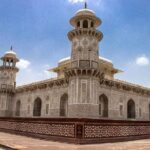
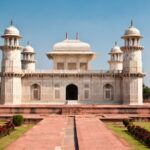
Then you get Tomb of Itimad-ud-Daulah, often described as a “jewel box” and nicknamed the Bachcha Taj because it’s seen as a draft of the Taj Mahal. This is one of those stops that can make you appreciate the Taj more, because you’re seeing the design logic in miniature.
Mehtab Bagh is next for sunset views of the Taj Mahal. It’s listed as free in the plan, which is a nice bonus. Dayal Bagh Temple follows for the Radhasoami faith’s headquarters and satsang holy service setting.
Finally, Tomb of Akbar the Great is included as an important Mughal architectural masterpiece, and Fatehpur Sikri is listed as a free stop with an hour allotted.
Practical note: With this much on one day, timing matters. If you’re someone who wants long, quiet reading time, you may prefer to treat Agra as visual absorption first and “slow learning” second.



Orchha’s Fort Complex and River-Bank Chhatris
Orchha is where the itinerary cools down in a good way—less pressure, more atmosphere. Day 7 includes Orchha Fort complex, with ancient monuments spanning fort, palaces, temples, and other structures. You’ll have around two hours, which is enough to see the breadth of the complex without feeling like you’re sprinting.
Then the tour focuses on the river-bank story through Chhatris Cenotaphs: fourteen chhatris built in memory of Orchha’s rulers of the Bundelkhand dynasty. After that, Ram Raja Temple is included; it’s a sacred Hindu pilgrimage site receiving regular devotees.
Chaturbhuj Temple follows, dedicated to Vishnu, with the name explained as a reference to the idea of Vishnu/Rama as “one who has four arms.” You also visit Sunder Mahal in Orchha—an architectural marvel linked to a love story between Prince Dhurbhajan and his Muslim lover, presented in the itinerary notes as the palace of love.
You finish with Lakshmi Temple, described simply as a beautiful Hindi temple.
Consideration: Orchha tends to be easier on the senses than big-city Delhi, but it’s still a sightseeing day. If you’re traveling with older kids or anyone who gets tired with heat, bring snacks and water and plan for slower breaks.
Khajuraho’s UNESCO Temples and Your Evening Choice
Day 8 is Khajuraho, home to the Kama Sutra Temples described as magnificent and UNESCO World Heritage. The itinerary specifically points you toward the Eastern, Western, and Southern groups of buildings, so you’re not stuck inside one cluster.
What makes Khajuraho memorable on this trip is the contrast: this route is already “spiritual India,” and Khajuraho adds explicit human storytelling through sculpture. The plan mentions erotic shrine programming as part of one evening option.
In the evening you can choose one of two activities:
- a cultural dance performance, or
- the light and sound show at the erotic shrine
You get about 6 hours on this day total, so even though the evening choice is optional, you’re not just sitting around waiting for it.
Tip if you’re sensitive to content: The erotic theme is explicitly noted in the light-and-sound option. If you’d rather avoid that, pick the dance performance.
Varanasi at Sunrise: Ghats, Boat Ride, and Sarnath
Days 9 and 10 are built around Varanasi’s Ganges energy, and the itinerary is very direct about how you’ll experience it.
Day 9 starts with Banaras Ghats—riverfront steps leading to the Ganges. The plan notes 88 ghats, and it distinguishes bathing/puja ghats from two cremation sites. You’ll have about 3 hours here.
Then comes the morning boat ride. The instructions ask you to start early before sunrise for a manually pulled boat ride along the ghats. You’ll see morning life: people bathing, praying, and doing rituals. This is one of those “you don’t forget how it felt” experiences because it’s not staged from a viewing platform. It’s moving, close, and human.
Next stop is Sarnath, the Buddhist city. You’ll have around two hours there. Then Ramnagar Fort is included (Mughal style sandstone structure built in 1750 by Kashi Naresh Raja Balwant Singh). You end with Bharat Mata Temple, described as dedicated to Bharat Mata, Mother of India.
Consideration: Sunrise work means you’ll need to adjust sleep schedules. If you’re prone to missing mornings, this day can test your commitment.
Varanasi Beyond the Ghats, Then One More Day in Delhi
Day 10 is a longer block labeled as Varanasi exploration, about 7 hours. Since the itinerary doesn’t list specific additional stops on that day, you’ll likely appreciate having time to wander at your own pace—whether that means revisiting the ghats, looking for temples, or simply soaking up street-level Varanasi.
Day 11 brings you back to Delhi and offers a choose-your-own pace finale. You can prepare for departure and stay relaxed at the hotel, or go out to explore markets like Chandni Chowk Market, Kinari Bazaar (wedding market), the textile wholesale market, the book market, and the spice market. If your interests tilt toward art and architecture, you could also visit Fateh Puri Mosque, Sis Ganj Guradwara, Jain Temple, and a Shiva Temple, based on your preferences and comfort.
Day 12 is straightforward: relax and get ready for your flight, and your driver takes you to the airport on your schedule.
Price and Value: What $1,404 Buys You on This 12-Day Circuit
At $1,404 per person for about 12 days, the value depends on what you consider “included.” This plan clearly provides:
- Pickup offered at the start
- a private experience where only your group participates
- mobile ticket use
- admission tickets for many of the listed sights (and a few explicitly marked free stops)
- structured time across major regions and cities
That matters because your cost isn’t just for entry fees; it’s for a functioning day-to-day plan that strings together Delhi, Rajasthan, Agra, Bundelkhand, Khajuraho, and Varanasi without you having to orchestrate the whole puzzle.
It also helps that the human side seems to land well in practice. Past clients specifically praised driver Bhanwar Singh for being punctual, cooperative, knowledgeable, and courteous, and praised guide Sandeep as professional. When someone takes timing seriously—especially in a city like Delhi—your schedule has a chance to feel smoother.
One caution on value: this is an active tour with many stops, so you’re paying for structure. If you prefer unplanned wandering, this might cost more than you need.
How to Make This Trip Easier on Your Body (and Your Mind)
This itinerary mixes monumental art with daily religious practice. That’s a great combination, but you’ll enjoy it more if you plan for the practical realities.
A few ideas that fit the way the tour is laid out:
- Wear comfortable shoes for forts and monument complexes.
- Expect days with long on-site blocks, like Mandawa and Varanasi, and pace breaks accordingly.
- Keep modesty and respectful behavior in mind at worship sites (you’ll be going through Hindu temples, Sikh gurdwaras, and mosques).
- For photography, decide in advance whether you want quick shots or more time on details. You’ll have more enjoyment if you don’t try to do everything at once.
- If you’re sensitive to explicit content, the Khajuraho light-and-sound option tied to the erotic shrine is flagged in the plan.
The best way to think about this trip is like a series of scenes. You don’t have to feel reverent at every stop. You just need to stay open, keep moving at a livable pace, and let each place shift your perspective.
Should You Book Mystic Paths of India?
Book it if you want a well-run circuit that connects Delhi, Rajasthan, Agra, and Varanasi into one clear story, with sunrise time on the Ganges and major UNESCO-level sights. You’ll like it if you enjoy structure, can handle long sight days, and want a mix of temples, forts, and city atmosphere rather than only one type of travel.
Skip it (or at least adjust expectations) if you hate packed schedules, want long unplanned stretches every day, or prefer mostly quiet, low-walking experiences. This tour gives you a lot of India in a short time—and the payoff is that you won’t be wondering what you missed.
If you do book, do one thing: be honest about your energy level. This trip will reward the people who show up ready to walk, watch, and adapt.
FAQ
Where does the tour start?
The start meeting point is Indira Gandhi Intl Airport, New Delhi, New Delhi 110037 India.
Is airport pickup included?
Yes. Pickup is offered, and on Day 1 you are picked up from Delhi Airport with a signed board under your name based on your arrival details.
How long is the trip?
It’s listed as 12 days (approx.).
Which cities are included?
The journey includes New Delhi, Mandawa, Jaipur, Agra, Orchha, Khajuraho, and Varanasi.
Are entrance tickets included?
Many attractions are marked as admission ticket included in the itinerary, while some stops are listed as free. You’ll see this mix throughout the days.
Do you visit Khajuraho in the evening?
Yes. The evening on Day 8 offers a choice of two activities: a cultural dance performance or the light and sound show at the erotic shrine.
Is there a sunrise activity on the Ganges?
Yes. On Day 9, you go early morning before sunrise to the Ganges ghats for a morning boat ride pulled manually by man.
Is the tour private?
Yes. It’s described as a private tour/activity, with only your group participating.
Is there time for shopping or extra sights in Delhi?
Yes. On Day 11 you have the option to explore markets like Chandni Chowk, Kinari Bazaar, the textile market, the book market, and the spice market. There are also listed options for additional religious/architectural sites.
Who provides the experience, and is it non-refundable?
The experience provider is Incredible Real India Tours. The experience is non-refundable and cannot be changed for any reason.