REVIEW · UTTAR PRADESH
Maharajas & Sadhus – 10 Days Tour of Rajasthan, Agra & Varanasi
Book on Viator →Operated by My Tour Adviser · Bookable on Viator
Old Delhi streets can feel loud. This tour turns that energy into an easy, guided plan from Old Delhi to the Ganges ghats. I especially liked the way it mixes the big sights with local culture moments like Rickshaw rides, artisan time in Jaipur, and an evening Aarti on the ghats. I also liked that the organization feels hands-on, not just ticket-punching, with 24/7 support if something changes. One possible drawback: it moves at a steady pace, with long drives between some cities, so you’ll want comfortable shoes and patience for traffic.
In This Review
- What you’re really buying
- Key highlights you’ll feel right away
- Day 1 in Delhi: Old Delhi, Chandni Chowk by pedal rickshaw, then Qutub Minar
- The Udaipur switch: flying in, then Lake Pichola views and City Palace terraces
- Jodhpur and Ranakpur: Mehrangarh’s museum focus and Jain architecture you’ll want to study
- Jaipur in three stops: Amber’s hilltop view, City Palace details, and Jantar Mantar for the curious
- Agra’s one-two punch: Taj Mahal, then Agra Fort with royal garden energy
- Lucknow to Varanasi: Nawabs’ architecture, then Sarnath and the ghats at night
- Price and logistics: why this feels like value, and what to watch
- Who this tour suits best (and who should think twice)
- Should you book Maharajas & Sadhus for Rajasthan, Agra, and Varanasi?
- FAQ
- What cities are included in this tour?
- Do you get picked up in Delhi if you arrive at the airport?
- Are entrance fees and monuments tickets included?
- Are flights included?
- What dress code should I follow?
- Is Wi‑Fi and bottled water included?
- Is there a vegetarian option?
- Is this a private tour or a shared group tour?
- What information do I need to provide when booking?
What you’re really buying
On paper, this is a Rajasthan-Agra-Varanasi loop. In practice, you’re paying for the “how” as much as the “what”: airport pickup or hotel pickup in Delhi, an air-conditioned private car with driver, professional city guides, most monument admissions, and daily water. The price also makes more sense when you notice how many places you hit across seven destinations—and that domestic flights within the route are part of the program, while international flights are not.
Key highlights you’ll feel right away
- Italian-speaking guide support from Manish Dutt Sharma (and real-time help when plans change)
- Day-and-evening rhythm: temples by day, markets after dark moments, plus a Ganga Aarti on the ghats
- Craft time where it matters: Jaipur for textiles and gemstones, with structured exploration
- Big monuments with smart sequencing: Taj Mahal and major forts backed by context from local guides
- Private-group setup: your group travels together, not mixed into a giant crowd
You can also read our reviews of more tours and experiences in Uttar Pradesh.

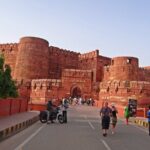

Day 1 in Delhi: Old Delhi, Chandni Chowk by pedal rickshaw, then Qutub Minar
Delhi can be a shock if you arrive cold and jet-lagged. The tour starts at 10:00 AM and offers pickup—either from the airport (with a name placard at Gate 5) or from your Delhi hotel if you’re arriving earlier. That matters because Old Delhi sightseeing goes from “cool” to “work” fast without a local hand.
In Old Delhi, you’ll visit Jama Masjid, the massive Friday mosque that can host up to 20,000 worshippers. It’s one of those places where you notice details you’d miss on a quick stop—crowd flow, prayer rhythms, and the surrounding street energy. After that comes a pedal rickshaw ride through Chandni Chowk’s narrow lanes. It’s a simple activity, but it’s also how you get your bearings fast.
Later you head to Raj Ghat, Gandhi’s memorial—black marble set into a calm, green space. It’s not a “big photo” stop like some monuments, but it balances the chaos of Old Delhi with a quiet, reflective pause. Then the drive along Rajpath gives you a quick view of key government buildings and India Gate, with context about its British-era name and its role in the Republic Day parade.
You end the day with Qutub Minar, a UNESCO World Heritage Site and a tapering tower within the Qutub complex. If you like architecture, go in ready to stare upward. The tour handles the timing and tickets, so you’re not stuck in ticket lines after a long travel day. You check in to your Delhi hotel overnight after sightseeing, as noted.
Practical note: there’s a dress code for worship sites and selected museums. Plan covered shoulders and knees to avoid headaches at entry.
The Udaipur switch: flying in, then Lake Pichola views and City Palace terraces
On day two, you fly from Delhi to Udaipur, the lake city locals (and the tourism world) often connect to the Venice-of-the-east idea. After arrival, you’ll have an optional boat ride on Lake Pichola to Jag Mandir, a palace built on an island. Even if you skip it, the timing is useful because Udaipur is best when you can pace yourself—sun, water, and walking distance.
Later you check in for the night. Udaipur hotels are usually comfortable, and the tour includes well-appointed accommodations.
Day three is where Udaipur’s spiritual side shows up. You’ll visit Shri Ekling Ji Temple and Nagda as an excursion. Eklingji is tied to the royal family temple tradition and is dedicated to Shiva, with construction believed to date back to the 8th century. Nagda is described as an archaeological site of medieval times. This pairing gives you a shift from palace glamour to devotional heritage.
Then it’s back for the City Palace, described as the largest palace in Rajasthan and now a museum. You’ll get terrace panoramas over Lake Pichola, plus the kind of palace-weirdness that makes travel fun: elephant stables (yes, twenty of them), the Pavoni courtyard with colored glass pieces, and the prince’s apartments with dazzling wealth cues. It’s not just walls and rooms—you feel how power lived here.
Why this pairing works: Udaipur can turn into a single-style sightseeing day (palaces only). This route adds temples and archaeological context so the city feels layered instead of repetitive.
Jodhpur and Ranakpur: Mehrangarh’s museum focus and Jain architecture you’ll want to study
From Udaipur, the tour drives to Ranakpur first for the Jain temple. Ranakpur is known for architecture, and this stop is included with admission. The temple’s layout—spanning halls and built to impress—fits the “craft and culture” theme even when you’re not shopping. You’ll appreciate how Jain craftsmanship expresses itself through stonework and interior design.
Then you continue to Jodhpur, often described as the gateway to the Thar Desert. You get an evening built around atmosphere: shopping in the local spice and textile markets, with time to wander rather than rush. If you love small purchases that reflect a place—fabric, spices, small artisan items—this is the moment.
Day five brings the big fort day. You’ll visit Mehrangarh Fort, one of India’s largest, built in the 15th century. The fort museum is highlighted for its collections connected to Indian royalty, including miniatures, furniture, clothes, and armor. If you’ve ever wondered how people actually lived and represented themselves visually, this museum helps.
After that, Jaswant Thada is a white marble mausoleum with fine carving and a polished look. The tour notes that local musicians and folk dancers make the place worth visiting. Even if you come just for photos, take a slow turn here. Mausoleums like this are designed for lingering.
Jaipur in three stops: Amber’s hilltop view, City Palace details, and Jantar Mantar for the curious
Jaipur is where the tour’s “art and craft” focus becomes easier to see. Day six starts at Amber for the Fort of Man Singh. Amber sits up on the Aravalli hills, and the fort’s position is part of the effect: you feel the vantage point before you even start walking. You’ll spend time inside and get the Rajput architecture context.
Next is the City Palace of Jaipur. The palace complex includes princely buildings and museums, and the tour emphasizes its architecture and mixed styles—Indian, Mughal, and even European touches. The red and pink stone look is a signature for Jaipur, but the real value is in seeing how those materials show up across courtyards and display areas.
Then comes Jantar Mantar, Jaipur’s UNESCO-listed astronomical observatory tied to Jai Singh. If you’re the type who likes science mixed with history, this stop delivers. The tour points to tools used to calculate eclipses, detect star positions, and determine ascendants, with a 27-meter sundial listed as a principal attraction. It’s the kind of place where you don’t need to be a physics person to feel the ambition.
After Jantar Mantar, you’ll have time to explore local handicrafts, with Jaipur noted for textiles and gemstones. This is where you can convert the day’s visual inspiration into something you can take home—again, without the chaos of guessing what’s legit.





Agra’s one-two punch: Taj Mahal, then Agra Fort with royal garden energy
Agra arrives on day seven and day eight, with an intermediate stop built for contrast.
Before Agra, you’ll visit Fatehpur Sikri, described as a ghost city built by Akbar in red sandstone and abandoned after only twelve years of use. Even in the tour framing, the key is the mood: you’re walking through a place built big, then suddenly left. That’s rare in travel history.
Next is Abhaneri for the famous stepwell baoli, built in sandstone in the 9th century. Stepwells are one of India’s most fascinating water-and-craft inventions—engineering dressed up like a monument. It’s a shorter stop, but it breaks up the long travel day and makes the Agra arrival feel less like a jump-cut.
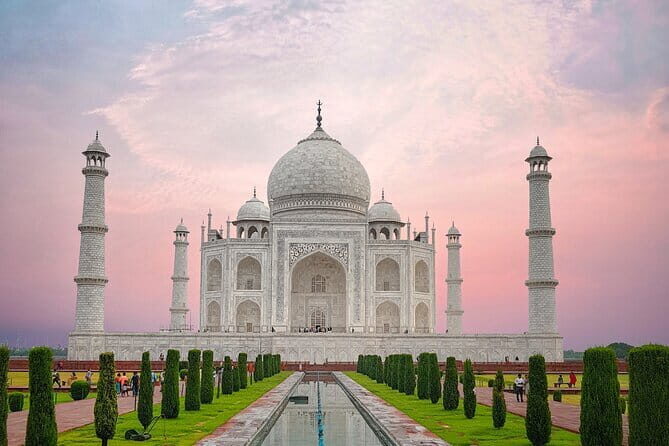
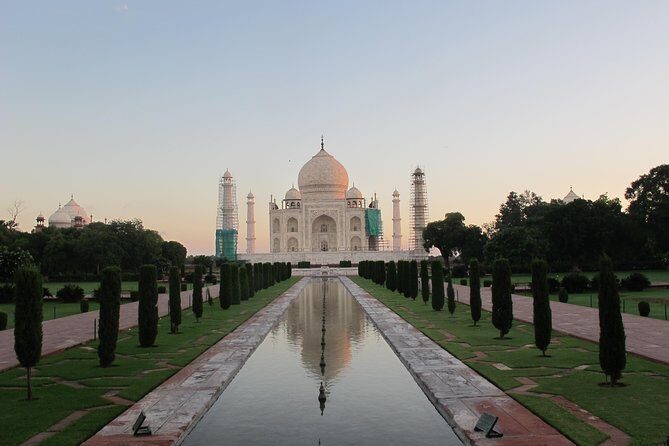
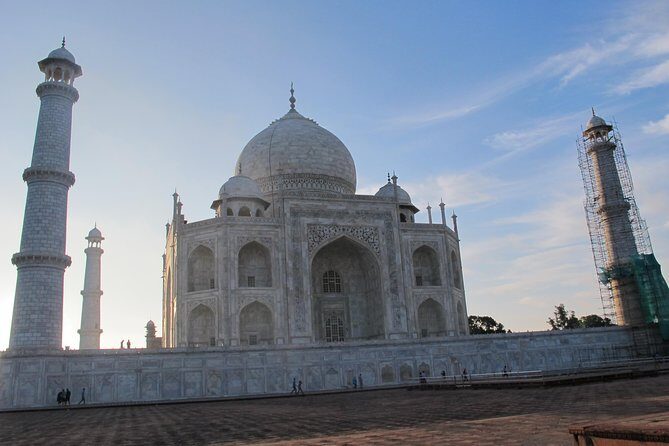
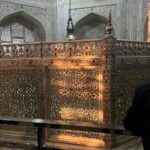
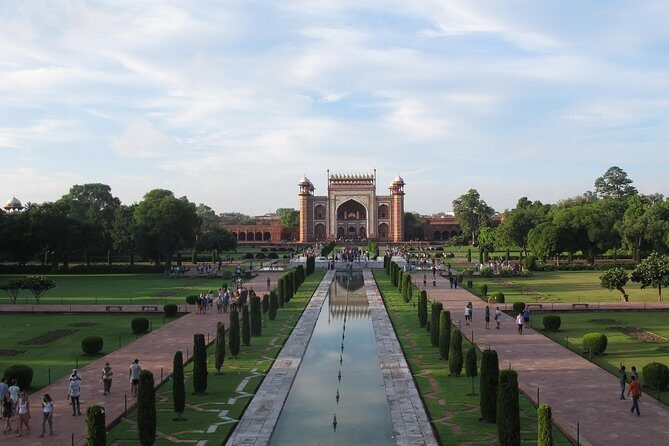
Then day eight is Taj Mahal. The tour describes it clearly: white marble mausoleum built between 1631 and 1648 by order of Shah Jahan in memory of his wife. You’ll spend time there with admission included, which matters because Taj tickets can be a hassle if you’re doing it independently.
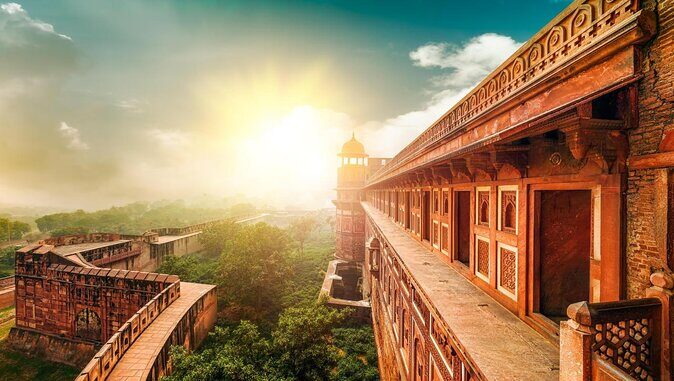
After Taj Mahal comes Agra Fort, about a kilometer away and tied to Mughal rule. The fort’s value is the mix of royal palaces and gardens, plus those moments when the fort viewpoint puts Taj into a different frame. It’s not just “another fort”—it’s a way to understand how rulers controlled views, power, and space around the river.
Family lunch time: the tour summary notes family lunches included at Agra and Jaipur. You don’t get a menu description in the info provided, but it’s a smart add-on if you want a reliable, sit-down break rather than improvising.
Lucknow to Varanasi: Nawabs’ architecture, then Sarnath and the ghats at night
From Agra, you drive to Lucknow, check in, and spend day nine working through two Awadhi landmarks.
First is Bara Imambara, also called Asfi Imambara. The tour explains it’s an important worship site for Muslims and connects it to Muharram celebrations. The highlight here is the Bhul Bhulaiya labyrinth of corridors on the upper floor. This is one of those buildings where moving inside feels like a story device—you understand why people remember these spaces.
Next is Rumi Darwaza, an imposing gateway built under the patronage of Nawab Asaf-Ud-Daula in 1784. It’s described as an example of Awadhi architecture and modeled after the Sublime Porte in Istanbul. That cross-connection is a useful reminder: Indian architecture doesn’t evolve in isolation.
Then you head onward to Varanasi for check-in and the overnight.
Sarnath comes in the afternoon portion of day nine. You visit Sarnath, one of the oldest cities on the planet and one of Hinduism’s seven holy cities, and the tour also focuses on the Buddhist site of Sakyamuni’s first teaching in Gazelle Park. The pairing matters because Varanasi is one of the places where religion isn’t separated into neat boxes. You’ll also head to the river later for an evening Aarti Puja on the ghats—described as a ceremony of light.
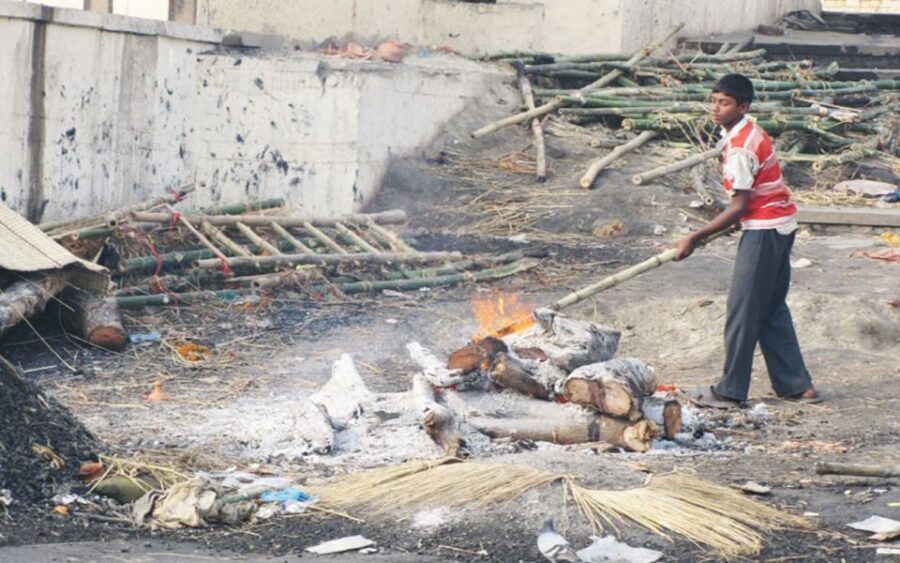
Day ten adds the pre-dawn Ganges moment: you wake early and take a boat ride on the river Ganges, seeing devotees who enter the water for spiritual cleansing. It’s an early start, but it’s exactly the kind of experience that changes how you remember the city.
Finally, you transfer to the airport via Delhi for your flight home, with the tour describing arrival and onward transfer to the international airport.
Price and logistics: why this feels like value, and what to watch
At $371 per person for about 10 days, you’re paying for far more than admissions. The tour includes hotels, a private air-conditioned car with driver, airport transfers, local guides, toll and parking, and bottled water (2 per person per day). It also includes free Wi‑Fi and 24/7 assistance, plus GST.
If you’re trying to travel with less mental load—less ticket hunting, fewer “what time is the bus” problems—this is the kind of package that actually earns its keep. The daily structure also matters: you’re not only hitting monuments; you’re getting market time, handicraft time, and a couple of night-feeling experiences.
What to watch: the route is long. You’ll be in transit between cities and you’ll walk inside major sites. That’s normal for this part of India, but it does mean you should travel light and plan for warm days and crowds at iconic spots.
Also note the dress code requirement. For temples and selected museums, the tour specifies no shorts or sleeveless tops and that knees and shoulders must be covered for both men and women. It’s not just etiquette—it’s practical. Being turned away wastes time fast.
Who this tour suits best (and who should think twice)
This tour fits you well if you want:
- A culture-and-craft emphasis, not just a highlight list
- Guides who handle the story, especially at places like City Palaces and Jantar Mantar
- Comfort and support, including pickup options and 24/7 help
You might want a different style of trip if you’re:
- Extremely sensitive to long travel days
- Hoping for lots of free time every day with no set program
- Not interested in early starts (there’s a pre-dawn boat ride on the last day)
If your group includes people who can’t do stairs or long walks, tell the operator ahead of time since the tour includes multiple forts and large complexes.
Should you book Maharajas & Sadhus for Rajasthan, Agra, and Varanasi?
I’d book it if you like travel that’s guided but not sterile—where you get the major icons (Taj Mahal, forts, Qutub Minar) plus the texture around them (markets, handicrafts, aarti nights, and spiritual sites like Raj Ghat and Sarnath). The best sign is the consistent theme of organization and support tied to the named guide Manish Dutt Sharma, plus the focus on keeping things running smoothly with a driver and real-time help.
Two practical checks before you decide:
- Confirm you’re comfortable with the dress code and the walking involved in forts, palaces, and temple areas.
- Make sure you’re okay with a steady pace—this is a 10-day sweep across multiple cities.
If you can keep those in mind, this package is a strong value way to experience Rajasthan and Varanasi without turning your trip into a logistics project. And if your plans change, cancellation is described as free with a full refund when you cancel at least 24 hours before the experience start time.
FAQ
What cities are included in this tour?
The tour covers Delhi, Udaipur, Jodhpur, Jaipur, Agra, Lucknow, and Varanasi.
Do you get picked up in Delhi if you arrive at the airport?
Yes. Pickup is offered either from the airport (with a representative waiting outside Gate 5 with a name placard) or from your Delhi hotel, depending on your arrival details.
Are entrance fees and monuments tickets included?
Yes. Entrance fees for attractions, monuments, and UNESCO World Heritage Sites are included as part of the package.
Are flights included?
International flights are not included. The program includes the flights mentioned within the route (for example, the flight from Delhi to Udaipur and the return flight via Delhi).
What dress code should I follow?
A dress code is required for places of worship and selected museums. The tour specifies no shorts or sleeveless tops and that knees and shoulders must be covered for both men and women.
Is Wi‑Fi and bottled water included?
Yes. You get free Wi‑Fi, and the package includes 2 complimentary bottled water bottles per person per day.
Is there a vegetarian option?
A vegetarian option is available. You should advise the provider at the time of booking and share any dietary requirements.
Is this a private tour or a shared group tour?
It’s described as a private tour/activity, meaning only your group participates.
What information do I need to provide when booking?
You’ll need the passport name, number, expiry, and country for all participants, and you must have a current valid passport on the day of travel.