REVIEW · UTTAR PRADESH
Golden Triangle Tour With Safari ( Ranthambore )8 Days Tour.
Book on Viator →Operated by INDIA TRIP DESIGNER India · Bookable on Viator
Delhi to tiger country, without the hassle. This 8-day Golden Triangle + Ranthambore Safari package strings together Delhi, Agra, Jaipur, and two park drives in a way that keeps logistics simple. I love the private vehicle pickup and the fact that your days are planned wall-to-wall with big sights and smart timing.
I also like that the safari side is treated as a main event, not an afterthought, with morning and evening jeep safaris at Ranthambore. The one drawback to plan around: major monuments have entry fees that aren’t included, so your real total cost will depend on what you pay on site.
In This Review
- Golden Triangle Safari at a Glance: what you should expect
- Key highlights I’d prioritize in your plans
- How the 8-day route actually flows (and why it works)
- Day 1 in Delhi: airport pickup and Swaminarayan Akshardham at night
- Day 2 Delhi: Humayun’s Tomb, Qutub Minar, Red Fort, Jama Masjid, and more
- Day 3 Agra: Fort views and sunset Taj moments at Mehtab Bagh
- Day 4 Sunrise Taj Mahal and the Fatehpur Sikri detour to Ranthambore
- Day 5 Ranthambore: dawn safari, Ranthambore Fort, and the evening jungle run
- Day 6 Jaipur: Amer Fort, Galtaji Monkey Temple, and Jal Mahal
- Day 7 Jaipur core: City Palace, Jantar Mantar, and Hawa Mahal’s purdah design
- Day 8 back to Delhi: the clean finish
- Price and value: what you’re paying for (and what to budget extra)
- Who this tour suits best (and where it may not)
- Should you book this Golden Triangle + Ranthambore Safari tour?
- FAQ
- What cities are included in this 8-day Golden Triangle tour?
- Are safari rides included at Ranthambore National Park?
- How many meals are included, and does it include lunch?
- Is pickup from the airport included?
- Are monument entrance fees included?
- Is there a cancellation window?
Golden Triangle Safari at a Glance: what you should expect
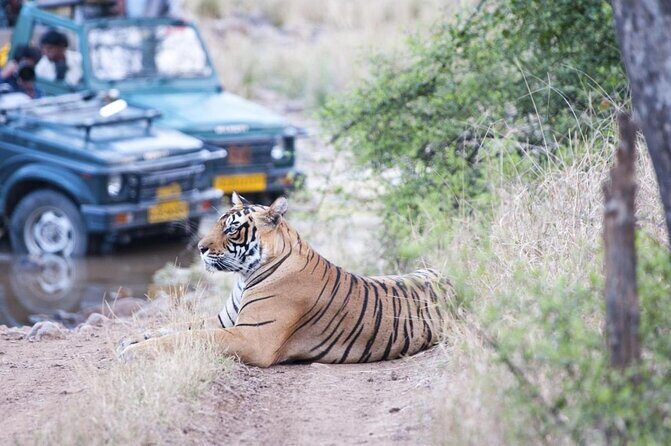
This is the classic route—Delhi, Agra, Jaipur—plus Rajasthan’s tiger-country at Ranthambore National Park. The pacing is intense, but the payoff is real: you get sunrise Taj Mahal, Mughal-era Delhi landmarks, royal Jaipur sights, and two chances in the jungle each day.
A good fit if you want the big names and you’d rather spend energy enjoying than sorting tickets and transport. It may feel like a lot if you’re hoping for a slow, restful vacation—between drives, early starts, and museum-like days, you’ll keep moving.
Key highlights I’d prioritize in your plans
- Pickup and private transport keep each city change straightforward
- Two Ranthambore safaris (dawn + late afternoon/evening) give you more tiger odds
- Sunrise Taj Mahal means fewer crowds and softer light
- UNESCO stops across Delhi, Agra, and forts give structure to the trip
- Jaipur’s Amer Fort plus Jantar Mantar and Hawa Mahal cover royal and scientific landmarks
- Meals are partially included (breakfasts and two dinners), so budget smart for lunches
You can also read our reviews of more tours and experiences in Uttar Pradesh.


How the 8-day route actually flows (and why it works)
The value of this tour is the sequencing. You start in Delhi right after arrival, then work your way through Agra before heading to Ranthambore, and you finish with Jaipur before flying out of Delhi. That means you’re not zig-zagging across India or paying extra time to “figure it out.”
It also helps that the plan uses time well. Delhi is packed into one guided day of major sights. Agra gets one day for forts and a sunset view, and then the next morning is reserved for Taj Mahal at sunrise. In Jaipur, you get multiple landmarks in a way that minimizes backtracking.
One note: the itinerary can feel busy because it’s designed to hit the highlights. If you hate running on schedules, you’ll need extra patience for the early safari and the sunrise Taj day.
Day 1 in Delhi: airport pickup and Swaminarayan Akshardham at night
Your first day starts with an airport pickup and transfer to your Delhi hotel, built around your flight schedule. If you land and don’t want to wrestle with transit, this is the kind of setup that saves stress immediately.
In the evening, you visit Swaminarayan Akshardham. It was inaugurated on November 6, 2005, and the visit is focused on the temple dedicated to Bhagwan Swaminarayan. The big win here is tone: after a travel day, this is a calmer, self-contained experience in one place, rather than rushing across multiple neighborhoods.
What to consider: evening temple visits can mean you’ll move at the pace of a crowd. Wear comfortable shoes and plan for a bit of walking, even if your schedule is light.
Day 2 Delhi: Humayun’s Tomb, Qutub Minar, Red Fort, Jama Masjid, and more
Day two is a guided highlights tour of central Delhi. You start with Humayun’s Tomb in Nizamuddin East, a UNESCO World Heritage Site. It’s a great opener because it sets the Mughal architectural mood early, before you move into the more famous cluster of monuments.
Next you visit Qutub Minar and the larger Qutub complex. This area isn’t just about one tall tower—it ties together multiple historic structures, including the Quwwat-ul-Islam Mosque and the Iron Pillar. One neat detail: the minaret is described as being designed on lines similar to Afghanistan’s Minaret of Jam.
Then comes the “power trilogy” of Mughal Delhi: Red Fort (Lal Qila), Jama Masjid, and the wider fort-and-city vibe near Shahjahanabad. Red Fort is associated with Shah Jahan, built starting in 1638 and completed in 1648. Jama Masjid is positioned higher than the street and built with a large workforce, using red sandstone with some white marble.
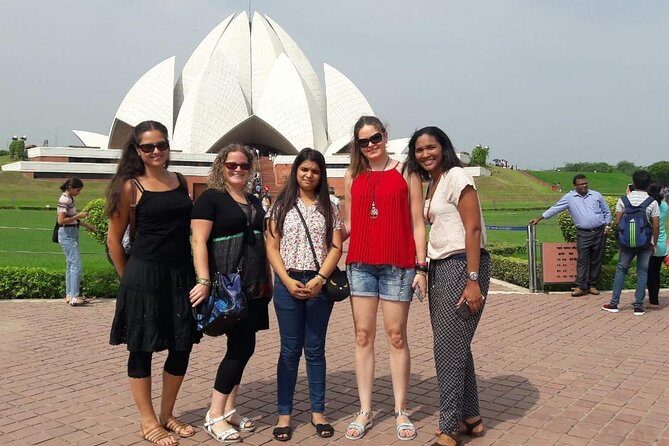
After that, you’ll also see Lotus Temple, India Gate, and Raj Ghat. India Gate memorializes soldiers who laid down their lives, and Raj Ghat marks where Mahatma Gandhi’s last rites were performed and his body was cremated.
Two practical cautions:
- Several of these major sites list admission tickets not included, so expect to pay at least some entry fees.
- This is a long day of stops, so keep water handy and don’t assume each place is a quick photo break.
Day 3 Agra: Fort views and sunset Taj moments at Mehtab Bagh
You head from Delhi to Agra after breakfast, with a drive of about 4 hours. Once you arrive, you check in and get right into Agra’s Mughal leftovers and viewpoints.
The first big stop is Agra Fort, also a UNESCO World Heritage Site. It’s often described as the “lesser sister” of the Taj Mahal, but that’s exactly why it’s worth your time. You’re close to Taj, yet the fort experience feels more self-contained, with fortress walls and history that’s tied to the Mughal era.
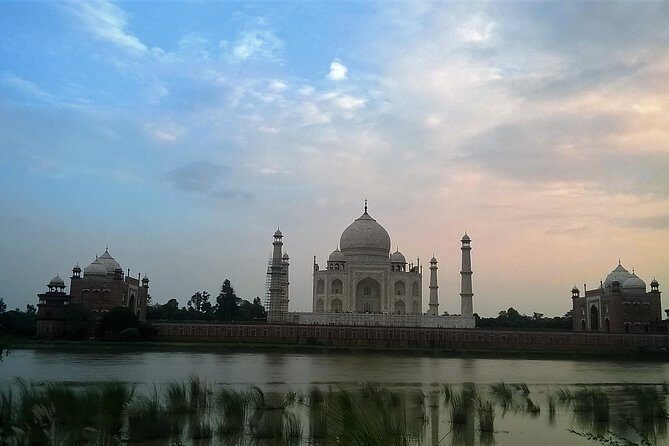
Later you go to Mehtab Bagh, described as the garden built by the first Mughal king Babar. The itinerary’s best timing here is practical: you visit in the evening for a view of the Taj Mahal from outside, during sunset. If you want a softer Taj moment (and not just the iconic frontal view), this is a smart way to balance your day.
Budget note: Mehtab Bagh and Agra Fort are marked with admission tickets not included, so don’t be surprised by extra on-site costs.



Day 4 Sunrise Taj Mahal and the Fatehpur Sikri detour to Ranthambore
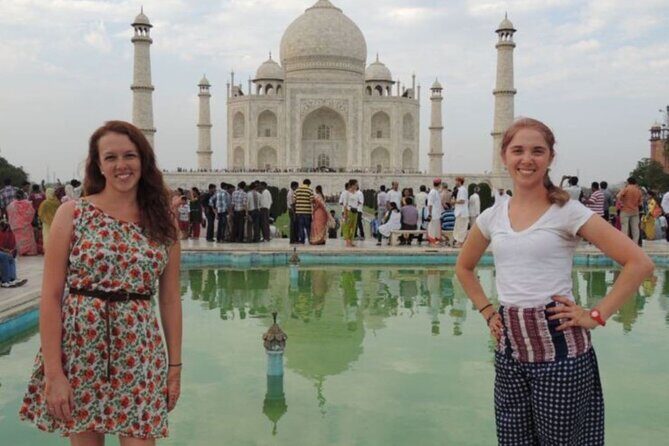
This is the day people remember. You start early to visit the Taj Mahal at sunrise, which is called out as the best time in the plan. The Taj Mahal is described as a major achievement in Indo-Islamic architecture, with the visual rhythm of solids and voids, arches and domes, plus marble relief work and inlay work with precious and semi-precious stones.
Sunrise isn’t just about aesthetics; it’s about getting your “most iconic image” day out of the way before the heat and crowds build. The route is built for that logic, and you’ll feel the difference.
After Taj, you head toward Ranthambore via Fatehpur Sikri, the dream capital of Akbar. You’ll stop in the afternoon for this UNESCO site stop. Then you continue on to the gateway area of Ranthambore (Sawai Madhopur), which is known as the base point for the national park.
One consideration: you’re stacking a high-demand Taj visit with travel time. It’s doable, but you’ll want to plan for tired feet after sunrise and don’t schedule anything else heavy later that evening.
Day 5 Ranthambore: dawn safari, Ranthambore Fort, and the evening jungle run
Ranthambore is the wildlife centerpiece, and the tour gives you two safari attempts, not one. Your morning starts with pickup around 6:00 am, then you head into the jungle for a drive of about 3 hours. Later, you do an evening safari sequence, starting again around 3:00 pm and returning to the hotel around 7:00 pm.
That timing matters for two reasons. First, you get to cover different light conditions in the park. Second, a second safari gives you a real swing at seeing what you came for, even though wildlife outcomes can’t be forced.
Between safaris, you visit Ranthambore Fort, described as a UNESCO World Heritage Site under Hill Forts of Rajasthan. It sits atop a hill about 700 feet high and was associated with the Chauhan dynasty, with construction starting in the mid-10th century. Even if you’re mainly here for tigers, the fort adds context to why this area mattered historically.
Safari practical note: the safari is marked as included, but some other monument admissions aren’t. With wildlife, dress for quick changes in temperature and be ready for early-morning departure routines.
Day 6 Jaipur: Amer Fort, Galtaji Monkey Temple, and Jal Mahal
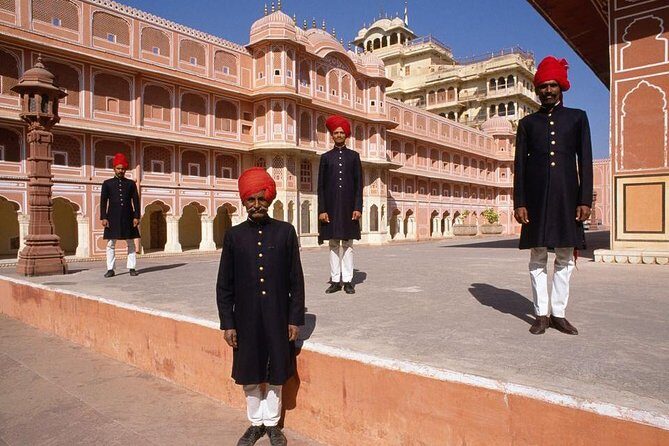
You move into Jaipur with a day that leans hard into “royal Rajasthan.” First up is Amer Fort (Amber Fort). It’s described as an architectural masterpiece with maze-like passages and serpentine staircases, part of a complex clad in pink and yellow sandstone. You’ll also get the origin timeline: built in 1592 during Maharaja Man Singh I’s reign, with Amer as the capital before Jaipur became the official capital in 1727.
Next is Monkey Temple (Galtaji Temple), a famous ancient pilgrimage site. The plan describes it as temples built in a ring around the hills around Jaipur, and it’s a good change of pace from fort-and-palace days.
Then there’s Jal Mahal, the Water Palace in the middle of Man Sagar Lake. Even if you don’t spend all day here, it’s a scenic break that helps you avoid turning Jaipur into only stone architecture.
Practical caution: some of these stops list admission tickets not included, and Jaipur days can run hot. Go light with your packing and keep water nearby.
Day 7 Jaipur core: City Palace, Jantar Mantar, and Hawa Mahal’s purdah design
Day seven is your “big three” Jaipur landmark cluster. The plan includes Amber Fort again (with admission tickets not included), which could be either about additional time or a second viewpoint chance depending on how your day is paced.
Then you go to City Palace of Jaipur, built by Maharaja Sawai Jai Singh II between 1729 and 1732. The palace complex covers one-seventh of the walled city and combines Mughal and Rajput architectural styles. The value here is that you’re not just seeing a single building—you’re walking through the scale of royal power.
After that comes Jantar Mantar, a UNESCO World Heritage Site. It’s described as a collection of 19 astronomical instruments, completed in 1734, and home to the world’s largest stone sundial. The location is convenient too: it’s near City Palace and Hawa Mahal, making this a tightly packed, efficient day.
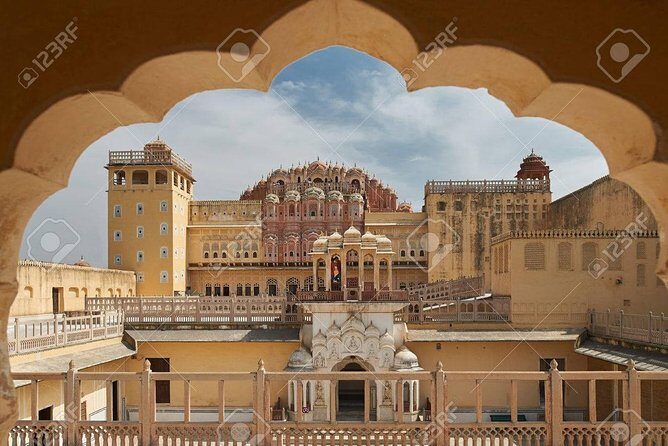
Finally, you see Hawa Mahal (Palace of Wind), built in 1799. It’s built from red and pink sandstone, and the plan notes it was designed for a period when the purdah system meant women were not supposed to be visible to the public eye. That social context adds meaning to what looks like just a beautiful façade.
Expect more entry fees on this day. The “tickets not included” pattern shows up repeatedly in Jaipur, so budget early instead of trying to mentally ration your money at each gate.
Day 8 back to Delhi: the clean finish
You leave Jaipur after breakfast with a drive of about 5 hours to Delhi. The itinerary has you arriving in Delhi in the late afternoon, and then you get a driver transfer to the airport based on your flight schedule.
This is a solid way to end: no midnight check-out stress, and you don’t burn your final hours doing long sightseeing walks. The value is in the simplicity.
Price and value: what you’re paying for (and what to budget extra)
The listed price is $1,726.67 per person for this roughly 8-day experience. That sounds like a lot until you break down what’s included: transport by private vehicle, morning and evening jeep safaris at Ranthambore, hotel accommodation, guided tours, and meals that include 6 breakfasts and 2 dinners.
That means you’re not paying separately for intercity transport, safari logistics, and most guided sightseeing time. For many people, that’s the biggest value of a packaged Golden Triangle tour: you trade planning time and uncertainty for a fixed schedule.
Now the part to watch: monument fees aren’t included, and the itinerary also says food like lunch and dinner isn’t included. Even if some individual sites are marked free in the day-by-day outline, the overall summary is clear that you should expect to pay entry fees at major attractions. Also, hotel tier can change the feel of the trip, since one of the strongest impressions connected to the service is that people who picked higher-end accommodation felt treated like royalty.
My practical advice: set aside a buffer for entrance fees at places like Taj Mahal, Agra Fort, and Jaipur’s major landmarks. Then you’ll stay calm instead of doing last-minute math.
Who this tour suits best (and where it may not)
I think this works especially well if:
- you want the Golden Triangle highlights without writing your own schedule
- you care about wildlife enough to do two safaris
- you prefer guided sightseeing in packed, efficient blocks
- you’re okay with longer drives between cities
It may not suit you as well if you want downtime. The structure is built to maximize highlights, so it can feel like a sprint. Also, sunrise Taj and early safari timing mean mornings start fast.
On the family side, the tour notes children under 8 are free with 2 adults. That can make the price look even better for families who can share rooms.
Should you book this Golden Triangle + Ranthambore Safari tour?
If your priority list includes sunrise Taj Mahal, major Delhi and Jaipur monuments, and two Ranthambore safari attempts, this is a strong match. The logistics are doing real work here: private transfers, hotels, guided sightseeing, and safari scheduling are handled for you, which is exactly what most people want when they’re short on planning time.
My final nudge: book it if you’re ready for an active pace and you’ll budget for monument entry fees and meals not included. Skip it if you want a slower trip with more flexible days—this one is built to keep moving and hit the highlights, day after day.
FAQ
What cities are included in this 8-day Golden Triangle tour?
The itinerary covers Delhi, Agra, Jaipur, and Ranthambore National Park (with the base area around Sawai Madhopur).
Are safari rides included at Ranthambore National Park?
Yes. The tour includes morning and evening jeep safaris at Ranthambore National Park.
How many meals are included, and does it include lunch?
Breakfast is included for 6 days, and dinner is included for 2 days. Lunch and other dinners are listed as not included.
Is pickup from the airport included?
Yes. The tour description states that a driver will pick you up from Delhi Airport and transfer you to your Delhi hotel, based on your flight schedule.
Are monument entrance fees included?
No. Monument fees are listed as not included, and several individual stops are marked as having admission tickets not included.
Is there a cancellation window?
Yes. There is free cancellation up to 24 hours in advance for a full refund. If you cancel less than 24 hours before the start time, the amount paid is not refunded.