REVIEW · NEW DELHI
Kinnaur And Spiti Tour Package
Book on Viator →Operated by Himalayan Frontiers Culture & Adventure Tours P(Ltd) · Bookable on Viator
Spiti feels far, even with a driver. On this 14-day private Kinnaur and Spiti route, you start in Delhi, ride the rails to Shimla, then switch to a private car pushing toward the Tibetan border with Tibetan Buddhist monasteries along the way. I like the personal attention that comes with a private setup, because you can actually ask questions instead of rushing with a crowd.
My second favorite part is what’s wrapped into the package beyond sightseeing: 3-star accommodation and all meals. That matters here, because once you’re in the high-country rhythm, you don’t want to spend energy hunting food or sorting lodging.
One possible drawback: this is a high-altitude tour, and only medically fit people should join. You’ll also be dealing with mountain-road timing, and one area near Kinnaur can be windy and cool, with roads that can feel rough compared to the plains.
In This Review
- Key things to know before you go
- Kinnaur and Spiti by private tour: why this route feels different
- Delhi to Shimla on an AC chair class train
- Private car days toward the Tibetan border and monastery stops
- Kinnaur temple country: windy borderlands and road realities
- Altitude, permits, and the safety kit (inner line permit and oxygen box)
- 3-star stays and included meals: where your money goes
- Transport mix explained: rail, Volvo bus, and mountain driving
- Price check: what $1,357.04 includes, and what costs extra
- Who should book this Kinnaur and Spiti package
- Practical tips for cold, windy, high-altitude days
- Should you book this Kinnaur and Spiti package?
- FAQ
- How long is the Kinnaur and Spiti tour?
- Where does the tour start and end?
- What transportation is included?
- Are meals included?
- Is there a permit included for this route?
- Do you get an English-speaking guide?
- Is there any medical or altitude support included?
- What does the cancellation policy allow?
Key things to know before you go
- Private tour, only your group: you get more flexibility for questions and pacing.
- Train + car + Volvo bus mix: fewer transfers than doing this solo.
- Inner line permit included: route access is handled for you.
- Medical box with oxygen cylinder: altitude safety support is built in.
- English-speaking local guide: you’ll have context for monasteries and local culture.
- All meals included (with breakfast, lunch, dinner): reduces daily logistics stress.
Kinnaur and Spiti by private tour: why this route feels different
Kinnaur and Spiti are the kind of places that make you lower your shoulders and just watch the mountains work. The point of a private tour is that you get that feeling without having to figure out every handoff—where to sleep, which vehicle to take next, and how to manage the paperwork needed for this border-adjacent region.
On this package, you’re guided by an English-speaking local guide and kept moving with private transportation. That helps you connect what you’re seeing with what locals care about: farming patterns in hard terrain, the way monasteries sit in the wider religious landscape, and why some roads matter more than others when weather and access change.
Also, because this is a private setup, you’re less likely to feel trapped by a rigid group schedule. If the day’s conditions slow down, you’re still dealing with a plan that has been built for this geography, not a generic itinerary that expects everything to run like a city tour.
You can also read our reviews of more tours and experiences in New Delhi.



Delhi to Shimla on an AC chair class train
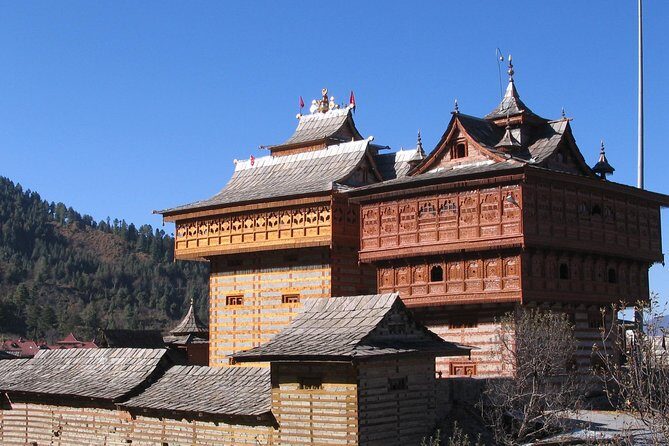
The tour begins in New Delhi, with pickup offered and the meeting point at Indira Gandhi International T3 Road. From there, you take an AC chair class train between Delhi and Shimla. For a trip like this, that train segment is more than just transport—it’s a gentler way to shift from the energy of Delhi to the mountains.
AC chair class is a practical choice: comfortable enough to stay functional, but not the cost of the most premium rail experience. It also gets you to Shimla without stacking even more road hours on your first big travel day.
If you’re the type who hates rushing, this rail start helps. You get a clear baseline: travel, settle, then begin the deeper mountain leg when you’re not already exhausted from a long drive.
Private car days toward the Tibetan border and monastery stops
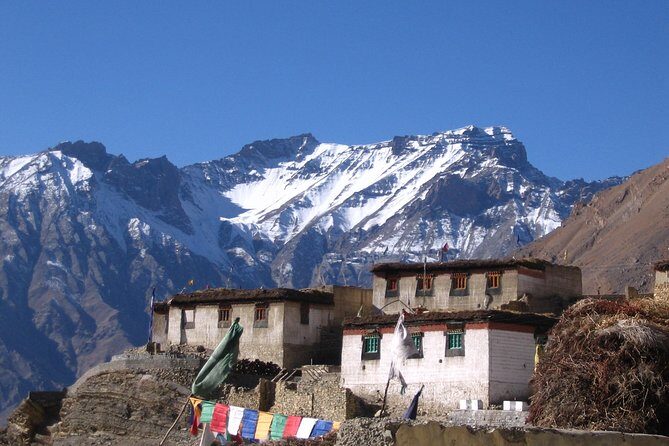
Once you leave Shimla, the trip goes deeper into the mountains near the Tibetan border using a private car. This is where the experience becomes truly “remote” in the best way—wide views, sharper air, and long stretches where the road feels like an achievement.
A key highlight is the Tibetan Buddhist monasteries along the way. You’re not just passing them; you’re traveling with an English-speaking guide who can help you understand what you’re seeing. Even when you don’t know the details of every tradition, a good guide makes the visit click: the reason monasteries are positioned where they are, and how visitors should behave in sacred spaces.
Private car time also gives you better control over what to do when you arrive early or when weather affects timing. In high-country travel, those small timing shifts can make the difference between a smooth day and a stressful one.
Kinnaur temple country: windy borderlands and road realities
One of the standout mentions from the trip experience is the area around Kinnaur Temple, described as close to the Indo-China/Tibet border. It’s also noted as windy and cool, which is exactly what you should expect from border-adjacent mountain zones. If you tend to get chilled easily, you’ll be glad to have proper layers and a way to handle wind.
There’s another practical detail that matters: parts of the route can feel like you’re coming off the main track. The Kinnaur road segment via Rampur Bushahar to Kinnaur is mentioned as coming off the track, which tells you that not every day will feel like a polished highway ride. That’s not a deal-breaker—it’s just reality.
What I like about booking a package like this is that the rougher-road days are already accounted for. You’re not left improvising transportation while managing altitude, weather, and limited options in remote valleys.
Altitude, permits, and the safety kit (inner line permit and oxygen box)
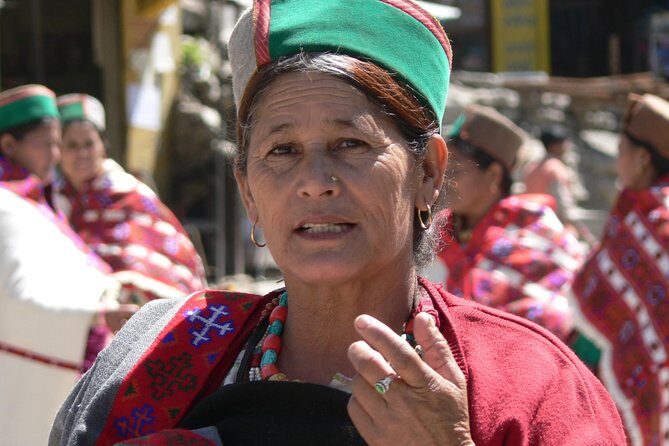
This tour comes with two important “responsible travel” elements: Inner line permit included and a medical box with oxygen cylinder.
The inner line permit is directly tied to access for this region. If you’re thinking about doing Kinnaur and Spiti independently, this alone can be a headache. In a group tour, it’s handled as part of the package so you can focus on the route instead of paperwork.
The medical box with an oxygen cylinder is equally important. The trip info clearly flags altitude risk and states that only medically fit people are allowed. That’s not just fine print. It means you should treat altitude seriously: if you’re unsure, check with your doctor before you go, and don’t treat the mountain like it’s just a higher city.
This kind of safety setup won’t remove every risk in the Himalaya, but it does tell you the operator is planning for altitude realities instead of pretending everything is smooth sailing.



3-star stays and included meals: where your money goes
One of the best value signals in this package is that 3-star accommodation and all meals are included. You get breakfast, lunch, and dinner for 13 days. When a trip is built around remote valleys, included meals aren’t a small perk—they’re a major stress reducer.
It also means you can plan your days around sightseeing and not around the question of where to eat next. On colder mountain days, food timing helps you keep your energy up, and it’s easier to manage your pacing when meals aren’t an afterthought.
About the lodging: “3-star” in this region is best thought of as clean, comfortable, and practical rather than luxury. The value comes from consistency and location choice that supports the tour schedule, not from expecting a five-star resort experience.
If you’re budget-minded but still want comfort, this balance is usually the sweet spot: a hotel you can count on, plus meals so you don’t waste the best daylight hours.
Transport mix explained: rail, Volvo bus, and mountain driving
You’ll move with a combination of rail and road:
- AC chair class train between Delhi and Shimla
- Private car as you go deeper into the mountains
- AC Volvo bus ticket between Manali and Delhi
That Manali-to-Delhi leg can be a big fatigue factor, so having AC Volvo comfort helps you end the trip without arriving totally fried. It’s also a clear sign the operator is smoothing out the long-haul parts with normal travel standards: AC, fixed routes, and a set end point back at the original Delhi meeting area.
The private car part is where you get the real advantage. It’s not just about convenience—it’s about control. When you’re in places where roads can be slow, and timing matters, having private transport means you’re not trying to coordinate with other vehicles or rigid shared-group logistics.
Add to this a mobile ticket and pickup offered, and it’s designed to reduce the “busywork” you’d otherwise do yourself.
Price check: what $1,357.04 includes, and what costs extra
At $1,357.04 per person (14 days approx.), the real question is what you’re paying for, not just the number.
Here’s what’s included:
- Private transportation
- Twin sharing room in a 3-star hotel
- AC train between Delhi–Shimla
- AC Volvo bus between Manali–Delhi
- Inner line permit
- English-speaking local guide
- Medical box with oxygen cylinder
- GST
- Meals: breakfast (13), lunch (13), dinner (13)
- Pickup offered
- Mobile ticket
What’s not included:
- Visa and airport tax, air fare
- Monument fee
- Insurance
- Beverages and personal expenses
- Medical expenses and evacuation
- Tipping
- Extra costs from road blocks or flight cancellation
So is it good value? For this region, yes, if you like the idea of paying for a working plan. You’re covering major cost drivers—vehicles, driver logistics, the guide, permitted access, and meals—so you’re not piecing things together day by day.
One thing to keep in mind: the tour includes meals and lodging, but not insurance or evacuation costs. If you’re booking a high-altitude, remote route, I’d treat travel insurance as non-negotiable and choose a plan that matches the kind of terrain you’re going into.
Who should book this Kinnaur and Spiti package
This one is best for:
- You want a remote-feeling Himalayan trip, but you don’t want to manage logistics alone
- You like monastery visits and cultural context, not just scenic photos
- You’re comfortable with long travel days and mountain-road timing
- You can handle altitude responsibly and meet the medically fit requirement
It may not suit you if:
- You’re looking for a luxury style of travel with minimal driving stress
- You have health concerns related to high altitude and haven’t gotten medical clearance
- You prefer to control every detail yourself and you’re set on booking everything independently
If you’re traveling as a couple or a small group, the private format is especially attractive, because twin sharing rooms plus private transport can turn into a practical value equation.
Practical tips for cold, windy, high-altitude days
The trip information points to high altitude and even calls out a windy and cool feel around the Kinnaur Temple area. That means you should pack for cold air and wind, not just for sunlight.
Plan on:
- Warm layers that you can remove as you move around
- A wind layer or outer shell (mountain wind can be stubborn)
- Comfortable shoes for uneven ground near viewpoints and religious sites
- A calm pace: altitude asks for it, even when you feel fine at first
Also, because meals are included, you don’t need to chase snacks every few hours. But you should still keep your own water and basic personal items ready, since beverages and personal expenses aren’t included.
Should you book this Kinnaur and Spiti package?
If you want Kinnaur and Spiti with less chaos and more cultural context, I think this is a solid choice. The value is in the bundle: rail + private car + return bus, plus meals, a guide, permits, and a basic altitude safety setup.
I’d book it if you’re the type who wants to be guided through the border-adjacent mountain experience without turning the trip into a logistics project. It’s also a good fit for people who appreciate safety planning and clear boundaries around who should join.
Don’t book it if you’re dealing with health uncertainty about altitude. The tour is explicit about medical fitness, and you should take that seriously.
If you want, tell me your travel month, your group size, and whether you’re more into monasteries, temples, or simply big mountain views. I can help you decide if the private rhythm here matches your style.
FAQ
How long is the Kinnaur and Spiti tour?
The duration is approximately 14 days.
Where does the tour start and end?
It starts at Indira Gandhi International T3 Road in New Delhi, and it ends back at the same meeting point.
What transportation is included?
You’ll travel by train between Delhi and Shimla (AC chair class), then by AC Volvo bus between Manali and Delhi. A private car is used for the mountain sections.
Are meals included?
Yes. Breakfast, lunch, and dinner are included for 13 days.
Is there a permit included for this route?
Yes. An Inner line permit is included.
Do you get an English-speaking guide?
Yes. The package includes an English-speaking local guide.
Is there any medical or altitude support included?
Yes. There is a medical box with an oxygen cylinder included.
What does the cancellation policy allow?
You can cancel up to 3 days in advance for a full refund. If you cancel less than 3 days before the start time, the amount paid is not refunded.