Rhinos, temples, and a boat at dusk. This private Kaziranga National Park & Guwahati package is built around real wildlife timing plus a smart half-day in Assam’s spiritual heart. I especially like that your Kaziranga time is structured for multiple jeep safari rides across the park’s ranges, and that the Guwahati day isn’t just driving past sites—it includes Kamakhya and Navagraha temples plus a sunset moment on the Brahmaputra. One thing to keep in mind: jeep safari seats and forest entry are controlled by the Assam forest department, so your exact ride slots depend on what’s available.
The tradeoff with wildlife tours is that you’re buying access, not guarantees. Expect a good chance at one-horned rhinos, elephants, swamp deer, and birdlife, but sightings still vary by day, season, and range. The schedule is also intense enough that you’ll want a calm, patient approach to early starts and long drives.
In This Review
- Key things that make this plan work
- Why Kaziranga + Guwahati is a smart 4-day mix
- Price and logistics: what $652 really buys
- Day 1: arrival, transfer, and an easy first night in Kaziranga
- Day 2: Kaziranga safaris across ranges, then unwind with dinner
- What you should expect from the habitat
- Day 3: another early start plus a flexible range safari
- Day 4: Kamakhya Temple, Navagraha, and Umananda Island
- Kamakhya Temple: Shakti shrine energy
- Navagraha Temple: the nine planets stop
- Umananda Island and the smallest river-island vibe
- The wildlife part: rhinos, elephants, birds, and realistic expectations
- Photography and what to pack (DSLR charges can surprise you)
- Hotels, food, and downtime between safaris
- Who should book this Kaziranga + Guwahati private package
- Booking with weather in mind
- Should you book this tour?
- FAQ
- FAQ
- How long is the Kaziranga National Park and Guwahati tour?
- What does the package include for Kaziranga?
- Are airport transfers included?
- Do I get an English-speaking guide?
- What sightseeing is included in Guwahati?
- Is food included during the trip?
Key things that make this plan work
- Three jeep safaris as the core experience: You’re not doing one quick drive; you’re using Kaziranga’s different areas and rhythms to improve your odds.
- Central, Eastern, and Western Range coverage: The day-by-day plan is designed to spread your wildlife search across major sections of the park.
- Forest naturalist on safari days: You get local insight from a naturalist connected to park operations (and that matters for reading the habitat).
- Guwahati with Kamakhya and Navagraha: Temple stops are paired with time in the city’s river atmosphere, not just a checklist.
- Brahmaputra sunset cruise: It’s a genuine change of pace after the jeep hours—cooler, calmer, and scenic.
- Private AC transfers and an English-speaking guide: You’re not piecing together transport or timing on your own.
Why Kaziranga + Guwahati is a smart 4-day mix
Kaziranga National Park is one of those places where the setting does half the work for you: tall elephant grass, marshy ground, broad-leaf forest, and several rivers (including the Brahmaputra) that shape the wildlife routes. It’s a World Heritage Site, and it’s famous for one-horned rhinos—so famous, in fact, that the park holds about two-thirds of the world’s Great One-horned Rhinoceroses. That alone makes it a strong destination.
Then Guwahati gives you a contrasting side of Assam. You’re moving from animal tracks and grasslands to old stone temples and river-island scenery. You also get a sunset cruise, which is the kind of “non-optional life detail” that makes a trip feel complete.
This package fits well if you want a single, organized base in Kaziranga rather than bouncing hotels and booking jeeps separately.
You can also read our reviews of more tours and experiences in Guwahati.

Price and logistics: what $652 really buys
The price is $652 per person for an approximately 4-day private package from Guwahati (with pickup/airport assistance) that includes:
- Airport transfers by private AC car/van (pickup and drop-off)
- English-speaking guide on sightseeing days (local guide in each city)
- Three jeep safaris in Kaziranga with a forest department naturalist
- Monument entrances and activity charges listed in the itinerary
- Bottled drinking water in the car
- 3 breakfasts, 2 lunches, and 2 dinners (so you’re not guessing meal plans between safaris)
- Government taxes
- Mobile ticket (handy in practice)
What’s not included is clear: flights, any camera charges at monuments if applicable, meals outside what’s listed, and personal expenses like laundry or tips.
Value-wise, the biggest “payoff” is that you’re not coordinating three different moving parts: transport, safari seating, and timing for temples/sightseeing. Still, remember this: safari seats and forest entry are regulated by the forest department, so the tour can’t always control the exact jeep availability. That doesn’t mean it fails—it means you should book with the understanding that nature and government systems set the timetable.
Day 1: arrival, transfer, and an easy first night in Kaziranga
On arrival at Guwahati or Jorhat, you get airport assistance and a transfer to your hotel in Kaziranga National Park. Then you check in, take a breather, and keep the evening light: rest time is built in, followed by dinner and an overnight at the resort.
Why this matters: after flights and travel days, Kaziranga rewards you most if you’re not rushing. The first day is about getting grounded—hydrating, sleeping, and letting your body adjust—so the early safari mornings feel manageable.
Day 2: Kaziranga safaris across ranges, then unwind with dinner
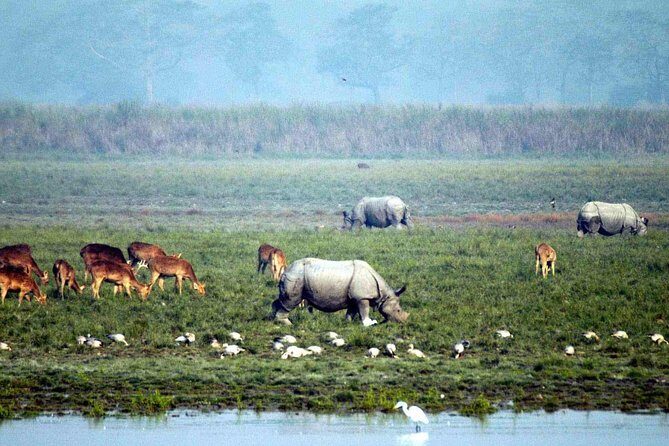
Day 2 is the wildlife heavy-hitter. The plan schedules an early jeep safari in the central range, then adds another safari in the eastern range, and later moves on to the western range. That’s a lot of time in the field, but it’s also how you make use of what Kaziranga offers.
One practical note: jeep safari and forest entry are regulated and controlled by the forest department of Assam. The package can arrange safari access, but safari seat availability is still subject to the official system. Also, once safaris are booked, they can’t be amended or canceled—so choose your preferences early and pack calmly for quick changes.
After the final safari and lunch back at the resort, you’re back for dinner and another overnight.
What you should expect from the habitat
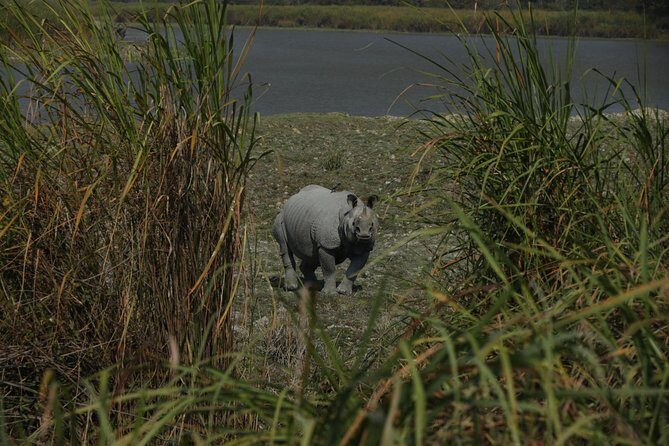
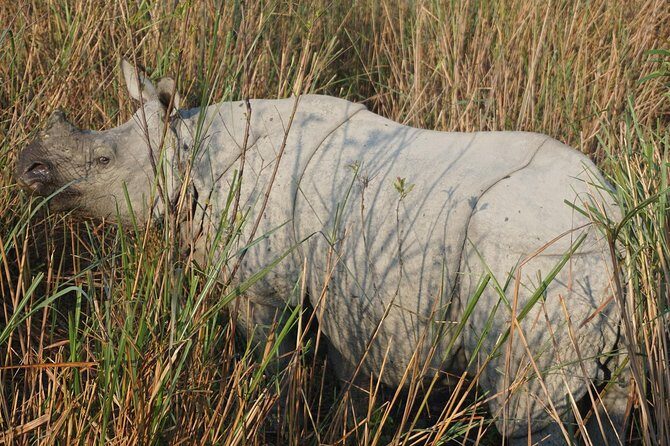
Kaziranga isn’t one uniform “jungle.” It’s marshland, elephant grass, dense forest pockets, and waterways crisscrossed by rivers. That mix matters because different animals use different microhabitats. You might find rhinos where the ground stays accessible, swamp deer near water edges, and birds wherever the habitat supports them.
If you’re the kind of person who loves birds, Kaziranga is recognized as an Important Bird Area. That’s the kind of detail that can change your trip from just rhino-chasing to a full wildlife day.



Day 3: another early start plus a flexible range safari
Day 3 continues the rhythm with another early morning jungle safari for wildlife viewing. Then you return for breakfast, and later you go out again by jeep for an additional safari that’s either in the central or western range.
This day is valuable because it reduces the odds of feeling like you only got one shot. If your Day 2 timing is light on certain animals, Day 3 gives you another chance under a different part of the day.
After that, the plan shifts gears: you drive to Guwahati, check in at a resort, and end with a sunset cruise over the Brahmaputra. This is the “reset button” that turns the trip from all-animals-all-day into a more balanced travel day.
Day 4: Kamakhya Temple, Navagraha, and Umananda Island
Your final morning in Guwahati starts with two major temple visits.
Kamakhya Temple: Shakti shrine energy
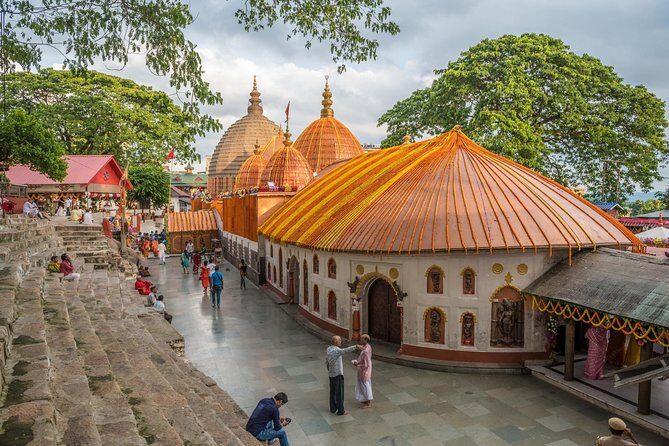
You’ll visit Kamakhya Temple, one of India’s most revered Shakti shrines. It’s connected to the legend of Shiva and Daksha Yagna and is recognized as one of the Shakti Peethams. Even if you don’t follow the theology closely, this is one of those sites where you feel the devotion in the air—people come for spiritual reasons, ceremonies, and continuity.
Practical tip: temples can mean stairs, crowded pathways, and changes in walking pace. Dress respectfully and wear shoes you’re comfortable moving in.
Navagraha Temple: the nine planets stop
Next is Navagraha Temple, dedicated to the nine planets and described as a center for astrological and astronomical research. It’s a different spiritual angle than Kamakhya, so the contrast helps make the half-day feel like more than one repeated theme.
Umananda Island and the smallest river-island vibe
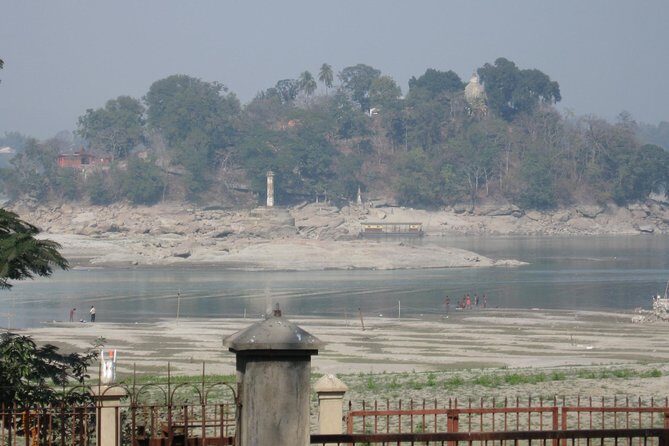
After the temple time, the plan includes Umananda Island, described as the smallest river island in the world. Here, man and wilderness “co-habit” in peace and serenity. You also visit Umananda Temple, a Shiva temple built in 1594 by the Ahom King of Assam.
What I like about ending here: it’s not “just sightseeing.” You get a quiet river feel before you head to the airport for your onward flight.
The wildlife part: rhinos, elephants, birds, and realistic expectations
This is one of those trips where you should go in with a clear mental target and an open mind.
Kaziranga is strongly associated with:
- One-horned rhinos (the park holds about two-thirds of the world’s Great One-horned Rhinoceroses)
- Elephants (including large breeding populations)
- Wild water buffalo
- Swamp deer
- Tiger conservation context (it’s noted for high density among protected areas)
Also, it’s an Important Bird Area for conservation of avifaunal species, which means you’ll likely spot birds throughout your safaris—especially if you slow down and watch edges of grassland and water.
Here’s the expectation balance that keeps your day enjoyable: you’re not just aiming for a dramatic photo. You’re learning to read signs—tracks, water movement, and the way grass hides or reveals animals until the moment they step forward.
And yes, tiger sightings can be inconsistent. Even in a tiger-supportive habitat, seeing one on a specific safari drive is never guaranteed.
Photography and what to pack (DSLR charges can surprise you)
Camera rules can vary by location, and Kaziranga can involve extra charges for equipment. One commonly reported item is a fee for DSLR use (for example, 100Rs per DSLR has been noted). To avoid awkward confusion, I’d treat camera fees as a “might apply” expense in Assam, not something you should assume is free.
Pack for comfort first:
- Light layers you can handle in early morning air
- Water (you’ll have bottled drinking water in the car)
- A hat and sunscreen for long safari hours
If your lenses are heavy, plan for the fact that safari movement and changing vehicle positions can be tiring. Keep your camera ready, but don’t let gear steal your ability to watch.
Hotels, food, and downtime between safaris
The package stays at selected price-category hotels for 3 nights, using accommodation in Kaziranga for the safari-focused portion and then moving to Guwahati for the city/cruise segment.
Meals are partially included:
- Breakfast: 3
- Lunch: 2
- Dinner: 2
That matters because safaris can make restaurant hunting annoying. The included meals help keep your schedule stable, especially on the days when you’re back and forth between resort and park gates.
Based on what you’ll be spending your day doing, downtime is more than comfort. It’s how you recover from early starts and long hours on rougher roads. Build in a bit of quiet time after safaris—your body will thank you.
Who should book this Kaziranga + Guwahati private package
This tour suits you if:
- You want a private plan where logistics are handled (airport transfers, guides, and safari arrangements)
- You care most about Kaziranga wildlife and want multiple chances instead of one short drive
- You want spiritual and river-city experiences in Guwahati without sacrificing time
This might be less ideal if:
- You hate early mornings and don’t do well with long drives
- You’re expecting guaranteed tiger sightings or guaranteed “big five” style moments (wildlife works that way only sometimes)
The activity level is listed as requiring moderate physical fitness. That mainly matters for temple walking and long days of getting in and out of vehicles.
Booking with weather in mind
The experience requires good weather, and if it’s canceled due to poor weather you’ll be offered a different date or a full refund. With wildlife safaris, “weather” can change road conditions and visibility, so keep your schedule flexible if you can.
Also, because safari seats and forest entry are regulated, I’d book with the assumption that the park is running on its official timetable—not just your itinerary.
Should you book this tour?
Yes, if you want a well-organized Assam trip that treats Kaziranga seriously—multiple safari outings, a forest naturalist connection, and enough structure to keep you from scrambling. The Guwahati add-on (Kamakhya, Navagraha, and Umananda Island) gives you a meaningful cultural finish, and the Brahmaputra sunset cruise is a smart way to balance the intensity of jeep days.
I’d say don’t book this if you’re chasing one specific animal with total certainty or if your travel style is allergic to early starts. Wildlife is wildlife.
If you want a trip where the planning is tight and the focus is on real habitat time, this is a strong choice.
FAQ
FAQ
How long is the Kaziranga National Park and Guwahati tour?
It runs for about 4 days.
What does the package include for Kaziranga?
You’ll have three jeep safaris in Kaziranga National Parks with a forest department naturalist, plus entrance and activity charges mentioned in the itinerary.
Are airport transfers included?
Yes. The tour includes arrival assistance and round-trip airport transfers by private AC car/van.
Do I get an English-speaking guide?
You get an English-speaking tour guide on sightseeing days, and local guides in each city as part of the program.
What sightseeing is included in Guwahati?
In Guwahati you visit Kamakhya Temple and Navagraha Temple, plus Umananda Island and Umananda Temple, and you also enjoy a sunset cruise over the Brahmaputra.
Is food included during the trip?
Breakfast is included for 3 days, lunch for 2 days, and dinner for 2 days, based on the itinerary. Other meals aren’t included.