REVIEW · JAIPUR
Jaipur Sightseeing Tuk-Tuk Tour
Book on Viator →Operated by Unique Jaipur Tour · Bookable on Viator
Jaipur by tuk-tuk makes the city feel close. This 8-hour loop is built for seeing major sights efficiently, while still giving you time to stop, look, and learn with an English-speaking driver. You’re riding in an auto rickshaw-style vehicle with hotel pickup/drop and bottled water, so the day starts smoothly and stays easy.
I particularly like two things: the tight, practical sightseeing circuit (city landmarks like City Palace, Hawa Mahal, and Jantar Mantar all in one day) and the way the driver can shape the pacing around your priorities. You’ll also get complimentary masala tea or coffee, which is a small comfort that matters in Jaipur’s heat.
One consideration: the tour price does not cover monument entrance fees. Many major stops charge extra (and camera fees can add up), and some entry is marked as not included—so you’ll want a realistic budget and cash ready.
In This Review
- Key highlights you’ll feel all day
- Price and logistics: what $5 really covers
- How an 8-hour tuk-tuk day flows in Jaipur
- From Sita Ram Mandir to Tripolia Gate: start in the old quarter
- Jantar Mantar: the stone sundial that still matters
- City Palace and Hawa Mahal: two views of royal Jaipur
- Royal Gaitor Tombs and Jal Mahal: quieter stops with payoff
- Panna Meena ka Kund and Amer: stepwell to sandstone grandeur
- Shopping time for gems, silver, bangles, blue pottery
- Drinks, breaks, and comfort in a hot city
- The tuk-tuk driving lesson option (and why it’s fun)
- Who should book this Jaipur tuk-tuk tour
- Should you book this tuk-tuk tour?
- FAQ
- What’s included in the price of the Jaipur sightseeing tuk-tuk tour?
- How long is the tour?
- Is it a private tour or a group tour?
- Are monument entrance fees included?
- Is lunch included?
- Is a guide included?
- Is there time for shopping in Jaipur?
- Can the driver teach me to drive a tuk-tuk?
- What if the weather is poor?
- What’s the cancellation policy?
Key highlights you’ll feel all day
- Full-day route built around major Jaipur icons, from Tripolia Gate and Hawa Mahal to Jantar Mantar and Amer
- Auto rickshaw freedom: you can move through busy streets and still get plenty of photo breaks
- English-speaking driver with flexibility, so the schedule can bend to your interests
- Shopping time included, with stops focused on gems, silver jewelry, bangles, blue pottery, and textiles
- Optional tuk-tuk driving lesson, if you want to try your hand at the local ride style
- Water + hot drink included, so you’re not stuck paying for every little reset
Price and logistics: what $5 really covers

The headline price looks tempting, but think of it like this: you’re paying for the private tuk-tuk vehicle, an English-speaking driver, and the pickup/drop, plus bottled water and a hot drink. The biggest extra cost is monument entry and camera fees, which are listed as not included.
The tour notes say monuments may charge up to INR 2500 per head for entrance/camera fees. That number can change depending on what you choose to enter, but the point is clear: the day can get expensive if you treat every stop like it includes itself. Plan for that, and the pricing feels fair.
Also remember: tips and meals are not included. If you want a good, hygienic lunch, you’ll likely need to budget separately (the tour suggests around INR 1000–1500 per head for a good restaurant).
You can also read our reviews of more tours and experiences in Jaipur.


How an 8-hour tuk-tuk day flows in Jaipur
This is a full-day tour, and the schedule is set up to balance sight time with travel time between neighborhoods. You’ll start with pickup and then work through the day in a loop, gradually moving from the older walled-city area toward the Amer side of Jaipur.
Most stops are short to medium length—think quick immersion rather than slow wandering. That’s exactly what works best in an 8-hour format: you get to see the big names without losing half the day just getting oriented.
One smart detail: admission for key sites is listed as not included, while other stops are free. That means you can stretch your day by deciding where you’ll pay entry versus where you’ll enjoy the exterior and photo angles.
From Sita Ram Mandir to Tripolia Gate: start in the old quarter
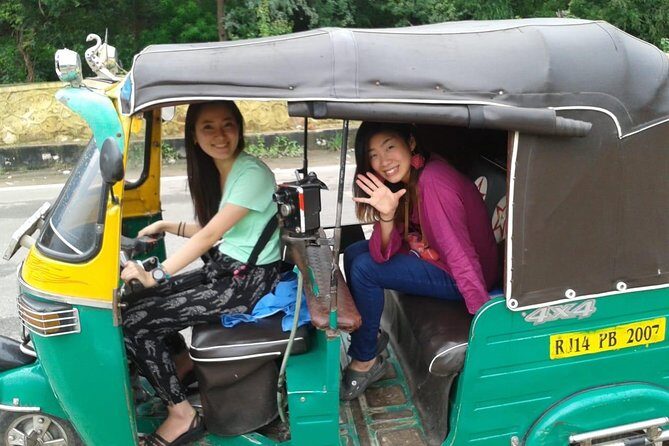
Your morning begins at Mandir Shree Sitaram Ji, a temple dedicated to Lord Rama and Sita. The tour description notes that parts of its history are elusive, but what tends to matter on-site is the atmosphere—temple carvings, local devotion, and that unmistakable sense that you’ve landed somewhere that still functions.
From there, you head to Tripolia Gate, described as the main entrance to the City Palace and reserved for the royal family. What I like about this kind of stop early in the day is that it sets the tone. You’re not jumping straight to tickets; you’re getting context for Jaipur’s Rajput and Mughal architectural mix before you go inside major palaces and observatories.
Both of these are marked with free admission in the plan, so they’re good for keeping costs under control while still getting real Jaipur texture.
Jantar Mantar: the stone sundial that still matters
Next up is Jantar Mantar – Jaipur, a UNESCO site and home to the world’s largest stone sundial (per the tour description). This isn’t the usual “pretty building” stop. It’s science-as-stone—an observation complex tied to how people measured time and the sky long before modern instruments.
The tricky part for some people is mindset. If you expect a museum crawl, you might feel a little rushed. But if you’re the type who likes to watch how the structures work, Jantar Mantar is one of the most memorable stops on this whole route.
Plan for about 45 minutes here, and remember admission is not included. If camera fees matter to you, factor that into your cash plan.
City Palace and Hawa Mahal: two views of royal Jaipur
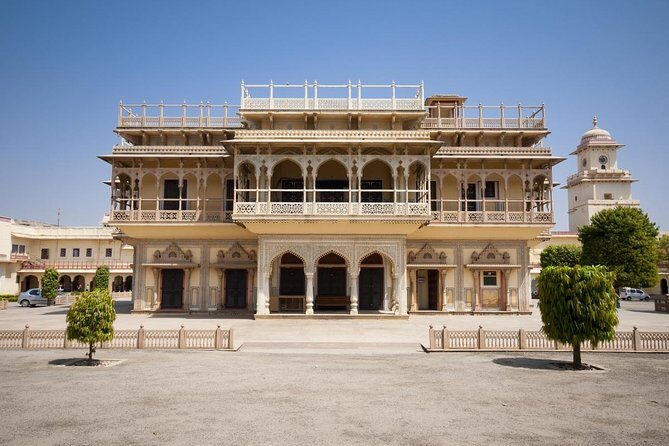
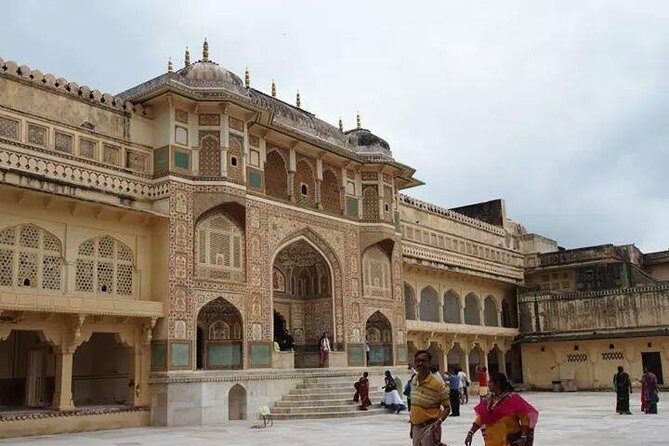
After Jantar Mantar, you’ll spend time at The City Palace. The description emphasizes separated gardens and courtyards over a wide area. This is one of those places where the best experience comes from pacing yourself—don’t try to see everything at once. Use the time to focus on layout and materials, then let the palace complex explain itself.
Admission is not included, so you’ll decide whether you want to go in based on your budget. Even if you only spend time at key viewpoints, City Palace often gives you enough to appreciate how Jaipur’s rulers built for status and ceremony, not just for living.
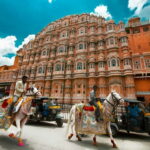
Then comes Hawa Mahal – The Palace of Breeze, built by Sawai Pratap Singh. Here’s the useful context: it was designed for the royal household to view life outside, while citizens could also use it. The famous curved latticework is the star. You’ll want time to look up and around, because photos don’t always capture how the façade repeats and frames the street.
Admission is not included, but even if you don’t pay, Hawa Mahal remains one of those landmark backdrops that makes Jaipur feel instantly recognizable.






Royal Gaitor Tombs and Jal Mahal: quieter stops with payoff
Next are Royal Gaitor Tumbas, located at the foothills of Nahargarh Fort. The tour describes an atmosphere of calm, with intricately carved marble and sandstone cenotaphs honoring Jaipur’s former rulers. This is a nice counterbalance to the heavier crowd zones. It feels more like a pause than another checklist item.
Then you reach Jal Mahal, the water palace in Man Sagar Lake. The description stresses the palace’s setting and the fact that it was renovated and expanded in the 18th century. The photos are often what draw you in, but the real payoff is noticing how the architecture seems to float in the water from certain angles.
Both of these stops are relatively short in the plan (about 15 minutes for Jal Mahal, around 45 for Royal Gaitor). If you hate rushing, you might still be glad you came—because these are the stops that tend to give you a mental break without killing your schedule.
Panna Meena ka Kund and Amer: stepwell to sandstone grandeur
A standout mid-to-late day stop is Panna Meena ka Kund, a 16th-century stepwell near Amer. The plan points out the symmetrical, crisscross steps and arched niches, and it was used as both a water reservoir and a gathering spot.
I like this kind of stop in a big-city itinerary because it teaches you something practical about daily life, not just royal power. Even if you don’t know the full story, the geometry is hard to ignore.
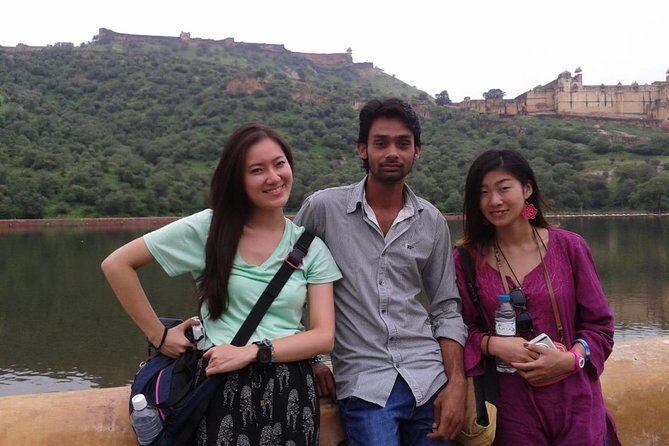
After that, you’ll head to Amer (Amber), one of the big draws outside Jaipur city. The description says Amer is a blend of Hindu and Muslim architecture, made from red sandstone and white marble. This is where you should expect the “wow” factor—Amer has the kind of visual scale that makes the whole day feel worth it.
Amer’s time allocation is about 2 hours, and admission is listed as free in the plan. That doesn’t always mean all areas are free, but it does suggest at least some of the experience can be budget-friendly compared to the other ticketed stops.
Shopping time for gems, silver, bangles, blue pottery
Later in the day, the tour includes an afternoon of shopping in Jaipur. The description mentions goods like precious gemstones, silver jewelry, bangles, clothes, blu pottery, and textiles.
This part is great if you want souvenirs that actually feel local—metalwork, small textile pieces, and painted ceramics can be meaningful buys when you’re careful. It’s less great if you’d rather spend every minute at palaces and viewpoints. Either way, it’s built into the day, so plan your energy.
One useful way to approach it: treat shopping as a guided browse, not a forced spending hour. Ask to see quality differences. If you find a piece you like, check how it’s made and what you’re paying for.
If the driver suggests a craft stop along the way, that can be convenient, but still compare prices and look closely. Entrance fees for certain stops can be expensive for foreigners, so keep an eye on what’s included and what’s added on top.
Drinks, breaks, and comfort in a hot city
Practical comforts are included: bottled water plus complimentary masala tea or coffee. That matters more than it sounds, because Jaipur’s days can feel long when you’re moving between sunlit monuments and shaded courtyards.
There’s also a simple comfort tip: you’ll spend time looking up at details like Hawa Mahal latticework and down at stepwell patterns at Panna Meena ka Kund. Wearing sun protection and keeping water accessible makes those stops more enjoyable.
And yes, you may get adapted pacing. The tour format allows a driver to adjust the schedule to your preferences, which helps if you want less shopping time or more attention on a specific landmark.
The tuk-tuk driving lesson option (and why it’s fun)
The tour description includes a fun extra: if you want to learn how to drive a tuk-tuk, the tuk-tuk expert can teach you. This is one of those add-ons that turns a standard sightseeing day into a skill-based memory.
Even if you’re not planning to drive, watching how locals handle the roads can help you understand the city. It also makes the day feel less like a checklist and more like a real interaction.
Who should book this Jaipur tuk-tuk tour
This tour fits best if you want:
- One full day to hit major Jaipur highlights without hiring multiple taxis
- A private setup where your group controls the pace
- Easy logistics: pickup/drop, water, and an English-speaking driver
- A mix of monuments plus an afternoon shopping stretch
It’s also a good choice if you’re short on time and hate the idea of crisscrossing Jaipur with complicated transfers.
If you want a slow, deep museum-style day with long stays and lots of interior exploration, you might find the shorter stop durations a bit tight. You’ll likely get the most satisfaction if you treat this as an efficient overview with smart stops.
Should you book this tuk-tuk tour?
I’d book it if you want a practical, street-level way to see Jaipur in a single day—especially because you’re getting major landmarks in a logical circuit plus included pickup/drop and basic refreshments.
Just go in with two expectations: monument entrances and meals cost extra, and the stops are designed for quick viewing rather than leisurely wandering. If that matches your style, this tuk-tuk day is a smart value way to experience Jaipur beyond the hotel lobby.
If you hate shopping stops, confirm how flexible the afternoon can be for your group before you go.
FAQ
What’s included in the price of the Jaipur sightseeing tuk-tuk tour?
The tour includes hotel/airport/railway station/bus station pickup and drop, bottled water, fuel and parking charges, a private tuk-tuk with an English-speaking driver, and complimentary masala tea or coffee.
How long is the tour?
The tour is listed as approximately 8 hours.
Is it a private tour or a group tour?
It is private. Only your group participates.
Are monument entrance fees included?
No. Monument entrance fees and camera fees are listed as not included.
Is lunch included?
Meal expenses are not included.
Is a guide included?
A guide is available on request for INR 1000, but a guide is not automatically included.
Is there time for shopping in Jaipur?
Yes. The afternoon includes shopping time where you can find items like gemstones, silver jewelry, bangles, clothes, blue pottery, and textiles.
Can the driver teach me to drive a tuk-tuk?
The tour description says a tuk-tuk expert can teach you if you would like to learn.
What if the weather is poor?
The experience requires good weather. If it’s canceled due to poor weather, you’ll be offered a different date or a full refund.
What’s the cancellation policy?
You can cancel for a full refund up to 24 hours in advance. If you cancel less than 24 hours before the start time, the amount you paid is not refunded.