REVIEW · JAIPUR
Jaipur Half-Day City Tour By E-Rickshaw with Female Driver
Book on GetYourGuide →Operated by Rajasthan India Tour Driver · Bookable on GetYourGuide
Female rickshaws make Jaipur feel personal. I love the female driver angle for comfort and a more grounded, respectful pace, and I love that you still hit big sights like Hawa Mahal and City Palace without feeling trapped in a car. One thing to consider: the tour includes workshop stops and ticketed monuments are extra, so if you prefer pure sightseeing only, you’ll want to set expectations with your guide.
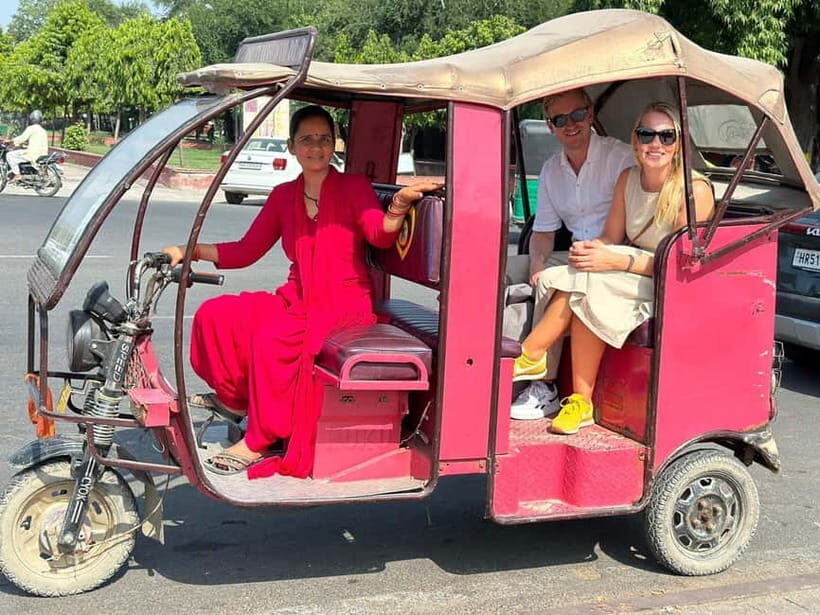
This is a tight, thoughtful 5-hour loop through the Pink City and the walled old town. You start at the flower market at dawn, then ride a slow pink e-rickshaw (about 30 km/h is mentioned), which is great for photos and for not getting squeezed in traffic. Guides I’ve seen named with this experience include Ali, Narendra, and Suresh, and drivers like Baby or Pinky are part of the appeal.
In This Review
- Key things that make this Jaipur e-rickshaw tour work
- How the female-driven e-rickshaw changes your Jaipur day
- Flower market at dawn: where your camera actually earns its keep
- Hawa Mahal in 30 minutes: classic façade, quick framing tips
- Jantar Mantar: how a stone observatory feels different up close
- City Palace: courtyards, temples, and enough time to feel the layout
- Jal Mahal and Man Sagar Lake: 15 minutes for the water-palace mood
- Workshop stops: where your day can become either special or sales-heavy
- Ramgarhmode class + the Albert Hall Museum finale
- Price and logistics: how $22 per group can feel like a deal
- Who this Jaipur half-day e-rickshaw tour suits best
- Should you book this Jaipur half-day e-rickshaw tour?
Key things that make this Jaipur e-rickshaw tour work
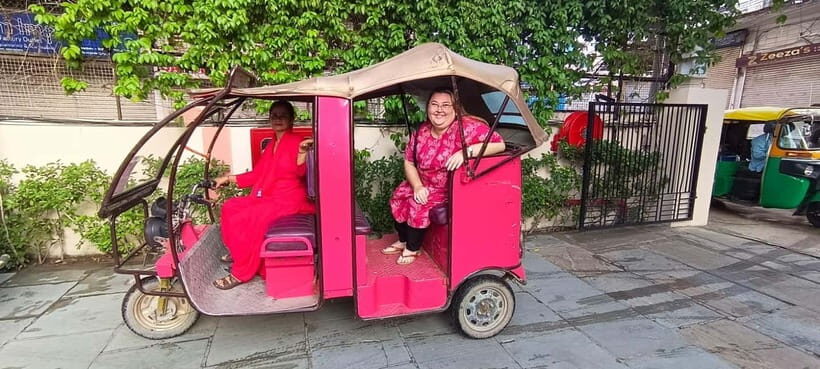
- Women driving, not just women introduced: you spend real time with a female driver, which changes the vibe from tour-bus to personal local support
- Dawn flower market timing: you see the market when colors first pop and the streets are calmer
- Iconic landmarks, compressed well: Hawa Mahal, Jantar Mantar, and City Palace get enough time for photos and context
- Photo-friendly slow ride: the e-rickshaw speed limit makes it easier to stop for viewpoints without feeling rushed
- Craft workshops inside the day: you visit factories and warehouses tied to women artisans and handmade products
- Museum finish with deep variety: Albert Hall Museum covers art, jewelry, carvings, and coins from multiple eras
How the female-driven e-rickshaw changes your Jaipur day
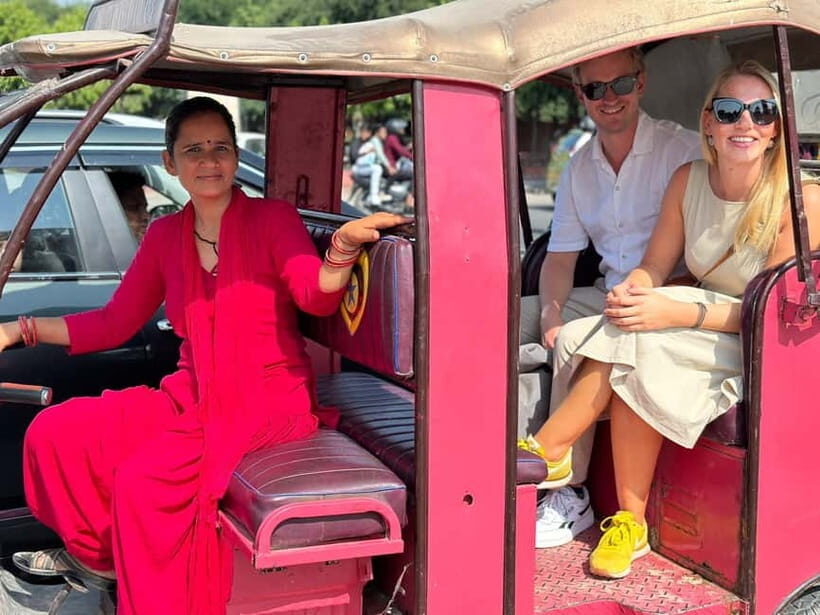
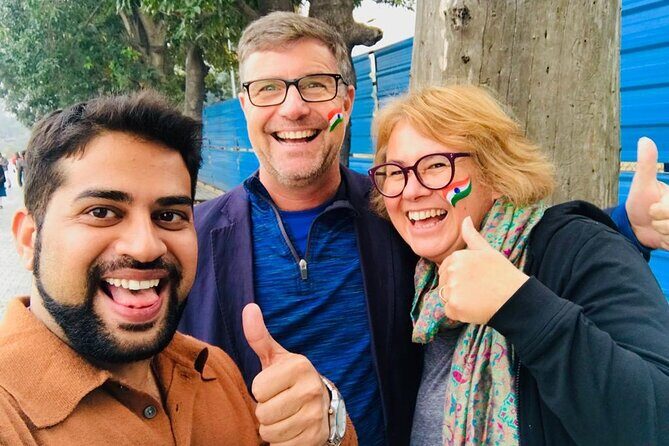
If you care about how a city feels—not just what you see—this tour hits the sweet spot. A female driver isn’t a gimmick here. It shapes the whole experience: the ride tends to be calmer, the communication usually feels more personal, and you’re less likely to feel like you’re getting hustled from stop to stop.
The other big win is the transport itself. An e-rickshaw is slower than a normal vehicle, so you’re not constantly watching your time disappear in traffic. That matters in Jaipur, where you can spend more energy dodging movement than actually enjoying the sights. A slower ride also makes quick photo stops far less stressful.
One practical note: the e-rickshaw comfortably fits about 3 to 4 people, and the pricing is listed as $22 per group up to 3. If you’re traveling as a pair, you’ll often get a more relaxed experience than if you’re squeezed into a very small space with four people.
You can also read our reviews of more city tours in Jaipur


Flower market at dawn: where your camera actually earns its keep
Your morning starts with the Jaipur flower market. You’ll get about an hour, including a break, photos, a guided visit, and walking time. Go in expecting senses first: the colors are the obvious part, but the real difference is the smell and the way the market shifts in the early hours.
What to do with your time:
- Use the first 10–15 minutes to walk the main lanes before stopping too early for photos.
- If you want close-up shots, linger near the stalls where vendors are actively arranging garlands.
Also, wear comfortable shoes. Even on a short tour, you’ll be stepping in and out of crowd flow and uneven surfaces around market areas. If you’re traveling with a camera, this is the moment it’s most rewarding.
Hawa Mahal in 30 minutes: classic façade, quick framing tips
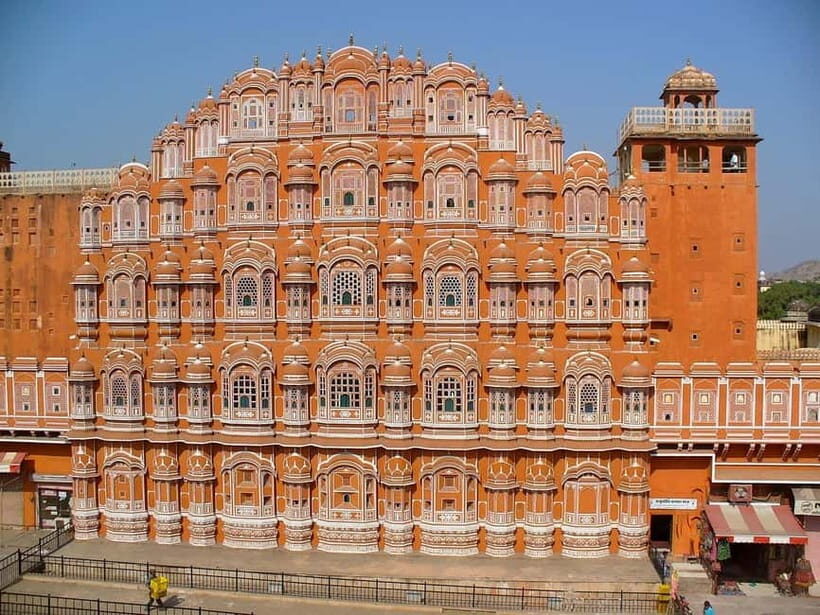
Next up is Hawa Mahal, one of Jaipur’s most recognizable landmarks. You’ll have about 30 minutes, which includes a photo stop, a visit, and a guided explanation.
With such a short window, your goal should be simple: get at least one strong photo from a distance and one closer composition that shows the façade pattern. The structure is an icon in part because of its intricate design, so don’t rush the angles.
If you’re sensitive to crowds, aim to step back when groups bunch up. With a guide, you’ll usually be able to find a quieter corner for pictures without turning it into an endurance event.
Jantar Mantar: how a stone observatory feels different up close
Then it’s Jantar Mantar, Jaipur’s ancient astronomical observatory. You get about 30 minutes again, with photo stop, visit, guided tour, and walking time.
The headline fact you’ll hear is the world’s largest stone sundial. But the value of Jantar Mantar on a half-day tour isn’t just the claim—it’s the way the place makes time feel physical. These instruments were built to measure the sky, but once you’re standing near them, you can’t help noticing how much intention went into the design.
Quick practical move: when your guide points out specific instruments, follow their order. If you jump around, you’ll miss the story thread that makes the site click.
City Palace: courtyards, temples, and enough time to feel the layout
City Palace is your longest single monument stop at about 1 hour. You’ll see the broader complex, which includes courtyards, buildings, pavilions, gardens, and temples. Popular highlights inside can include Chandra Mahal, Mubarak Mahal, Shri Govind Dev Temple, and the City Palace Museum.
In a short tour, City Palace can either feel like a checklist—or like a place. The difference is time spent understanding the layout. A good guide helps you connect where you are (courtyard transitions, temple areas, museum space) so you’re not just snapping photos while moving.
What I like about building City Palace into this route is balance. Hawa Mahal gives you a façade view. Jantar Mantar gives you a science-and-sky angle. Then City Palace gives you daily-life architecture: spaces that look designed for movement, gathering, and ceremony.
One consideration: City Palace has areas where the dress code matters. The tour advises smart casual clothing and notes that short shorts or sleeveless tops aren’t recommended in temples. If your outfit is borderline, you might want a light layer you can pull on quickly.
A few more Jaipur tours and experiences worth a look





Jal Mahal and Man Sagar Lake: 15 minutes for the water-palace mood
You’ll have a brief stop at Jal Mahal (Water Palace) for about 15 minutes, including a photo stop and guided sightseeing, plus scenic views on the way.
Jal Mahal works best when you treat it like a pause. It’s surrounded by Man Sagar Lake, so the scene changes depending on light and water conditions. With only a short time allotment, don’t plan to walk far. Focus on getting one or two angles and letting the water setting do the work.
If you’re the kind of person who hates missing viewpoints, know this stop is short. It’s scheduled as a scenic break, not a long exploration.
Workshop stops: where your day can become either special or sales-heavy
After the big monuments, the tour shifts gears. You’ll explore the walled city and visit local factories and warehouses tied to skilled work by women artisans, including items like carpets and embroidered fabrics. There’s also mention of learning about the lives of the women who drive the e-rickshaws, not just selling you a souvenir.
This part can be wonderful if you like craft details. Seeing how materials are handled—threadwork, fabric structure, finishing—gives context you won’t get from a shopping street alone. Plus, the tour’s overall theme is empowerment, so the intent matters.
That said, here’s the main reality check. Since these are workshop and warehouse stops, you should expect some degree of sales conversation. If you don’t want custom clothing talk, or you’re not interested in buying higher-ticket items, be clear early and keep your decisions simple.
If you want a safer approach:
- Tell your guide right away what you do and don’t want to purchase.
- Spend your energy asking craft questions (how it’s made, who works on it, how long it takes) rather than debating products.
Also, one booking experience described a mismatch between the claimed workshop focus and what was actually happening on-site. I can’t predict your day, but you can protect yourself by asking your guide what the workshop portion will cover that morning.
Ramgarhmode class + the Albert Hall Museum finale
Your day continues with Ramgarhmode, a 1-hour stop that includes visit, sightseeing, and a class. The specific content of the class isn’t spelled out in the details you have, so go with curiosity and ask the guide what the session will cover once you arrive.
What to expect from a class-style stop on a city tour: you’ll likely learn something practical or cultural, but it may run in step with time needed at other sights. This is another reason to keep expectations flexible. If you’re set on a strict timing plan, your best friend is your guide’s ability to manage the pace.
Then you finish at Albert Hall Museum. You’ll spend about 45 minutes here, with a photo stop, visit, guided tour, and walking time.
This museum stop is a strong closer because it widens the frame. You’re not only looking at buildings anymore—you’re looking at objects, materials, and eras. The collection is described as covering paintings, jewelry, carpets, ivory carvings, stone sculptures, metal works, and crystal pieces. There are also ancient coins from periods such as Gupta, Kushan, Delhi Sultanate, Mughal, and British eras.
If you want the most out of 45 minutes, ask your guide to point out what they consider the top coins or materials first. Museums can balloon in time, and a good order prevents you from missing the most meaningful pieces.
Price and logistics: how $22 per group can feel like a deal
At $22 per group (up to 3 people), this tour can be good value because you’re bundling a few things most independent visitors have to piece together:
- a guided route through major sites (Hawa Mahal, Jantar Mantar, City Palace, Jal Mahal, Albert Hall Museum),
- hotel pickup and drop-off,
- and a professional guide plus tea/coffee/lassi with samosa.
That said, the monuments entrance fees aren’t included. This is normal for sightseeing tours, but it affects how “cheap” the day really feels once you arrive at ticketed sites. Plan for extra costs for entry into monuments, and remember that the tour includes a skip-the-ticket-line promise. Still, skip-the-line does not mean free entry.
A second logistics note: the advertised duration is 5 hours. Some people like half-day tours because they can fit them into a travel schedule without disrupting everything else. If you like schedules to be exact, build a bit of cushion for traffic, security checks at monuments, and workshop timing.
Pickup is also handled based on where you’re staying. If your location is within 5 km of the city center, you get e-rickshaw pickup; within 10 km, they arrange a car to reach the starting point. That’s helpful if you’re in a compact part of town.
Who this Jaipur half-day e-rickshaw tour suits best
This experience is a strong match if you:
- like the idea of supporting women in the driving role and want that part of your day to be real, not symbolic,
- want a guided run at the big landmarks without renting a vehicle,
- prefer a slower pace for photos and don’t mind short stops,
- enjoy craft and want to see how carpets, embroidered fabrics, and other handmade items are made.
It may be less ideal if you:
- have limited tolerance for shop conversations or high-pressure selling (you can reduce this by being upfront early),
- need a very strict itinerary with zero flexibility (Ramgarhmode and workshops can stretch),
- don’t want any walking at all (you will walk a bit throughout the route).
There’s also a clear safety note: it isn’t suitable for pregnant women or people with pre-existing medical conditions.
Should you book this Jaipur half-day e-rickshaw tour?
Yes, if you want a practical first taste of Jaipur that mixes the headline monuments with museum time and a craft angle—and you value the feel of a female-driven ride. The combination of women driving, major sights with a guide, and the Albert Hall Museum finale makes it more than just transportation.
Book it with one smart mindset: treat workshops as learning opportunities, but protect your time and budget by knowing you can decline purchases. If you want a strict timeline, ask your guide to keep the key stops on schedule and confirm monument entry plans before you arrive.