REVIEW · JAIPUR
Jaipur: Full-Day Tuk-Tuk Sightseeing Tour with Monkey Temple
Book on GetYourGuide →Operated by Jaipur tour travels · Bookable on GetYourGuide
One ride, and Jaipur’s royal landmarks start to make sense. I like that this is a private Tuk-Tuk day with a friendly driver who talks through what you’re seeing, and it also gives you practical flexibility for photo stops in tight lanes you can’t reach in a big vehicle.
My other favorite part is the mix: big-name icons like Amber Fort and Jantar Mantar, plus quieter breaks like Gaitor ki Chhatriya and the sunset payoff at the Monkey Temple. The one drawback to consider is that you’ll do mild walking and the tour is usually best for people with no medical limits, since it’s not designed around long, fully seated museum time.
In This Review
- Quick take: what stands out
- Why a Private Tuk-Tuk Is the Best Way to See Jaipur
- Amber Fort: the hilltop fortress that rewards your patience
- Panna Meena ka Kund: a short stop that punches above its weight
- Jal Mahal and Hawa Mahal: photos with real storytelling behind them
- City Palace and Jantar Mantar: where art meets measurement
- Gaitor ki Chhatriya, Albert Hall Museum, and Birla Mandir for variety
- Monkey Temple sunset: Galta Ji’s monkeys and golden light
- Price and value: what $6 covers, and what you’ll likely pay separately
- Who this 8-hour Tuk-Tuk tour is best for
- Should you book this Jaipur Tuk-Tuk tour?
- FAQ
- How long is the Jaipur Tuk-Tuk sightseeing tour?
- Is this tour private?
- What stops are included during the day?
- Are entrance fees and camera fees included?
- Is pickup from my hotel included?
- What’s included in the tour price?
- What should I bring, and what should I wear?
- Are there size limits for luggage or pets?
Quick take: what stands out
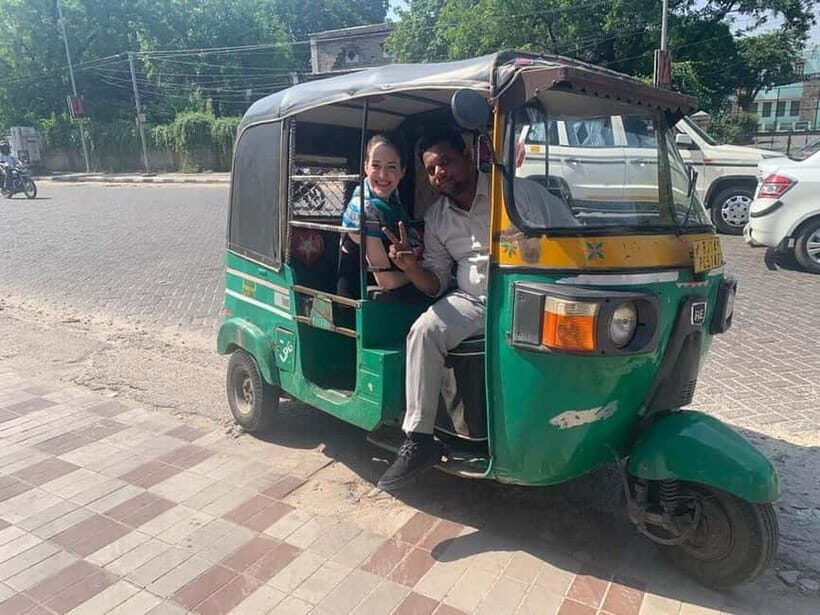
- Private Tuk-Tuk access to narrow streets where cars struggle
- Amber Fort + Jantar Mantar as a clear UNESCO pair of architecture and science
- Café and local-life detours are often possible if your driver has time
- Monkey Temple sunset gives you a strong closing moment
- Budget-friendly price that still includes pickup, bottled water, and driving
Why a Private Tuk-Tuk Is the Best Way to See Jaipur
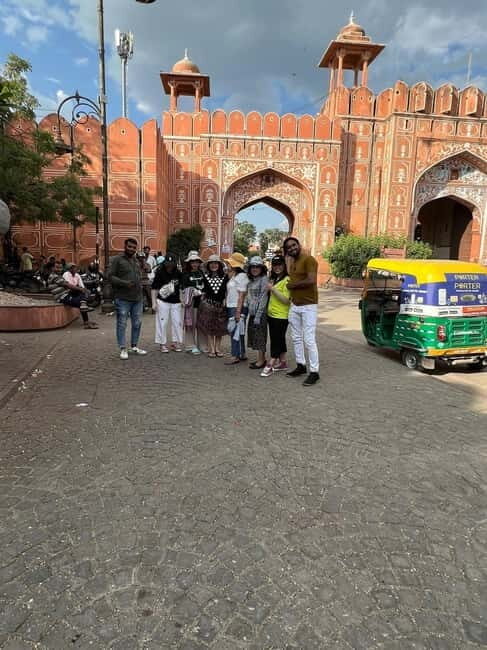
Jaipur can feel like a living collage: forts on hills, palaces in the center, stepwells hiding in plain sight, and lanes that change character every few minutes. A Tuk-Tuk is slow enough to notice details, but flexible enough to keep your day from turning into one long logjam. You’re not stuck in a “see-it-fast” vehicle loop.
I also like how the private format changes the vibe. If you want a quick photo stop at Hawa Mahal’s facade, you can usually get it without negotiating a group schedule. The driver you get can make a difference too; in past experiences people have praised drivers like Ali, Faruk, Faisal, and Imran for being helpful with timing and small tasks like directions and even finding a cafe.
Just know what the Tuk-Tuk day demands: you’ll be getting in and out, and you’ll walk a bit at multiple stops. Comfortable shoes matter more than you think, especially around forts and stepped areas.
A few more Jaipur tours and experiences worth a look


Amber Fort: the hilltop fortress that rewards your patience
Amber Fort is the kind of place where you’ll understand the hype once you’re there. You’re looking at a 16th-century fortress with Rajput and Mughal influences, and the whole site feels built for commanding views. Even the ride up sets the mood because you’re heading toward a skyline made for forts.
This stop usually includes time for photos and a guided look, plus some walking in courtyards and palace areas. One practical point: if you’re hoping for easy, flat strolling only, this isn’t that kind of site. You’ll do steps and uneven ground, and the main advantage is the payoff—mirror-work details, ornate halls, and the overall sense of power behind the architecture.
If you like taking aerial-style photos, you might get opportunities depending on timing and where you pause. The fort’s layout also makes it easier to break your energy into short bursts: walk, pause, look, then move again.
Panna Meena ka Kund: a short stop that punches above its weight
After the big fort energy, Panna Meena ka Kund feels like a calm reset. It’s an ancient stepwell known for symmetrical staircases and geometric patterns, which makes it a favorite if you enjoy design more than grand entrances.
Even if you only have about half an hour, you can still get what you came for: a few good angles, a quick look down the well, and time for photos without feeling rushed. The setting also works well for travelers who want something atmospheric but don’t want another long climb.
The main consideration here is sunlight and shadows. Stepwells can be visually intense in bright midday light, so if you’re photographing, you might want to keep an eye on how the steps look as the light shifts.
Jal Mahal and Hawa Mahal: photos with real storytelling behind them
Jaipur gives you iconic facades fast, and two of the best are Jal Mahal and Hawa Mahal.
Jal Mahal sits in Man Sagar Lake and has those submerged lower floors that make it look like it’s floating. You often don’t get an inside visit, so your goal is the outside view—especially if you’re chasing that “palace on water” effect against the Aravalli hills. It’s a smart stop for photos and for a quick mental switch from climbing and courtyards.
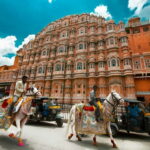
Then you move to Hawa Mahal, the Palace of Winds. What I like here is that the building’s personality is in the details: the famous facade has 953 windows. From a street-level viewing, you don’t just see a pretty wall—you start to picture how royal life, ventilation, and daily observation might have worked.
These stops are especially good if you’re traveling with a mix of interests. One person can focus on angles and colors, while another might get more out of the architecture and its practical design. Either way, you’ll leave with images that feel unmistakably Jaipur.
City Palace and Jantar Mantar: where art meets measurement

You’ll get a strong dose of Jaipur’s “how did they think of this?” factor at City Palace and Jantar Mantar.
City Palace sits in the heart of Jaipur and blends Rajput and Mughal architecture. It’s not just a monument; it’s still partially home to the royal family, so the place has a living feel. Even when you’re only seeing parts of it, the layout and style help you understand the power structure of the city over time.
Then comes Jantar Mantar, a UNESCO World Heritage Site and an 18th-century astronomical observatory. This is where Jaipur gets unusually clever: there are 19 large-scale instruments built to track celestial bodies and measure time. If you’ve ever thought math and science feel too abstract when they’re trapped behind textbooks, this is one of the best “make it visual” settings you’ll find.
The best way to handle these stops is to take your time with what the instruments are supposed to do. Even a short guided explanation can turn the site from scattered structures into a system with logic. You’ll also appreciate that it isn’t just “old ruins”—it’s architecture built around observation.





Gaitor ki Chhatriya, Albert Hall Museum, and Birla Mandir for variety
A one-day plan can’t be only forts and palaces, or the day starts to blend together. This route includes variety so your brain doesn’t hit museum fatigue.
Gaitor ki Chhatriya is a serene historic site known for intricately carved cenotaphs (chhatris) dedicated to Jaipur’s Maharajas. It’s a quieter mood after the big open views. If you like spaces that feel respectful and slower-paced, this stop is a good breather.
Then you head to Albert Hall Museum for another change of pace. You’ll have time for photos and a guided look, and it helps balance the day because it’s a different kind of “collection” experience than you get at the forts. Think of it as a cultural stop that turns architecture into a broader story of the city.
Finally, Birla Mandir gives you a religious and devotional counterpoint. It’s included for photos and a short guided experience, and the time is usually manageable even if you’re pacing yourself through the day.
The pattern here is simple: you go from royal power and astronomy to memorials and culture. That pacing is part of the value of the full-day format.
Monkey Temple sunset: Galta Ji’s monkeys and golden light
The day’s finishing moment is the Monkey Temple, also known as Galta Ji. This isn’t just a temple stop—it’s a whole scene in a tranquil valley setting, and the presence of monkeys is part of the experience. You’ll also see sacred water tanks and ancient temple areas.
The reason this stop works so well at the end is timing. You get stunning sunset views, which changes how the whole place feels. Soft light makes stone surfaces more dramatic, and it also gives you a different kind of photo compared to the bright, sharp palace shots earlier in the day.
Keep your expectations practical. This is an active site with animals, so don’t plan to linger for hours in one spot. Instead, aim for a few good viewing angles, enjoy the atmosphere, and then soak in the sunset from a spot where you can see the valley view.
Price and value: what $6 covers, and what you’ll likely pay separately
At around $6 per person, the big value is what’s included: pickup and drop-off from your hotel or other Jaipur location, a private Tuk-Tuk, an English-speaking driver, bottled water, plus taxes, parking, fuel, and handling charges. For a full 8-hour day with multiple major sites, that’s an unusually strong base deal.
The part to budget for is what isn’t included: meals, monument entrance fees, and any camera-related fees (listed as not free), along with souvenirs photos if you buy them. This is where your real cost will vary, depending on whether you choose extra guided commentary, how many entrances you pay for, and what you eat during the day.
A good way to plan is to carry small cash for snacks and local drinks, and to ask your driver what entrance fees are likely for the day’s stops. If your driver has a good rhythm, you’ll spend less time figuring things out on the spot.
Who this 8-hour Tuk-Tuk tour is best for
This tour is a good match if you want to see a lot without feeling like you’re stuck on a schedule made for someone else. It’s also a great fit for travelers who like street-level access—Jaipur’s best details aren’t always on the main road, and a Tuk-Tuk helps you reach the right spots.
It’s also suited to people who appreciate a friendly storyteller. In prior experiences, drivers like Faruk have even helped find a cafe for coffee and cake, and other guides have suggested where locals go for chai. That kind of small flexibility turns a list of monuments into a day with actual texture.
On the other hand, it’s not suitable for pregnant travelers or anyone with pre-existing medical conditions. Also, if you’re carrying bulky luggage, it may be an issue since luggage and large bags aren’t allowed.
Should you book this Jaipur Tuk-Tuk tour?
If you want an efficient, private, street-friendly way to hit Amber Fort, City Palace, Jantar Mantar, and Hawa Mahal in one day, I think this is worth booking. The price is strong for the included driving, pickup, and bottled water, and the itinerary mix keeps the day from becoming repetitive.
Book it if you’ll benefit from flexibility. A great driver can make the day easier—photo timing, short pauses, and small help like where to stop for chai or what to do next. If you know you need fully minimal walking or a very slow pace with no stepped areas, you might look for a more limited itinerary instead.
If you’re ready for a lively day on Jaipur time, this Tuk-Tuk route is one of the more practical ways to do it.
FAQ
How long is the Jaipur Tuk-Tuk sightseeing tour?
The tour runs for 8 hours, including pickup, travel time between stops, and time spent at each destination.
Is this tour private?
Yes. It’s a private group tour, meaning only your group participates.
What stops are included during the day?
You’ll visit or photo-stop at major Jaipur sights including Amber Fort, Panna Meena ka Kund, Jal Mahal, City Palace, Jantar Mantar, Hawa Mahal, Albert Hall Museum, Birla Mandir, and the Monkey Temple at sunset. Gaitor ki Chhatriya is also part of the experience.
Are entrance fees and camera fees included?
No. Monument entrance free/camera free are listed as not included, so you should expect to pay those at the sites.
Is pickup from my hotel included?
Yes. Pickup and drop-off from your hotel or any preferred location in Jaipur is included.
What’s included in the tour price?
Included items are hotel pickup and drop-off, a private Tuk-Tuk with an English-speaking driver, bottled water, and taxes, parking, fuel, and handling charges. A tour guide may be included if you select that option.
What should I bring, and what should I wear?
Bring a passport or ID card, comfortable shoes, and comfortable clothes. Mild walking is part of the day.
Are there size limits for luggage or pets?
Pets are not allowed, and luggage or large bags aren’t allowed on the tour.