REVIEW · NEW DELHI
Heritage Day Tour of Old and New Delhi
Book on Viator →Operated by India City Walks · Bookable on Viator
Delhi’s layers click into place fast. This Heritage Day tour strings together Old Delhi’s street life, Mughal-era monuments, and modern government landmarks with a guide who keeps the story moving, plus bottled water to help you stay comfortable. I liked the way the day felt built around real details, not a rushed photo stop: on outings led by guides such as Kazal and Srushti, you get guided detail that makes the sites easier to read in your head.
Two more things I really appreciated: you leave with a clear mental map of where to return on your own, and the pacing is structured enough that even busy places like Chandni Chowk feel manageable. One consideration: monument entry fees are not included, so you should expect on-the-spot ticket costs on top of the $38 price.
In This Review
- Key highlights you will actually feel during the day
- Why this Heritage Day combo works: Old Delhi plus the capital’s modern spine
- Price, what’s included, and the one budget note you must plan for
- Getting your bearings in Old Delhi: Chandni Chowk and the Shahajanabad story
- Humayun’s Tomb complex: what to notice beyond the main tomb
- Qutub Minar: the mosque, the Iron Pillar, and Alauddin’s gateway
- Kartavya Path and India Gate area: seeing the modern Delhi storyline
- The guide factor: why your day depends on who holds the thread
- What to bring and how to handle the day’s physical rhythm
- Weather and timing: when to be flexible
- Who this tour is best for (and who might want a different format)
- Should you book Heritage Day Tour of Old and New Delhi?
- FAQ
- FAQ
- How long is the Heritage Day tour?
- What is the price of the tour?
- Is this tour private?
- Is bottled water included?
- Are food and drinks included?
- Are monument entry charges included?
- Is pick-up or drop-off included?
- What happens if the weather is bad?
- What is the cancellation window?
Key highlights you will actually feel during the day
- Bottled water included, so you can focus on walking and looking instead of hunting for refills.
- A private group experience, which usually means fewer delays and better questions.
- Old and New Delhi in one route, so you see the capital as it evolved, not as a museum-only day.
- Humayun’s Tomb complex is multi-layered, with stops at Isa Khan Niyazi’s mosque/tomb and Arab Sarai areas before the main tomb.
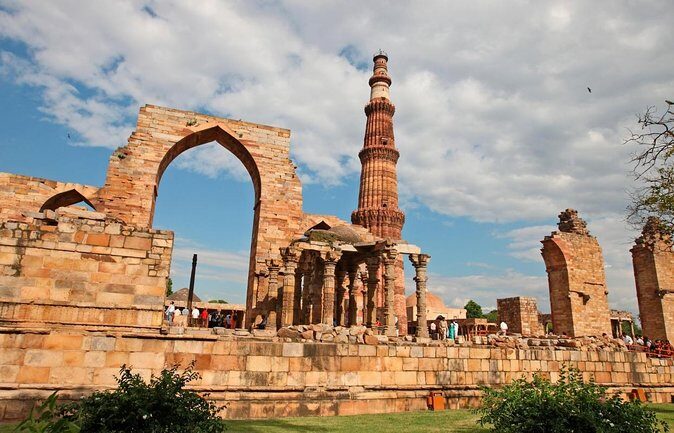
- Qutub Minar isn’t just the tower: you also see the Quwwat-ul-Islam Mosque, the Iron Pillar, and Alai Darwaza.
- Kartavya Path walk connects the colonial plan to present-day symbolism, including how the street name shifted from Rajpath.
Why this Heritage Day combo works: Old Delhi plus the capital’s modern spine
Delhi can feel like two different worlds stitched together: the old city’s tight lanes and markets, and the newer capital’s wide ceremonial avenues. This tour does that stitch for you. You start with the Chandni Chowk/Shahajanabad story, then move through Mughal monumental architecture, and end with a walk in central New Delhi around major government and war-memory landmarks.
For $38, the value isn’t about paying for a long list of stops. The real value is the guide’s threading: someone explains what you’re looking at, helps you navigate what’s important, and keeps the day from turning into a blur. The route also helps you avoid the common Delhi trap—seeing a few famous names and still not understanding how they connect.
You can also read our reviews of more historical tours in New Delhi



Price, what’s included, and the one budget note you must plan for
You’re paying for a guided day (about 8 hours) in a private format, with a tour guide included and bottled water on hand. You also get a mobile ticket, which saves time at the start.
What’s not included is the part that can surprise people: food and drinks, pick and drop, and monument entry charges as per actual. That last line matters most. The tour may say admission is free at some stops, but you should still treat the day as one where ticket costs can pop up at certain monuments or complexes.
My practical advice: budget a little extra for entrance fees, and plan your day around walking. Food isn’t included, so have a simple plan for lunch/snacks near where you end up, or you’ll spend your energy on logistics.
Getting your bearings in Old Delhi: Chandni Chowk and the Shahajanabad story
The day opens where Delhi’s old-city energy is strongest: Pasar Chandni Chowk, rooted in the historic fabric of Shahajanabad. This is not a quiet sightseeing lane. It’s a living commercial zone where history and trade run side by side, and the guide’s role becomes more than explanation—it’s direction.
What you’re set up to see around this area includes major Mughal-era touchpoints in the broader Red Fort/imperial zone context, plus a famous Friday mosque from the 17th century and the kind of old bazaars that still pull shoppers in for spices and daily goods. The highlight for many people is the spice market atmosphere: it’s sensory, yes, but it’s also a lesson in how commerce shaped neighborhoods.
One realistic drawback: the tour portion in Old Delhi is time-limited (about an hour at this stop). Chandni Chowk is the type of place where you can spend half a day just wandering. So use the guided hour for orientation—then, if you love the vibe, return later for a slower, personal route.
Practical tip: wear comfortable shoes and keep your phone secure. Crowds make everything harder, including photos and casual detours.
Humayun’s Tomb complex: what to notice beyond the main tomb
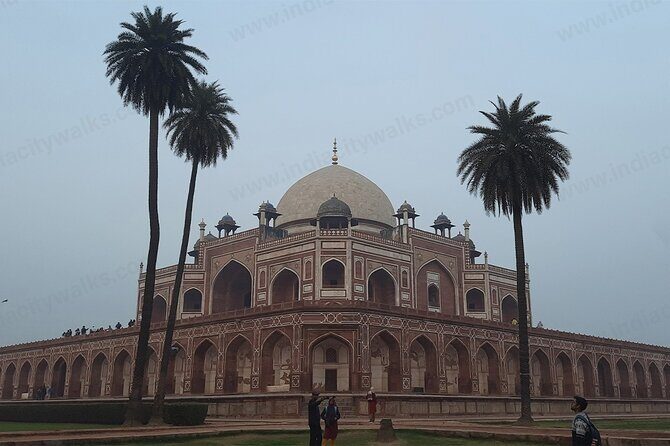
After the high-energy market start, the tour shifts gears into something calmer but still deeply designed: Humayun’s Tomb and its surrounding complex. This stop is one of the best examples of why guided structure matters. Without context, you may walk through sections and miss the connections between them.
You’ll move through a sequence inside the complex: first the mosque and tomb of Isa Khan Niyazi, then the Arab Sarai area built for 300 Arab servants brought back by Hamida Banu Begum, and you’ll look out toward the garden and tomb of Bu Halima. After that, you finally reach Humayun’s Tomb itself, commissioned by Hamida Banu Begum after Humayun’s death in 1556.
The details to watch for here are the kind that take the “wow” factor from architecture-only to story-and-place. The mosque is described as exceptionally lovely, with incised plaster work and glazed tiles in green, yellow, and bright blue. That combination is a clue that this complex isn’t just about one ruler—it’s about patronage, cultural exchange, and the way a royal household planned spaces.
Time note: this stop is also about an hour. You won’t see every corner deeply, but you’ll get the main reading of the site. If you’re the type who loves returning to places, this is exactly the kind of monument where a second visit can turn into a mini obsession in a good way.
Qutub Minar: the mosque, the Iron Pillar, and Alauddin’s gateway
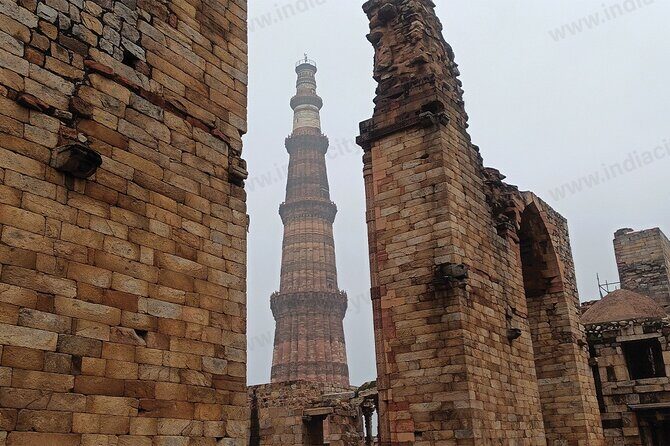
Next up is the Qutub Minar complex, and the order matters. You meet at the Qutub Minar ticket counter, then enter and begin with Quwwat-ul-Islam Mosque—the first building in the Qutub Complex—founded by Qutbuddin Aibak. From there you’ll see the Iron Pillar standing within the mosque area, and then you’ll move toward Alai Darwaza, later added by Alauddin Khilji as a gateway to the ambitious extension of the mosque.
This stop is worth your time because it’s not only about one dramatic tower. The guide’s explanations help you understand how early Sultanate power expressed itself in stone and layout. The Iron Pillar becomes a centerpiece for that story, and Alai Darwaza gives you a clear sense of expansion and ambition rather than a single-era snapshot.
Another practical point: complexes like this often have uneven surfaces and lots of foot traffic. Keep a steady pace, watch your step, and accept that you’ll be sharing space with other visitors. The guide helps you stay oriented so you don’t waste time figuring out what to look at next.




Kartavya Path and India Gate area: seeing the modern Delhi storyline
After Mughal monuments, the tour steps into the capital’s formal center on Kartavya Path. This part focuses on the colonial aspects of Delhi through landmarks around the arena, including the President’s House and India Gate.
The walk is designed as a “past, present, and contemporary advancement” story, which is a useful framing because these buildings can feel like they exist in their own bubble if you don’t know what connects them. You also get the angle that Kartavya Path replaced Rajpath, shifting the symbolism from a show of power to one tied to democratic control and empowerment.
This segment is about context, not climbing. You’re looking at the city as a planned stage—where architecture communicates national identity and political messaging. It’s a nice counterweight to the older city’s sensory chaos.
If you prefer less walking and more time sitting, this could be the stretch that feels the most “on your feet,” since it’s a guided walk through open areas. Still, it’s a strong finish because you end with a sense of how today’s Delhi is shaped.
The guide factor: why your day depends on who holds the thread
This is the kind of tour where the guide can make or break the experience. The best tours here are the ones where you don’t just hear facts—you get links. In the provider’s orbit, guides such as Aamir Ahmed, Surbhi Dwivedi, Kazal, and Srushti show up in different Old and New Delhi walks, and the common theme is structured pacing and attention to detail.
A practical way to judge whether you’ll like the guide: watch how they handle transitions. In a day like this, you move from crowded bazaars to quiet tomb complexes to an open modern avenue. When someone can switch gears smoothly, you feel it in the quality of your attention.
And you’ll likely walk away with a personal short list: where you want to return, which sections of a complex you want to revisit, and which streets you want to explore at your own speed later.
What to bring and how to handle the day’s physical rhythm
This experience asks for moderate physical fitness. It’s not about hiking, but it is about steady walking and being in and out of different areas. You’ll want to plan for:
- Comfortable footwear for uneven pavement and stone floors
- Sun protection (Delhi heat can make even a “short” walk feel long)
- A small bag you can keep close in busy areas
- A simple food plan since food and drinks aren’t included
Good news: bottled water is included, and the guide keeps the pacing sensible. Still, you’ll be happier if you treat the day like a walking day, not a light stroll.
Weather and timing: when to be flexible
The tour requires good weather. If weather turns, you’ll be offered a different date or a full refund. In Delhi, this is the right kind of policy: tombs and complexes are doable in light changes, but not when conditions get unsafe or miserable.
If you have a tight itinerary, look at your travel dates and build in some buffer time. An 8-hour day is only fun when you’re not stressed about what comes next.
Who this tour is best for (and who might want a different format)
This Heritage Day tour is a strong fit if you want:
- A guided overview that connects Old Delhi’s markets and Mughal monuments to modern Delhi’s central landmarks
- A structured route that helps you pick what to revisit later
- A private group experience where you can ask questions without fighting the crowd
It’s also a good match for first-time visitors who feel overwhelmed by Delhi’s scale. You won’t solve Delhi in one day, but you will get a map in your head.
If you’re the type who hates organized schedules or wants lots of free time in one specific neighborhood (like only Old Delhi markets), you might find the day feels a bit “balanced”—less single-topic deep. In that case, you may prefer a more focused walking tour.
Should you book Heritage Day Tour of Old and New Delhi?
Yes, I’d book it if your goal is orientation plus standout monuments in one day. The price makes sense when you value the guided threading, the bottled water, and the fact that you’ll leave knowing what to return to—especially after seeing Humayun’s Tomb and Qutub Minar in a guided, sequenced way.
I’d think twice if budget certainty is your top priority, since monument entry charges are not included and food isn’t covered. Also, if you’re hoping for a super relaxed day with lots of downtime, the full-day format and walking time may feel like too much.
FAQ
FAQ
How long is the Heritage Day tour?
It runs for about 8 hours (approx.).
What is the price of the tour?
The price is $38.
Is this tour private?
Yes. It’s a private tour/activity, and only your group will participate.
Is bottled water included?
Yes, bottled water is included.
Are food and drinks included?
No. Food and drinks are not included.
Are monument entry charges included?
No. Monument entry charges are not included and are paid on the spot as per actual.
Is pick-up or drop-off included?
No. Pick and drop are not included.
What happens if the weather is bad?
The experience requires good weather. If it’s canceled due to poor weather, you’ll be offered a different date or a full refund.
What is the cancellation window?
You can cancel up to 24 hours in advance for a full refund. If you cancel within 24 hours of the experience start time, the amount paid is not refunded.