REVIEW · UDAIPUR
Heritage & Cultural Walk of Udaipur -Guided Walking Tour
Book on GetYourGuide →Operated by Yo Tours · Bookable on GetYourGuide
A 2-hour walk through the parts most people miss. This Heritage & Cultural Walk of Udaipur mixes real sights like the City Palace and ghats on Lake Pichola with playful, story-heavy guidance about Mewar royalty and everyday life. I like that it’s built around recognizable landmarks and also quieter lanes where you’ll see how the old city actually works. I also like the focus on conversation—your guide, often Yash by name, keeps things relaxed and fun while explaining what you’re looking at. One thing to keep in mind: it’s a walking tour, so if you’re not comfortable on uneven, narrow old-street paths, plan for slower pacing.
You’ll spend the time in a tight loop: clock tower, old-market lanes, Bagore Ki Haveli and Jagdish Temple, two major waterfront steps, then the City Palace area and Tripolia Gate with its nearby sacred details. The tour is priced at about $14 per person, and that low cost matters because you’re paying for a guide with English/Hindi storytelling plus practical local recommendations (food and tea spots show up in the experience). If you want a laid-back day that includes lots of sitting and long views with minimal walking, this may feel a bit full for only 2 hours.
In This Review
- Key points to know before you go
- Clock Tower to the old market lanes: where Udaipur starts to make sense
- Bagore Ki Haveli and Jagdish Temple: power, art, and carved stone
- Gangori Ghat and Lal Ghat on Lake Pichola: the waterfront Udaipur everyone means
- City Palace from the street: balconies, towers, and a palace that looms
- Tripolia Gate and Jagat Shiromani Temple: the 1711 three-arch entrance
- How the guide keeps you moving: Yash, English/Hindi, and story-led pacing
- Timing, pace, and what to bring for a smooth 2-hour loop
- Value check: does $14 per person make sense for Udaipur?
- Who this tour fits best (and who should reconsider)
- Should you book the Heritage & Cultural Walk of Udaipur?
- FAQ
- How much does the Heritage & Cultural Walk of Udaipur cost?
- How long is the tour?
- Where is this tour located?
- What languages is the guide available in?
- Is this a private group tour?
- What’s included in the price?
- What is not included?
- What should I wear?
- What is the cancellation policy?
- Can I reserve without paying right away?
Key points to know before you go

- Clock Tower meaning: see the city’s first public clock, linked to the Mewar royal family
- Bagore Ki Haveli + Jagdish Temple: ornate carvings and a direct connection to Mewar leadership
- Lake Pichola ghats: Gangori Ghat and Lal Ghat give you the waterfront Udaipur people photograph
- City Palace from below: balconies, towers, and cupolas make the palace feel like it’s looming over the lake
- Tripolia Gate details: three-arched gate built in 1711, plus nearby Jagat Shiromani Temple marble work
- Stories that move: historical explanations with curious anecdotes and light gossip, plus local chai/food tips
Clock Tower to the old market lanes: where Udaipur starts to make sense
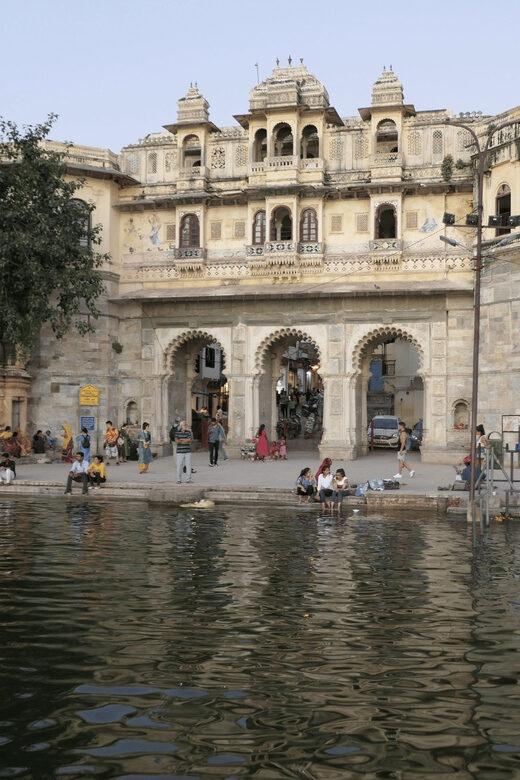
The walk begins with a quick hit of meaning: the Clock Tower, described as the city’s first public clock built as a souvenir to the royal family of Mewar. It’s a small-looking thing at first, but it helps you read Udaipur differently. You’re not just looking at buildings. You’re noticing how rulers, institutions, and public life shaped the city’s physical layout.
From there, you move into the older market streets—tight, narrow, and crooked in that purposeful way old cities get when streets grew around life instead of planning documents. This part is where the tour earns its value. Left to your own devices, you can walk those lanes and still feel like you missed the point. With a guide, the lanes turn into a map of culture: where power sat, where trade happened, and why certain buildings show up when they do.
Practical takeaway: wear shoes you don’t mind walking in for 2 hours. Even when the pace is relaxed, the old streets can be uneven, and stopping often means you’re standing in place more than you expect.
You can also read our reviews of more walking tours in Udaipur



Bagore Ki Haveli and Jagdish Temple: power, art, and carved stone

Next you’ll work your way into Bagore Ki Haveli, known for its 18th-century character and for its connection to a Mewar prime minister. A haveli in this setting isn’t just a pretty house. It’s a statement of status, taste, and how elite households displayed authority without needing modern signage.
Your guide points out details that most people miss. Think of ornate carvings and the way the building’s design supports social life—courtyards, openings, and lines that make the space feel structured even when you’re moving through it. It’s architecture you can almost read like a language once someone explains the logic.
Then you’ll reach Jagdish Temple, again with a focus on decoration and craftsmanship. The temple is described as decorated with beautiful ornate carvings, and on a guided walk that matters. You’ll spend more time looking instead of just passing through. You’ll likely notice how stonework is used to tell stories, create rhythm on the façade, and reinforce the temple’s importance in daily life.
A small but real drawback: if you’re the type who prefers strict museum-style information and fewer anecdotes, this stop may feel story-forward. The tour is designed to combine history with entertainment. If you enjoy a guide who talks while you walk, you’ll be in your element.
Gangori Ghat and Lal Ghat on Lake Pichola: the waterfront Udaipur everyone means
Now the walk changes gears. You hit Gangori Ghat and Lal Ghat, the waterfront steps on Lake Pichola that people associate with the classic Udaipur view. Even if you’ve seen photos before, being there changes the scale. The waterfront isn’t just a backdrop. It’s part of how the city breathes.
Your guide helps you connect the lake to what you’ve been seeing in the old city. Instead of treating the palace and temples like separate worlds, you start to understand the lake as a constant companion to Mewar power and local routines. That’s why the ghats feel important in the flow of the tour.
Practical tip: give yourself a minute before you take the perfect photo. Stand, look at the waterline and how buildings frame the view. Then shoot. The best shots usually happen when you stop trying to photograph the view and start photographing the relationship between the view and the town.
City Palace from the street: balconies, towers, and a palace that looms
The City Palace of Udaipur is the kind of sight that can make you go quiet. The tour describes it as overwhelming by balconies, towers, and cupolas towering over the lake. That’s accurate. Even from the outside approach, the palace feels like it’s controlling the landscape around it.
What I like about covering City Palace in a walking format is that you experience it in layers. You don’t get one angle and then move on. You get a sense of how the palace dominates sightlines, how towers create visual anchors, and how balconies suggest both ceremony and everyday observation.
One consideration: City Palace can be emotionally intense in the best way, but it can also crowd your brain if you’re trying to take in everything at once. The guide helps you order what you’re seeing. That’s why paying for a guide at this stage matters more than you might think. You leave with comprehension, not just screenshots.
Tripolia Gate and Jagat Shiromani Temple: the 1711 three-arch entrance
Then comes one of the tour’s most specific historical moments: Tripolia Gate, a three-arched gate built in 1711. The tour doesn’t treat it like a quick photo stop. It’s described with added context: nearby sacred elements including Jagat Shiromani Temple, made with exquisitely carved marble torana, plus a Garuda chhatri and mandapa.
This stop is where the tour’s storytelling style really pays off. A gate is a gate—until you understand what it symbolized, why it was built, and how nearby details like a carved marble torana reinforce the religious and royal blend of the Mewar tradition.
If you’re a detail person, you’ll like this segment. The marble work and the architectural rhythm are easier to notice when someone walks you through what you’re looking for. If you’re not a detail person, you still benefit. The gate gives you a clear landmark, and the nearby temple features help you see how civic movement and devotion shared the same street-level reality.
You can also read our reviews of more guided tours in Udaipur






How the guide keeps you moving: Yash, English/Hindi, and story-led pacing
The experience is led by a highly trained and friendly storyteller/guide who speaks English and Hindi. That bilingual element matters because you can ask questions without awkward language guesswork, and the guide can tailor explanations to what you actually care about.
From the reviews, Yash shows up as a standout example: enthusiastic, informed, and able to steer the tour based on your interests. People also mention that he made time for local food specialties and chai spots, which adds texture. It also helps you understand the city beyond monuments, because tea culture and street snacks are part of the cultural story.
The tour’s tone is also worth mentioning: it mixes historical elucidation and curious anecdote, with mildly scurrilous talk about past and present celebrities and defunct royals. That kind of humor isn’t for everyone. But if you like history with personality, it makes the walk less like school and more like a good conversation with a local.
My practical advice: listen for the guide’s recurring themes. If you hear the same explanation about Mewar power repeated from different angles, you’re likely getting the city’s big thread. Grab that thread early, and the rest of the walk feels easier to remember.
Timing, pace, and what to bring for a smooth 2-hour loop
This is a 2-hour walking tour with a private group setup. The private format can be a plus if you want fewer delays and more flexibility to ask questions. It also means the guide can usually steer the stop durations to match your group’s energy.
You’re not getting hotel pickup and drop, so you’ll need to reach the meeting area on your own. The good news: since it’s only 2 hours, you can keep the rest of the day flexible rather than losing most of it to logistics.
What to bring is simple: comfortable clothes. Since a water bottle isn’t included, bring your own if you’ll get thirsty. Udaipur’s sun can be no joke, and short tours still add up when you’re walking and stopping for viewpoints.
Value check: does $14 per person make sense for Udaipur?
For about $14 per person, you’re buying four things at once: a guide who can speak English/Hindi, access to streets and lanes you might not choose on your own, a structured route through major landmarks, and storytelling that ties it together.
If you tried to do this route alone, you’d likely still see some of the highlights. But you’d miss the connections: why the clock tower mattered, why the haveli and temple belong in the same mental framework, and how the City Palace and Tripolia Gate relate to Mewar presence in everyday space.
Also, local tips and recommendations are included. Reviews mention the tour’s attention to chai spots and local food specialties. That’s not just fun; it’s practical. Getting one or two good local recommendations can save you time the rest of your trip.
So yes, the price feels fair for what you get, especially if you like guided context over self-guided wandering.
Who this tour fits best (and who should reconsider)
This walking tour fits best if you want:
- a guided way to connect Udaipur’s old lanes to big landmarks
- a story-led guide who speaks English and Hindi
- a route that mixes Mewar royal-era references with street-level culture like chai and local foods
It may be less ideal if you:
- dislike walking for short stretches on narrow, uneven old streets
- want a quiet, strictly factual tour with no humor and no anecdotal chat
- prefer to linger longer at one attraction rather than covering multiple key sights in 2 hours
If your goal is to see Udaipur’s highlights quickly and understand them enough to guide your next day, this tour works well.
Should you book the Heritage & Cultural Walk of Udaipur?
Yes, if you want a smart first pass through Udaipur’s old city that doesn’t just rattle off monuments. The mix of Clock Tower, Bagore Ki Haveli, Jagdish Temple, Lake Pichola ghats, City Palace, and Tripolia Gate gives you a complete picture in a short window, while the guide’s storytelling style helps it stick.
Book it especially if you like energetic guides who answer questions and who’ll steer you toward local tea and food stops. If you’re sensitive to walking pace or you want minimal talking, consider asking for a quieter style from the guide when you arrange the tour. But for most people who enjoy history with personality, this is a great value use of 2 hours in Udaipur.
FAQ
How much does the Heritage & Cultural Walk of Udaipur cost?
It costs $14 per person.
How long is the tour?
The tour lasts 2 hours.
Where is this tour located?
It takes place in Udaipur, Rajasthan, India.
What languages is the guide available in?
The guide speaks English and Hindi.
Is this a private group tour?
Yes, it’s listed as a private group.
What’s included in the price?
Included items are a storyteller/guide (English & Hindi), great local tips and recommendations, access to hidden lanes and places, and conversation with the guide.
What is not included?
Hotel pickup and drop are not included, and a water bottle is not included.
What should I wear?
Wear comfortable clothes for walking.
What is the cancellation policy?
You can cancel up to 24 hours in advance for a full refund.
Can I reserve without paying right away?
Yes. The tour offers reserve now & pay later, meaning you can book your spot and pay nothing today.