REVIEW · NEW DELHI
Golden Triangle With Rishikesh
Book on Viator →Operated by New Delhi Tourist Taxi · Bookable on Viator
Eleven days, five cities, one smooth route. This Golden Triangle with Rishikesh tour is interesting because you get a small group (max 6) plus a private vehicle for an easier ride between major sights, and you still slow down for yoga and meditation in Rishikesh. The main trade-off is that monument entrance fees and lunch aren’t included, so your final total depends on what you choose to pay at the gates.
I like the pacing here: you are not just checking boxes. You get a local guide to make sense of what you’re seeing, and the route is planned so you spend real time in Old Delhi, Mughal landmarks, royal Jaipur stops, and then quiet spiritual time on the Ganges.
In This Review
- Key points to know before you go
- Why the Golden Triangle plus Rishikesh fits a lot of travel goals
- Private vehicle logistics: how comfort changes the whole trip
- Day 1 in Old Delhi: Red Fort, Jama Masjid, Chandni Chowk, Raj Ghat
- Day 2 in New Delhi: Humayun’s Tomb, Qutub Minar, the Lotus Temple, and more
- Day 3-5 Rishikesh: yoga retreat structure with room to breathe
- Day 6 Haridwar return: a quieter transition back to Delhi
- Day 7 Taj Mahal and Agra Fort: the big icons, with context
- Day 8 Fatehpur Sikri en route to Jaipur: the royal detour that pays off
- Day 9 Jaipur architecture day: Jal Mahal, City Palace, Jantar Mantar, Hawa Mahal
- Day 10 Jaipur shopping and crafts: textile and gemstone factory visits
- Day 11 departure: smooth finish back in Delhi
- Price and value: $500 plus the extras you must budget
- Practical tips to make the itinerary feel easy, not rushed
- Should you book this Golden Triangle With Rishikesh tour?
- FAQ
- What cities are included on this tour?
- How long is the Golden Triangle with Rishikesh tour?
- What is the group size limit?
- Is pickup and drop-off included?
- What’s included in the price?
- Are monument entrance fees included?
- Is lunch included?
- What travel documents do I get?
- What is the cancellation policy?
Key points to know before you go
- Max 6 people means less crowding and more personal help from your guide and driver.
- Private car, hotel pickup/drop-off keeps door-to-door travel simpler across long distances.
- Rishikesh yoga and meditation time breaks up the sightseeing grind.
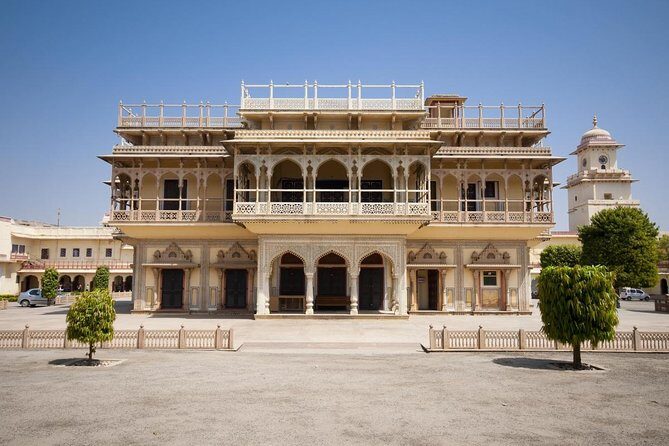
- Agra and Jaipur highlights are built around the big names: Taj Mahal, Agra Fort, City Palace, Jantar Mantar, and Hawa Mahal.
- Accommodation is your choice (extra cost), so you can match comfort level to budget.
Why the Golden Triangle plus Rishikesh fits a lot of travel goals
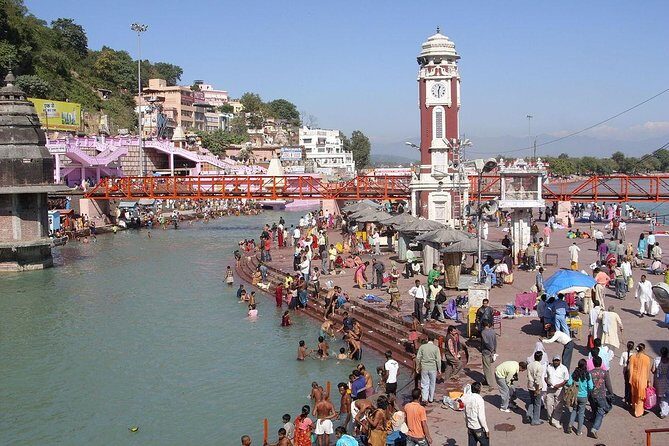
The Golden Triangle is usually sold as a fast-hit route: Delhi, Jaipur, Agra, and then you move on. What makes this version more satisfying is the addition of Rishikesh (and a Haridwar moment), which turns the trip from purely historical sightseeing into a more balanced India experience.
You’ll cover the classics you’ve probably already heard about, like Humayun’s Tomb, Qutub Minar, and the Taj Mahal. But you also get breathing room. Instead of rushing from one monument to the next, the middle of the trip shifts into yoga and meditation time, which can feel like a reset after the busier streets of Delhi and the intensity of Agra.
If you like travel that mixes culture, architecture, and lived spiritual practice, this combination works. The route is tight enough to feel efficient, yet structured with free exploration in Rishikesh and Haridwar so you can actually wander.
You can also read our reviews of more tours and experiences in New Delhi.



Private vehicle logistics: how comfort changes the whole trip
North India distances add up fast. A private car is not just about comfort; it also means your day stays on track. With a dedicated vehicle, you’re not constantly coordinating shared transport, waiting for other groups, or playing timing roulette.
This tour includes hotel pickup and drop-off, plus transport by private vehicle and bottled water. That matters more than you’d think on a trip that runs around a clock: Delhi to Haridwar to Rishikesh, then back toward Agra/Jaipur, then back to Delhi again.
You’ll also enjoy the small-group cap (max 6). In practical terms, that usually means:
- Easier questions for your local guide
- Less chaos with luggage during transfers
- More flexibility if your day needs slight adjustments
There’s a small reality check, though: sightseeing times are grouped into blocks. Even with a smooth ride, some stops are brief, so you’ll get a taste rather than a slow, museum-style day at every location.
Day 1 in Old Delhi: Red Fort, Jama Masjid, Chandni Chowk, Raj Ghat
Day 1 is classic Old Delhi energy. The route starts with the Red Fort, the Mughal-era fortress that anchors Delhi’s imperial story. Even if you’ve only ever seen photos, being there in person helps you understand why it became such a powerful symbol. It’s also tied to India’s national celebrations, which adds an extra layer beyond architecture.
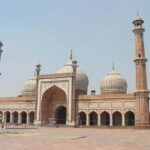
From there you move to Jama Masjid, one of the biggest mosques in the city. This is the kind of stop where the setting matters as much as the building—Old Delhi is loud, crowded, and alive, and the mosque area reflects that daily rhythm. You’re then placed near Chandni Chowk, famous for markets that pour out spices, dried fruits, silver jewelry, sari fabric, and street-level everyday essentials. This is the part where your senses get a workout.
Finally, you end with Raj Ghat, Mahatma Gandhi’s memorial. It’s a calmer emotional note after forts and bazaars. The contrast is useful: it keeps the day from feeling like one long sightseeing sprint.
A smart tip for Day 1: wear comfortable shoes and plan for street-level movement. Even if your time at each site is scheduled, Old Delhi is still Old Delhi—busy alleys and foot travel are part of the experience.
Day 2 in New Delhi: Humayun’s Tomb, Qutub Minar, the Lotus Temple, and more
Day 2 shifts you into New Delhi’s grand layout and Mughal-era landmarks. You start at India Gate, a war memorial along the ceremonial axis of the city. Then you move to the Rashtrapati Bhavan area and the Parliament House region, which helps you understand the political geography of the capital.
Next comes a pair that’s worth paying attention to for architectural storytelling:
- Humayun’s Tomb: a Mughal tomb commissioned in the late 1500s, tied to Emperor Humayun and designed by Persian architects. It’s the kind of place where the symmetry and garden setting teach you how Mughal design thinking worked.
- Qutub Minar: part of a UNESCO World Heritage complex, with a soaring minaret that dominates the skyline.
After that, the trip takes an intentionally modern-spiritual turn with the Lotus Temple. It’s a Baháʼí House of Worship open to everyone, and the building’s geometry makes it feel peaceful even in the middle of a major city. You finish with Birla Mandir (Lakshmi Narayan), a Hindu temple complex dedicated to Laxminarayan, which gives you another religious lens on the city.
One practical consideration: Day 2 includes several major stops that are geographically spread out. The private car helps, but this is still a day where you’ll feel like you’re moving. If you tend to get overwhelmed by big schedules, keep water handy and take small breaks when your guide gives you a pause.
Day 3-5 Rishikesh: yoga retreat structure with room to breathe

This is where the trip stops feeling like a typical Golden Triangle tour and starts feeling like a personal reset.
On Day 3, you drive from New Delhi to Haridwar, with breakfast served on board, and then transfer to Rishikesh. The overnight stay is tied to yoga and meditation. In other words, you’re not just sightseeing; you’re entering the rhythm of the place.
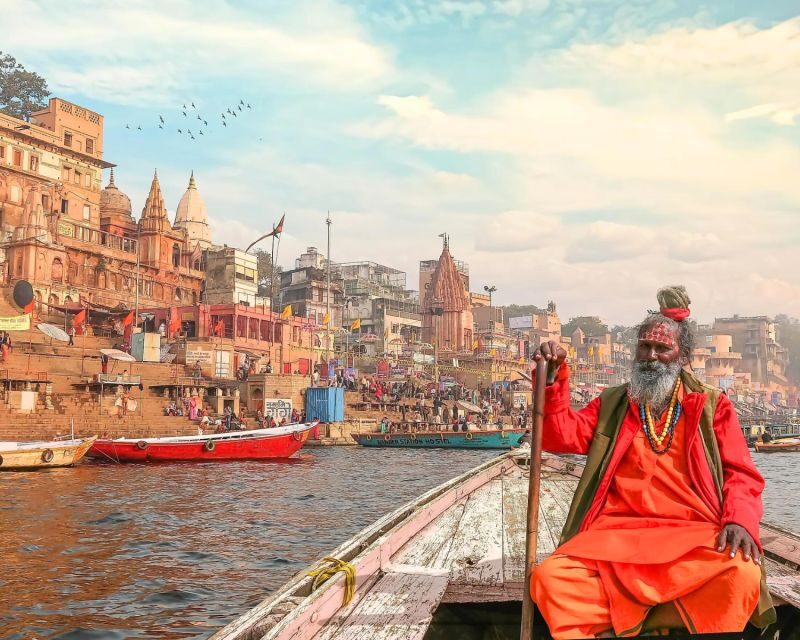
Day 4 is a free exploration day in Rishikesh, and it explicitly includes Laxman Jhula and the holy Ganges River. In the evening, you return to yoga and meditation practice. That’s a great rhythm: daytime wandering, evening structure.
Day 5 keeps the same vibe with another free day at your own pace, again anchored around yoga and meditation time. You can use this day to slow down. Watch the river activity. Walk when you want. Choose how much energy you spend.
A reality check: yoga retreats can mean different things in different locations. This tour keeps it simple: you have yoga and meditation included during the retreat stay, plus free time for your own exploration. It’s a solid setup for people who want spiritual time without turning the entire trip into a strict program.




Day 6 Haridwar return: a quieter transition back to Delhi
Day 6 is a useful hinge. You have free time in Haridwar, then in the afternoon you depart by car back toward Delhi. On the way back, the schedule includes dinner served on board. When you arrive, you’re met by a representative and transferred to your Delhi hotel for the night.
This day matters because it reduces decision fatigue. Instead of you trying to figure out trains, timing, and connections across Haridwar to Delhi, the tour handles the transfer and keeps you fed and settled.
If you want your energy to stay intact, treat Day 6 like recovery time. After a spiritual-focused segment, it’s easy to overshop or overwalk. Keep it light, save your strongest legs for Agra and Jaipur.
Day 7 Taj Mahal and Agra Fort: the big icons, with context
Agra day is the kind of day that can either feel magical or stressful, depending on pacing. Here, you’re given Taj Mahal time followed by Agra Fort.
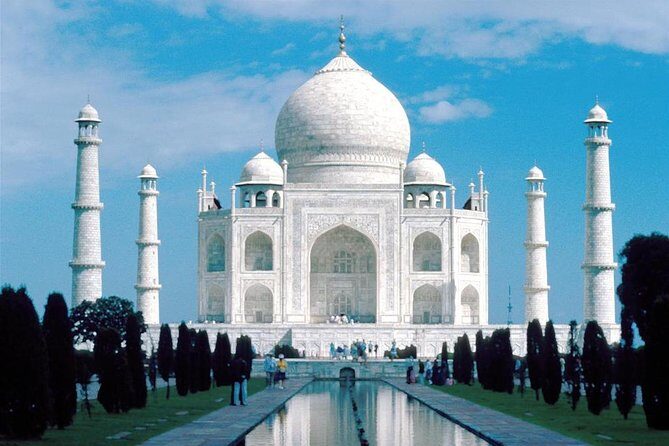
The Taj Mahal is described as the ivory-white marble mausoleum commissioned in 1632 by Emperor Shah Jahan to house Mumtaz Mahal’s tomb, and it also includes Shah Jahan’s tomb. Knowing the basics helps you look beyond the postcard look. You start paying attention to symmetry, materials, and the way the monument sits in its river setting.
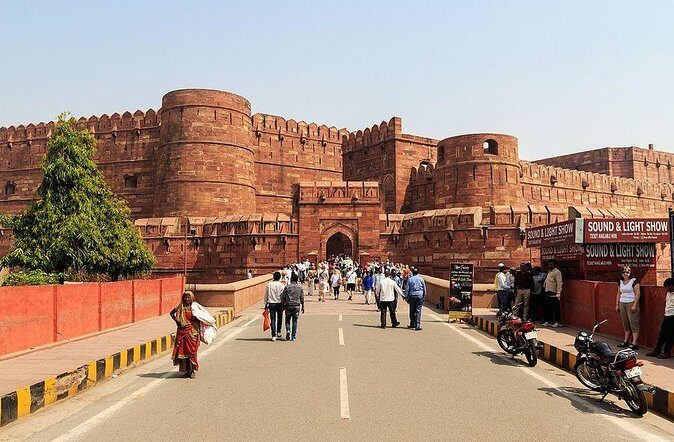
Then you move to Agra Fort, a Mughal stronghold that served as the main residence of Mughal emperors until the capital shifted away from Agra. That contrast is good: one site is pure romance and memorial artistry; the other is power, administration, and defense.
Practical tip: bring something for weather changes. Agra can feel warm in daylight and cooler later, and long outdoor stretches can catch you off guard.
Day 8 Fatehpur Sikri en route to Jaipur: the royal detour that pays off

Day 8 keeps the momentum but adds a smart detour. You drive from Agra toward Jaipur, stopping at Fatehpur Sikri along the way.
Fatehpur Sikri is known in your itinerary as an en-route visit before you continue to Jaipur for hotel check-in. Even with a limited time block, it’s worth using your guide here. Fort cities like this can be hard to understand from a map, so you’ll get more out of the stop if your guide explains how the place functioned historically.
In the evening, you get free time to walk around and visit bazaars. This is where Jaipur starts to feel lived-in. The best move is to keep your shopping curious, not frantic. Walk first, compare prices later, and remember that your future days include shopping time too.
Day 9 Jaipur architecture day: Jal Mahal, City Palace, Jantar Mantar, Hawa Mahal
Jaipur is designed for visual impact, and Day 9 is basically a greatest-hits architecture lineup.
You start with Jal Mahal, the palace surrounded by Man Sagar Lake. It’s short on time in the schedule, but it sets the stage: Jaipur isn’t only forts on hills; it also plays with water and spectacle.
Next is City Palace of Jaipur, a royal complex established when Jaipur was founded and connected to Maharaja Sawai Jai Singh II. This stop helps you understand how the city’s monarchy and administrative life shaped the architecture around it.
Then you visit Jantar Mantar, the observatory with large-scale instruments built for astronomical measurements. It’s not just a building—it’s a science site dressed in stone and geometry.
Finally, you end with Hawa Mahal, the Palace of Wind, built in 1799. Its red and pink sandstone look and the women’s chamber connection make it a surprisingly human stop within the grand royal story. It also gives you an easy photo moment and a sense of how the city’s facades were designed to interact with life inside.
One caution: when you pack multiple major landmarks into a single day, you may feel rushed if you try to do everything at once. Use your guide to prioritize what you care most about—architecture, design, or storytelling—and let the rest be background.
Day 10 Jaipur shopping and crafts: textile and gemstone factory visits
Day 10 gives you a more flexible feel. After breakfast, you have free time for shopping and then visit textile factories and gemstone factories.
This is a good addition if you want to take home something meaningful beyond a souvenir magnet. Even if you’re not buying, these visits can help you understand what you’re seeing in Jaipur’s markets—what materials are used, how items are made, and why certain things cost more.
Then, in the afternoon, you drive back to Delhi, check in at your hotel, and stay overnight.
If you’re shopping for fabric or stones, keep in mind that factory visits often come with sales momentum. Go in with a plan: set a budget, decide what type of item you want, and don’t feel pressured to buy on the spot.
Day 11 departure: smooth finish back in Delhi
Your final day is straightforward: a departure transfer to airport/train station for your onward plans. It’s simple, which is exactly what you want after 10 days of moving, walking, and paying attention.
If you have a late flight, I’d still assume you’ll have some buffer time built in for hotel checkout and transfer. The tour keeps it calm rather than squeezing in a last-minute attraction.
Price and value: $500 plus the extras you must budget
At $500 per person for an 11-day North India route, the value depends on how you handle the parts that are not included.
Here’s what’s included:
- Private vehicle transport
- Local guide
- Hotel pickup and drop-off
- Bottled water
Here’s what’s not included:
- Monument entrance fees
- Lunch
- Alcoholic drinks
- Your accommodation choice, which costs extra
That last item is important. This isn’t a tour where you pay one price and the lodging is magically handled. You get to choose where you stay, but you should price that in when comparing value versus other packages.
The way I look at it: if you want the comfort of private transport and a guide to make sense of major sites, you’re paying for fewer hassles. If you’re trying to travel super-budget with only public transport and skip most paid sites, then the tour’s structure may feel less efficient. But if you want a clean route with reduced stress, $500 can be a fair deal.
The small-group size (max 6) also affects value. Less crowding means your guide’s attention and your timing are easier to manage.
Practical tips to make the itinerary feel easy, not rushed
- Plan for paid admissions: since monument tickets are not included, set aside money for entry fees and any additional charges you choose to pay.
- Budget lunch: lunch is not included, so decide how you’ll handle meals—carry water, eat near the stops, and avoid waiting for a late lunch.
- Wear shoes for street-level days: Old Delhi and bazaar areas are foot-heavy.
- Bring breathable layers: you’ll move between regions, and weather can shift across the trip.
- Communicate early if you’re changing hotel choices: since accommodation is extra, lock in your plan so transfers stay smooth.
One more practical note: the service is run with a strong focus on driver professionalism and clear communication. Names that come up include drivers Lalan and Akshay—both described as punctual and polite, with good English. That matters because when the route gets busy, it’s your driver’s handling of timing and logistics that keeps the trip comfortable.
Should you book this Golden Triangle With Rishikesh tour?
Book it if you want a structured Golden Triangle with real pacing, plus a meaningful spiritual break in Rishikesh instead of just adding another city. It’s especially a good fit if you like having a guide to connect the dots between forts, tombs, temples, and the way people live around these sites.
Skip it or consider alternative options if you’re determined to keep costs ultra-low. With monument entrance fees and lunch not included, and with accommodation chosen by you (extra cost), the final total depends heavily on your choices at each step.
Overall, I think this is a smart package for travelers who want the big sights—Taj Mahal, Jaipur architecture, Delhi’s Mughal landmarks—without turning the trip into nonstop sprinting.
FAQ
What cities are included on this tour?
The tour covers Delhi, Jaipur, Agra, Rishikesh, and includes a Haridwar stop.
How long is the Golden Triangle with Rishikesh tour?
It’s approximately 11 days.
What is the group size limit?
The tour has a maximum of 6 travelers.
Is pickup and drop-off included?
Yes. Hotel pickup and drop-off are included.
What’s included in the price?
Included items are transport by private vehicle, local guide, bottled water, and hotel pickup and drop-off.
Are monument entrance fees included?
No. Entrance fees of monuments are not included.
Is lunch included?
No. Food and drinks, unless specified, are not included, and lunch is listed as not included.
What travel documents do I get?
You receive a mobile ticket.
What is the cancellation policy?
There is free cancellation. You can cancel up to 24 hours in advance of the experience start time for a full refund.