REVIEW · NEW DELHI
Golden Triangle Tour India
Book on Viator →Operated by Indiancircle Tours · Bookable on Viator
Delhi, Agra, Jaipur in one smooth loop.
This Golden Triangle Tour is built for travelers who want major sights without the daily planning headache. I especially like the private, air-conditioned transportation plus the 3-star hotel base for 5 nights, so your time stays focused on monuments and neighborhoods. The one thing to watch is the cost of entrance fees and a camera fee—they add up fast once you start ticking off big-ticket sites like the Taj Mahal.
What also makes this tour feel practical is the human touch at the edges: a representative meets you at the airport for a welcome garland, and a language guide is available based on your needs. Your days are packed, but the structure keeps you from losing time to transit surprises—useful on a route as popular as the Golden Triangle. Still, because it’s schedule-heavy, you’ll want to pace yourself and keep breaks real (especially if you’re sensitive to heat, crowds, or long museum time).
In This Review
- Quick Take: What’s Most Interesting Here
- Price and Logistics: Is $275 Good Value?
- The Private Car Advantage on the Golden Triangle
- Day 1 in Delhi: Airport Welcome and First-Class Orientation
- Day 2: Delhi’s Iconic Starts Before the Agra Leg
- Day 3 in Agra: Taj Mahal + Forts + Baby Taj
- Taj Mahal: the marquee stop
- Agra Fort: power, not romance
- Itmad-ud-Daula: the Baby Taj
- A small budget note about Agra
- Day 4 in Jaipur: Forts, Stepwells, Palaces, and the 953-Window Facade
- Amber Fort: start high, look wide
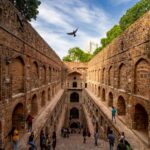
- Panna Meena ka Kund: a stepwell with geometry
- Royal Gaitor Tumbas: marble cenotaphs in gardens
- Jal Mahal: the floating palace moment
- City Palace: where styles mix
- Jantar Mantar: old-school science
- Hawa Mahal: the 953-window façade
- Albert Hall Museum: Rajasthan artifacts and art
- Patrika Gate and shopping stops
- Day 5: Back to Delhi and a Real Free Day
- Day 6 in Delhi: Gandhi, Mosques, Markets, and the Big Forts
- Raj Ghat: calm before the crowds
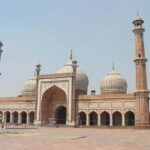
- Jama Masjid: Mughal scale
- Chandni Chowk: street life and sensory overload
- Red Fort: Mughal power in stone
- Lotus Temple: quiet geometry
- Humayun’s Tomb: design link to the Taj
- Qutub Minar complex: towers and older structures
- Dilli Haat: markets with a different vibe
- What I’d Prepare Before You Go
- Should You Book This Golden Triangle Tour?
- FAQ
- How many days is the Golden Triangle Tour India?
- What’s included in the tour price of $275 per person?
- Are monument entrance fees included?
- Is pickup available, and where does the tour start?
- Is this a private tour?
- Can I cancel for a full refund?
Quick Take: What’s Most Interesting Here
- Airport welcome with a garland so you start with less stress
- Private car with an allowance for the driver, plus parking handled
- 5 nights in 3-star hotels and 5 breakfasts, with daily bottled water
- A very sight-focused route: Taj Mahal, forts, palaces, mosques, and major Delhi monuments
- Shopping stops built in (Jaipur crafts and Delhi market time), so you’re not stuck only doing museums
- Entrance fees are not included, so budget ahead to avoid last-minute decisions
Price and Logistics: Is $275 Good Value?

At $275 per person for 6 days (about), this tour is priced like a “comfort + structure” package rather than a bare-bones itinerary. You’re paying for the parts that often ruin a first-time India trip: airport pickup coordination, private transport, and a hotel setup for the full multi-city swing.
Here’s what you do get in the base price:
- 5 nights in 3-star hotels
- Breakfast included (5 days)
- Private transportation in an air-conditioned vehicle
- Parking fees, airport/departure tax, and GST
- Daily bottled drinking water (2 bottles, 500 ml per person)
- A language guide as per guest requirement
- Traditionally welcome with garland at the airport
- All driver allowance included
The part that will affect your total trip cost is the money for sights. Entrance fees are not included, and the tour lists a total of about $67.65 per person for monuments, with specific prices for each major stop (for example Taj Mahal, Red Fort, Humayun’s Tomb, Qutub Minar, City Palace, and more). If you want to photograph inside where allowed, there’s also a camera fee listed as $50 USD for any camera at monuments.
So is it good value? For most people, yes—if you’re planning to see the big names anyway. If you’re the type who wants to pick and choose and skip several paid interiors, then a smaller, pay-as-you-go plan might cost less. But if your goal is a clean Golden Triangle hit list with minimal friction, this price structure fits.
You can also read our reviews of more tours and experiences in New Delhi.



The Private Car Advantage on the Golden Triangle
The Golden Triangle lives or dies on transportation. Distances between Delhi, Agra, and Jaipur are manageable, but only if you don’t spend your day negotiating rides, fighting for seats, or losing time to unclear meeting points.
This tour uses a private, air-conditioned vehicle with driver allowance included, plus parking fees handled. That matters because it turns each day into a sequence of stops you can actually enjoy—India Gate, forts, palaces, tombs—without the constant question of how you’ll get from Place A to Place B.
One practical note: the itinerary includes several “free” sights (like India Gate and Jal Mahal), but many of the biggest wow moments are paid. Your driver’s job is to keep the day moving; your job is to keep your expectations realistic. When you’re doing Taj Mahal and an Agra fort in the same larger block, you’ll want water, a hat, and time for lines.
Day 1 in Delhi: Airport Welcome and First-Class Orientation
Your trip starts in Delhi with an airport arrival welcome. After you land, an Indiancircle Tours representative greets you and you’re transferred to your hotel for check-in. The goal here is simple: help you get your bearings fast and off your feet after travel.
Later, the plan includes classic Delhi landmarks:
- India Gate: a war memorial with a big arch and surrounding park space for downtime. Admission is listed as free.
- A pass by Rashtrapati Bhavan (Presidential Residence) and Parliament House, so you get the “you’re in India’s political heart” feeling without turning it into a museum day.
What I like about the setup is that Day 1 doesn’t demand you understand every corner of Delhi. You get a first look at the scale of the city and a calm landing before the heavier historical days.
Potential drawback: if you arrive late, Day 1 can feel like a long travel-to-walking shift. The itinerary is structured, but your energy still depends on your flight schedule. If you’re jet-lag prone, schedule a slower pace at the hotel that night.
Day 2: Delhi’s Iconic Starts Before the Agra Leg
Day 2 keeps things in Delhi’s “outside and landmark” zone before you head into the Mughal-heavy stops in Agra. You’ll stand at India Gate for about 30 minutes—enough time to understand what it is and still breathe.
The passing views of the Presidential Residence and Parliament House are short, but they’re useful. They’re the kind of sights you might otherwise miss if you just wandered or relied on public transit without a plan.
If you like cities where you get both monument photos and a sense of how people live around them, this pacing makes sense. It also sets up a contrast: Delhi’s governmental symbols one day, then Agra’s imperial architecture the next.
Day 3 in Agra: Taj Mahal + Forts + Baby Taj
Agra is where the Golden Triangle tour earns its fame, and Day 3 is built around three major sites that define the Mughal aesthetic.



Taj Mahal: the marquee stop
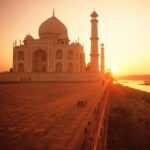
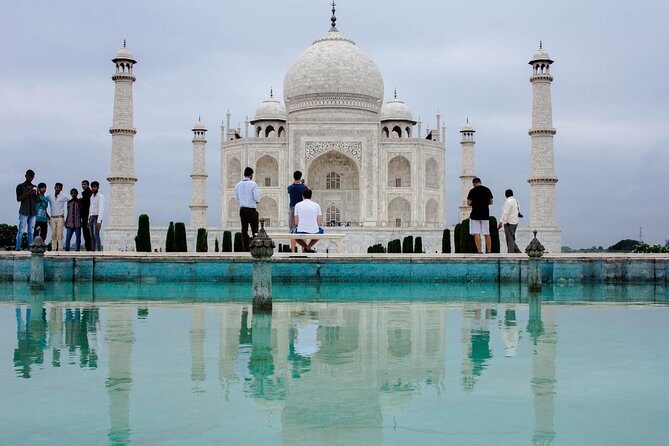
You’ll visit the Taj Mahal for about 2 hours. The tour description calls out the details that really matter once you’re there: the ivory-white marble, the intricate marble inlays, symmetrical gardens, and the reflection in the reflecting pool.
A helpful mindset: don’t try to see it as one photo. Treat it like layers. First, take in the overall symmetry. Then move to the patterns and textures. If you go in expecting only a single view, you might miss the craftsmanship.
Admission is listed as not included, priced separately at $15.66 per person.
Agra Fort: power, not romance
Next is Agra Fort, about 1 hour 30 minutes. This is a UNESCO World Heritage Site and the fort’s red sandstone architecture gives you the royal-government perspective that complements the Taj’s love-story reputation.
The tour notes grand palaces inside and specific points where you can view the Taj Mahal from the fort. That’s valuable because it gives you another angle—more strategic, less postcard.
Admission is listed as not included at $7.83 per person.
Itmad-ud-Daula: the Baby Taj
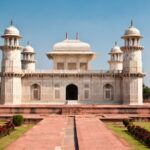
Finally, you’ll visit Itmad-ud-Daula, often called the Baby Taj, for about 1 hour. The description frames it as an elegant Mughal mausoleum with delicate design elements—often an easier stop to enjoy without feeling like you’re racing.
Admission is listed as not included at $3.73 per person.
A small budget note about Agra
The entrance-fee list also mentions Mehtab Bagh, Agra at $3.73 per person. It’s not spelled out clearly in the stop list you were given, so if this is important to you, check with Indiancircle Tours what’s included on your exact dates. The presence of it in the fee list suggests it may show up in some versions of the route.
Day 4 in Jaipur: Forts, Stepwells, Palaces, and the 953-Window Facade
Jaipur is where you get the “royal life” feeling in full force. Day 4 is the longest and most varied day, with forts, memorials, a stepwell, and several of the city’s signature landmarks.
Amber Fort: start high, look wide
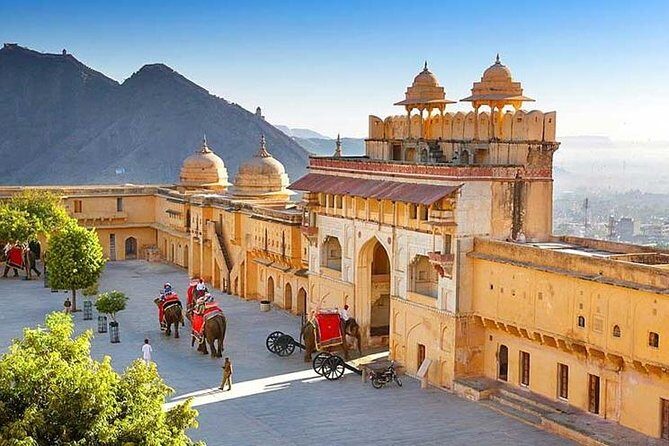
You’ll begin at Amber Fort for about 2 hours. The focus is on hilltop fortifications, palaces and courtyards, and panoramic views. Admission is not included, listed at $6.02 per person.
What to expect: more walking than you might assume. This is a place where you’ll want comfortable shoes and time to slow down in the courtyards.
Panna Meena ka Kund: a stepwell with geometry
Next is Panna Meena Ka Kund for about 30 minutes. It’s described as a stepwell known for geometric design. Admission is listed as not included for this stop, so budget for it only if you’re definitely interested in architecture and patterns.
Even if you don’t care about history lectures, stepwells can be visual calm. They also break up the heavier fort/palace sequence.
Royal Gaitor Tumbas: marble cenotaphs in gardens
You’ll visit Royal Gaitor Tumbas for about 1 hour. This is framed as a tribute to Jaipur’s rulers, with grand marble cenotaphs inside garden settings.
Admission is listed as not included. This stop isn’t the loudest on a typical Golden Triangle checklist, but it’s the kind of place where you can slow down and see how funerary architecture fits into everyday landscapes.
Jal Mahal: the floating palace moment
Then comes Jal Mahal, about 30 minutes, with a palace-like structure appearing to float on Man Sagar Lake. Admission is marked free in the data you were given.
It’s a great reset stop—short, scenic, and a chance to take photos without museum-style intensity.
City Palace: where styles mix
You’ll head to City Palace for about 1 hour 30 minutes. The tour description highlights a blend of Rajput and Mughal architecture, plus museums, courtyards, and royal chambers.
Admission is not included at $8.43 per person. If you like interiors and artifacts, this is one of the Jaipur stops worth paying extra attention to.
Jantar Mantar: old-school science
Jantar Mantar takes about 1 hour. It’s listed as a UNESCO World Heritage Site and described as an astronomical observatory with monumental instruments.
Admission is not included at $2.41 per person. Even if astronomy isn’t your thing, the scale makes it worth seeing once.
Hawa Mahal: the 953-window façade
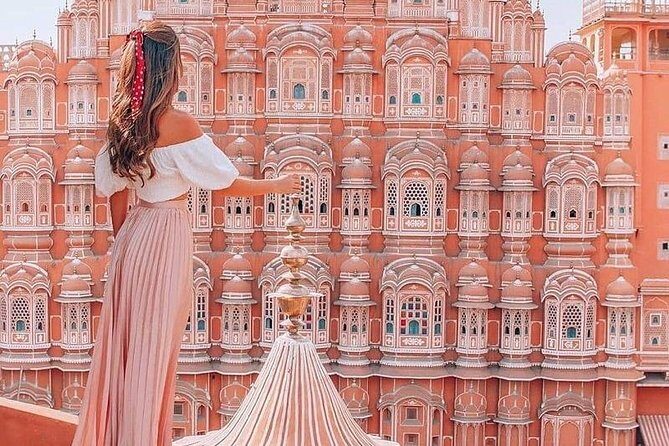
Next is Hawa Mahal, about 1 hour. The tour notes the ornate façade with 953 windows and its historical significance.
Admission is not included, and you’ll likely appreciate this most if you like architecture details. It’s also a great photo target, even if you don’t spend forever inside any single room.
Albert Hall Museum: Rajasthan artifacts and art
You’ll visit the Albert Hall Museum for about 30 minutes. Admission is not included, priced at $3.61 per person.
If you’re museum-ed out by this point, treat this as a quick skim: focus on the materials and visual style rather than trying to read everything.
Patrika Gate and shopping stops
The day ends at Patrika Gate, described as a monument honoring Rajasthan’s cultural heritage, followed by Rajasthan Cottage Industries for about 1 hour of shopping.
Admission is listed as free for the stop. This is the tour’s “buy local” moment: gemstones and jewelry, textiles, and crafts. It’s also where I’d keep your budget sanity. If you’ve ever felt pressure to shop while on a schedule, set a spending cap early. That way you can browse without regret.
Day 5: Back to Delhi and a Real Free Day
After breakfast, you check out and drive back to Delhi. When you arrive, you’re transferred to your pre-booked hotel for check-in and rest.
Then the itinerary gives you a free day at leisure with no scheduled monument blocks. This matters more than it sounds. Delhi is big, and without this breathing room you’d feel like you were constantly sprinting between checklists.
Use the free day for laundry, rest, a slower meal, or even repeating a favorite market area you didn’t fully enjoy earlier. If you’re the kind of traveler who wants one “free-choice” day per trip, this structure will feel like a gift.
Day 6 in Delhi: Gandhi, Mosques, Markets, and the Big Forts
Day 6 is another packed list, but it’s built to show you Delhi’s layers: independence-era memorials, Mughal mosques, old markets, and the skyline-level monument hits.
Raj Ghat: calm before the crowds
You’ll visit Raj Ghat for about 30 minutes. It’s the memorial to Mahatma Gandhi and the description emphasizes its calm simplicity.
Admission is free. It’s an ideal stop to reset your head before moving into the denser historical sites.
Jama Masjid: Mughal scale
Next is Jama Masjid, about 30 minutes. It’s described as one of India’s largest mosques with towering minarets and Mughal design details.
Admission is not included (no fee is listed in your data for this one), so plan for the standard ticketing process on the day.
Chandni Chowk: street life and sensory overload
Then comes Chandni Chowk time at Pasar Chandni Chowk for about 30 minutes. This is framed as a classic old market where you can navigate narrow lanes and savor street food.
Admission is listed as free for this stop. This is one of those places where you’ll either love the energy or you’ll need the right pacing. Keep hydrated and don’t try to sample everything in a half hour—choose a couple things and move.
Red Fort: Mughal power in stone
After that, Red Fort for about 1 hour. It’s listed as a UNESCO World Heritage Site and the description points to its role as Mughal power for centuries.
Admission is not included.
Lotus Temple: quiet geometry
Next is the Lotus Temple, about 1 hour. The tour notes it’s a Bahá’í House of Worship with a lotus-shaped design and an emphasis on meditation and reflection.
Admission is not included. This stop can feel like a palate cleanser after Red Fort and the market noise.
Humayun’s Tomb: design link to the Taj
Then you’ll visit Humayun’s Tomb for about 30 minutes. It’s UNESCO listed, and the description notes how its architecture influenced the design of the Taj Mahal and reflects Mughal opulence.
Admission is not included. Even in a short visit, the gardens and symmetry make it feel substantial.
Qutub Minar complex: towers and older structures
You’ll spend about 1 hour 30 minutes at Qutub Minar and Complex, including structures like Alai Darwaza and Quwwat-ul-Islam Mosque.
Admission is not included, with Qutub Minar complex fee listed at $7.33 per person.
This is one of the stops where you’ll likely want to look up often. The whole point is vertical scale and the way different structures sit together across time.
Dilli Haat: markets with a different vibe
Finally, you’ll visit Dilli Haat for about 1 hour. The description frames it as market time across Delhi’s different shopping areas, giving you a structured browse.
Admission is listed as free for this stop.
This ending sequence makes sense: monuments early, then market energy as a gentle landing into departure time.
What I’d Prepare Before You Go
This tour is very doable for most people, but being ready makes it smoother. Here’s what I’d pack mentally and physically based on what’s on the schedule.
- Budget for entrances: the route lists Taj Mahal, Red Fort, Humayun’s Tomb, Qutub Minar, City Palace, and several others with separate prices totaling around $67.65 per person, plus a listed camera fee of $50 USD where applicable.
- Wear walking shoes: forts and palace complexes mean stairs and uneven surfaces.
- Plan for heat: you’ll have midday sun exposure between Delhi, Agra, and Jaipur blocks.
- Use your language guide: if your language isn’t English, make it a priority. A good guide turns a “look at the building” stop into a “why this matters” stop.
Should You Book This Golden Triangle Tour?
If you want a structured Golden Triangle with private transportation, hotel nights handled, and the major sights lined up, this is a solid pick. The pricing makes sense when you value the convenience: airport welcome, air-conditioned private vehicle, and most breakfasts included. It’s also a good match if you like tours where the guide explains what you’re seeing—not just pointing.
I’d think twice if you hate paying lots of entrance fees, or if you prefer slower days with fewer stops. This itinerary is full, and the free time you do get is on Day 5 in Delhi—so you’re trading “flexibility” for “coverage.”
Bottom line: book it if your dream trip is Delhi, Agra, and Jaipur with minimal logistics stress and maximum iconic sights in a tight loop.
FAQ
How many days is the Golden Triangle Tour India?
It’s listed as 6 days (approximately), with 5 nights in 3-star hotels.
What’s included in the tour price of $275 per person?
The included items are GST, parking fees, airport/departure tax, language guide as per guest requirement, daily bottled drinking water (2 bottles per person), airport welcome with garland, driver allowance, private air-conditioned transportation, 5 nights accommodation in 3-star hotels, and breakfast for 5 days.
Are monument entrance fees included?
No. Monument entrance fees are not included, and the data provides separate prices for major sites like the Taj Mahal, Red Fort, Humayun’s Tomb, Qutub Minar, City Palace, and others.
Is pickup available, and where does the tour start?
Pickup is offered, and the start meeting point is Indira Gandhi International Airport Metro Station, Delhi. The tour ends back at the same meeting point.
Is this a private tour?
Yes. It’s listed as a private tour/activity, so only your group participates.
Can I cancel for a full refund?
Yes, free cancellation is available if you cancel up to 24 hours in advance for a full refund.