REVIEW · NEW DELHI
Golden Triangle Tour – Delhi Agra Jaipur
Book on Viator →Operated by Indian Travel Tour - Private Day Tours · Bookable on Viator
That first glimpse of the Taj changes everything.
This private Golden Triangle Tour (Delhi–Agra–Jaipur) strings together Delhi monuments, an early Taj Mahal visit, and Jaipur’s forts and palaces with real on-the-ground guidance. I like that you get help designed to cut friction, like priority queue access and clear communication via real-time WhatsApp updates.
The best part for me is how practical it feels once you’re in India. I really value the English-speaking local guides (with past guests mentioning guides like Satish and Raja) and the comfortable A/C vehicle setup, so you spend more time seeing and less time figuring out logistics.
One thing to consider: most monument entry fees are not included, so your total cost will be higher once you add tickets. Also, the plan depends on good weather, especially for the Taj Mahal sunrise experience.
In This Review
- Key highlights you’ll feel on the trip
- Is This $250 Golden Triangle Package Worth It?
- Delhi’s Qutub Minar, Lotus Temple, and the quick wins first
- A quick practical note on morning monument comfort
- Parliament House to Jama Masjid: two very different Delhi moods
- Agrasen Ki Baoli and Humayun’s Tomb: Delhi’s quieter, stranger side
- Chandni Chowk: shopping energy with a guide steering you
- The Yamuna Expressway drive to Agra and why lunch choice matters
- Taj Mahal sunrise: how this timing changes everything
- Agra Fort and Itmad-ud-Daula: seeing the city beyond one postcard
- Abhaneri’s Chand Baori stepwell: a stop that rewards patience
- Jaipur: Amber Fort plus the royal layout of the Pink City
- Jal Mahal photos: a quick win when time is tight
- City Palace, Jantar Mantar, and Hawa Mahal in one focused route
- How the tour runs: private groups, real guides, and room to adjust
- Cost breakdown reality check: what you should budget for tickets
- Should you book this Golden Triangle Tour?
- FAQ
- How long is the Golden Triangle Tour – Delhi Agra Jaipur?
- What does the tour cost?
- What’s included in the price?
- Are monument entry fees included?
- Is pickup offered and do I receive a ticket on my phone?
- What is the cancellation policy?
Key highlights you’ll feel on the trip

- Priority queue help at the big-ticket sights so you lose less time waiting.
- Small private setup where it’s only your group, not a big bus herd.
- A/C vehicle with onboard comfort like free water, snacks, and first aid support.
- Taj Mahal sunrise timing before the heaviest crowds build up.
- A mix of Delhi stops that blend Mughal-era landmarks and Old Delhi shopping streets.
Is This $250 Golden Triangle Package Worth It?
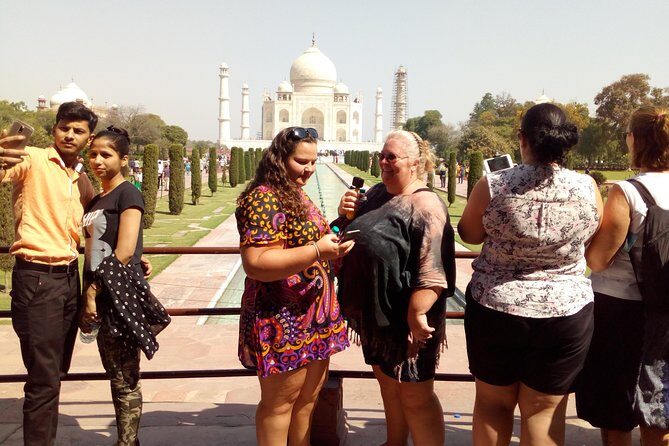
$250 per person for a 4-day private-style route through Delhi, Agra, and Jaipur is a solid deal if you want a guided, organized trip rather than DIY. You’re paying for someone to handle the driving, the day-by-day timing, and the guiding inside major sites. That matters a lot on this route because the distances are real and the crowd flow can be chaotic.
What’s included is the stuff that usually costs you time and energy when you travel on your own: an air-conditioned vehicle, breakfast with accommodation, an English-speaking local guide, plus taxes, tolls, parking, fuel, and the driver’s services. Then there’s the added value layer: pickup is offered, you get a mobile ticket, and the operator emphasizes priority queue access.
What’s not included is also important. Entry fees at monuments aren’t included in general, so you should plan for extra ticket cost at places that are marked not included. A few stops are free or included (like Lotus Temple and Chandni Chowk), and India Gate is listed as included. But most of the major sights will still require paid tickets.
You can also read our reviews of more tours and experiences in New Delhi.



Delhi’s Qutub Minar, Lotus Temple, and the quick wins first
Delhi is a lot on day one, so I like that the tour starts with major landmarks that give you instant orientation. Qutub Minar is your first big statement: a 73-meter UNESCO World Heritage tower built in 1193. The tower is the kind of monument you can enjoy even if you only have an hour, because it gives you clear scale and a sense of Delhi’s Sultanate era.
From there, Lotus Temple is a smart shift in tone. It’s free, it’s architecturally distinctive (a lotus flower design), and it welcomes visitors of all backgrounds. I appreciate that this stop is short—about 30 minutes—because it works like a reset button. If you’re tired from travel or just feel overwhelmed, this kind of calm sight helps you keep your energy for Old Delhi later.
India Gate follows, and this is another good “breather” stop. It’s a war memorial on Rajpath, and it’s also one of Delhi’s go-to evening hangouts. Even if you’re not a military history person, it helps to see how locals use public spaces in real life, not just as photo backdrops.
A quick practical note on morning monument comfort
Delhi days can be warm, and walking can be uneven around some historic sites. Wear shoes you can handle for a few miles across a day, and keep water handy. The tour setup includes free water in the vehicle, which takes the edge off when you’re out and about.
Parliament House to Jama Masjid: two very different Delhi moods
After those landmark stops, you get a brief look at Parliament House (Sansad Bhavan). The tour lists it as a short stop, and that makes sense. It’s worth seeing from the outside because the circular design is visually striking and the setting in landscaped gardens adds to the experience, but you likely don’t need a long time there.
Then comes Jama Masjid, which is where Delhi turns loud and big. It’s one of India’s largest mosques, built by Mughal Emperor Shah Jahan between 1650 and 1656. This kind of place rewards a guided explanation because you start noticing details you would miss on your own—scale, layout, and the Mughal architectural logic.
One drawback here is crowd pressure. This stop is marked at about an hour, but depending on the day, you might feel rushed in certain areas. The upside is that a guide helps you move with purpose, so you’re not just standing around waiting for the group to catch up.
Agrasen Ki Baoli and Humayun’s Tomb: Delhi’s quieter, stranger side
Next, you hit a spot that’s famous for a reason but still feels off most tourist routes: Agrasen Ki Baoli (a stepwell). You’re there for only about 15 minutes, but that short time is useful. It’s protected and connected to ancient water conservation architecture, and the 60-meter length and 15-meter width make it feel substantial, even though you’re not walking miles.
Then you’ll shift to Humayun’s Tomb, another UNESCO site and a key Mughal landmark commissioned in 1558 by Empress Bega Begum. This is the kind of place where you’ll get more from a guide because the story connects to what comes later in Agra. It’s often easier to understand the Taj Mahal when you’ve seen what came before it, and Humayun’s Tomb is one of those stepping-stone sights.
The gardens and the sense of symmetry help too. If Delhi felt overwhelming earlier, this stop can feel restorative.




Chandni Chowk: shopping energy with a guide steering you
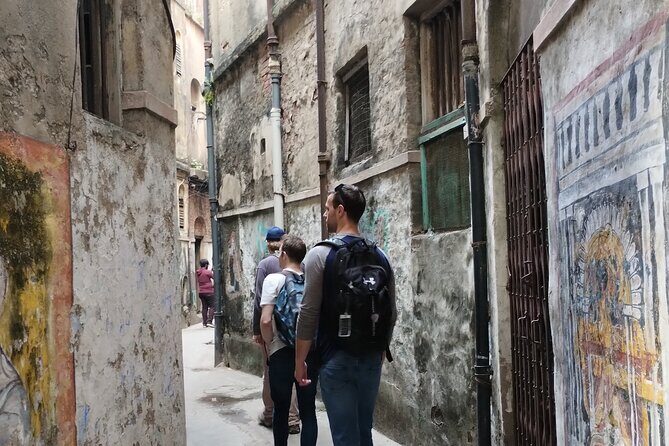
You end the Delhi loop with Chandni Chowk, which is free to enter and about an hour in time. This is Old Delhi at full volume: narrow lanes, spice vendors, silver and sari shops, sweet sellers, and a street layout that can feel like sensory overload if you’re not ready.
I find this kind of stop works best when someone helps you read the space. A guide can steer you toward what’s easiest to browse (and what’s easiest to skip), and you’re less likely to get stuck in a slow-moving pocket of the market. If your goal is souvenirs, snacks, or just absorbing the vibe, it’s a good final anchor before you move on.
The Yamuna Expressway drive to Agra and why lunch choice matters
Once you finish Delhi sightseeing, the tour includes a drive out toward Agra via the modern Yamuna Expressway Link Road, listed as about three hours. It’s not just transportation—it’s time management. By building in a real travel block instead of scattering stops, you avoid the burnout that happens when each day is half driving and half waiting.
Lunch is included as part of this transition, at a selected local restaurant. This is a key value point. You’re not stuck eating whatever is closest to the road, and you’re aiming for authentic food at a local place rather than only tourist-style menus.
By the time you reach Agra, you check into your hotel and your evening is at your own pace. I like this setup because Agra can feel intense in the morning. Having downtime helps you be ready for the big day ahead.
Taj Mahal sunrise: how this timing changes everything
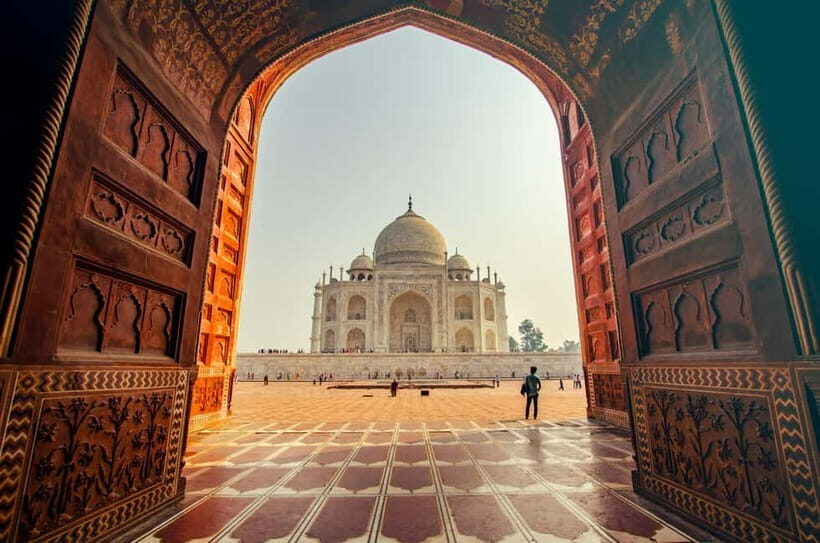
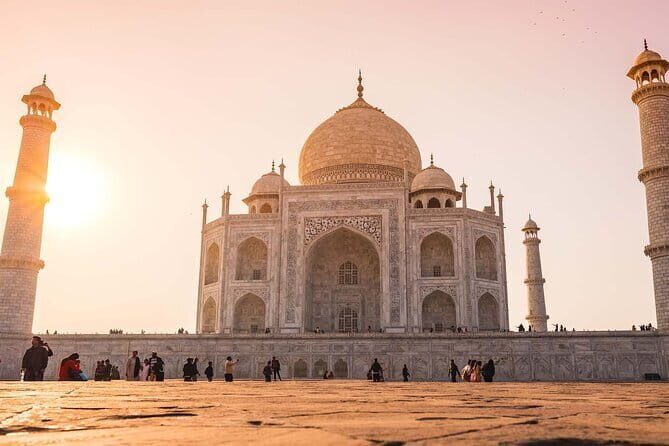
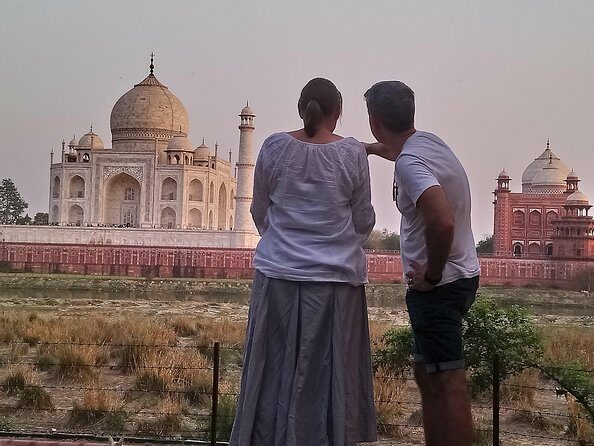
The highlight of the whole itinerary is the Taj Mahal at sunrise. The tour is designed so you see the marble when the light is soft and the crowds are still building. You’ll get about a two-hour guided tour inside the UNESCO site.
This timing is more than a romantic detail. It’s practical. Early hours mean you spend less time moving through packed corridors, and you get better chances for clear views of the main elements without the constant interruption of crowd surges.
One note: Taj Mahal entry fees are not included. So while the morning experience is a huge draw, you’ll still need tickets on top of the base price. Still, compared to paying for a separate private Taj guide plus an independent transport plan, this package often works out simpler.
If you want photos, sunrise is also where the architecture looks most dramatic. You get that classic golden cast on the stone before the day turns harsh.
Agra Fort and Itmad-ud-Daula: seeing the city beyond one postcard
After the Taj, Agra has more to offer than just the main attraction. Agra Fort is a UNESCO fortress with royal palaces, ornate balconies, and Mughal gardens. It’s listed for about an hour with a guide. For me, this is where the Taj story becomes bigger—this is the environment where power played out, not just where one love story was memorialized.
Then comes Itmad-ud-Daula, often called the Baby Taj. This Mughal mausoleum, built between 1622 and 1628, is known for its architectural transition from red sandstone to white marble—details you’ll miss if you rush. The visit is short (about 30 minutes), so it works as a satisfying closer without draining your day.
Agra Fort plus Itmad-ud-Daula make your Agra experience feel complete. Without them, you’d leave with only one dominant memory. With them, you connect the dots between styles, materials, and the way Mughal architecture evolved.
Abhaneri’s Chand Baori stepwell: a stop that rewards patience
On the way toward Jaipur, the itinerary includes Chand Baori in Abhaneri, with about 30 minutes there. This stepwell is massive, with around 3,500 steps descending to reach water at the bottom, and it’s tied to ancient engineering and water conservation.
It might sound like a random detour until you see it. Stepwells are visual logic made physical—geometry, shade, depth, and sound changing as you move. This kind of stop also balances the trip. After days of grand tombs and forts, Chand Baori gives you something different to look at and different stories to hear.
The trade-off is time. Thirty minutes is tight, so if you enjoy slow photography or long explanations, you’ll want a guide who keeps you moving efficiently while still letting you appreciate the structure.
Jaipur: Amber Fort plus the royal layout of the Pink City
Once you reach Jaipur, you check in and have time to rest and prepare for sightseeing. That matters because Amber Fort plus the later palaces and observatories can be a long day.
The main Jaipur highlight is Amber Fort, the former capital until 1728. It’s listed for about two hours. Built by Raja Man Singh I, the fort is packed with Rajput architecture—courtyards and palace interiors that are more detailed than a quick exterior glance suggests. If you like forts, this stop is worth your full attention.
Jal Mahal photos: a quick win when time is tight
Right after Amber Fort, there’s a Jal Mahal photo stop. You’ll see the palace appear to float on Man Sagar Lake. It’s an 18th-century structure, and it’s associated with renovations and enlargement by Maharaja Jai Singh II of Amber.
This is one of those stops that’s mostly about sightlines. You’ll likely get the best value if you take a few photos, enjoy the view, and then keep moving. It’s not meant to be a long exploration, but it’s a nice visual break.
City Palace, Jantar Mantar, and Hawa Mahal in one focused route
Jaipur keeps rolling with three key stops:
- City Palace of Jaipur (about one hour): an administrative and ceremonial center built in 1721. It helps you understand the city beyond the postcard streets.
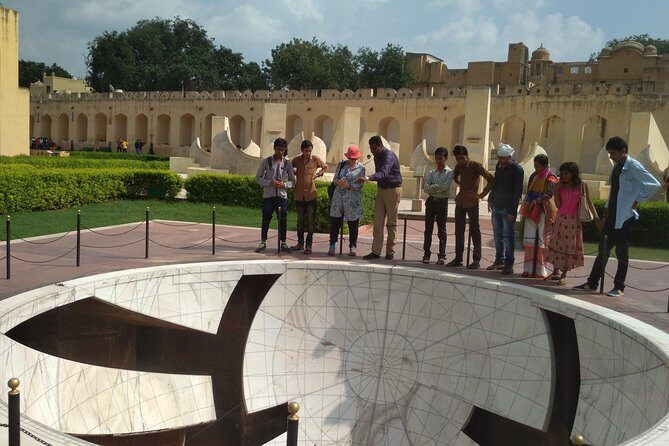
- Jantar Mantar (about one hour): a UNESCO site created in 1734 with nineteen massive astronomical instruments. It’s a rare mix of science and architecture, and it’s easier to enjoy with a guide who can explain how the tools were meant to be used.
- Hawa Mahal (about 15 minutes): the Palace of Wind, built in 1799. It’s visually iconic, and the short stop works because you get what you came for without losing the day to extra wandering.
These are very different stops, and that variety is the point. Jaipur isn’t just one type of sight. You’re looking at royal power, scientific thinking, and street-level iconic design all in one loop.
How the tour runs: private groups, real guides, and room to adjust
The operator’s approach centers on keeping the trip smooth. You ride in an air-conditioned vehicle with WiFi, free water, and snacks onboard, plus first aid support. That sounds like comfort fluff until you’re in heat, stuck between sights, or stuck in traffic. Then it becomes the difference between feeling fine and feeling frazzled.
The guides are English speaking and local, with a focus on storytelling and explanations that help you make sense of what you’re seeing. In past customer notes, guides like Satish, Raja, and drivers like Rahman came up as examples of friendly, steady support.
Another big advantage is that the tour is private in the sense that it’s only your group. That means you’re not racing to match a crowd’s pace. It also means you can ask for small changes. The tour description says you can customize on the spot—for example, spending more time at the Taj Mahal or skipping a stop if you’re tired. When this kind of flexibility is real, it turns a fixed checklist into a trip that fits your energy.
Cost breakdown reality check: what you should budget for tickets
To judge value, I always separate base price from monument tickets. Your $250 per person covers the guide, transportation, and included meals like breakfast. It does not cover most monument fees.
From the stops listed, you can expect some tickets to add up, especially at:
- Qutub Minar
- Jama Masjid
- Humayun’s Tomb
- Taj Mahal
- Agra Fort
- Itmad-ud-Daula
- Chand Baori
- Amber Fort
- Jal Mahal
- City Palace
- Jantar Mantar
- Hawa Mahal
Some are free or included: Lotus Temple and Chandni Chowk are free, and India Gate is included. But the balance still leans toward paid tickets.
If you want fewer surprises, set aside extra spending money for entries at the major sites. It turns your budget from guesswork into a plan.
Should you book this Golden Triangle Tour?
Book it if you want an organized Golden Triangle trip with a guide who helps you get your bearings fast, especially if it’s your first time in India. I’d also recommend it for couples or families because you get a private-group feel without losing structure, and you’ll cover a lot without the stress of route planning.
Skip it or rethink it if you hate early mornings, because Taj Mahal sunrise is a core part of the experience. Also, if you’re extremely budget-sensitive, remember that entry fees at many monuments are not included, and those costs can swing your final total.
One more decision factor: the tour requires good weather. If weather is unstable, you might get a different date or a full refund, depending on how the operator handles cancellations for weather.
If you want the simplest path through Delhi, Agra, and Jaipur with strong logistics and real local guidance, this one is an easy yes.
FAQ
How long is the Golden Triangle Tour – Delhi Agra Jaipur?
The duration is listed as 4 days (approx.).
What does the tour cost?
The price is $250.00 per person.
What’s included in the price?
Included features list an air-conditioned vehicle, breakfast with accommodation, an English speaking local guide, and state tax, toll, parking, fuel, and driver’s services.
Are monument entry fees included?
No, entry fees at the monuments are not included. Some sights are free or included, such as Lotus Temple, Chandni Chowk, and India Gate as listed.
Is pickup offered and do I receive a ticket on my phone?
Yes, pickup is offered, and you’ll receive a mobile ticket.
What is the cancellation policy?
You can cancel for a full refund up to 24 hours in advance. The experience also requires good weather, and if it’s canceled due to poor weather, you’ll be offered a different date or a full refund.