REVIEW · NEW DELHI
Golden Triangle of India : Delhi | Agra | Jaipur
Book on Viator →Operated by MTA Destination Management Company · Bookable on Viator
A private Golden Triangle can make India feel less like a blur. I like the private chauffeured car with a guide at the big sights, and I like that entry fees and transfers are handled for you. That combination means more time seeing, less time negotiating.
One thing to plan for: parts of the day can be structured around guided access and sometimes shopping stops happen along the way. If you prefer to skip those, set expectations early and watch the pacing.
In This Review
- A Private Golden Triangle Route That Moves at Your Pace
- Key Points I’d Prioritize Before You Go
- First Day in Delhi: Old Delhi Mosques, Rickshaws, Raj Ghat and Qutub Minar
- The Agra Jump: Taj Mahal First, Then Agra Fort
- Fatehpur Sikri and Chand Baori: A Detour That Feels Like Time Travel
- Jaipur’s Royal Core: City Palace, Jantar Mantar, and Hawa Mahal
- How the Included Pieces Change the Value (Hotels, Guides, Entry Fees, Water)
- A Balanced Reality Check: Shopping Stops and Meals You Control
- Who This Private Golden Triangle Tour Fits Best
- Should You Book This Golden Triangle Private Tour?
- FAQ
- What time does the tour start?
- How long is the Golden Triangle tour?
- Is this a private tour or shared group?
- What’s included in the price besides the sightseeing?
- Do meals come with the tour?
- Are monument tickets included?
- Will I have help at the start in Delhi?
- Do I need to pay extra for tips?
- What if weather is bad?
- Can I cancel and get my money back?
A Private Golden Triangle Route That Moves at Your Pace
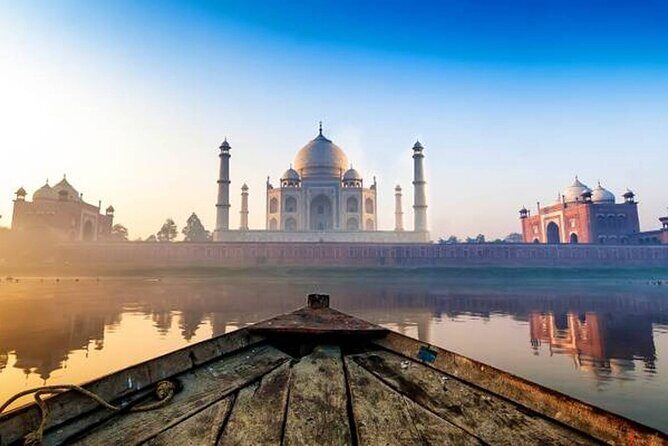
This is the kind of India trip that works if you want the highlights of the Golden Triangle—Delhi, Agra, Jaipur—without the hassle of figuring out transport, tickets, and timing on your own. You travel by private air-conditioned vehicle, and your guide joins you for the main monuments, so you’re not standing around wondering what you’re looking at.
The value is in the coverage. You get four nights in hotels, monument entry fees, a rickshaw ride in Old Delhi, and daily bottled water. It also uses a mobile ticket, and you meet an MTA representative at the start of the tour with a name placard, which is reassuring after a flight.
The overall feedback score is strong: 4.9 rating with 97% recommended. That typically signals you’re paying for smooth execution, good guide energy, and fewer “where do we go now?” moments.
Key Points I’d Prioritize Before You Go
- Private car + guide at major sights keeps you from losing time to taxi lines or missed entrances
- Old Delhi by rickshaw is the fastest way to feel the city’s everyday energy in one hour
- Four-night, hotel-plus-entries package reduces planning stress and ticket-hunting
- Agra and Jaipur are tightly grouped so you don’t burn half your trip in transit
- Watch for shopping detours and make your preferences clear on day one
You can also read our reviews of more tours and experiences in New Delhi.



First Day in Delhi: Old Delhi Mosques, Rickshaws, Raj Ghat and Qutub Minar
Day 1 is built for contrast. You start in Old Delhi with the grand scale of Jama Masjid. This is one of Delhi’s most important mosques, and going early (as the itinerary assumes) helps you get photos without the day getting too crowded.
From there, you head straight into the narrow lanes with an Old Delhi rickshaw ride. The route runs through the Chandni Chowk area—one of those places where the street layout almost forces you to slow down and look at details: shop signs, food aromas, and the choreography of people moving around you. It’s an ideal “first taste” day because you learn the city’s rhythm fast.
Then comes a quieter moment at Raj Ghat, the memorial for Mahatma Gandhi. It’s not a long stop, but it changes the tone. You go from street life and religious architecture to modern Indian history in a calm, reflective space.
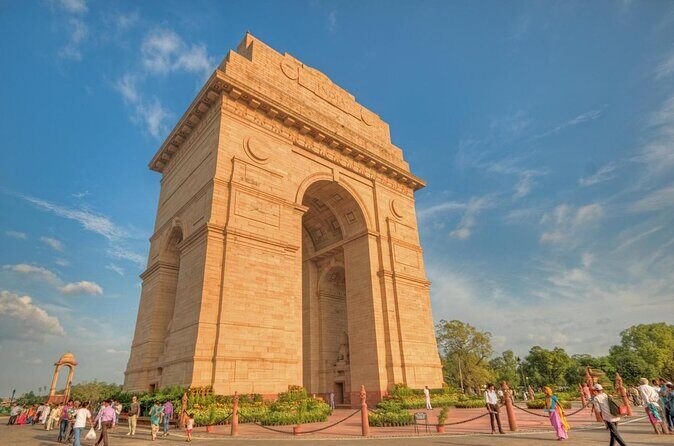
After lunch time pacing (meals aren’t included, so you’ll be deciding on your own), you get a scenic drive along Rajpath—a useful overview of Delhi’s major government landmarks, including views of Parliament House, President’s House, and India Gate. If you’ve never been to Delhi, this drive helps you orient yourself without turning the day into pure driving.
You finish at Qutub Minar, a UNESCO World Heritage site. The big win here is context: seeing Qutub Minar after Old Delhi makes the city feel like layers of time, not just one “tourist circuit.”
Practical tip: dress for temples and mosques (covered shoulders if possible, and be ready for sun). Also, Delhi days can run hot, so comfortable shoes matter even on a “short” sightseeing day.
The Agra Jump: Taj Mahal First, Then Agra Fort
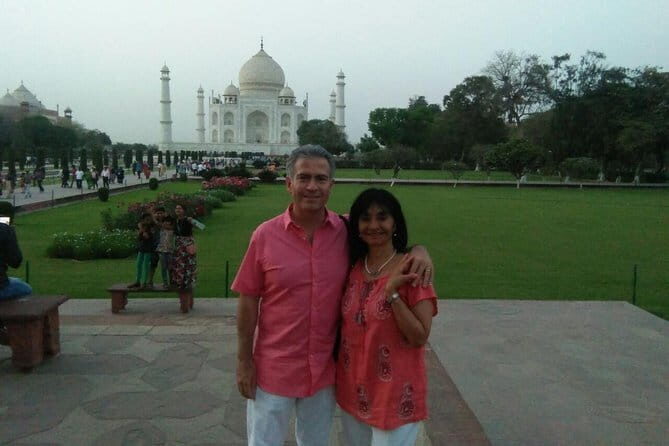
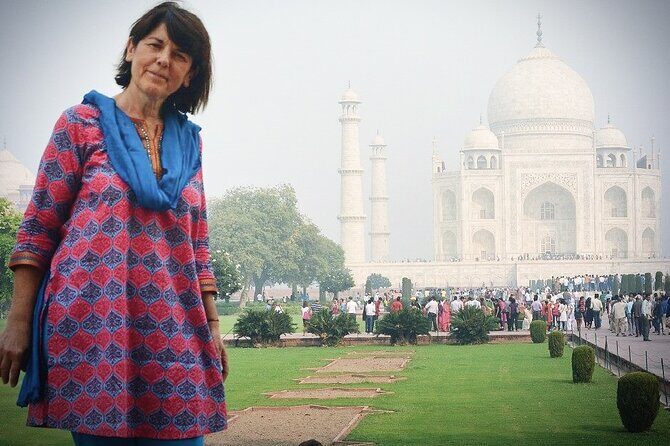
Day 2 is the day most people picture when they hear Golden Triangle. You travel from Delhi to Agra, then start at the Taj Mahal. The itinerary frames it clearly: it was commissioned by Emperor Shah Jahan in memory of Mumtaz Mahal, and it’s one of the most recognizable examples of Mughal architecture anywhere in India.
What I like about structuring the day around Taj Mahal is that it gives you a clean anchor for everything else you’ll see in Agra. You understand why the complex is famous before you move on to the more fortress-like feel of Agra Fort.
Agra Fort sits near the Taj, and it’s a different mood: the riverside complex served as a residence of Mughal rulers. It traces from Akbar’s construction in 1565 with later expansion by successors. Forts can sound like “just walls” on paper, but with a guide you’ll notice what changes where power lived, where courtyards sat, and how the compound worked as more than a defensive structure.
Time-wise, this day is compact. That’s good for first-timers who want a “big sights” concentration. The tradeoff is that you’ll want energy discipline: drink water (you get bottled water twice daily per traveler), and keep your pace steady in the heat.
Fatehpur Sikri and Chand Baori: A Detour That Feels Like Time Travel
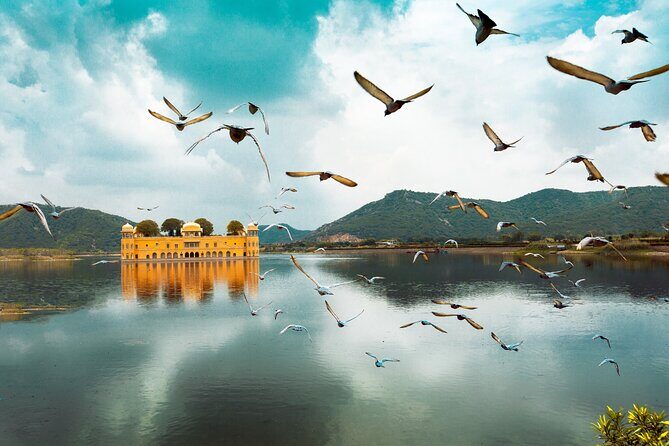
Day 3 is a classic Golden Triangle “route day,” but this one has extra wow factor. On the way to Jaipur, you stop at Fatehpur Sikri, often called the Ghost City. The story is built into the site: Emperor Akbar built the complex in red sandstone, it functioned for about 12 years, then was abandoned. That rise-and-fall explains why the place feels both majestic and strangely quiet.
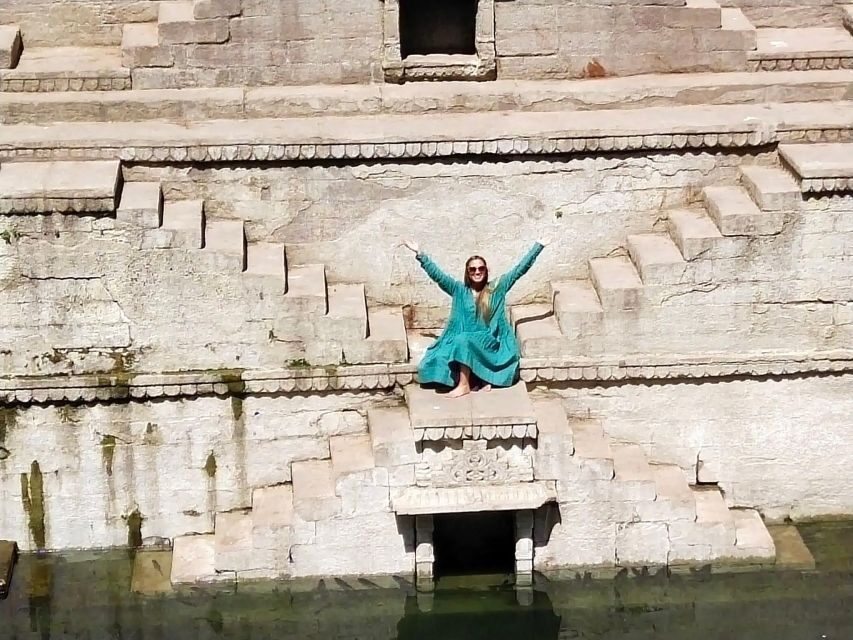
Then you continue to Chand Baori in Abhaneri, a stepwell famous for its geometry. It’s described as a 9th-century sandstone marvel, and the point of the stop is to see how architecture solved daily water needs long before modern plumbing.
What makes this day valuable is the contrast: Mughal imperial power at Fatehpur Sikri, then local engineering at Chand Baori. You’re not just collecting famous monuments—you’re learning how different types of design reflect different needs and priorities.
Once you reach Jaipur, you check into your hotel. The pace is intentional: you’re done with the “big drives” before evening, so Jaipur doesn’t feel like a rush-job on day four.
Jaipur’s Royal Core: City Palace, Jantar Mantar, and Hawa Mahal
Day 4 is where Jaipur becomes a camera-friendly city, but it’s also where you can learn more than just what buildings look like.
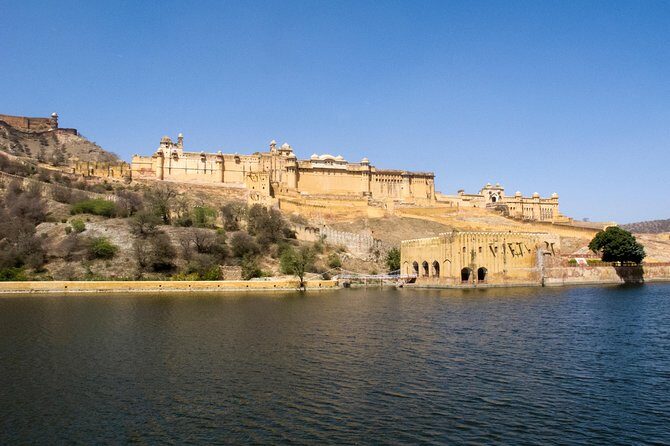
You start at City Palace of Jaipur, a grand complex connected to the Maharaja’s private chambers and a museum experience. What’s specifically called out is the museum’s collection of carpets and miniatures, which is a smart inclusion. Miniatures help you understand court aesthetics. Carpets show how luxury travel extends into daily life.
Next comes Jantar Mantar, Jaipur’s 17th-century astronomical observatory. The highlight mentioned is a 27-meter sundial. With a guide, you can connect the instruments to why time and astronomy mattered for agriculture, ritual, navigation, and governance. Even if you’re not a science person, it’s one of those sights where explanations make the whole place click.
Then you get a photo stop at Hawa Mahal, the Palace of Winds. This works well because Hawa Mahal is more about details than long wandering. The lattice windows and the iconic façade are the reason you stop—and it’s quick enough that you don’t burn your energy budget.
After that, you’ll have time to explore Jaipur’s markets, especially textile-focused shopping. Meals aren’t included, so this is also when you’ll decide whether to snack light or go for a sit-down meal on your own terms.
Practical tip: if you’re the type who hates being rushed, carry a little extra patience on market time. The sights are worth it, but streets are narrow and attention pulls you in different directions.



How the Included Pieces Change the Value (Hotels, Guides, Entry Fees, Water)
This tour price—$769 per person—is easiest to judge by what you avoid paying for separately: four nights of twin-sharing accommodation, private transport, professional English-speaking guides for sightseeing, and all monument entry fees listed in the program.
That’s not just “convenience.” It’s risk reduction. In a trip like the Golden Triangle, a missing ticket or a misunderstood meeting point can turn into wasted hours. Here, the package removes most of those friction points, and it also includes hotel pickup and drop-off.
A small but meaningful comfort detail: you get two bottles of water per traveler per day, which is helpful when you’re walking in sun and between locations with limited time.
One note on hotels: the information provided doesn’t list every hotel name, but at least one documented Agra hotel pairing was Golden Tulip Agra. That’s a sign you’re not being sent to the cheapest possible options.
A Balanced Reality Check: Shopping Stops and Meals You Control
There’s one potential snag with tours like this, and it’s not about the monuments. It’s about how guides manage schedule and optional stops.
A past guest flagged an issue: an Italian-speaking guide wanted to steer time toward shops, and then directed people to a restaurant where the guide reportedly did not cover the bill. The reported cost was 3,200 rupees for two people. The point here isn’t that every guide will do this. It’s that this kind of detour can quietly change your trip cost and your mood.
So here’s what you can do, in plain terms:
- On day one, tell your guide you’re happy to browse but you want to skip pressured shop stops.
- If a restaurant stop appears on top of the tour plan, ask what’s included and whether meals are optional.
- Budget for meals and tips separately, since meals aren’t specified as included and tips aren’t included.
If you’re firm and friendly, most of the time you’ll get a smoother day.
Who This Private Golden Triangle Tour Fits Best
This works especially well if:
- you want a private tour rather than a large group bus day
- you like structure but still want flexibility within a private setup
- you prefer an English-speaking guide to add context at Taj Mahal, Agra Fort, Jantar Mantar, and the rest
- you’d rather pay for fewer moving parts than run your own ticket-and-transport logistics
It may be less ideal if you hate any mention of shopping or prefer long, unstructured wandering. The itinerary is sight-forward. You’ll see a lot, but you won’t have days to “live in” any one neighborhood the way you might with a longer India stay.
Also, the tour “requires good weather.” That matters for planning comfort and photo results, especially for outdoor monuments like Qutub Minar, Taj Mahal approaches, and the Fatehpur Sikri complex.
Should You Book This Golden Triangle Private Tour?
I’d book if you want a guided, high-coverage Golden Triangle with private transport and fewer logistical headaches. The biggest practical wins are the entry fees included, the guides at the major sights, and the way the days are organized to keep driving manageable.
I wouldn’t book (or I’d go in with extra rules for your guide) if your idea of a perfect trip is total independence and zero detours. If you’re sensitive to shopping pressure, say so upfront and keep your boundaries clear.
If you’re on the fence, think about your priorities: if you want the highlights with explanations and less hassle, this is a strong match. If you want deep local time and slow days, you may prefer a longer, more self-paced itinerary.
FAQ
What time does the tour start?
The start time is listed as 9:00 am.
How long is the Golden Triangle tour?
It’s approximately 5 days.
Is this a private tour or shared group?
It’s a private tour/activity, meaning only your group participates.
What’s included in the price besides the sightseeing?
Accommodation on a twin-sharing basis, private air-conditioned vehicle transfers and sightseeing, professional English-speaking guide for sightseeing, monument entrance fees, Old Delhi rickshaw ride, hotel/port pickup and drop-off, two bottles of water per traveler per day, and applicable taxes.
Do meals come with the tour?
Meals and beverages are not specified as included in the itinerary.
Are monument tickets included?
Yes. Monument entrance fees as per the program are included.
Will I have help at the start in Delhi?
Yes. You meet an MTA representative outside Gate 5 in Delhi holding a personalized name placard.
Do I need to pay extra for tips?
Tips and gratuities for guides and drivers are listed as not included.
What if weather is bad?
The experience requires good weather. If it’s canceled due to poor weather, you’ll be offered a different date or a full refund.
Can I cancel and get my money back?
Yes. Free cancellation is available, and you can cancel up to 24 hours in advance for a full refund.