REVIEW · NEW DELHI
Golden Triangle India
Book on Viator →Operated by Services International Ltd. · Bookable on Viator
Three cities in six days sounds simple, but it works. This private Golden Triangle India route stitches together Delhi’s Mughal and colonial landmarks, Agra’s Taj Mahal, and Jaipur’s royal sights, with pickup and a guided car to keep everything smooth.
What I like most is that the essentials are handled: entrance fees are included for the monuments on the plan, so you’re not constantly hunting tickets. I also like the clarity of the structure, with set times for big stops like Raj Ghat, Qutub Minar, Humayun’s Tomb, the Taj Mahal, and Agra Fort.
One possible drawback: the days run on a schedule, and site visits have set durations, so you won’t have unlimited time to wander slowly or linger on every corner.
In This Review
- Key highlights you’ll care about
- Golden Triangle India: The big-picture idea (and who it’s for)
- Arriving in Delhi and getting settled the right way
- Delhi day 2: From Gandhi’s place to Mughal masterpieces
- Raj Ghat and the tone-setting start
- Passing Chandni Chowk: seeing Delhi’s everyday pulse
- Jama Masjid: monumental scale and Mughal craftsmanship
- Qutub Minar and Humayun’s Tomb: UNESCO time
- India Gate and Lakshmi Narayan Temple: national pride plus faith
- The drive to Jaipur: starting your royal-era chapter
- Jaipur day 4: City Palace and Jantar Mantar’s brainy side
- City Palace: three styles under one roof
- Jantar Mantar: an observatory that isn’t stuffy
- Hawa Mahal drive-by and fort time
- Agra day 5: Taj Mahal with enough time to feel it
- Taj Mahal: white marble scale, with room to look
- Agra Fort: Mughal defenses and fairy-tale palaces
- Day 6: Leaving Agra and ending in Delhi for your flight
- Hotels on this route: what your five nights are buying
- Comfort and guides: the practical side of enjoying India
- Is the $1,542 price good value for this 6-day Golden Triangle?
- Who should book this, and who might prefer something else
- Should you book Golden Triangle India?
- FAQ
- What cities are included in this Golden Triangle tour?
- Where does the tour start and how long is it?
- What’s included in the price?
- Which hotels are used?
- Is pickup included?
- What if I need to cancel?
Key highlights you’ll care about
- Private car + English-speaking guide means you’re not stuck with mixed languages or slow group decisions.
- Entrance fees are included for the listed monuments, which saves time and money at key gates.
- Five nights of hotel across Delhi, Jaipur, and Agra keeps you from changing lodging mid-day.
- Well-known hotel names are used on the route: The Suryaa (Delhi), Four Points by Sheraton (Jaipur), and Grand Mercure (Agra).
- A steady sequence of world-famous sights reduces planning stress, especially between cities.
Golden Triangle India: The big-picture idea (and who it’s for)
The Golden Triangle is popular for a reason: it puts three heavy hitters of northern India into one efficient route. Here, you get Delhi’s layered heritage, Agra’s Mughal masterpieces, and Jaipur’s royal-era design in a tight six-day sweep. It’s a great fit when you want major sights with guided context, without turning your trip into a spreadsheet.
This is also a private setup, meaning it’s designed around your group rather than a big cattle-car bus day. You’ll ride in an air-conditioned vehicle, and you’ll have an English-speaking guide plus a designated tour manager who stays in touch. That matters when you’re trying to see a lot but still want things to feel organized.
The most important thing to know is pacing. You’re visiting top monuments that naturally involve walking and photo stops, but the schedule keeps moving. If you love slow museum-style days, this format might feel a bit brisk. If you want a clear, guided route with minimal stress, it’s a strong match.
You can also read our reviews of more tours and experiences in New Delhi.



Arriving in Delhi and getting settled the right way
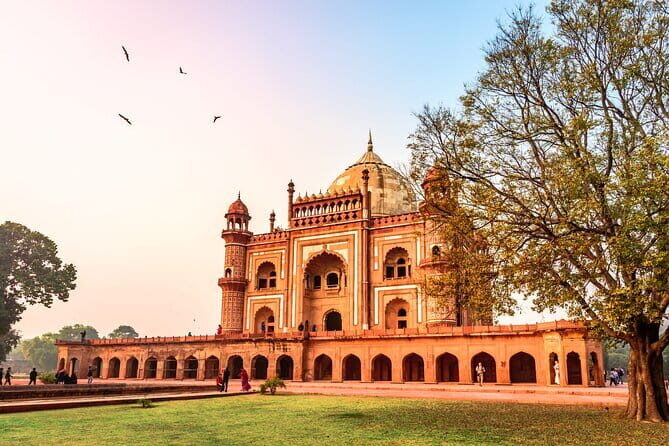
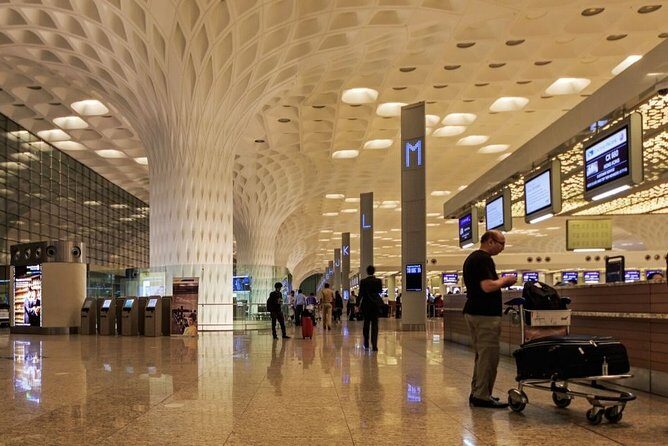
Day one is simple: you arrive at Indira Gandhi International Airport and are met by a representative for a transfer to your hotel. Delhi is a huge city, so that first step is more valuable than it sounds. You avoid the early mental load of figuring out transport and orientation.
The tour start time is listed as 9:00 am at the airport. In practice, that early timing usually helps because it leaves more daylight for the real sightseeing days. You’re also told that pickup is offered, which helps if your flight timing and your first hotel logistics would otherwise be tricky.
Your first hotel stay is included, and you’ll have five nights total. That’s not just comfort; it’s also time. When you’re doing Delhi to Jaipur to Agra, fewer lodging changes makes the whole route feel less chaotic.
Delhi day 2: From Gandhi’s place to Mughal masterpieces
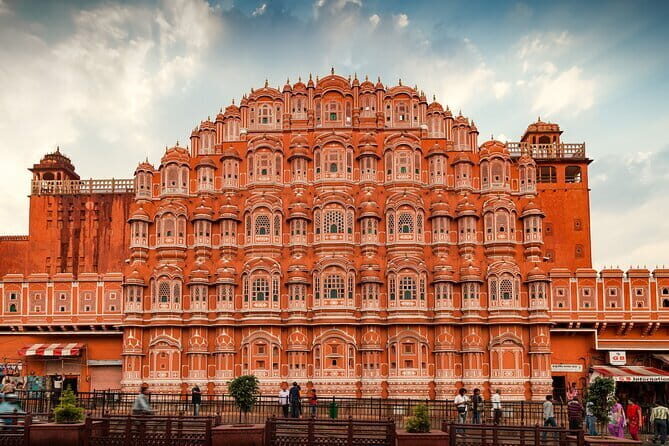
Delhi’s day is built like a sampler platter of meanings and eras. You start at a memorial tied to modern India, then you shift into Mughal architecture, then you end with landmarks that point to national pride and everyday religious life.
Raj Ghat and the tone-setting start
Raj Ghat is where Mahatma Gandhi was cremated. It’s one of those stops where the guide’s context can shape how you experience the place. Even if you don’t know every historical detail, the site has a gravity that tends to land quickly.
The time here is about 30 minutes, so this isn’t a long, slow meditation. Still, it’s a powerful anchor for the rest of the day because it frames India’s modern identity before you move into older empires and grand architecture.
Passing Chandni Chowk: seeing Delhi’s everyday pulse
You’ll pass through Chandni Chowk, a well-known, very busy market area. You get a look at daily street life—shops, movement, and the kind of urban energy you rarely catch from a hotel lobby. You likely won’t have a long deep-shop stroll built into the timing, but you still get the visual sense of what makes this part of Delhi tick.
This stop is also a practical reminder: the city can feel loud and crowded even when you’re just driving past. Keep that in mind if you’re sensitive to noise or dense traffic.




Jama Masjid: monumental scale and Mughal craftsmanship
Next is Jama Masjid, described as one of the iconic and largest historic mosques in India, constructed by Shah Jahan. The visit is about 45 minutes. That’s enough time to appreciate the scale, take photos, and absorb the architecture without turning it into a rushed checklist.
If you’re the type who likes to understand what you’re looking at—materials, design choices, how buildings signal power—this is a strong stop. If you prefer silent wandering, the guide’s explanations might feel like extra, but they usually help you notice details you’d otherwise miss.
Qutub Minar and Humayun’s Tomb: UNESCO time
You’ll then visit Qutub Minar, India’s largest minaret, a UNESCO World Heritage Site. The tour gives about 1 hour, which is realistic because the area is scenic and active with people.
After that comes Humayun’s Tomb, also UNESCO-listed, with a 1.5-hour visit. This is one of the better “architecture for people who like stories” stops. It’s not only about what’s there, it’s about how it reflects the era and the ambition of empire builders.
India Gate and Lakshmi Narayan Temple: national pride plus faith
You’ll move to India Gate, a war memorial and a symbol of national pride. The time is about 30 minutes. It’s a good breather between heavy architectural stops—more open space, and usually easier for photos.
Then you continue to Lakshmi Narayan Temple, dedicated to Goddess Lakshmi and Lord Narayan, with about 30 minutes. The combination of memorial, mosque area, tombs, and a temple gives you a broader sense of how different belief systems and public spaces coexist in Delhi.
You’ll also pass key government buildings like the Parliament House and President’s House. These are driving-by views, but they add a sense of place: Delhi isn’t only monuments. It’s also functioning governance.
The drive to Jaipur: starting your royal-era chapter
Day three is an early drive from Delhi to Jaipur. The tour frames Jaipur as about 260 years old, built by Maharaja Jai Singh, and the name is connected to the king. Even when you’re not standing still, this transition matters because Jaipur feels like a shift in style—more royal planning, stronger visuals, and a different pace.
This is one of those segments where what you’ll remember later is the “setup.” A smooth early transfer means you arrive with enough energy to actually enjoy the next day’s sights. If you’re prone to motion sickness, you may want to plan ahead, since car time is part of the deal here.
Jaipur day 4: City Palace and Jantar Mantar’s brainy side
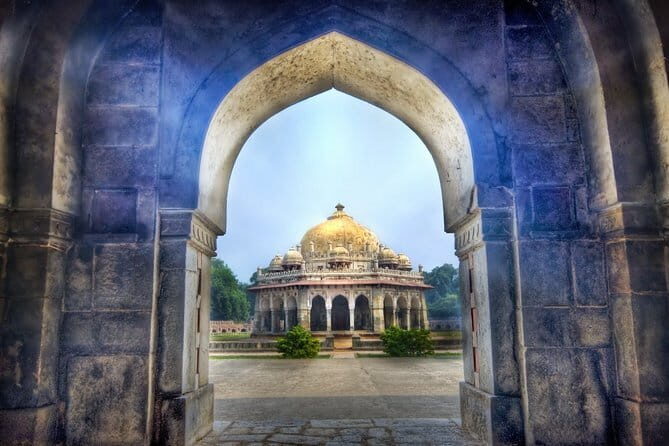
Jaipur’s main day focuses on two major hits: City Palace and Jantar Mantar, plus views and additional fort time.
City Palace: three styles under one roof
You visit City Palace, described as a royal palace with seven stories. It’s said to mix Mughal, Rajput, and European styles. You’ll have about 45 minutes here.
This stop is great if you like seeing how design can reflect political and cultural crossovers. A palace complex also tends to feel more alive than a single monument, because you can spot textures, courtyards, and different building sections as you move.
Jantar Mantar: an observatory that isn’t stuffy
Next is Jantar Mantar, an observatory. The time is about 45 minutes. This is one of the few stops on the route that gives you a different kind of “wow,” not just beauty but science and measurement.
If you’ve ever wondered how pre-modern observers tracked celestial events, this is where you’ll see it. The guide’s explanations can help you read the instruments and structures instead of treating it like a random outdoor sculpture park.
Hawa Mahal drive-by and fort time
You’ll drive past Hawa Mahal, then later visit a fort. Hawa Mahal is famous for its extraordinary structure, and even from a road view, it gives you that instantly recognizable Jaipur silhouette.
The fort visit isn’t detailed in the information you’re given, but the inclusion suggests a classic Jaipur mix: viewpoints, defensive architecture, and royal-era presence. The best way to enjoy a fort stop is to accept that you’ll spend time on uneven steps and lookout moments, so comfortable footwear matters.
Agra day 5: Taj Mahal with enough time to feel it
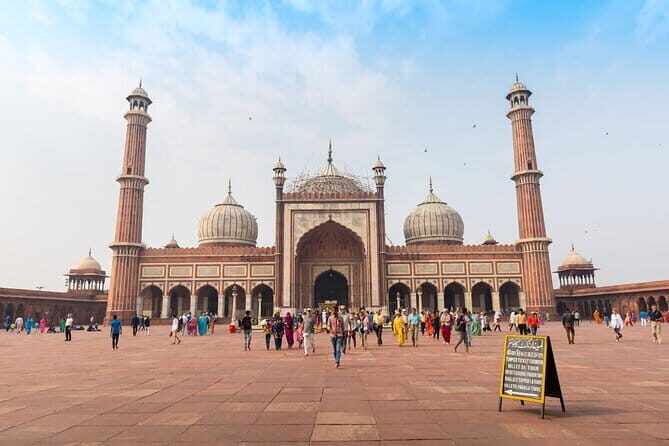
Agra is the part of the Golden Triangle most people come for, and the schedule respects that. Your main focus is Taj Mahal, then Agra Fort.
Taj Mahal: white marble scale, with room to look
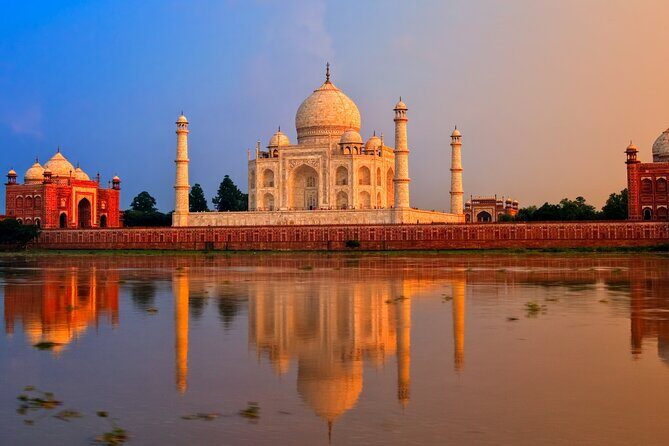
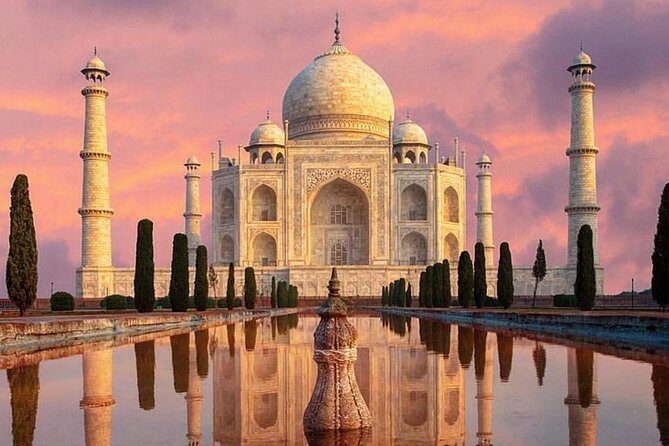
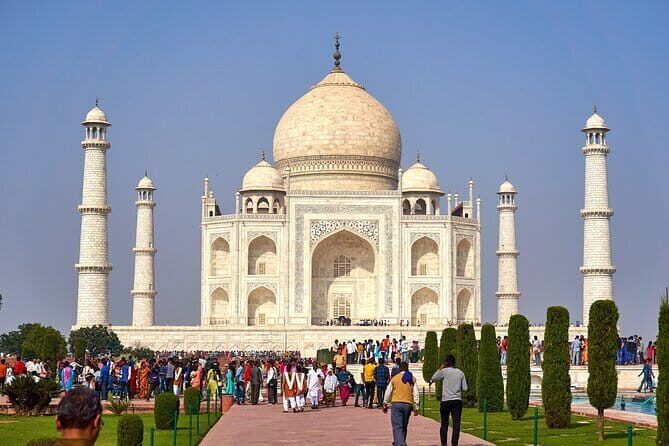
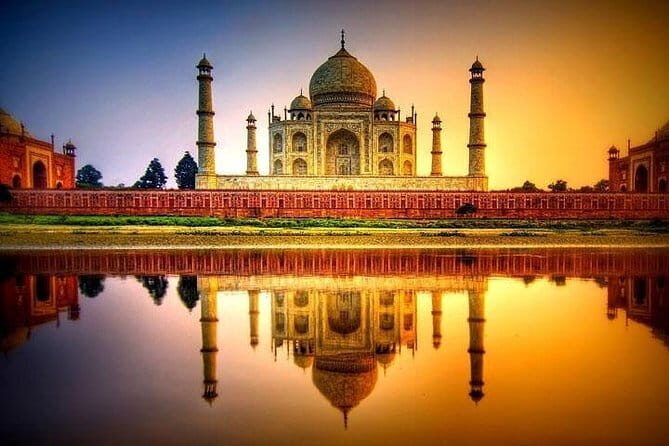
You’ll visit the Taj Mahal, described as a wonder of the world made of white marble, built by Mughal Emperor Shah Jahan on the banks of the Yamuna River. The time is about 2 hours, which is more helpful than you might think.
Two hours is enough to do the classic walk and photos and still have time for slower observation. You’ll likely notice how the monument changes with light and angle as you move around. That’s when the visit stops being a checkbox and starts feeling like an experience.
Agra Fort: Mughal defenses and fairy-tale palaces
Next is Agra Fort, a UNESCO World Heritage Site, with about 1 hour. It’s described as admired for its architectural shape and built in the sixteenth century by Shah Jahan, with places like Khas Mahal and Jahangir’s palaces mentioned.
This is a different kind of Taj partner. If the Taj Mahal is about elegance and symbolism, the fort adds the power and practical side of empire. Even if you only have an hour, you can get a sense of how rulers lived and how defenses shaped the architecture.
Day 6: Leaving Agra and ending in Delhi for your flight

Your last day is a transfer from Agra to Delhi airport, timed for your return flight. The tour notes that many flights leave after midnight, and lodging isn’t included in Delhi for the last night.
This is an important planning detail. Don’t count on a last-minute hotel if your flight schedule is late. If you prefer to shower, relax, and reset before flying, you’ll need to plan that around your personal timeline after you’re dropped at the airport.
Also, because the route ends with an airport transfer, you can treat the final day as a wrap-up rather than one more sightseeing push. That often makes the overall trip feel less squeezed in the last 24 hours.
Hotels on this route: what your five nights are buying
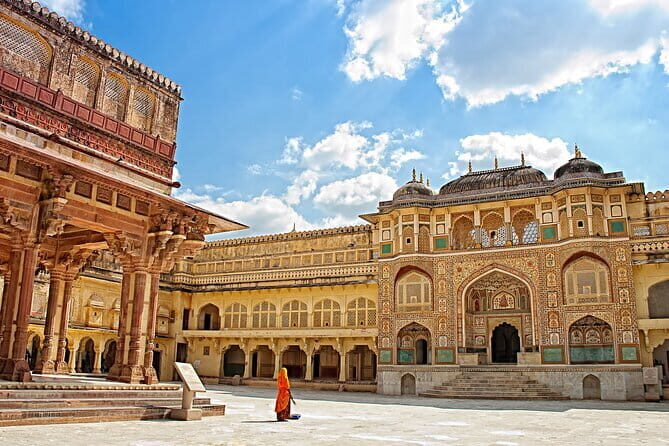
The tour specifies five nights of hotel accommodation, with these properties on the route:
- Delhi: The Suryaa
- Jaipur: Four Points by Sheraton
- Agra: Grand Mercure
Even without star-level claims, these are reputable international-style hotels. What you’re really buying is predictability: predictable check-in, predictable rooms, and a place to recover between long driving days.
Breakfast is included for four mornings, not all five. That means you’ll still need to plan for at least one other morning or meal outside the hotel, depending on how the schedule lines up.
In my view, this mix is normal for a guided package. The value is strongest when the big-ticket items—transport, entrances, and most lodging—are already handled.
Comfort and guides: the practical side of enjoying India
The tour includes an air-conditioned vehicle and an English-speaking guide, plus all fees and taxes. It’s easy to underestimate how much that matters in India, where distances are real and traffic can change by the hour.
Having a guide who can explain what you’re seeing turns the monuments into something you can actually connect with. It’s also helpful when you’re trying to keep your timing on track at sites with multiple areas and viewing spots.
The private format helps too. You can ask questions that fit your interests, and you don’t have to wait for a large group to finish photos. A smooth driver experience matters on the Golden Triangle, and the information you have suggests you’ll get daily support and a comfortable car setup, including regular refreshments during the day.
Is the $1,542 price good value for this 6-day Golden Triangle?
The listed price is $1,542 per group (up to 2) for about 6 days, with 5 nights hotel, an English guide, air-conditioned vehicle, entrance fees at the monuments on the plan, and all fees and taxes included. Pickup is also offered.
Here’s how I’d think about value. The cost covers the “hard parts” you’d otherwise have to piece together: transport between three cities, driver time, guide time, hotel nights, and the money and time of admission tickets. If you tried to build a similar trip on your own, the entry tickets and guided pacing alone can add up quickly, and the logistics between Delhi, Jaipur, and Agra usually turn into the biggest headache.
The tradeoff is that you’re paying for structure. If you want to skip a stop, spend extra time at one monument, or add unplanned detours, a fixed-route package may feel limiting. But if you want a strong backbone to your trip, this price-to-inclusions ratio looks reasonable.
Who should book this, and who might prefer something else
This tour suits you if:
- You want a guided three-city Golden Triangle with clear daily focus.
- You care about having entrance fees included and not managing ticket lines.
- You want comfort and predictability with hotel stays and airport transfer.
You might reconsider if:
- You hate schedules and prefer long, slow exploration with frequent stops.
- You’re planning very late-night flights and don’t want to handle airport time without hotel support.
- You need a trip with more meal inclusions beyond four breakfasts, since dinners and lunches are not listed as included.
The tour also notes a moderate physical fitness level. That fits most people, but it’s worth remembering you’ll walk at major sites like mosques, tombs, and fort areas where surfaces and steps can vary.
Should you book Golden Triangle India?
I’d book it if you want the classic Golden Triangle hits—Delhi, Agra, Jaipur—without spending your vacation on logistics. The best part is the mix of included monument entrances, English guidance, and pre-arranged hotels, which removes a lot of planning friction. The route is also designed so you end each day with a real place to rest, not constant hotel-hunting.
I’d hesitate only if you’re the type who wants lots of free time to linger in each site, because the visit durations are built-in and the whole plan keeps moving. If that’s you, look for a more flexible itinerary.
If you want structure, context, and comfort while seeing the big names of the region, this one makes a lot of sense.
FAQ
What cities are included in this Golden Triangle tour?
The tour covers Delhi, Jaipur, and Agra.
Where does the tour start and how long is it?
It starts at Indira Gandhi International Airport in New Delhi at 9:00 am, and the duration is about 6 days.
What’s included in the price?
Included are an air-conditioned vehicle, all fees and taxes, an English-speaking guide, entrance fees at monuments listed in the itinerary, hotel accommodation for 5 nights, and breakfast for 4 mornings.
Which hotels are used?
The hotels listed are The Suryaa in Delhi, Four Points by Sheraton in Jaipur, and Grand Mercure in Agra.
Is pickup included?
Pickup is offered, and you’ll also be met at Delhi airport for the transfer to your hotel at the start.
What if I need to cancel?
You can cancel up to 6 days in advance for a full refund, and cancellations made closer than that follow the stated reduced-refund schedule.