REVIEW · NEW DELHI
Full-Day Private Old and New Delhi Combo Tour
Book on GetYourGuide →Operated by A Star Tour. · Bookable on GetYourGuide
A single day can feel like two different cities. This private Old and New Delhi combo stacks famous monuments with real market time, plus an air-conditioned vehicle and a live English-speaking guide. I like that it’s structured enough to cover the big names, but flexible enough for the human side of sightseeing. The one catch: monument fees and lunch aren’t included, and Lotus Temple is closed on Mondays.
You’ll start where Delhi has always traded ideas and goods, then shift into the grand Mughal and imperial sights of the south and New Delhi. I especially like that the plan includes both “up close” moments (Chandni Chowk, Jama Masjid, Humayun’s Tomb) and “from-the-road” views (Red Fort, India Gate, Rashtrapati Bhavan) so you don’t lose half the day in travel. A practical consideration: the day runs about 4 to 8 hours, so pace yourself, especially in hot months and at peak crowds around the old-city sites.
In This Review
- Key Things That Make This Combo Tour Worth Your Time
- Why This Old and New Delhi Combo Works So Well
- Pickup From Noida, Gurugram, or New Delhi (And Why Location Matters)
- Chandni Chowk Start: Rickshaw Ride, Spice Markets, and Fast Market Sense
- Jama Masjid: A Mosque Built for 25,000, Explained in Real Time
- Khari Baoli: A Quick Market Walk That Complements Chandni Chowk
- Red Fort Pass-By: You’ll See It, But Not the Full Experience
- Humayun’s Tomb: UNESCO Garden-Tomb Design in About an Hour
- India Gate and Rashtrapati Bhavan Pass-By: Big Views From the Road
- Lotus Temple: White Marble Calm, But Only If It’s Not Monday
- Qutb Minar: The 73 m Brick Minaret You Can Actually Feel in One Hour
- Gandhi Smriti Museum: A Focused 30-Min Guided Pause
- Timing Tips: How to Stay Comfortable on a 4 to 8 Hour Day
- Price and Value: Why $30 Can Make Sense Here
- Who This Tour Suits Best
- Should You Book This Private Old and New Delhi Combo Tour?
- FAQ
- What is the duration of the tour?
- How much does the tour cost?
- Is this a private tour?
- What languages are available for the guide?
- What’s included in the price?
- Are monument fees included?
- Is lunch included?
- Can I skip the ticket line?
- Where can you be picked up and dropped off?
- Is Lotus Temple open every day?
Key Things That Make This Combo Tour Worth Your Time

- Private AC transportation with all driver, fuel, tolls, and parking covered in the price
- Chandni Chowk with a rickshaw ride plus a focused look at the spice-market vibe
- Jama Masjid guided visit in a mosque built for massive Friday crowds (courtyard capacity up to 25,000)
- Humayun’s Tomb UNESCO stop with the garden-tomb design story explained
- Qutb Minar guided visit at about 73 m high, a landmark you can really picture after the walk-through
- Lotus Temple only if it’s not Monday, since it’s listed as closed on Mondays
Why This Old and New Delhi Combo Works So Well
Old Delhi and New Delhi don’t just look different. They move differently. Old Delhi is about close-up street life: bargaining, smells, temples, mosques, and the scramble of real daily routines. New Delhi swings to wide roads, big stone memorials, and planned architecture.
This tour’s value is in how it matches that contrast without wasting your energy. You get the classic sights you came for, plus guided context so you’re not just taking photos—you’re understanding why those places matter.
And because it’s private, you’re not stuck with a slow group or a guide who has to herd everyone. You can ask questions, linger when something catches your eye, and keep moving when you want to beat the heat.
You can also read our reviews of more private tours in New Delhi



Pickup From Noida, Gurugram, or New Delhi (And Why Location Matters)

You can be picked up in the morning from Noida, Gurugram, or New Delhi, with pickup available from the airport and also from Delhi, Noida, Faridabad, and Ghaziabad (you specify your location when booking). That matters more than it sounds, because Delhi traffic is the real tour boss.
The tour includes a comfortable AC car plus the practical stuff that usually ruins “cheap” sightseeing plans: parking, tolls, road taxes, and full driver and vehicle expenses. In plain terms, you avoid the stress of sorting transport gaps between far-apart areas.
If you’re traveling solo or short on time, this is a big win. You’re spending your energy on sights, not on logistics.
Chandni Chowk Start: Rickshaw Ride, Spice Markets, and Fast Market Sense
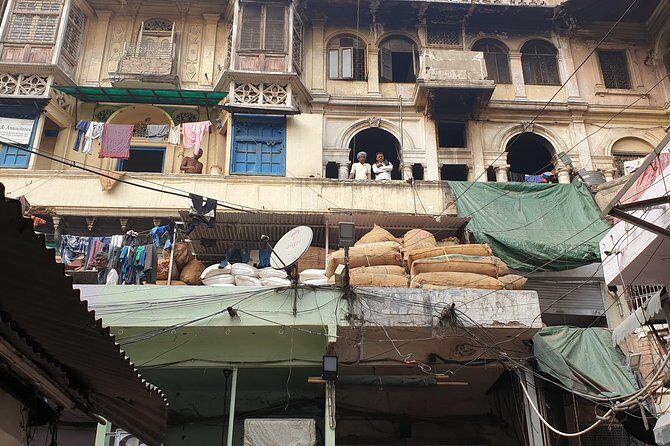
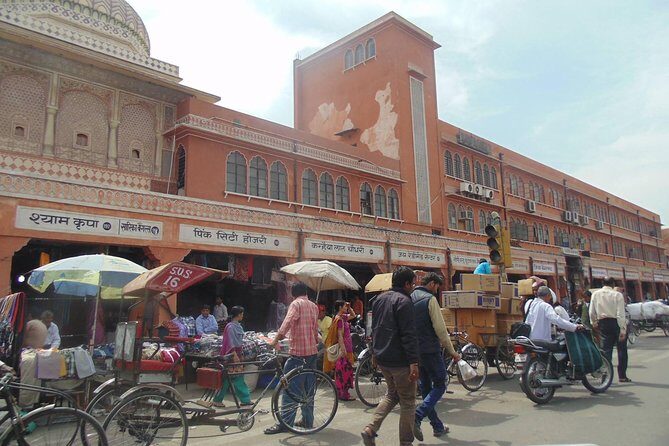
Chandni Chowk is where Delhi’s old pulse shows up in the first five minutes. The tour begins right here, in one of the city’s busiest and oldest street areas, known for small ornaments and local culture. You’ll get a guided walk plus time to explore.
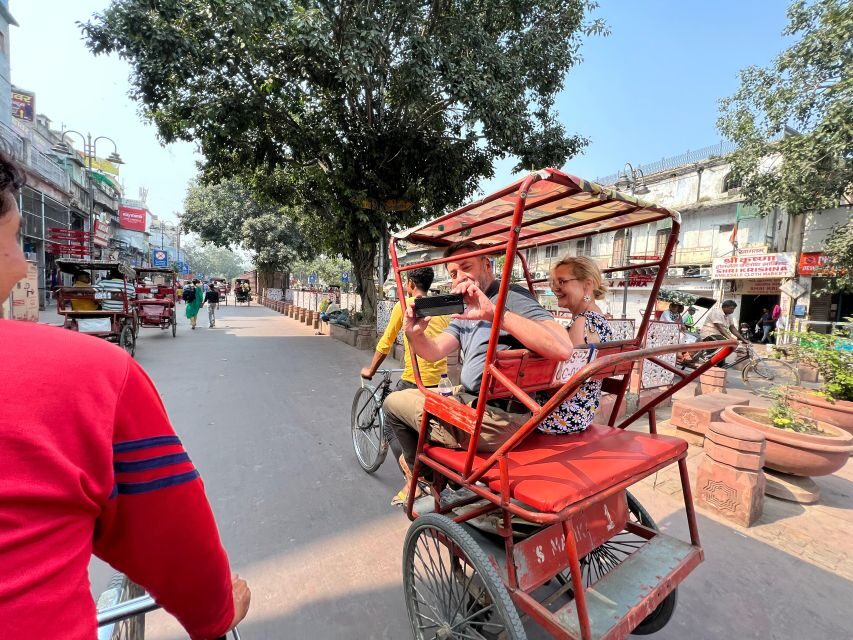
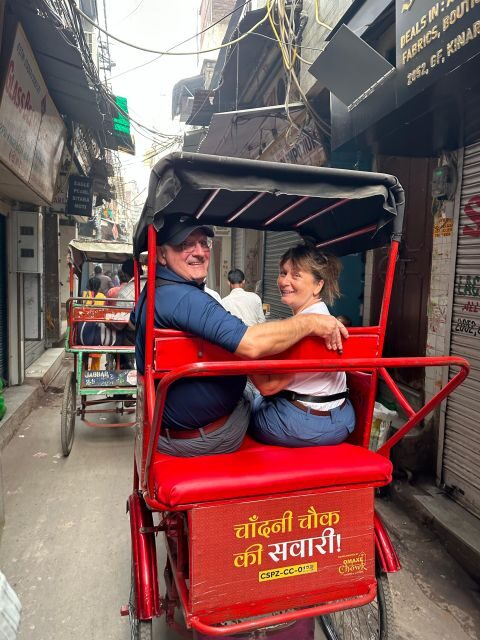
Then comes the rickshaw ride. It’s the right choice for this street layout. Walking is great, but the rickshaw helps you cover ground without constantly threading through crowds.
One of the most useful parts is the way the tour frames Chandni Chowk beyond the postcard. The area is famous for its huge spice market, so expect the sensory side of Delhi—colors, aromas, and the kind of market chatter that makes you feel like you’re moving with the city, not around it. If you like street photography, this is your best time slot of the day.
Practical note: this is a crowded place. If you want calmer photos, keep moving with your guide and use quick stops rather than standing still for long.
Jama Masjid: A Mosque Built for 25,000, Explained in Real Time
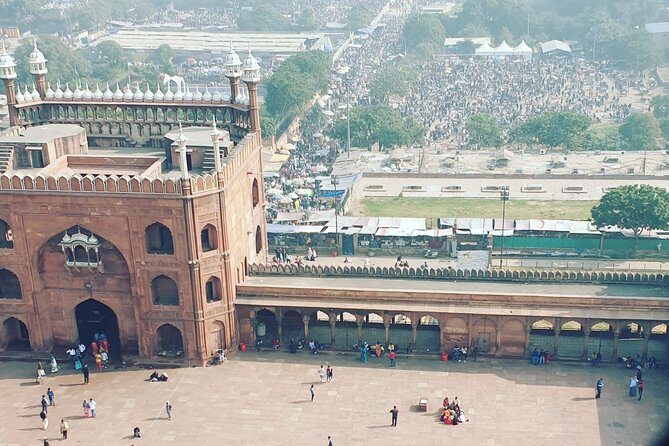
After the market energy, Jama Masjid gives you scale. It’s described as India’s largest mosque, with a courtyard that can hold around 25,000 devotees. That number changes how you see the building. You stop thinking of it as a single attraction and start seeing it as a place designed for major moments.
The guided visit is about 30 minutes, but it’s long enough to pick up the key Mughal context: construction began in 1650 under Shah Jahan, and the project used more than 5,000 workers over six years. The guide also explains the Friday tradition tied to the Mughal court—how the emperor and his retinue would travel from the fort to attend congregational prayers.
Why it matters for you: if you visit without context, you might notice architecture and color and then move on. With the guide’s framing, you understand how religion, power, and public space were built into the site.
Khari Baoli: A Quick Market Walk That Complements Chandni Chowk

Right after Jama Masjid, you’ll do a short walk (about 15 minutes) around Khari Baoli. This stop is brief, but it fills a useful gap: it keeps the day from jumping too quickly into only monument-mode.
Khari Baoli sits in the same overall old-city shopping world as Chandni Chowk. You get more of the market character—especially if you want to see how daily commerce looks beyond the main headline street.
Tip for your own pacing: treat this like a warm-up. If you want to shop, do it with a clear limit and bring cash, since market payment setups can vary. If you’re mostly there for photos, keep your stops short and keep moving.
A few more New Delhi tours and experiences worth a look






Red Fort Pass-By: You’ll See It, But Not the Full Experience
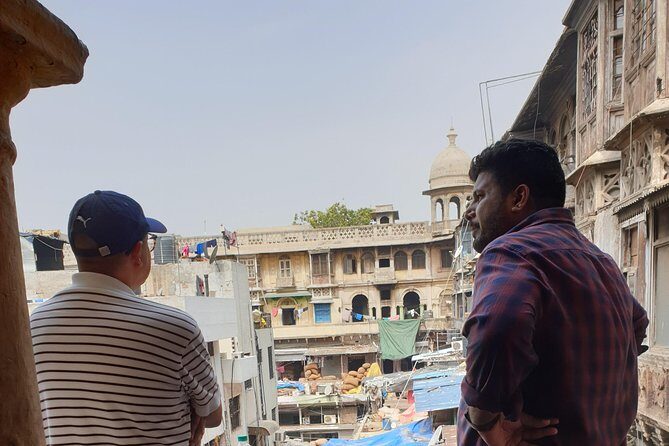
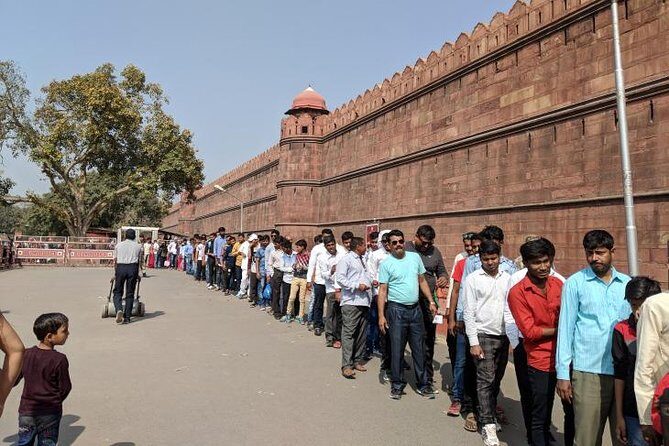
The tour includes a pass by the Red Fort. That means you’ll spot it from the route and get its visual presence, but you won’t spend the time inside that a dedicated Red Fort visit would take.
This is a fair trade in a combo day. With multiple major stops, you’d lose too much time waiting in lines and walking long interior routes. Passing by still helps you connect the dots—especially because the Red Fort is described as being built in 1648 by Shah Jahan and serving as the Mughal residence for about 200 years until 1857. It’s also adjacent to Salimgarh Fort, another historic layer you can notice by location.
So think of this as a snapshot. If Red Fort is your top priority, you’d pair this tour with a second day later (or book a dedicated Red Fort-focused trip).
Humayun’s Tomb: UNESCO Garden-Tomb Design in About an Hour
Humayun’s Tomb is one of those places where the guide makes a big difference. You’ll visit for about one hour, with a guided walk and time to absorb the layout.
The key facts you’ll hear are the ones that change how you read the site: it’s a UNESCO World Heritage Site (listed in 1993), commissioned by Humayun’s son Akbar in 1569, and designed by Persian architect Mirak Mirza Ghiyas. The tour also notes the role of Humayun’s widow Haji Begum in selecting the architect.
One of the most helpful concepts is that this was the first garden-tomb on the Indian subcontinent. That design idea is more than trivia. It explains why the place feels balanced and calm compared with many other tomb structures—because the “garden” isn’t decoration. It’s part of the plan.
Why you’ll like it: you’ll get a guided story that makes the symmetry and the placement of spaces feel intentional. And since it’s not just one building but a designed environment, you can take photos without rushing every ten seconds.
India Gate and Rashtrapati Bhavan Pass-By: Big Views From the Road
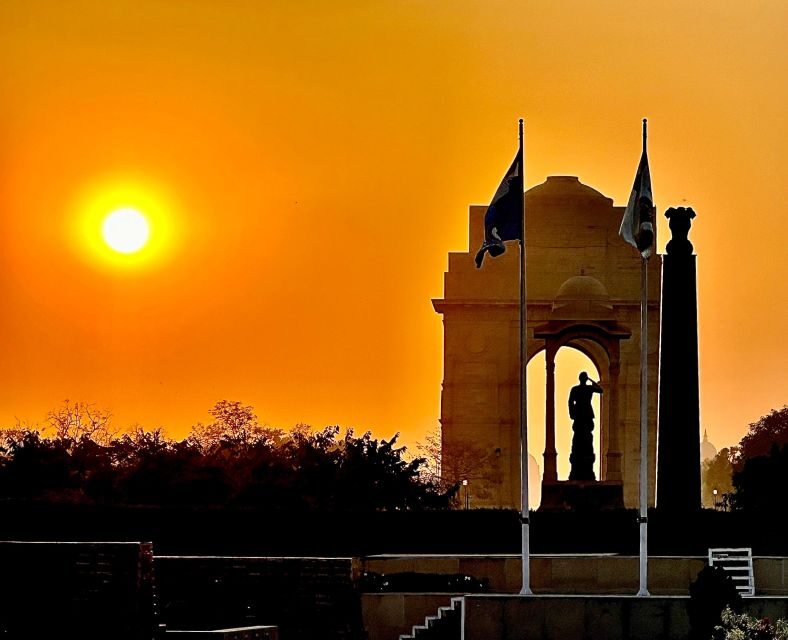
In New Delhi, the tour shifts into a “see it and move” mode. You’ll pass by India Gate and Rashtrapati Bhavan.
India Gate is worth noticing even from the road. The tour highlights it as a 42 m tall memorial with an arc-de-Triomphe-like feel at a crossroad. It was built to commemorate India soldiers killed in World War I, and it’s noted as being designed by Sir Edwin Lutyens.
Passing by is useful here because New Delhi’s road network is wide. If you try to do everything on foot, you waste time crossing traffic and waiting for walk signals. A drive-by still gives you the sightline so you can recognize it later—especially if you want to take your own time at dusk.
Rashtrapati Bhavan is listed as a pass-by stop, so you’re seeing it from outside. That works for a combo day; it gives you the landmark presence without eating your monument-time.
Lotus Temple: White Marble Calm, But Only If It’s Not Monday
Lotus Temple is listed as part of the sightseeing, but with an important condition: it’s closed on Monday.
When it’s open, you’ll get a guided experience of the Bahá’í temple built in a lotus shape. The tour description emphasizes the pure white marble construction and explains the symbolic choice: the architect Furiburz Sabha selected the lotus as a shared symbol across Hinduism, Buddhism, Jainism, and Islam.
You’ll also hear about the nine water pools around the petals, which light up in natural light—and the temple looks especially dramatic at dusk when it’s flood lit. If your schedule makes dusk possible, this is the kind of site where you’ll notice the change.
If your day falls on Monday, don’t treat Lotus as a must. Consider swapping your focus to the other monument stops and using the freed-up time for a market walk or a quiet coffee break near your next location.
Qutb Minar: The 73 m Brick Minaret You Can Actually Feel in One Hour
Qutb Minar is the late-day monument that anchors the whole tour’s “Delhi in layers” story.
You’ll visit for about one hour with a guided tour. The details the guide shares are the kind that help you picture the site’s origin: it’s around 73 m high and described as the tallest brick minaret in the world, built in 1193 by Qutub-ud-din Aibak right after the defeat of Delhi’s last Hindu kingdom. It’s also described as UNESCO-listed.
Even if you’ve seen it in photos, the guided framing helps you understand what you’re looking at: the tower isn’t just tall. It’s tied to conquest, change, and new architectural ideas.
One thing to keep in mind: Qutb Minar can be busy and photo-hungry. I suggest you focus on the tower first, then use the remaining time to look at surrounding details rather than trying to get every angle at once.
Gandhi Smriti Museum: A Focused 30-Min Guided Pause
This tour includes Gandhi Smriti Museum as a guided stop of about 30 minutes. It’s not a long museum block, which is exactly why it fits here.
You’re getting a guided start point—enough to understand what the museum is highlighting—without turning your day into an all-day indoor slog. If you love museums, you might wish you had more time. If you’re the type who wants quick context and then back to sights, this time box is a good match.
Timing Tips: How to Stay Comfortable on a 4 to 8 Hour Day
A combo tour can be a lot. The duration is listed as 4 to 8 hours, so you’ll want a plan that matches your energy level.
Here’s what helps most:
- Start with water. The tour includes packaged mineral water, so use it early rather than waiting until you feel thirsty.
- Keep expectations realistic for each stop. Some are guided visits with walking time, while others are pass-by sights.
- If you’re doing this during hotter months, wear breathable clothes and shoes that handle uneven ground in the old city.
- For photos, decide in advance what matters most. You’ll get standout moments at Chandni Chowk, Jama Masjid, Humayun’s Tomb, and Qutb Minar. Let the pass-by stops be for recognition, not perfection.
Price and Value: Why $30 Can Make Sense Here
The price is $30 per person for a private, guided, AC-vehicle day that covers a full sweep of Delhi’s major sights across Old and New Delhi.
What you’re paying for is not just entry into places. You’re paying for:
- a private English-speaking guide (English and Spanish available)
- an AC car with driver, fuel, parking, and tolls included
- all vehicle and driver expenses and applicable taxes
- bottled water
What you’re not paying for:
- monument fees
- lunch or any other meal
This is where the math often becomes clearer. If you were to hire a driver by yourself, figure out timed logistics, and then pay for guided interpretation separately, you’d likely spend more. The combo tour keeps the “translation layer” consistent across markets and monuments, which is what makes it feel coherent instead of random.
So I’d call this good value if you want breadth plus guidance in one day. If you only care about one site, a smaller, single-area tour might be better.
Who This Tour Suits Best
This private combo makes the most sense if:
- you have limited time in Delhi and want Old and New Delhi highlights in one shot
- you like walking and photos but don’t want to battle transport planning
- you’re traveling as a couple, solo, or small group that prefers flexibility
- you want clear English guidance, with Spanish also available
It’s also listed as wheelchair accessible, which helps if you need that kind of mobility planning.
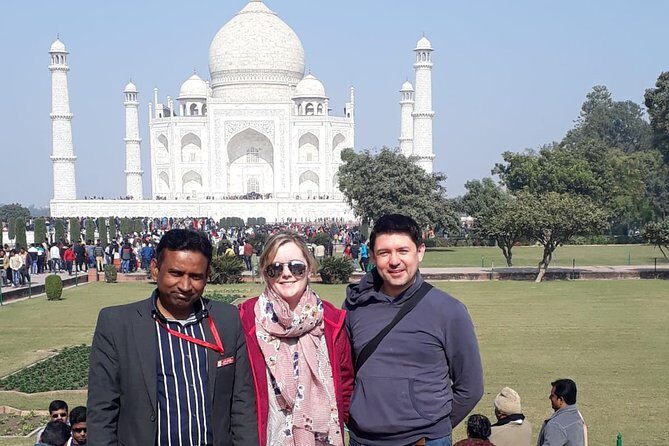
One more small practical note: in one real booking experience, the driver was Sunil, and the guide was Asim, who handled requests beyond the planned route and took great photos. That’s not a guarantee for every day, but it’s a helpful sign of what kind of guiding approach you might encounter.
Should You Book This Private Old and New Delhi Combo Tour?
If you want a smooth, guided, private day that hits the big monuments and the real market atmosphere, I’d book it. The combination of Old Delhi marketplaces and New Delhi landmarks is hard to assemble well on your own, especially when you’re trying to fit in Qutb Minar and Humayun’s Tomb without wasting time.
I’d hold off only if:
- you’re visiting on a Monday and Lotus Temple is a must for you (it’s listed as closed)
- you don’t want to budget for monument fees on top of the tour price
- you’d rather spend more time inside a single site, like Red Fort, instead of doing a pass-by and moving on
If that sounds like you, then this is a smart way to get oriented fast and leave Delhi with both the architecture and the street-level feel.
FAQ
What is the duration of the tour?
The duration is listed as 4 to 8 hours, depending on the day and timing.
How much does the tour cost?
The price is listed as $30 per person.
Is this a private tour?
Yes, it’s a private group tour.
What languages are available for the guide?
The tour offers live tour guiding in English and Spanish.
What’s included in the price?
Pickup and transportation, a good English-speaking guide, private AC vehicle, packaged mineral water, all parking/toll/road taxes, and all applicable taxes are included.
Are monument fees included?
No. Monument fees are not included.
Is lunch included?
No. Lunch or any other meal is not included.
Can I skip the ticket line?
Yes, it’s listed as skipping the ticket line.
Where can you be picked up and dropped off?
Pickup options include Noida, Gurugram, and New Delhi. Pickup is also available from the airport and areas including Delhi, Noida, Faridabad, and Ghaziabad. Drop-off locations are Gurugram, New Delhi, and Noida, and you’ll be dropped at your hotel or at the airport in the evening.
Is Lotus Temple open every day?
Lotus Temple is listed as closed on Monday.