REVIEW · RAJASTHAN
Food & Culture Walking Tour – The Pushkar Route
Book on GetYourGuide →Operated by The Pushkar Routes · Bookable on GetYourGuide
One wrong turn in Pushkar can cost you lunch. This 3-hour walking tour turns that problem into a plan, guiding you through where locals actually eat while also explaining the Hindu customs behind what you see around town.
You’ll get two big wins right away: nonstop snack sampling and clear context from your guide, Manish, who keeps the mood friendly and the stories grounded. My one caution: it moves on foot at a walking-tour pace, so comfy shoes are non-negotiable if you’re aiming to enjoy every stop instead of just surviving it.
In This Review
- Key things I’d circle on your map
- Why this Pushkar food walk works (and why 3 hours is the sweet spot)
- Getting picked up at the Gurudwara: start where locals start
- The first part of the walk: orientation plus an eating plan
- What you actually eat: the tasting lineup that makes the tour worth it
- Street food stops: how the tour keeps it confident, not chaotic
- Tea break and the local snack moment: your energy reset
- Temples with meaning: Brahma Temple and the smaller stops that matter
- The Brahma Temple guided moment: what to pay attention to
- Where this tour fits in your Pushkar trip
- Price and value: $10 buys more than you think
- Logistics you should plan for (so the walk stays fun)
- Who should book this food and culture walk?
- Should you book The Pushkar Route Food & Culture walk?
- FAQ
- How long is the Food & Culture Walking Tour – The Pushkar Route?
- How much does the tour cost?
- Where are the pickup locations?
- Is pickup available beyond the exact meeting point?
- What language is the tour guide?
- How large is the group?
- What food and drinks are included?
- Which temples are included?
- Do I need to buy temple tickets separately?
- What should I bring and what is not allowed?
- Is there free cancellation?
Key things I’d circle on your map
- Small group (up to 10) means more attention and quicker questions answered on the spot.
- Temple time with entry included saves you hassle and keeps the focus on meaning, not ticket logistics.
- Hygiene-first street stops helps you taste more without constantly second-guessing what you’re eating.
- A tight 3-hour structure stacks lassi, savory bites, tea, and a bigger temple moment without dragging.
- Manish-led storytelling connects dishes and ceremonies to Pushkar’s living traditions.
Why this Pushkar food walk works (and why 3 hours is the sweet spot)
Pushkar can overwhelm you fast. The streets are busy, the smells are strong, and every corner seems to have something worth trying. This tour is a smart shortcut: you get a curated route that focuses on food, then adds cultural meaning so you’re not just eating blindly.
The 3-hour length is also practical. You won’t burn half a day getting from one taste to the next, and you’ll still have time to explore on your own afterward with a better sense of what matters locally. And because the group is small, you don’t end up as one more body shuffled along like luggage.
Most importantly, the tastings are not random. The tour mixes Western-leaning and classic desi flavors, so you can see how Pushkar’s “melting-pot” culinary culture works in real life—not just on paper.
You can also read our reviews of more tours and experiences in Rajasthan.



Getting picked up at the Gurudwara: start where locals start
The experience begins at one of two meeting points: Gurudwara Sahib in Pushkar (Ajmer) or Pushkar Ram dham. In many cases, you’ll also get pickup from nearby within about a 2-kilometer radius of the meeting point, which matters if you’re arriving by taxi and don’t want to play map Tetris in your first hour.
Right away, you’re in the right mindset. A Gurudwara is a good anchor because it signals community life and daily practice. It also helps you understand why Pushkar’s religious spaces aren’t “museum quiet.” They’re places where people show up, eat, pray, and move through the day.
And yes, there’s a practical bonus: the tour mentions temple entry with a separate entrance / skip-the-line access. That’s the kind of detail that makes a huge difference in popular places where queues can eat up your food-tour momentum.
The first part of the walk: orientation plus an eating plan
Before the food really starts, you’ll get a guided walk section of about 30 minutes. This isn’t filler. It’s your orientation—how the city is laid out, what to look for, and what you’ll learn from the spots ahead.
Then the tour starts feeding you in steady waves:
- food tasting (about 15 minutes),
- street food (about 15 minutes),
- and regional food (about 15 minutes).
That timing matters because it prevents the common food-tour problem: eating one massive thing early and then feeling stuffed while the rest of the itinerary passes you by. Here, you get smaller hits that keep things interesting.
What you actually eat: the tasting lineup that makes the tour worth it
This is the part I like most about the value. For the price, you’re not just getting one snack and a sip of water. You’re getting a lineup that spans sweet, creamy, savory, and hot tea.
Here are the included items you should expect:
- Rose Gulkand Lassi
A lassi with rose preserve flavor (gulkand). It’s cooling, fragrant, and helps reset your palate between savory bites.
- Pushkar Famous Pancake
A local-style pancake you’ll likely see treated differently than what you might expect back home.
- Pushkar Famous Falafel
Crunchy and spiced; a nice “Western touch” that still feels at home in Pushkar’s food scene.
- Dal Kachori
A classic savory snack: crisp outside, dal inside. Comfort food with serious flavor.
- Sugarcane juice with lemon, mint & ginger
Refreshing and energizing, especially if the day is warm.
- Dal Bati Churma
A signature Rajasthani plate: dal, bati (baked dough/roasted bread-like pieces), and churma (sweetened crumbled wheat). This is one of those dishes that instantly gives you context for Rajasthan.
- Surprise sweet
You’ll get a small dessert surprise. That’s a smart move because it keeps the walk from feeling purely savory.
- Pushkar Famous Local Pizza
Crispy bread topped with lentils. It scratches the pizza itch without requiring you to hunt for Western food.
- Masala tea or Lemon Ginger Honey
Warming drinks to end one eating block and start the next.
A practical note: the tour is designed for tasting, not feasting. If you know you’re a super big eater, you may still want to pace yourself, but you’ll likely leave with a full, satisfying sense of Pushkar’s food range.
Street food stops: how the tour keeps it confident, not chaotic
Street food in India can be amazing, but it can also make you worry about hygiene if you don’t know the rhythm. This tour explicitly focuses on street vendors and stalls chosen for excellent, hygienic cuisine, which is exactly what you want on a short visit.
You’ll have dedicated street-food windows (about 15 minutes, repeated). That structure also helps your brain. Instead of one long scramble, you’re moving from one bite-focused moment to another, with your guide steering you toward food that matches what they’re explaining at the same time.
And your guide can explain things you’d miss alone: why certain spices pair with certain foods, how sweet drinks balance savory snacks, and what locals might choose depending on the time of day.


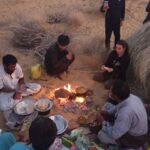
Tea break and the local snack moment: your energy reset
Between bigger sights, the tour includes a segment for local snacks and then a dedicated tea stop (about 15 minutes each in the schedule). This is where the walking tour rhythm becomes comfortable.
Tea isn’t just a drink here. It’s part of how people slow down without stopping. You’ll also get one of the included options: masala tea or lemon ginger honey, both of which can feel like a mini recovery plan for your throat and stomach after spicier bites.
If you’re the type who likes to take photos but also wants your tour to keep moving, this tea break is also when you can breathe, check your map, and plan your next wander.
Temples with meaning: Brahma Temple and the smaller stops that matter
The tour doesn’t just hand you a temple checklist. It spends real time on the story behind the space. You’ll visit Brahma Temple, and temple entries are included for Varaha Temple, a Sikh Temple, and Old Vishnu Temple as well.
Why those matter: Pushkar’s religious landscape is not one single religion in one single lane. It’s a mix of communities sharing space and meaning. Seeing different temples close together helps you understand why the city feels spiritual without feeling like one-size-fits-all.
You’ll also get an extra 30-minute guided segment that’s focused on Hindu customs and the city’s religious significance. This is especially useful if you’re not used to watching rituals closely. The guide’s job is to make the details understandable, so you can actually interpret what you’re seeing instead of standing there like you’re waiting for subtitles.
The Brahma Temple guided moment: what to pay attention to
At the end, you’ll have a guided time at Brahma Temple (about 30 minutes). This is the big anchor of the tour, and it’s where all the earlier food-and-customs pieces start to connect.
If you want a practical way to enjoy it more: watch for the flow. People don’t move randomly. They follow patterns tied to devotion and tradition. When your guide explains why, the temple stops being just pretty architecture and starts becoming a living practice.
One more angle you might find especially memorable: the tour experience includes a ceremony moment, and some guides’ explanations naturally connect to the lakefront areas. In past experiences, people have highlighted seeing Ghandi Ghat during the tour window. If your timing lines up, it’s a lovely place to understand how Pushkar’s water and rituals overlap.
Where this tour fits in your Pushkar trip
This is best early in your visit. If you take it right when you arrive in town, you’ll understand faster where to eat later, which streets feel local, and which sights actually connect to the stories you heard. The tour is built to help you navigate Pushkar from the inside, not just scratch a surface route.
It also pairs well with a later self-guided stroll around the lake area and quieter lanes. After you’ve learned what matters, you can walk slower and notice more. Without that context, Pushkar can feel like sensory overload. With it, you start seeing the logic behind the city’s design and daily habits.
Price and value: $10 buys more than you think
At about $10 per person for a 3-hour walk, this tour is priced in a way that feels designed for people who want to taste widely without paying a big-tour premium. You’re getting:
- multiple tastings across sweet and savory,
- drinks including lassi, juice, and tea options,
- a guided explanation that covers customs and temple meaning,
- and temple entry tickets included for major sites like Brahma Temple.
Even if you compare it to the cost of just one or two meals out, the included lineup makes the pricing feel fair. And because the group is small, you’re not just buying food—you’re buying orientation, guidance, and explanations that help you get more out of every later stop.
One more subtle value: the route is built to keep you walking rather than waiting. If you’re time-limited, that matters more than you’d expect.
Logistics you should plan for (so the walk stays fun)
The tour is English with a live guide, and the group is limited to 10 participants. That small group size is one of the most practical comforts in a crowded city.
You’ll also want to plan for walking. The duration is short, but there are multiple stops, and temples mean steps and time spent standing. The most important item to bring is simple: comfortable shoes.
Rules are also clear: no smoking, no alcohol and drugs, and no littering. It keeps the experience respectful and helps you feel comfortable in religious areas.
Who should book this food and culture walk?
You’ll probably love this tour if:
- you’re in Pushkar for a short time and want fast orientation,
- you like street food but also want help choosing safely,
- you’re interested in Hindu customs and temple significance (not just photo stops),
- you appreciate a guide who tells you what something means, not only what it is.
You might choose a different option if you:
- hate walking tours and would rather sit and eat,
- have dietary restrictions not mentioned by the operator (the tour data only confirms what’s included, not allergy handling),
- want a super slow, sit-down dining experience.
Should you book The Pushkar Route Food & Culture walk?
Yes, if you want the best “first day” version of Pushkar. This is one of those experiences that gives you both flavors and explanations, in a time window that doesn’t steal your whole afternoon. Manish’s approach, as reflected in guide feedback, seems to balance warmth with clear cultural context, and the tastings are broad enough to satisfy both spice lovers and curious eaters.
If you’re on a tight budget, the included foods plus temple entries make the math work. If you’re on a tight schedule, the 3-hour structure keeps you moving without feeling rushed.
Go for it early in your trip, wear good shoes, and come hungry in the best way. You’ll leave knowing what you ate, why it matters, and where you should go next.
FAQ
How long is the Food & Culture Walking Tour – The Pushkar Route?
The tour duration is 3 hours.
How much does the tour cost?
The price is $10 per person.
Where are the pickup locations?
Pickup options include Gurudwara Sahib – Pushkar (Ajmer) and Pushkar Ram dham.
Is pickup available beyond the exact meeting point?
Yes. Pickup is included from normally all customers from the meeting point, and they also offer pickup within about a 2-kilometer radius of the meeting point.
What language is the tour guide?
The live tour guide speaks English.
How large is the group?
The group is limited to a small group size, with a maximum of 10 participants.
What food and drinks are included?
The tour includes foods such as Rose Gulkand Lassi, Pushkar Famous Pancake, Pushkar Famous Falafel, Dal Kachori, sugarcane juice with lemon, mint & ginger, Dal Bati Churma, Surprise Sweet, and Pushkar Famous Local Pizza. Drinks and tea options include Masala Tea or Lemon Ginger Honey, plus a water bottle.
Which temples are included?
Temple entry tickets are included for Brahma Temple, Varaha Temple, Sikh Temple, and Old Vishnu Temple. The tour also includes a guided visit to Brahma Temple.
Do I need to buy temple tickets separately?
No. Temple entry tickets are included in the tour price.
What should I bring and what is not allowed?
Bring comfortable shoes. Smoking and alcohol and drugs are not allowed, and littering is not allowed.
Is there free cancellation?
Yes. Free cancellation is available up to 24 hours in advance for a full refund.