REVIEW · RAJASTHAN
Canter Safari: Skip-the-line Entry Ranthambore Tiger Reserve
Book on GetYourGuide →Operated by Find24 · Bookable on GetYourGuide
If tigers are on your Rajasthan checklist, this is a smart way in. A shared canter safari in Ranthambore National Park, plus skip-the-line entry, gets you focused on wildlife instead of waiting around.
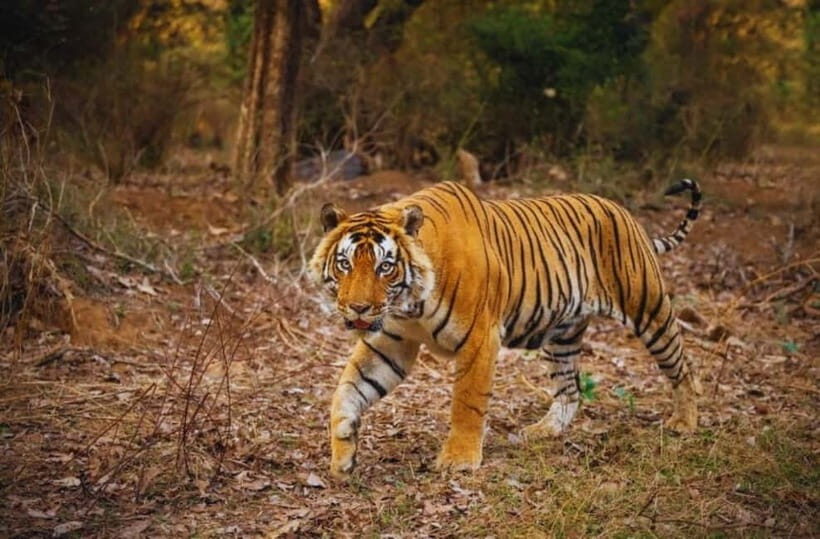
What I like most is the chance to spot Royal Bengal tigers (and the smaller, easier-to-miss birds and mammals) on a 3-hour outing. I also like that the experience is run with the seriousness of a tiger reserve, not a zoo vibe.
Big caution: tiger sightings are never guaranteed, and the experience can rise or fall with how well your guide communicates on the day.
In This Review
- Key things worth knowing before you go
- Ranthambore canter safari: what 3 hours feels like in the field
- Skip-the-line entry and your first reality check: it’s official forest procedures
- The tiger reserve rule: you’re not buying a guarantee
- Best months and safari timing windows (so you don’t miss your best shot)
- Where you start: meeting point and how hotel pickup works
- The safari day itinerary: what happens during those 3 hours
- Wildlife viewing and photography: how to get more from less time
- Guide quality matters: English support and the human factor
- Price and value: what you’re really paying for
- Getting to Ranthambore: airport, train, and road basics
- Who should book this safari (and who should skip)
- Should you book Canter Safari in Ranthambore?
- FAQ
- What’s the duration of the Canter Safari in Ranthambore?
- Are tiger sightings guaranteed?
- What’s included in the $54 price?
- Do I need a passport or ID to enter?
- What should I bring, and what’s not allowed?
- Is hotel pickup included?
- What are the safari timing windows by season?
Key things worth knowing before you go
- Skip-the-line via a separate entrance helps you start your safari with less hassle.
- The park is a tiger reserve, so sightings are unpredictable by design.
- Your safari timing changes by season, with set windows in the morning and afternoon.
- You’re on a shared canter, so you follow the group’s pace while wildlife decides the route.
- The ticket includes official fees plus the English live guide and vehicle entry.
- Your paperwork matters: you’ll need a passport or valid ID, and you may have to send it after booking.
Ranthambore canter safari: what 3 hours feels like in the field
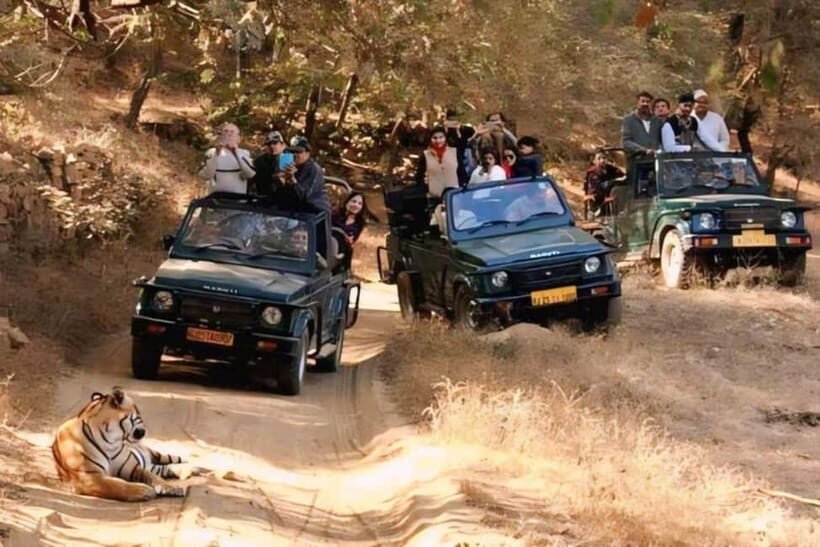
A canter safari is a practical middle ground in Ranthambore. You’re not stuck in a private vehicle for the whole ride, but you still get enough time inside the park to make the outing meaningful. The total duration is about 3 hours, and the guided wildlife viewing portion runs around 2 hours while the rest covers the flow of getting in and out.
The day’s rhythm depends on where the canter is positioned and what the forest offers. Sometimes it’s fast—birds calling, movement in scrub, a flash of color. Other times it’s slow and strategic, because spotting wildlife in a tiger reserve often means waiting for the right moment rather than chasing it.
What I appreciate about this format is that it keeps expectations realistic. You’re going for a genuine wildlife search, not a staged performance. And when you do catch a good view—especially of tigers—you’ll understand why Ranthambore is so famous for tiger conservation in India.
A few more Rajasthan tours and experiences worth a look


Skip-the-line entry and your first reality check: it’s official forest procedures
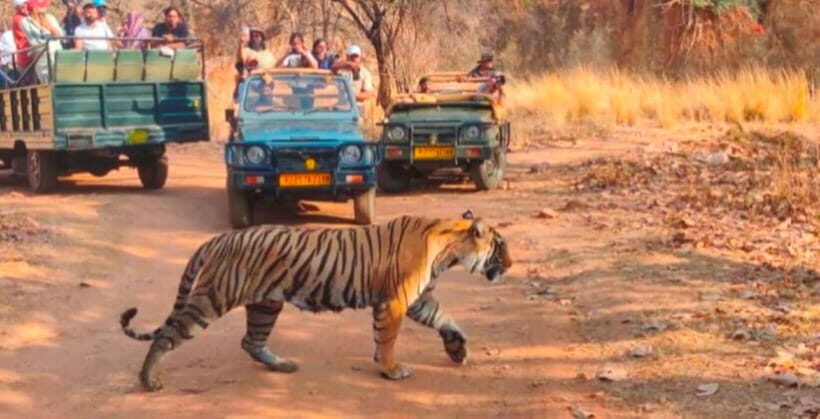
This safari offers skip-the-line entry through a separate entrance. In practice, that usually means less time standing around and more time ready for the morning or afternoon wildlife windows.
That said, Ranthambore works under strict rules because it’s government-run. The safari is managed and operated by the Forest Department, and you have to follow their requirements. In other words: even with a smoother entry, you still need to be prompt, prepared, and ready to comply.
One small but important point: some places offer a choice of guide for an extra Rs. 1000 per guide per safari. If guide quality is a big priority for you (and it is for me), it can be worth asking in advance whether this is available for your date.
The tiger reserve rule: you’re not buying a guarantee

Ranthambore is a tiger reserve, not a zoo. That’s not just a disclaimer—it’s the core logic of the whole experience. Tigers are wild. They move. They hide. They choose the timing.
So what you can do is optimize your odds:
- Go during the season when conditions favor sightings.
- Be mentally prepared for the possibility that the day is more about birds, deer, monkeys, and the “almost” moments.
- Treat the guide as your wildlife interpreter, not your ticket to guaranteed tiger sightings.
The upside of this unpredictability is that the sightings you do get feel earned. When you see a tiger at a distance and realize it’s actually nearby because of signs in the vegetation, it changes the whole safari from entertainment into something closer to real discovery.
Best months and safari timing windows (so you don’t miss your best shot)
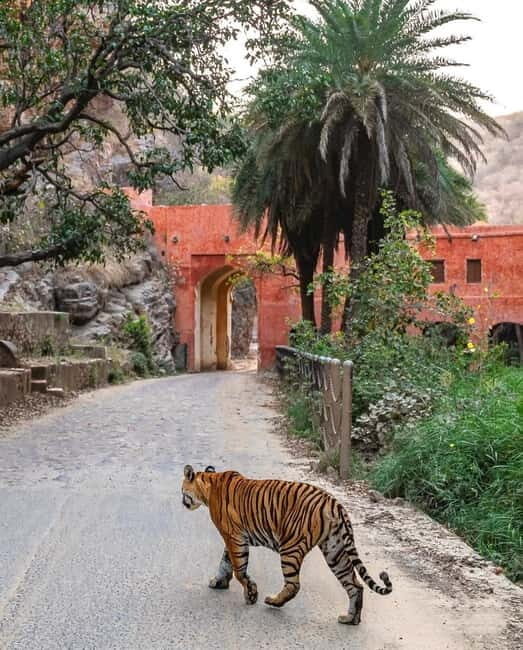
The park’s best time is October to March during the dry season. That’s when wildlife sightings are often better and the weather is usually easier on you. The monsoon months July to September are a problem because the park is closed.
What matters for planning is that safari timings are fixed and change by season. Here are the official windows provided for the safari times:
- 1 Oct to 31 Oct
- 6:30 to 10:00 AM
- 2:30 to 6:00 PM
- 1 Nov to 31 Jan
- 7:00 to 10:30 AM
- 2:00 to 5:30 PM
- 1 Feb to 31 Mar
- 6:30 to 10:00 AM
- 2:30 to 6:00 PM
- 1 Apr to 16 May
- 6:00 to 9:30 AM
- 3:00 to 6:30 PM
- 17 May to 30 Jun
- 6:00 to 9:30 AM
- 3:30 to 7:00 PM
If you’re trying to choose between morning and afternoon, I’d pick based on your energy and your camera schedule. Morning often feels calmer, but the afternoon session can also be productive. The bigger win is matching the right time of year, then showing up ready.
Where you start: meeting point and how hotel pickup works
The meeting flow is built around local pickup, but it’s not the same everywhere. A local representative calls you the day before your safari date. You’ll be picked up from your hotel in Ranthambore or from about 5 km from the forest entry point.
Important detail: hotel pickup and drop for the safari are not included in what you pay. So even though you’ll have coordination, don’t assume the provider is running a full, guaranteed hotel-to-door service like some city tours do.
If you’re staying outside Ranthambore town or you’re unsure where the 5 km point is relative to your lodging, confirm details early so you don’t spend your safari morning doing roadside guesswork.



The safari day itinerary: what happens during those 3 hours
The plan is simple:
1) Start location: Ranthambore National Park
2) Ranthambore National Park: guided tour, sightseeing, and wildlife viewing (about 2 hours)
3) Return: arrive back at Ranthambore National Park
In reality, that “2 hours of wildlife viewing” is the money part. Your guide works the canter experience—helping you read the forest and focus on the life you might otherwise miss. You’re also navigating a shared ride, so you’ll follow the route decisions made for that canter circuit.
You should also expect that wildlife viewing is influenced by real-time conditions: animal movement, vegetation, and the way the reserve management sets the canter flow.
Wildlife viewing and photography: how to get more from less time
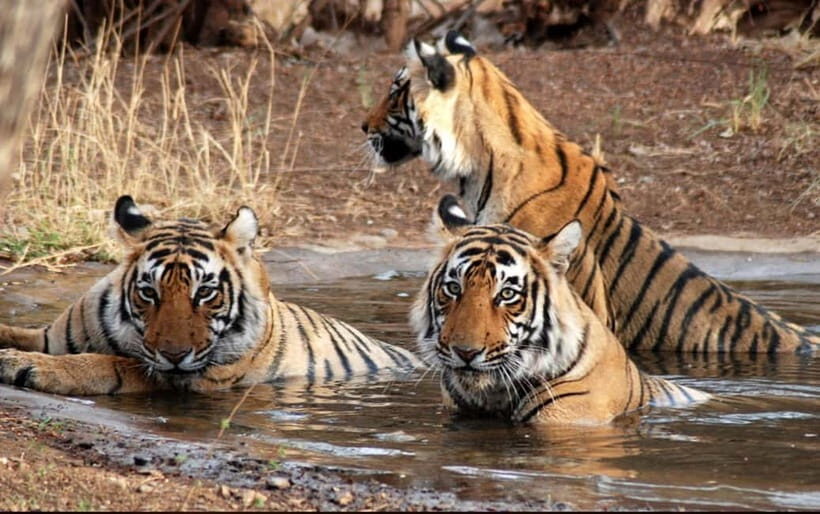
Ranthambore is well-known for tiger opportunities, but it’s also a great place for varied wildlife spotting. The experience highlights tigers, leopards, and lots of other flora and fauna.
For photography, here are practical ways to improve your odds without buying extra gear:
- Use your zoom, but keep your stance steady and avoid bouncing around—your best shots come from patience.
- Watch for movement patterns: tracks, disturbed grass, and birds reacting to something can be early clues.
- Build a habit of scanning tree lines and edges, not only open ground.
This is also one reason I like a guided safari. Even when you’re not seeing a tiger in the frame, a good guide can point you toward animal behavior, not just animal bodies.
One caution from real-world experience: guide performance can vary. I’ve seen examples where communication problems caused people to miss key moments because the canter stopped or moved with limited explanation. In one documented case tied to a guide named Mahesh Choudhary, communication was described as absent and seating coordination went badly—less information, more confusion, and fewer opportunities captured. That’s not the norm everywhere, but it is a reminder: in a shared safari, guide clarity affects what you actually experience.
Guide quality matters: English support and the human factor
Your safari includes a live tour guide in English. That’s a big deal in a reserve where quick explanations help you make sense of what you’re seeing.
But here’s the honest part: on a shared canter safari, your guide shapes the experience. If the guide is engaged, you’ll feel like you’re learning while you’re looking. If the guide is disengaged or unresponsive, the same animal sightings may feel less rewarding because you don’t get context.
If you’re sensitive to that, do two things:
- Ask whether the guide will focus on interpretation, not just driving.
- Consider paying the extra Rs. 1000 (when available) for guide choice.
Also, keep your expectations aligned: you’re not just riding around hoping. You’re part of a managed system inside a protected reserve.
Price and value: what you’re really paying for
The price listed is $54 per person, with a shared canter safari and paid entry ticket included.
What makes the value feel more solid here is that the ticket is described as covering official costs like:
- tiger reserve development fund
- vehicle entry fee and vehicle rent
- guide fees
- online booking charges and applicable taxes
So you’re not piecing it together later. You’re paying for the whole official safari package: access + vehicle logistics + guiding.
What’s not included:
- camera charges
- accommodation
- airport pickup/drop
- hotel pickup/drop specifically for the safari
If you’re comparing options, calculate like this: the true cost is what you avoid paying separately later. This one is set up to include the official entry and vehicle and guide fees in the main price.
Getting to Ranthambore: airport, train, and road basics
Ranthambore National Park sits in the Sawai Madhopur district in Rajasthan.
Your travel options:
- Nearest airport: Jaipur International Airport, about 160 km away.
- Rail: Sawai Madhopur railway station connects to major cities.
- Road: accessible via National Highway 48, with buses and private taxis from nearby locations.
If you want a smoother safari day, plan your arrival so you’re not rushing from far away on the morning of your first entry window.
Who should book this safari (and who should skip)
This safari is a good fit if you want a structured, official wildlife viewing experience in a tiger reserve, and you’re happy with a shared canter format.
It may not fit if:
- you’re pregnant (the activity is not suitable)
- you travel with pets (pets aren’t allowed)
- you expect a guaranteed tiger sighting (you won’t get one, and the reserve makes that clear)
Wheelchair accessibility is listed as available, which is a helpful point if you’re planning around mobility needs. Still, confirm the practical details that affect you directly when you book.
Should you book Canter Safari in Ranthambore?
I’d book it if your priorities are:
- getting into Ranthambore with skip-the-line entry
- having an English live guide
- spending 3 hours in the reserve during a strong season window (ideally October to March)
- keeping your expectations realistic about tigers being wild and unpredictable
I’d think twice or ask more questions if:
- guide quality and communication matter a lot to you (because shared safari experience can hinge on the guide)
- you need dependable pickup logistics beyond what’s described
- you’re booking on a day outside the best months and you’re counting on tiger certainty
If you go in ready—passport/ID handled, timing respected, and patience switched on—you stand a real chance of seeing something unforgettable in the form Ranthambore is famous for: wild cats, wild behavior, and wildlife drama that plays out on its own schedule.
FAQ
What’s the duration of the Canter Safari in Ranthambore?
The safari experience is listed as about 3 hours total, with roughly 2 hours of guided wildlife viewing inside Ranthambore National Park.
Are tiger sightings guaranteed?
No. Ranthambore is a tiger reserve, not a zoo, so tiger sightings are unpredictable and cannot be guaranteed.
What’s included in the $54 price?
It includes the live English tour guide, a sharing canter jungle safari, the paid entry ticket for the jungle safari, and all associated fees and taxes listed with the booking.
Do I need a passport or ID to enter?
Yes. You must present a valid passport (and a passport copy is accepted). The safari entry requires this information, and you may be asked to send your passport details after booking.
What should I bring, and what’s not allowed?
Bring your passport or ID card. Pets are not allowed.
Is hotel pickup included?
Hotel pickup and drop for the safari are not included. You’ll be picked up either from your Ranthambore hotel or from about 5 km from the forest entry point, and a local representative calls before 1 day of your safari date.
What are the safari timing windows by season?
The safari timings vary by season. The listed windows include morning and afternoon slots such as 6:30–10:00 AM and 2:30–6:00 PM in October, with different start and end times for November–January, February–March, April–mid-May, and mid-May–June.