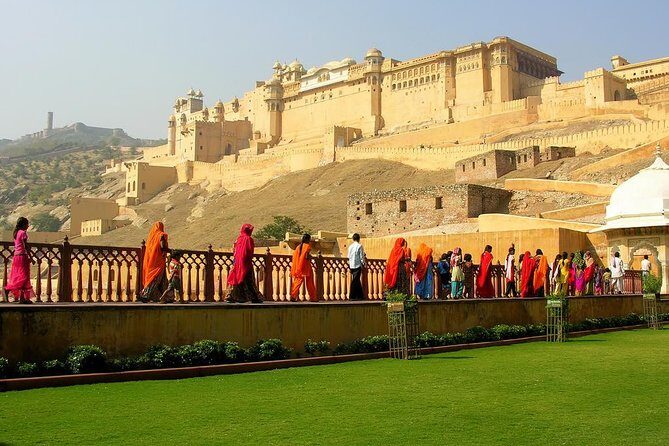
REVIEW · NEW DELHI
Facets of Archaeology and Mehrauli, Mehrauli Archaeological Park
Book on Viator →Operated by India City Walks · Bookable on Viator
Ancient Delhi hides in plain view. The Mehrauli Archaeological Park walk is interesting because it links eras you usually see in separate museum stories, from the Tomar fort ruins through Sultanate, Mughal, and British layers, all in one 2-hour route. I like the way the guide keeps the history clear and human, and I especially like the setting: this park is still inhabited, so the past feels close. One drawback to plan for is money: the $60 tour doesn’t include monument entry, and on-site tickets cost extra.
This is a private, guide-led experience by India City Walks, and you’ll get a mobile ticket for the tour itself. You meet near Qutab Minar Metro Station, then focus on a walk that’s meant to be paced, not rushed. Even with only one main stop, you’ll cover a lot of ground by zooming in on details you might otherwise miss.
Wear comfy shoes and take your time with the uneven surfaces. You only need moderate fitness, but the park is outdoors and you’ll be walking steadily. Also, if you have any medical limitations, tell the operator ahead of time so the guide can help you manage the route.
In This Review
- Key highlights at a glance
- Mehrauli Archaeological Park by Qutub Minar: Why This Patch of Delhi Works
- The 2-Hour Walk Plan: What You Actually Get on the Ground
- Lal Kot Ruins and the Tomar Rajputs: The Delhi You Don’t Expect
- Tomb of Balban (1287 CE): The Early Arch and Dome Story
- Jamali and Kamali Mosque: Djinn Legends and How to Listen to Place
- Quli Khan’s Tomb and the British Summer Retreat Twist
- What Guides Tend to Do Well Here (and Why You’ll Feel It)
- Price and Value: The $60 Tour Ticket vs On-Site Monument Fees
- Where You’ll Spend Your Time Inside the Park
- Practical Tips So You Enjoy the Walk More
- Who This Tour Fits Best
- Should You Book the Mehrauli Archaeological Park Walk?
- FAQ
- How long is the Mehrauli Archaeological Park walk?
- What is the meeting point for the tour?
- Is the tour private?
- Is a mobile ticket provided?
- Are monument tickets included in the $60 price?
- How much are the on-site monument tickets?
- Do I need good physical fitness to join?
- What if I have a medical condition or special requirements?
- Can I get a full refund if I cancel?
Key highlights at a glance
- Balban’s Tomb (1287 CE) and the early arch/dome idea that shaped later styles
- Lal Kot ruins, tied to the Tomar Rajputs in the 11th century
- Jamali and Kamali Mosque complex, with the djinn legends that locals still talk about
- Quli Khan’s tomb, including the British-era refresh into a summer retreat palace
- Layered Delhi rule, from Khalji and Tughlaq through Lodhi, Mughal, and British periods
- On-foot storytelling, where guides like Tushar and Amir are praised for lucid explanations and even shayari-style storytelling
Mehrauli Archaeological Park by Qutub Minar: Why This Patch of Delhi Works
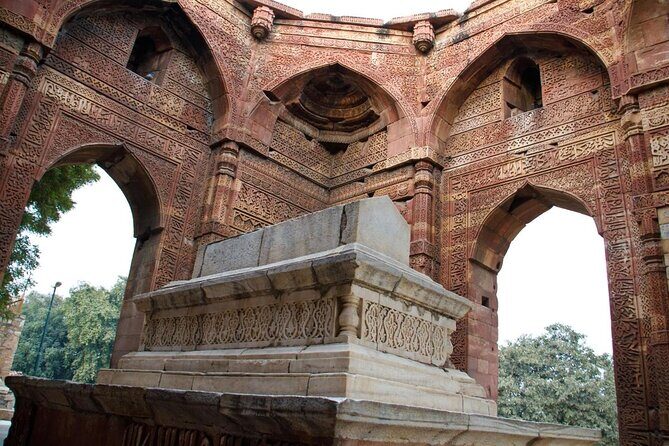
Mehrauli is in South Delhi, and its Archaeological Park spreads across about 200 acres beside Qutub Minar, a World Heritage Site. Most people line up for the famous monument and move on. This walk gives you a reason to slow down and look at what’s around it.
What makes it worth your attention is the feel of continuity. The park isn’t just a fenced-off “dead zone” of ruins. It’s one of the few heritage areas in Delhi that remains inhabited today, so you’re seeing history in a living neighborhood. That changes how ruins land in your mind: you don’t just read about a fort or tomb, you watch how people live near the evidence.
I also like that the tour’s pitch isn’t only big-name monuments. The park holds 100+ notable historical monuments, including older foundations like Lal Kot, plus later structures tied to the Delhi Sultanate, the Mughal Empire, and the British Raj.
If you want Delhi history that doesn’t feel like a lecture, this is the kind of walk that tries to make the stones do the talking.
You can also read our reviews of more tours and experiences in New Delhi.



The 2-Hour Walk Plan: What You Actually Get on the Ground
The experience runs for about 2 hours and is structured as a focused walk inside Mehrauli Archaeological Park. It’s private, so it’s not a shuffle-through with strangers, which matters when you want time for questions and a better pace.
You’ll start at the meeting point on Anuvrat Marg, opposite Qutab Minar Metro Station (Christian Colony area). The activity ends back at the meeting point, so you don’t have to worry about figuring out how to get home from an unfamiliar route.
Since there’s one main stop, the value comes from how the guide selects landmarks and explains what they mean. Instead of saying “this is old,” the best guides connect:
- what each site signals about power at the time (who built it, who ruled next),
- how styles changed across dynasties,
- and what legends or later use added to the story.
From the guide style described in past walks, the pacing tends to be comfortable and explanation-heavy. Names that show up in feedback include Tushar, Amir, and Nidhi, often credited for clear, interesting recounting and storytelling that makes you remember what you saw.
Lal Kot Ruins and the Tomar Rajputs: The Delhi You Don’t Expect
A big early anchor in Mehrauli is the Lal Kot ruins, described as the oldest existing fort in Delhi, built by the Tomar Rajputs in the 11th century. This matters because it shifts your mental timeline. Most people start their Delhi story with later Sultanate rulers because that’s what the headlines focus on. Here, you start earlier, with fort foundations that set up what later dynasties inherited and reshaped.
On this kind of walk, you don’t need to be an archaeology student to follow along. When a guide points out how ruins fit into a bigger timeline, the stones stop feeling random. They start looking like architecture clues: this is where the settlement’s logic was, this is where later rule likely pressed on older space.
A practical tip: go in with the expectation that you’ll be “reading” ruins. Some sections will look broken or minimal. That’s normal. The value is in having someone explain why a fragment still carries meaning.
Tomb of Balban (1287 CE): The Early Arch and Dome Story
One of the signature stops tied to the site is the Tomb of Balban, established in 1287 CE. The park’s description notes that this is where India’s first real arch and true dome were created. Even if you don’t care about architectural trivia, this is exactly the kind of detail that makes the place click.
Why? Because domes and arches aren’t just decorative. They show engineering choices, materials, and the direction of imperial taste. When you see an early example tied to a specific ruler and year, it turns style into evidence.
This is also where a strong guide earns their fee. The best explanation connects the tomb to the Delhi Sultanate context, then zooms back out so you can see how later structures echo ideas like curvature, load distribution, and spatial planning.
If you like “how did they build this” questions, put your attention here. It’s the moment where archaeology feels less like ruins and more like solved puzzles.
Jamali and Kamali Mosque: Djinn Legends and How to Listen to Place
Another highlight inside the park is the Jamali and Kamali Mosque complex, believed to be associated with the djinn—stories often tied to haunted sites in India. Even if you don’t believe in djinn in a literal way, legends still tell you something.
Local belief can be a kind of cultural map:
- it shows which places people pay attention to,
- it hints at how the site is remembered,
- and it adds emotional texture to architecture that might otherwise feel purely historical.
A good guide won’t just throw the story at you and move on. Instead, they’ll use it to help you look harder at the features around the mosque area. You’ll get more from the visit if you treat the legend as a way of noticing, not as a way of “proving.”
And yes, this is the kind of stop where the atmosphere can feel more personal. In a park that’s partly alive with daily life nearby, a story like this can make the space feel present rather than distant.





Quli Khan’s Tomb and the British Summer Retreat Twist
Mehrauli also includes the tomb of Quli Khan, described as early 17th century and later refurbished by a British resident in Delhi into a summer retreat palace. This is the kind of historical layering that I love because it resists the neat timeline people expect.
Instead of history being a closed chapter, you get “history plus reuse.” Later authorities sometimes repurpose older structures, and those changes become part of the story. Even if the tomb was originally made for one purpose, British-era refurbishment adds another layer of meaning tied to the colonial relationship to local heritage and space.
If you’re the type who likes how empires leave marks beyond politics—through buildings, renovations, and changing uses—this stop gives you that angle.
One note to keep your expectations realistic: you’re not touring a fully restored palace. You’re walking through the park’s archaeology. The value is interpretation and context.
What Guides Tend to Do Well Here (and Why You’ll Feel It)
This experience is priced for a guided walk, and the strongest feedback focuses on exactly that: explanation quality, clarity, and storytelling.
A repeated theme is that the walk leaders are described as young, energetic, and passionate, with explanations that are lucid and easy to follow. People also mention Amir and Tushar delivering facts in an engaging way, including moments of shayari-style storytelling. That kind of delivery matters because Mehrauli’s monuments are scattered and, in places, broken or understated.
In other words: without a guide, you might walk past important elements and only half-register why they matter. With a guide, you get a framework that helps you interpret what you’re seeing in real time.
I’d also watch how the guide connects architecture to time. The park spans multiple dynasties and empires, including Khalji, Tughlaq, Lodhi, the Mughal Empire, and the British Raj. When that chain is explained clearly, it helps you build a mental timeline fast instead of needing to study afterward.
Price and Value: The $60 Tour Ticket vs On-Site Monument Fees
The tour price is $60.00 per person, and it lasts about 2 hours. That’s the “experience” fee, and it includes a tour guide plus a mobile ticket for the walk itself.
What’s not included is monument entry. On-site monument tickets come with an additional charge:
- National: INR 30
- Foreign national: INR 500
So, the real value equation looks like this: you’re paying for a guided, interpretive walk through an archaeological area with many monuments, while your entry costs depend on nationality.
For most people, the guide component is the big value. Mehrauli’s power isn’t only in the fact that it’s old. It’s in the fact that it’s old in many ways at once, across time periods. A good guide translates that jumble into something you can understand during the walk, not hours later.
If you’re budget-sensitive, plan to carry cash for the on-the-spot monument fees. And if you’re a foreign national, take the INR 500 fee into your total plan rather than assuming it’s wrapped into the $60.
Where You’ll Spend Your Time Inside the Park
Even though the tour lists one main stop, the experience is really about moving between meaningful points within the park. You’re likely to cover:
- early fort context through the Lal Kot narrative,
- the Sultanate architectural and engineering story through the Tomb of Balban,
- the mosque complex area with the Jamali and Kamali legends,
- and the later-era reuse angle at Quli Khan’s tomb and its British-era refurbishment.
The order can vary depending on the guide’s pacing and the on-ground conditions, but the goal stays the same: you end up with a connected picture of how Delhi changed ruling houses, styles, and even uses of sacred/monument spaces.
Expect it to feel like a guided “scan” of the park’s most meaningful nodes rather than a long hike to far-off corners. That makes the 2-hour format realistic.
Practical Tips So You Enjoy the Walk More
A few things will make your time smoother:
- Bring comfortable walking shoes. Ruins and paths can be uneven, and you’ll be outside.
- Carry water, especially if you’re going during warmer parts of the day.
- If you’re sensitive to heat or have medical needs, notify the operator so the guide can help you adapt the pace.
- Don’t treat monument entry as optional. It’s an on-site add-on charge, so it affects your final total.
Also, go with a mindset of noticing details. The park’s monuments include architectural remnants, ruins, and later-era modifications. If you look with your guide’s prompts in mind, the whole place starts making sense faster.
Who This Tour Fits Best
This walk is a strong match if you want:
- guided archaeology without heavy academic language,
- a history story that spans Tomars to British Raj within one area,
- and an outdoor experience you can handle in about 2 hours.
It’s also ideal if you like walking tours that focus on interpretation and storytelling, not just photo stops. The mention of guide names like Tushar and Amir, plus the praise for lucid explanations and shayari-style storytelling, suggests you’ll get energy and clarity rather than a monotone lecture.
You might want to skip it if you’re expecting a fully restored site with lots of indoor exhibits or if you hate walking in uneven outdoor terrain.
Should You Book the Mehrauli Archaeological Park Walk?
Yes, I think it’s worth booking if you want a Delhi heritage experience with real context. The park sits next to Qutub Minar, but the walk goes beyond the postcard. You get Sultanate architecture ideas like the arch and dome connection at Balban, earlier fort context from Lal Kot, and later layering like Quli Khan’s tomb and British-era refurbishment.
It also has a practical advantage: you’re not trying to cover ten different sites across the city. You get a focused, private walk that’s long enough to make sense of what you see.
Just factor in the reality of on-site monument fees (especially if you’re a foreign national) and wear shoes you trust. If you do that, you’ll leave with a better timeline in your head and a stronger sense of how Delhi’s past still sits in everyday life.
FAQ
How long is the Mehrauli Archaeological Park walk?
It’s approximately 2 hours.
What is the meeting point for the tour?
You meet at Mehrauli Archeological Park Walk, Anuvrat Marg, opposite Qutab Minar Metro Station, Christian Colony, Mehrauli, New Delhi 110030.
Is the tour private?
Yes. It’s a private tour/activity, and only your group participates.
Is a mobile ticket provided?
Yes. The tour includes a mobile ticket.
Are monument tickets included in the $60 price?
No. Monument entry has an on-the-spot cost charge, which is an additional fee.
How much are the on-site monument tickets?
For a National: INR 30. For a foreign national: INR 500.
Do I need good physical fitness to join?
You should have moderate physical fitness level. Customers are responsible for assessing their own fitness.
What if I have a medical condition or special requirements?
Notify the tour operator of any medical conditions or special requirements so the guide can account for them.
Can I get a full refund if I cancel?
Yes. Free cancellation is available, and you can cancel up to 24 hours in advance for a full refund.