REVIEW · JAIPUR
Explore Taj Mahal & Sacred Mathura–Vrindavan Tour From Jaipur
Book on Viator →Operated by SAMI WORLD TRAVELS · Bookable on Viator
A stepwell, a lost capital, and the Taj Mahal. This long route from Jaipur strings together Chand Baori’s mind-bending geometry and the Taj Mahal’s famous scale, then pushes on into Krishna country around Mathura and Vrindavan. It’s a lot to fit into a single stretch, but that’s exactly why it works: you get daylight ruins, Mughal-era drama, and major sacred stops without having to plan each one.
I especially like the comfort-and-control combo here: pickup from your Jaipur hotel and a private air-conditioned car mean less stress and more time actually looking. I also like that you’re not just dropped off—there’s a sightseeing guide and bottled mineral water during the journey, plus a guarantee to skip the lines when it matters.
The only real consideration is time. With a 10 to 12 hours schedule, you should expect a full day of driving and walking, so bring shoes you can trust and be ready to move at a steady pace.
In This Review
- Key Highlights You’ll Feel Right Away
- The Big Picture: Why This Jaipur-to-Taj-and-Krishna Route Makes Sense
- Pickup, Private AC Car, and Line-Skipping: How You Actually Save Time
- Stop 1: Abhaneri and Chand Baori’s Stepwell Geometry
- Stop 2: Fatehpur Sikri, the Abandoned Mughal Capital
- Agra Time for the Taj Mahal: Why This Part Feels Different
- Mathura–Vrindavan: Sacred Krishna Country After the Heavyweight Monuments
- Private Guidance and Service: What the Reviews Indicate About Real-World Experience
- Price and Value: What $50 Buys on a Long Route
- Tour Timing Reality Check: How to Prepare for a 10–12 Hour Day
- Who This Tour Is Best For (and Who Might Not Love It)
- Should You Book This Tour?
- FAQ
- FAQ
- What is the total duration of the tour?
- What is the price per person?
- Is pickup included from Jaipur?
- Where does the tour start and end?
- Is this a private tour?
- Is there a vehicle with the tour?
- Are monument entrance tickets included?
- Are there places on the itinerary with free admission?
- Is line-skipping included?
- What is the cancellation policy?
Key Highlights You’ll Feel Right Away
- Guaranteed line-skipping helps you spend your energy on sights, not queues
- Chand Baori turns a simple water story into a visual puzzle you can’t stop staring at
- Fatehpur Sikri gives you the payoff of an abandoned Mughal capital in a focused, time-friendly visit
- Private local guide means you get context while you walk, not random facts after the trip
- Private AC car and mineral water keep the long route manageable
- A sacred Mathura–Vrindavan finish shifts the mood from imperial grandeur to devotional calm
The Big Picture: Why This Jaipur-to-Taj-and-Krishna Route Makes Sense
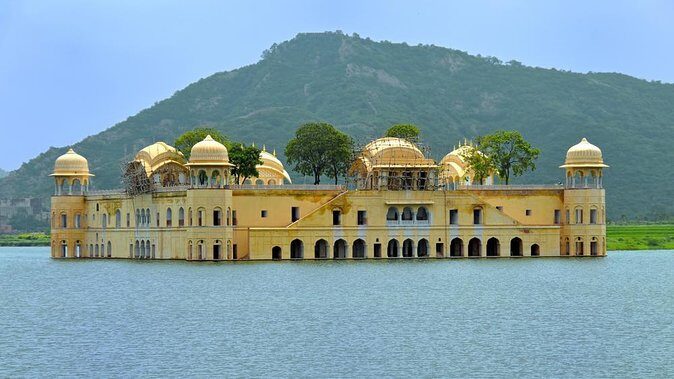
This tour is built for travelers who want more than one “top highlight” photo. You start in the Jaipur area, then head out through the kind of countryside stops that make North India feel larger than a single city. The day’s rhythm matters: you go from Rajasthan’s sculpted water history, to Akbar-era Mughal ambition, and then toward Agra and onward into Mathura–Vrindavan’s spiritual heart.
What you’re really buying with this format is time-saving and clarity. Instead of stitching together transport, ticket lines, and separate tours, you get a single plan with a guide and a vehicle waiting for you. That’s especially useful on a route like this, where delays can spiral quickly if you’re doing it solo.
And the mood shift is genuinely fun. Abhaneri’s stepwell makes you slow down and study. Fatehpur Sikri makes you imagine what a capital city felt like at its peak. Then the day turns toward the sacred focus of Mathura and Vrindavan, where the energy is more devotional than cinematic. If you like variety in one day, this schedule gives it to you.
You can also read our reviews of more tours and experiences in Jaipur.


Pickup, Private AC Car, and Line-Skipping: How You Actually Save Time
Let’s talk practical comfort first. Pickup in Jaipur means you don’t waste time figuring out meeting points in a city that moves fast. A private air-conditioned car helps a lot on longer drives, especially if you’re traveling with older family members or you just don’t want to arrive drenched in sweat and ready to call it quits.
You also get bottled mineral water during the journey, which sounds small until you’re halfway through the day and realize how quickly dehydration affects your mood (and your patience). Then there’s the line-skipping promise. Even when you’re excited, waiting in heat for entry can drain the day. A guide who’s working the logistics so you can focus on what you came for is a real value add here.
One more detail I appreciate: the tour is private for your group. That usually means fewer compromises on pace, photo stops, and how long you want at key monuments. If you’ve ever been stuck behind a slow moving crowd, you already know why that matters.
Stop 1: Abhaneri and Chand Baori’s Stepwell Geometry
Abhaneri is a small place, but it hits hard. The star is Chand Baori, one of the most famous stepwells in India and a serious visual spectacle. What makes it so memorable isn’t just that it’s big—it’s that it’s a whole system of stacked steps descending into the earth. When you look at it from the rim, your brain starts counting levels and patterns, and the architecture keeps rewarding you as you change your viewing angle.
This part of the tour is scheduled as a dedicated block (about two hours), with admission listed as free for the stop. That matters because stepwell experiences can turn rushed if you’re only passing through. Here, you get enough time to take in the symmetry, notice how light behaves across the terraces, and understand why stepwells were so important for water storage and community life.
Two practical tips. First, bring a camera that can handle contrast—this place has bright rim light and deeper shadows. Second, wear shoes with grip. Even if you don’t climb far, the ground around heritage sites can be uneven, and you’ll want stable footing while you’re staring downward at the steps.
Stop 2: Fatehpur Sikri, the Abandoned Mughal Capital
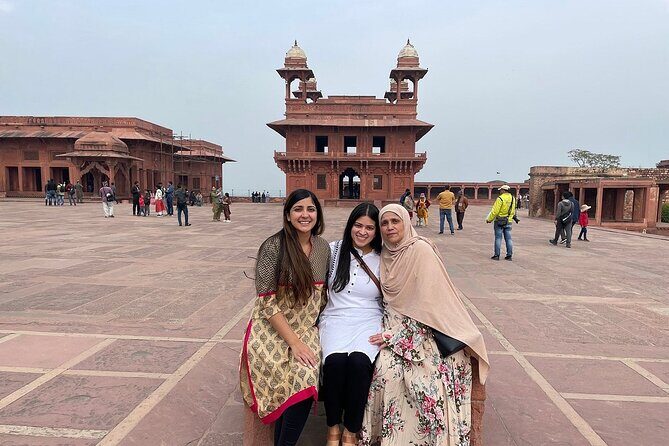
After Abhaneri, the itinerary heads to Fatehpur Sikri, the Mughal capital associated with Emperor Akbar. It’s often described as a lost city, but what you’ll feel on-site is more specific: a concentration of big ideas—palace planning, religious symbolism, imperial confidence—surrounded by silence.
You’re given about two hours here, with admission listed as free for the stop. That’s a helpful setup because Fatehpur Sikri can feel overwhelming if you don’t have a sense of what you’re looking at. A good guide helps you connect the dots: what was built for state power, what was built for faith, and why the city’s story ended the way it did.
One drawback to consider is that it’s an “open-air” experience. Even though the itinerary blocks time well, the sun still decides how comfortable you’ll be. I’d plan on shade breaks and water sips as part of the rhythm. If you’re sensitive to heat, this is where your pace matters most.
The payoff, though, is strong. Fatehpur Sikri is the kind of site that makes you look up at doorways and rooflines and then look back down at foundations. It rewards attention more than speed.
Agra Time for the Taj Mahal: Why This Part Feels Different
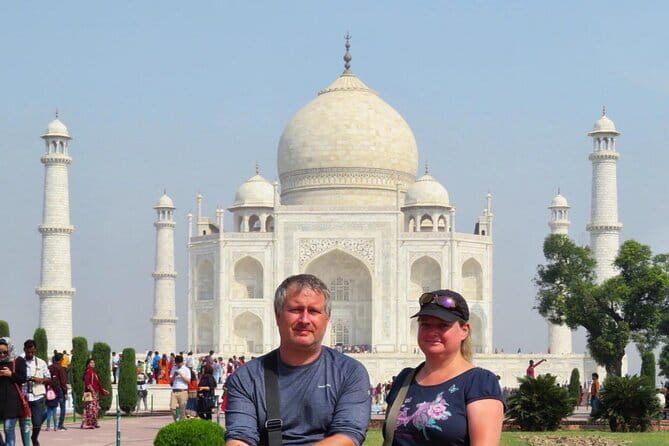
The tour name makes it clear: Taj Mahal is the centerpiece. While your exact time window isn’t spelled out here, you should expect the day to shift toward Agra after Fatehpur Sikri. This is when the route stops being about “learning ruins” and starts being about one monument that people travel across the world to see.
Here’s what I think makes this plan work for real-world visitors: you’re not arriving in Agra having never seen the building-language of North India. You’ve already encountered stepwell engineering in Abhaneri and the Mughal capital layout mindset in Fatehpur Sikri. That context helps you read the Taj Mahal as more than a postcard. You start noticing the details that are easy to miss when you’re rushing.
If you’re booking this tour, treat the Taj Mahal like an experience, not a checklist item. Take a slow first look to get the proportions, then give yourself a second pass with a slightly different angle or focus. Even with line-skipping included, you’ll enjoy it more if you plan to stand, not just snap and move.
Also, expect crowds. The day’s demand on entry is part of the Taj’s fame. The line-skipping promise should help, but your best strategy is to stay patient and ready for a bit of motion.






Mathura–Vrindavan: Sacred Krishna Country After the Heavyweight Monuments
After Agra, the tour moves toward Mathura–Vrindavan, the sacred region strongly associated with Lord Krishna. This isn’t just another sightseeing stop. It’s a shift in what you’re looking for.
Instead of grand, imperial architecture, you’re moving into spaces where devotion drives the atmosphere—temples, religious activity, and a sense of place tied to stories people live with daily. The schedule is designed to let you transition from the monumental scale of the Taj Mahal into a more spiritual focus where the day slows down emotionally, even if the timetable still keeps moving.
One thing I like about having this included is that it prevents the trip from feeling one-note. Agra is awe. Mathura–Vrindavan is meaning. Together, they give you a fuller view of what draws visitors to this region: not just artistic beauty, but also faith and tradition.
If you want to get more out of these stops, ask your guide what to look for. Even simple prompts—what role a site plays, why rituals happen where they do, what people gather for—can turn a fast visit into something you remember.
Private Guidance and Service: What the Reviews Indicate About Real-World Experience

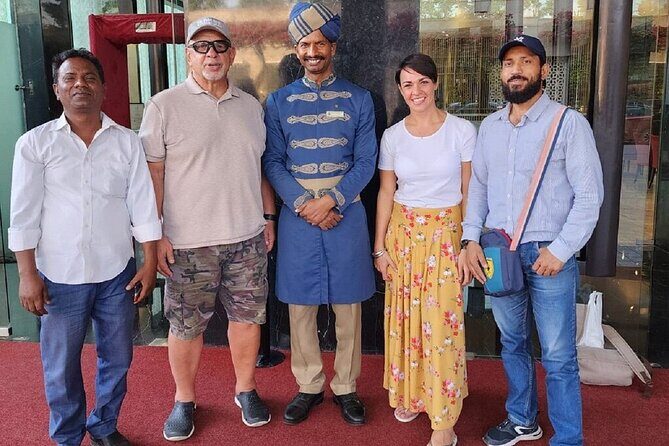
This company’s strength shows up in how responsive they are. One review highlights that the travel agent stayed available by call for an extended period and handled last-minute changes with a family group size. That matters because tours like this can be sensitive to timing, and families often need flexibility.
There’s also praise for guides who can adjust on the fly. A named guide, Rajesh Singh, was described as amazing, knowledgeable, and flexible for Jaipur sightseeing. Even if your guide roster can vary by booking, that kind of feedback is a signal you’ll likely get someone who can explain what you’re seeing in a way that doesn’t feel like a lecture.
On the transport side, there’s also specific praise for driver experience and safety in longer trips connected to this provider—especially a driver named Ashish Kumar, described as experienced and helpful. Again, you may or may not have the same driver on your exact booking, but the pattern of feedback supports a key point: the service team seems to take the journey seriously, not just the destinations.
And yes, the tour is described as a private activity. That aligns with how these teams typically work: less crowd management for you, more problem-solving behind the scenes.
Price and Value: What $50 Buys on a Long Route
At $50 per person, this tour is priced to feel like a bargain—especially with a private AC car and a guide included. The best way to think about value here is not just the ticket price, but what usually costs extra on similar routes: reliable pickup, dedicated transport time, and entry logistics.
That said, you should check what’s included in your exact option. Monument entrance tickets are included only if you select the option that covers them. Abhaneri and Fatehpur Sikri have admission listed as free in the stop details, but major monuments like the Taj Mahal may depend on the ticket option you choose. So before you lock it in, make sure you know whether monument tickets are covered for your itinerary.
The line-skipping guarantee is also part of the value story. Waiting time at major sites can be painful. If this tour truly helps you avoid a chunk of that, the price suddenly looks more realistic for what you’ll experience.
Bottom line: this looks like good value for travelers who want structure, a driver, and a guide without paying a luxury-tour price. If you prefer total freedom and don’t mind handling your own transport and tickets, that’s another style—but it usually costs time, not money.
Tour Timing Reality Check: How to Prepare for a 10–12 Hour Day
Even without exact stop-by-stop clocks for Agra and Mathura–Vrindavan, the duration shown is 10 to 12 hours. That means you should plan like you’re doing a serious day trip, not a casual stroll.
Wear comfortable clothing you can handle in sun and indoor temple spaces. Bring a light layer because vehicles and certain buildings can feel cooler than outside. Start with good shoes because you’ll be doing repeated walking at heritage sites.
Also, keep your phone charged. You’ll likely want photos for Chand Baori’s step patterns and quick reference pictures for Fatehpur Sikri’s structures. And if you’re the kind of traveler who asks questions, this is a good tour to do it—your guide is part of the value.
One more practical idea: travel with a flexible mindset. When you pack a lot into one day, the goal isn’t perfection at every second. The goal is to leave with a balanced set of memories: engineering wonder, imperial ruins, one global icon, and a sacred finish.
Who This Tour Is Best For (and Who Might Not Love It)
This is a strong fit if you:
- want a guided, efficient route from Jaipur into major Uttar Pradesh highlights
- like mixing different types of experiences in one day (stepwell, Mughal capital, Taj Mahal, Krishna devotion)
- value private transportation and not dealing with public transit logistics
It might not be ideal if you:
- prefer slow travel with minimal driving
- get tired easily in long schedules
- hate being on a fixed itinerary even when it’s well organized
If you’re traveling with family, especially kids who can handle long seated travel and short bursts of walking, this kind of private setup can be a lifesaver. The tour also notes that children must be accompanied by an adult.
Should You Book This Tour?
I’d book this if you’re looking for a structured, comfortable way to cover a lot of ground: Chand Baori, Fatehpur Sikri, the Taj Mahal, and then the spiritual focus of Mathura–Vrindavan. The private AC car, pickup, mineral water, and line-skipping promise point to a plan that’s built around reducing hassle.
I’d hesitate only if you’re the type who needs lots of breathing room, or if you’re not sure about entrance-ticket coverage for the monuments. If you confirm the ticket option you want and you’re ready for a long day, this tour looks like a smart way to see key highlights without turning your vacation into a logistics project.
FAQ
FAQ
What is the total duration of the tour?
The tour is listed as approximately 10 to 12 hours.
What is the price per person?
The price is $50.00 per person.
Is pickup included from Jaipur?
Yes, pickup is offered from your hotel in Jaipur.
Where does the tour start and end?
It starts in Jaipur, Rajasthan, India, and ends back at the meeting point.
Is this a private tour?
Yes, this is a private tour/activity, and only your group participates.
Is there a vehicle with the tour?
Yes, you travel in a private air-conditioned car.
Are monument entrance tickets included?
Monument entrance tickets are included if you select the option that includes them.
Are there places on the itinerary with free admission?
The stop details list admission ticket free for Abhaneri and Fatehpur Sikri.
Is line-skipping included?
Yes, the tour includes a guaranteed skip-the-lines benefit.
What is the cancellation policy?
Free cancellation is available, with a full refund if you cancel at least 24 hours in advance of the experience start time.